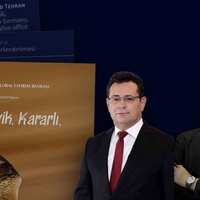
President Donald J. Trump meets with President Xi Jinping in China, May 14, 2026.
Xi Jinping’s promise to Donald Trump that China would not arm Iran is being tested by Tehran’s alleged pursuit of Chinese MANPADS, relatively cheap weapons that could make future US and Israeli air campaigns more dangerous and expensive.
In April, an American F-15 fighter jet was shot down over southwestern Iran, likely by a Chinese-made shoulder-fired missile. Both crew members ejected and were rescued, one of them after two days on the ground in the foothills of the Zagros Mountains.
The loss was historic. No American fighter had been downed by enemy fire in decades.
Iran has reportedly been sourcing these weapons from China, through schemes Washington has been watching for months.
In early May the Treasury Department put one scheme on the public record, sanctioning a network of middlemen arming the Islamic Republic with Chinese weapons, including shoulder-fired missiles. Days later, President Trump traveled to Beijing for a state visit with Xi Jinping.
In late July, he told the public that Xi had personally assured him China would not, “under any circumstances,” sell weapons to the Islamic Republic.
Five days later Reuters reported that a Chinese company had agreed to supply the Islamic Republic with 300 to 400 shoulder-fired air defense missile systems in a deal worth $60 to $70 million.
While the two leaders met and traded assurances, the Islamic Republic appears to have kept buying, likely working several supply channels at once.
The reported deal could help the Islamic Republic close a dangerous gap at exactly the wrong time for Washington. During the 12-day war in June 2025, Israeli aircraft operated over Iran almost at will after the opening strikes severely damaged the country’s air-defense network. The United States later joined the campaign with strikes on Iran’s nuclear facilities.
A shoulder-fired missile will lose most encounters with a modern fighter, but it only has to win occasionally. After the April shootdown, every pilot flying low over Iran has to assume there may be a missile team underneath him, so planners may fly higher or less often, and spend more time and aircraft clearing threats before anyone goes in.
It’s the same effect CIA-supplied Stinger missiles had during the Soviet–Afghan War after 1986, when they made low-altitude flying dangerous enough to force Soviet pilots to change their tactics.
We’ve already seen the effect of this strategy at sea, where the Islamic Republic’s missiles, mines and drones along the Strait of Hormuz have sunk few ships yet collapsed traffic and multiplied insurance costs.
These missiles reach only a few thousand meters into the sky. They cannot touch high-flying aircraft or ballistic missiles, and they will not rebuild the air defense shield the Islamic Republic lost. What they will do is make low-altitude missions—including helicopter operations and some strike and support flights—riskier and more expensive
Since the ceasefire, Basij and Revolutionary Guard units around the country have been training with shoulder-fired air-defense weapons. They also won’t all stay in Iran.
Iran has previously been accused of supplying MANPADS to allied armed groups like the Houthis and Hezbollah, raising the risk that some systems could leave the country. Shoulder-fired missiles have also posed a longstanding threat to civilian aviation worldwide.
China’s answer to all of this has been denial. When NBC reported that a Chinese missile likely downed the F-15, Beijing dismissed the reporting as a groundless smear. When Reuters described the new deal in July, the foreign ministry called it “completely groundless” as well.
Reuters reports that the contract runs through a company registered in Hong Kong and that the missiles are set to travel from Urumqi in western China through Pakistan into Iran. Pakistan, which brokered April’s ceasefire, denies any role.
Strategic credulity?
Trump has taken America’s adversaries at their word before. Xi told him China would not arm the Islamic Republic, and he repeated the assurance to the public as though it settled the matter.
When Volodymyr Zelensky said in late July that Russia was feeding the Islamic Republic satellite imagery to help target American bases, Trump said he would ask Putin about it. He says what he says with a purpose.
Repeating Xi’s promise keeps the relationship warm and the Washington visit on track, while his own government sanctions the middlemen and works to stop the shipments. The message serves diplomacy and the action deals with the missiles, and he sees no contradiction in running both at once.
The Islamic Republic never puts all its eggs in one basket. Washington got ahead of one channel, and we are starting to see the others. The network Treasury sanctioned in May ran through Hong Kong, Belarus and Dubai, while the reported July deal runs through a different Hong Kong company and a different route, through Pakistan.
As the reported Chinese deals advanced, Tehran also signed an agreement with Russia, as reported by the Financial Times, for roughly half a billion euros’ worth of Verba shoulder-fired missiles.
Every route runs at once, and the Islamic Republic plans on losing a few. The first Chinese shipment is said to be weeks away. It should be one that the Islamic Republic loses.
US President Donald Trump speaks during the first televised Cabinet meeting at Camp David, flanked by Secretary of State Marco Rubio and Defense Secretary Pete Hegseth, July 31, 2026.
The Trump administration on Friday outlined military and financial measures against Tehran alongside negotiations that President Donald Trump said were being undermined by Iran’s conduct.
Speaking during the first televised Cabinet meeting at Camp David, Trump, Defense Secretary Pete Hegseth and Treasury Secretary Scott Bessent addressed continued talks, military action aimed at preventing Iran from obtaining a nuclear weapon and a worldwide search for assets linked to its government.
Talks continue as trust erodes
Trump said negotiations with Iran were continuing but that he was “losing faith” in Tehran because “they do lie” and “they do misrepresent.”
“They always want to talk, but they break their words so often,” he said. Trump said Steve Witkoff, Jared Kushner, Vice President JD Vance and Secretary of State Marco Rubio were involved in the talks. “We have great people talking,” he added.
He said five missiles were fired at a US base in Jordan while negotiations were underway.
“Instead, I got a call from Pete that they just shot five missiles at one of our bases in Jordan,” Trump said.
Asked whether the attacks could continue, Trump said: “I think I’m going to be foolish to say no. You always have to keep your guard up.”
“They get weaker. They get a little stronger, maybe now, but they’ll get weaker, and then they peter out,” he added.
Military pressure and nuclear sites
Hegseth praised Trump for having “the courage to do Midnight Hammer and conclude the 12-day war by obliterating their nuclear sites.”
He said previous presidents had considered such action but “never pulled the trigger because of the complications, because of the challenge, and because of the risk.”
Hegseth said Trump remained committed to ensuring Iran never obtained a nuclear weapon and praised his willingness to negotiate with people who had “shown no willingness to do so honestly.”
Diplomacy under pressure
As hopes for diplomacy flicker, the United States is increasing military and economic pressure on Tehran while Trump and Hegseth continue to voice confidence in the US negotiating team.
“We have great people talking,” Trump said. “We have the best negotiators in the world,” Hegseth added.
A poster released by the US State Department's Reward for Justice program, July 30, 2026
The United States has offered a reward of up to $15 million for information that disrupts the financial mechanisms of Iran's Revolutionary Guards (IRGC), focusing on a company Washington says plays a key role in producing drones used by Tehran and its regional allies.
The State Department's Rewards for Justice program announced Thursday that it was seeking information on Kimia Part Sivan Company (KIPAS), which it described as the drone-production arm of the IRGC's overseas Qods Force.
According to the statement, KIPAS has conducted unmanned aerial vehicle (UAV) flight tests for the IRGC-Qods Force, provided technical assistance for drones transferred to Iraq for use in IRGC operations, and procured critical UAV components from companies outside Iran.
Washington also named six senior KIPAS officials—Hasan Arambunezhad, Abolfazl Ramazanzadeh Moshkani, Mehdi Ghaffari Naghneh, Reza Nahar Dani, Abbas Sartaji and Hadi Jamshidi Zavaraki—saying they had been involved in the testing, development and supply of drones, particularly for Iranian-aligned armed groups in Iraq, Yemen and Syria.
The officials were sanctioned by the U.S. Treasury Department in April 2024 for acting on behalf of the IRGC-Qods Force, while KIPAS itself was designated in 2021 under U.S. counterterrorism authorities for providing material support to the organization.
The announcement marks the latest step in Washington's expanding "maximum pressure" campaign against Tehran, which has intensified in recent weeks as the United States and Iran remain locked in a confrontation over the Strait of Hormuz.
The Trump administration has increasingly paired military pressure with financial measures aimed at disrupting the IRGC's access to revenue and procurement networks.
On Thursday, the United States sanctioned international networks accused of supporting Iran's Mahan Air, saying the airline facilitated logistics and procurement for the IRGC.
A day earlier, Treasury imposed sanctions on companies and tankers it accused of helping Iran profit from commercial shipping through the Strait of Hormuz by forcing vessels to purchase IRGC-linked maritime insurance.
The Rewards for Justice statement said proceeds from Iran's sales of military equipment, including drones exported to Russia and supplied to regional armed groups, help finance the IRGC-Qods Force's activities abroad.
Washington accuses the force of supporting groups including Hamas, Hezbollah and Iran-backed militias in Iraq, allegations Tehran rejects.
Under the reward program, the United States is seeking information that would disrupt the IRGC's financial networks rather than information leading directly to arrests.
The reward of up to $15 million is among the largest routinely offered under the program for intelligence related to Iranian security organizations.
Smoke rises from a warehouse of Russian online retailer Wildberries that the Regional Governor Oleg Melnichenko says is following a Ukranian drone attack, in Priovrazhnoe, Penza Region, Russia, July 30, 2026 in this screengrab taken from a social media video.
Signs of reluctance to widen the conflict are emerging in Tehran, with conservative politicians and media urging restraint even as they accuse the United States and Israel of orchestrating Ukraine's attack on an Iranian vessel.
The New York Times reported Wednesday that Iran had considered retaliating by striking a Ukrainian port before diplomatic efforts helped defuse the crisis, reinforcing the impression that, despite its rhetoric, Tehran is seeking to avoid opening another front.
Establishment figures have largely portrayed the attack as part of a broader US and Israeli effort to widen the conflict, warning Tehran against responding in a way that would play into that strategy.
Mohsen Sani, a member of parliament's National Security and Foreign Policy Committee, argued that the attack on the Iranian vessel and recent strikes against Iraq's Popular Mobilization Forces should be viewed within the same strategic framework.
"The United States is trying to pursue its objectives through proxy actors such as Ukraine and Saudi Arabia," he told the conservative news website Tabnak.
‘International dimension’
Former Iranian ambassador to Kuwait Mohammad Irani likewise accused Israel of encouraging Kyiv to open a new front against Tehran.
"The coming together of Netanyahu and Zelensky, in my view, represents the formation of a new front of confrontation or preparations for a new regional order," he told ILNA.
Irani nevertheless argued that Tehran should avoid creating conditions that would draw additional countries into the conflict.
"Because of pressure from Trump, Israel's hands are temporarily tied. They therefore want to bring another party into the confrontation so that the conflict expands beyond the region and acquires an international dimension," he said.
"If an immediate response is considered, every possible consequence and every option that could be used against us must also be taken into account so that the opposing side does not achieve greater cohesion."
A Western trap
Nour News, a media outlet closely aligned with Iran's Supreme National Security Council, argued that Ukraine's actions formed part of a coordinated US strategy stretching "from Yemen to the Caspian Sea," designed to increase pressure on Iran while allowing Israel time to recover militarily and politically.
In a separate editorial, the outlet argued Kyiv's subsequent diplomatic outreach—including Foreign Minister Andrii Sybiha's assurances to Abbas Araghchi that Ukraine sought no escalation—reflected concern over Iran's deterrence capabilities rather than a genuine attempt at reconciliation.
The conservative daily Resalat likewise argued Washington was attempting to use Ukraine as another proxy against Iran while warning that escalation in the Caspian Sea could ultimately draw Russia more directly into the conflict.
The moderate conservative newspaper Jomhouri-ye Eslami similarly urged Tehran not to fall into what it described as a Western trap, arguing that reducing tensions with Kyiv would better serve Iran's interests than opening another front.
Little appetite for escalation
Javid Ghorbanoghli, Iran's former ambassador to South Africa, said another Ukrainian attack was unlikely, arguing that Tehran had already signalled it would respond to any repeat incident.
"It is highly unlikely that Tehran seeks to expand the war," he said. "Iran prefers not to allow its already tense relations with European countries to deteriorate even further."
He added that Iran's political establishment was trying to avoid opening new fronts that could generate additional political and economic pressure.
Russia analyst Rouhollah Modabber argued the attack was intended to disrupt the International North-South Transport Corridor and undermine Iran's economic cooperation in the Caspian region.
He also claimed President Volodymyr Zelensky publicly accepted responsibility in an effort to secure additional US military and financial support.
A US Army AH-64 Apache attack helicopter takes off at an undisclosed location in the Middle East in this image posted by US Central Command on X on July 25, 2026.
US President Donald Trump's most likely response to the conflict with Iran will be to intensify air strikes against a broader range of targets rather than withdraw or launch a ground invasion, former senior Pentagon official David Des Roches told Iran International TV.
Speaking on Iran International's Titre Aval (The Lead) program on Wednesday, Des Roches said the United States had limited military options after adopting an air campaign and argued Trump was unlikely to accept the political cost of ending the operation without achieving his objectives.
Three options
"The United States went in with an air power-only strategy," said Des Roches, now an associate professor at the Near East South Asia Center for Security Studies.
"That usually is flawed because once you do that, and if you look historically at how we've used an air power-led strategy in Korea, Vietnam, even World War II, but I think the illustrative point is Kosovo."
"If you don't achieve your strategic goals initially against a small target set, your options are to either introduce another element of warfare, and we don't have time to do that. To have a credible ground invasion force would take a year to build up, or you bomb more intensively."
"You widen the target list to include dual-use infrastructure, like bridges, the power grid, the national communications, television, and radio. This is what the US did against Serbia to stop the massacre of Muslims in Kosovo, or you leave."
"Those are really your three options, and I think that President Trump does not relish the prospect of leaving. That's too close to Joe Biden."
David Des Roches (left), associate professor at the Near East South Asia Center for Security Studies, speaks with Iran International TV presenter Niusha Saremi during the network's Titre Aval program on July 29, 2026.
More strikes likely
Des Roches said he believed the White House was most likely to increase military pressure rather than expand into ground operations.
"So I think, you know, he doesn't really have the ability to introduce another domain of warfare," he said.
"But really, I think his main option is to try to increase pain on the regime, and I think that that will mean an expansion into the targets towards dual-use targets and an expansion of intensive bombing to include not just areas adjacent to the Persian Gulf, but also areas inland, and especially the capital Tehran."
Asked about reports that Trump had been advised against escalating the conflict because of concerns about US weapons stockpiles, Des Roches said he believed political and economic factors were more important than military constraints.
"Some, but I think it's not really driven by military action or missile inventories," he said.
"I think it's political and economic. So we have midterm elections coming up. The Islamic Republic knows this. The leaders within the Islamic Republic know it, and they have calculated that if they can draw the war out, keep gasoline prices high, that President Trump will be in a worse position, or may even be impeached and removed."
"I think that they're kind of overplaying their hand."
Des Roches said recent Iranian actions might not reflect a unified government position.
"I'm not sure if the actions we're seeing reflect a unitary position of the Iranian government, but rather the actions of different factions of the Iranian government, probably the Revolutionary Guard, who are vying for supremacy and are trying to wreck any possibility for negotiations."
He argued that an end to the conflict would shift public attention inside Iran toward domestic issues.
"Obviously, if peace breaks out, then the focus within Iran goes from a national rally around the flag, oppose the Zionist entity and the Great Satan, towards looking at things like where has all the money gone over the year? Why is Tehran running out of water when the Revolutionary Guard controls the major construction companies in the country, and why are their children driving Lamborghinis in Spain and ours are having a hard time getting water in Tehran?"
"So it's a challenging period, but I think the hardliners, particularly in the Revolutionary Guard, are at risk of severely overplaying their hand."
Asked whether regime change had become part of US strategy, Des Roches said he believed Trump was pursuing a different approach from previous US interventions.
"My view is President Trump's theory of victory is not that the US will impose a new regime the way we did, for example, in Iraq, because that didn't work out well."
"I think he feels that economic pressure will lead the Iranians to have their own regime change."
Des Roches said Trump appeared to believe the anti-government protests in late 2019 had brought Iran close to internal political change.
"I think he feels that in December that was about to happen. It was only the violence of the Revolutionary Guard and the Basij, the massacres of between 1,300 and 4,000 Iranians - we don't know the exact number - that would have done it."
"I think that's why we're here now. It's not because Netanyahu led it. It's because, in the face of what he saw as a vindication of his policy, I think he believes that had he remained president after 2020, regime change would have been accomplished from within by about 2022."
An image released by citizen journalist Vahid Online purports to show missiles launched from central Iran toward Jordan early Wednesday, July 29, local time
Iran's ballistic missile strike on US forces in Jordan and its seizure of three oil tankers in the Strait of Hormuz have dealt a fresh blow to efforts to preserve last month's Iran-US understanding.
After Iran fired several ballistic missiles toward a US military base in Jordan early Wednesday Tehran time, US President Donald Trump vowed to hit back hard.
Hours later, the naval arm of Iran's Islamic Revolutionary Guard Corps (IRGC) announced it had struck and detained three "offending" oil tankers in the Strait of Hormuz.
Several analysts said the combination of the Jordan strike and Tehran's actions in the Strait of Hormuz suggested Iran was no longer content to react to US pressure but was instead trying to seize the initiative and reshape the course of the confrontation.
Political analyst Ruhollah Rahimpour told Iran International the overnight missile launches and the Hormuz operation reflected a deliberate strategy of escalation.
"I think last night's missile operations in Jordan and the Strait of Hormuz are part of the Islamic Republic's strategy of escalating tensions and trying to accelerate a full-scale war with the United States and Israel, forcing them into conflict before they are fully prepared," he said.
‘Ready for broader conflict’
Despite the latest escalation, Trump insisted talks with Tehran would continue. A day earlier, he told Fox News negotiations were progressing well but warned that if no agreement was reached, Washington could strike Iran's underground facilities, bridges and power plants.
The strike also marked the first time Iran had targeted a US military installation without first coming under direct US attack, although Tehran has repeatedly argued that the continuing US maritime blockade itself constitutes an act of war.
Political analyst Shahir Shahid Saless argued Tehran appears to have concluded that maintaining the current status quo is no longer strategically sustainable while Iran remains under severe economic pressure and a maritime blockade.
According to Shahid Saless, Iranian leaders believe that if Washington's strategy is to prolong a "no war, no peace" situation indefinitely, Iran will gradually be worn down while the United States enjoys the benefits of an undeclared ceasefire.
"From Tehran's perspective, this situation must be disrupted, even if the cost is a broader conflict," he wrote.
He added that renewed attacks carry only a limited risk of triggering all-out war while serving a more important strategic objective: demonstrating to Washington that it cannot unilaterally determine when conflict begins or ends.
Hormuz complicates diplomacy
The military escalation has unfolded alongside increasingly difficult negotiations over navigation through the Strait of Hormuz.
Deputy Foreign Minister Kazem Gharibabadi said Tuesday that Oman had proposed dividing responsibility for a new shipping lane equally between the two countries, but insisted the arrangement failed to address Iran's concerns.
Former Israeli intelligence official Danny Citrinowicz argued the latest attacks reflected what he described as a post-Khamenei doctrinal shift, with Tehran now prepared to initiate offensive operations rather than relying primarily on deterrence.
"Today Iran is also prepared to initiate offensive moves and to rely deeply on its missile array, drones and regional proxies,” Citrinowicz wrote on X.
"The leadership in Tehran is prepared to take significant risks because it sees the current confrontation as a decisive battle over its regional status and its ability to shape the security reality in the Middle East."
Former Iranian diplomat Kourosh Ahmadi argued Oman has little room to accommodate Tehran because of its obligations under the UN Convention on the Law of the Sea and pressure from Washington and regional states.
"The problem now is that the Strait of Hormuz has become an issue of prestige for both Iran and the United States, making it unlikely that either side will easily accept the other's conditions."
Regional conflict widens
Saudi Arabia announced Tuesday that it had intercepted several drones launched from Iraq towards Saudi oil facilities, blaming Iran-backed groups.
In response, Saudi and US forces jointly bombed positions held by the Iran-aligned Popular Mobilization Forces (PMF) in Iraq for the first time, reportedly killing numerous fighters..
The US Central Command and Saudi officials described the operation as retaliation for more than 30 drone attacks over three days targeting US forces and Saudi energy infrastructure, allegedly carried out by Iraqi groups aligned with Iran under IRGC direction.
Iran's state broadcaster IRIB quoted an unnamed military official as denying any Iranian involvement in projectiles launched from other countries towards Saudi Arabia and calling claims linking Tehran to such attacks "a major miscalculation."
Commenting on the broader trajectory of the crisis, social media commentator Tohid Javadi warned that a much larger confrontation could lie ahead.
"A major—perhaps very major—conflict may be approaching. Under the current circumstances, neither the Islamic Republic can surrender nor does Washington appear willing to reach an understanding without extensive bombing and breaking a few of Iran's bones."