• العربية
  • فارسی
Brand
  • Iran Insight
  • Politics
  • Economy
  • Analysis
  • Special Report
  • Opinion
  • Podcast
  • Iran Insight
  • Politics
  • Economy
  • Analysis
  • Special Report
  • Opinion
  • Podcast
  • Theme
  • Language
    • العربية
    • فارسی
  • Iran Insight
  • Politics
  • Economy
  • Analysis
  • Special Report
  • Opinion
  • Podcast
All rights reserved for Volant Media UK Limited
volant media logo

Senator Warnock questions US rationale for Iran war after ceasefire deal

Jun 16, 2026, 23:56 GMT+1
Sen. Raphael Warnock (D-GA) walks on stage to give remarks at the Center for American Progress Ideas Conference at the Mayflower Hotel in Washington, DC, US, May 19, 2026
100%
Sen. Raphael Warnock (D-GA) walks on stage to give remarks at the Center for American Progress Ideas Conference at the Mayflower Hotel in Washington, DC, US, May 19, 2026

Democratic Senator Raphael Warnock on Tuesday questioned the rationale for the US war with Iran following a ceasefire agreement and reopening of the Strait of Hormuz, saying the outcome appears to resemble the situation before the conflict began.

“The Strait of Hormuz, they're saying, will be reopened. Well, it was open before he started the war. I hope the war is over. but the question is, why were we in the war in the first place?” Warnock told CBS News.

Warnock said the US remains “a long way from what Donald Trump promised and what it looks like he's going to deliver,” and said the conflict “has not been good for America or its credibility.” Asked whether the US is safer, he said: “I don't think so.”

Most Viewed

Hardliners accuse negotiating team of ignoring Supreme Leader's objections
1

Hardliners accuse negotiating team of ignoring Supreme Leader's objections

2

Hardliner reveals ‘top-secret’ Khamenei objections to US talks on state TV

3

Israel reveals Iranian-designed Hezbollah ‘terror tunnel’ with large drone cache

4

Iran’s legal drug market is being hollowed out as shortages feed illicit channels

5

Illegal adoptions expose Iran’s hidden baby-selling market, child advocate warns

Banner
Banner
Banner

Spotlight

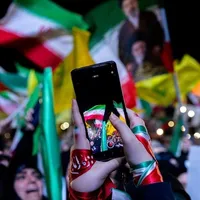
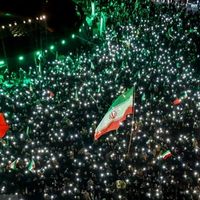
  • Iran's postwar rallies become flashpoint in diplomacy debate
    INSIGHT

    Iran's postwar rallies become flashpoint in diplomacy debate

  • MoU's forgotten casualty is the Iranian people
    OPINION

    MoU's forgotten casualty is the Iranian people

  • Iran may get a lifeline, but major obstacles remain
    ANALYSIS

    Iran may get a lifeline, but major obstacles remain

  • Can Iran rebuild ties with Arab neighbours without a US deal?
    INSIGHT

    Can Iran rebuild ties with Arab neighbours without a US deal?

  • Trump says Iran is 'finished', experts say Tehran won big
    PODCAST

    Trump says Iran is 'finished', experts say Tehran won big

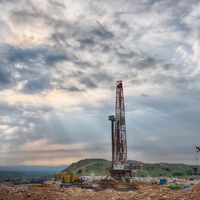
  • A US-Iran deal alone won't rescue Iran's oil economy
    ANALYSIS

    A US-Iran deal alone won't rescue Iran's oil economy

•
•
•

More Stories

US-Iran draft deal offers Tehran major financial incentives - Bloomberg

Jun 16, 2026, 23:32 GMT+1

A draft US-Iran memorandum of understanding outlines broad financial incentives for Tehran, including expanded oil exports, access to a large development fund, and eventual release of frozen assets, according to Bloomberg.

The report says the United States would issue immediate waivers allowing Iranian exports of crude oil and petrochemical products once the agreement is signed, alongside steps to restore traffic through the Strait of Hormuz within 30 days.

The draft also refers to a development package worth at least $300 billion, to be structured with US and regional partners, though details and timelines remain unclear, the report said.

According to Bloomberg, the deal is part of a 60-day negotiation framework aimed at a longer-term settlement over Iran’s nuclear program, under which Tehran would commit not to pursue nuclear weapons and address the fate of its enriched uranium stockpile in a final agreement.

The draft does not specify how or when sanctions relief would be fully implemented, and US officials have said that benefits would depend on Iran meeting its obligations, the report added.

Australia lowers Middle East travel warnings after US-Iran deal

Jun 16, 2026, 23:26 GMT+1

Australia lowered its travel advisories for several Middle Eastern countries following a US-Iran interim agreement aimed at de-escalating the regional conflict, Reuters reported.

The government downgraded warnings for Bahrain, Israel, Kuwait, Qatar and the United Arab Emirates from “do not travel” to “reconsider your need to travel,” Foreign Minister Penny Wong said.

Wong cautioned that Australians should still avoid non-essential travel to the region, warning that the security situation could deteriorate “rapidly with little warning,” even after the shift in advisory level.

Clearing mines from Strait of Hormuz would be technically difficult - CNN

Jun 16, 2026, 22:51 GMT+1

A US expert warned on Tuesday that removing mines from the Strait of Hormuz would be a complex and technically challenging operation, following reports that Iran may be required under a US-Iran memorandum of understanding to clear the waterway.

CNN reported that White House talking points on the draft agreement state Iran would be responsible for de-mining the strategic shipping route. A senior US official said operations in the strait were expected to “return to normal pretty quickly, definitely within 30 days” once Iran commits to removing the mines.

Scott Savitz of the RAND Corporation said mine clearance is far more difficult than deployment, calling it “painstaking” and “a game of intense precision,” and questioning Iran’s ability to carry it out effectively without external assistance.

US easing Iran oil sanctions could boost revenues to $100 billion - report

Jun 16, 2026, 22:42 GMT+1

Israeli newspaper Israel Hayom reported on Tuesday that the United States is effectively easing enforcement of sanctions on Iranian oil exports, a shift that could significantly increase Tehran’s revenues over the next two years.

According to the report, expanded oil flows alongside increased maritime access through the Strait of Hormuz could allow Iran to raise export earnings to around $100 billion annually within one to two years.

"Energy firms are showing growing interest in purchasing Iranian crude despite concerns over the possible reimposition of sanctions," the report said. The report also added that US officials have maintained that any financial transfers to Iran would depend on Tehran meeting its obligations under the emerging framework.

Mark Levin questions reported Iran negotiation framework

Jun 16, 2026, 22:26 GMT+1

Conservative commentator Mark Levin on Tuesday criticized a reported US-Iran memorandum of understanding, saying that no country would accept constraints on its ability to respond to missile and drone attacks from armed groups on its borders.

In a post on X, Levin questioned whether any state would agree to conditions requiring permission or restraint in responding to attacks, and said such arrangements would be incompatible with confronting Iranian-backed militant groups.

Levin also referred to Iran’s regional network of armed proxies, including Hezbollah, and raised concerns about whether they could be emboldened under the reported framework.