• العربية
  • فارسی
Brand
  • Iran Insight
  • Politics
  • Economy
  • Analysis
  • Special Report
  • Opinion
  • Podcast
  • Iran Insight
  • Politics
  • Economy
  • Analysis
  • Special Report
  • Opinion
  • Podcast
  • Theme
  • Language
    • العربية
    • فارسی
  • Iran Insight
  • Politics
  • Economy
  • Analysis
  • Special Report
  • Opinion
  • Podcast
All rights reserved for Volant Media UK Limited
volant media logo

Iranian hardliners seek to undermine potential deal with US - NYT

May 30, 2026, 02:45 GMT+1Updated: 06:34 GMT+1

A vocal faction of Iranian hard-liners is seeking to derail negotiations with the United States as the two sides move closer to a potential agreement, according to a report by The New York Times.

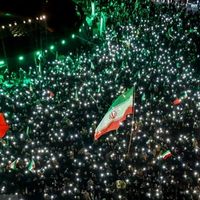
The report said hard-line figures in parliament, state media and the Supreme National Security Council have publicly opposed concessions to Washington through rallies, media campaigns and political pressure, despite support for the talks from Iran’s leadership.

According to the newspaper, President Masoud Pezeshkian recently criticized state television for portraying negotiations as a failure and deepening divisions, while Iran’s negotiating team has continued discussions with the United States.

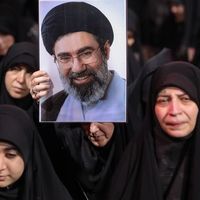
The report cited analysts and officials as saying the hard-line camp represents a minority view but retains influence within parts of the political establishment and among supporters of the Islamic Republic. It also described tensions between hard-line figures and members of the negotiating team over the direction of talks with Washington.


Most Viewed

Tehran divided over what Khamenei MoU message really meant
1
INSIGHT

Tehran divided over what Khamenei MoU message really meant

2

Hardliner reveals ‘top-secret’ Khamenei objections to US talks on state TV

3

Hardliners accuse negotiating team of ignoring Supreme Leader's objections

4
ANALYSIS

Iran may get a lifeline, but major obstacles remain

5
INSIGHT

Can Iran rebuild ties with Arab neighbours without a US deal?

Banner
Banner
Banner

Spotlight

  • Iran may get a lifeline, but major obstacles remain
    ANALYSIS

    Iran may get a lifeline, but major obstacles remain

  • Can Iran rebuild ties with Arab neighbours without a US deal?
    INSIGHT

    Can Iran rebuild ties with Arab neighbours without a US deal?

  • Tehran divided over what Khamenei MoU message really meant
    INSIGHT

    Tehran divided over what Khamenei MoU message really meant

  • Trump says Iran is 'finished', experts say Tehran won big
    PODCAST

    Trump says Iran is 'finished', experts say Tehran won big

  • A US-Iran deal alone won't rescue Iran's oil economy
    ANALYSIS

    A US-Iran deal alone won't rescue Iran's oil economy

  • A fragile compact: ambiguities that could undermine US-Iran MoU
    ANALYSIS

    A fragile compact: ambiguities that could undermine US-Iran MoU

•
•
•

More Stories

FDD outlines six conditions for future Iran nuclear deal

May 30, 2026, 02:34 GMT+1

The Foundation for Defense of Democracies (FDD) outlined six requirements it says should form the basis of any future US-Iran nuclear agreement, arguing that weaker terms would leave Tehran with a pathway to nuclear weapons.

In a report released on Friday, FDD research fellow Andrea Stricker said any deal should require the recovery of Iran’s enriched uranium stockpile, a permanent ban on uranium enrichment and plutonium reprocessing, the dismantlement of enrichment and plutonium-related infrastructure, a full declaration of past nuclear weapons work, and unrestricted International Atomic Energy Agency inspections, including at military sites.

The report added that allowing Iran to retain enrichment capabilities or limiting inspections would undermine the effectiveness of any agreement.

US has ‘global obligation’ to prevent Iran from obtaining nuclear weapon

May 30, 2026, 02:23 GMT+1

US Secretary of War Pete Hegseth said on Friday that the United States has a “global obligation” to ensure Iran does not obtain a nuclear weapon, speaking at the Shangri-La Dialogue security forum in Singapore.

“We still have global obligations to ensure that, say, Iran doesn’t get a nuclear weapon,” Hegseth said during remarks at the annual defense summit, which brings together senior security officials from across the Indo-Pacific and beyond.

USNAVCENT and UKMTO issue advisory on military operations in Strait of Hormuz

May 30, 2026, 01:23 GMT+1

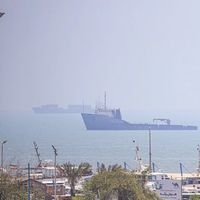
The UK Maritime Trade Operations (UKMTO) and US Naval Forces Central Command (USNAVCENT) issued a Joint Maritime Information Center (JMIC) Advisory Note on Friday warning of ongoing military operations in the northern Strait of Hormuz near the Musandam Peninsula, according to the official advisory.

The advisory said maritime activity in the area includes critical security risks and warned that military operations are ongoing in proximity to the waterway. It urged mariners to exercise extreme caution and remain alert to rapidly changing conditions.

The notice did not confirm specific threats such as mine-laying but advised vessels to maintain a listening watch on VHF Channel 16, avoid traffic separation schemes where possible, and report suspicious activity.

100%
100%

US has not confirmed Iran placed mines in Strait of Hormuz - NBC

May 30, 2026, 00:56 GMT+1

The US military has not confirmed that Iran placed mines in the Strait of Hormuz despite continued searches of the critical waterway, NBC News reported on Friday, citing sources.

Military searches using underwater drones, robotic systems, and manned and unmanned aircraft have identified some objects that could resemble mines, but none have been definitively confirmed as such, the report said.

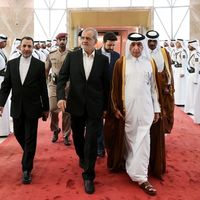
Qatar rejects Iran’s demand for unrestricted release of $12 billion in funds

May 30, 2026, 00:51 GMT+1

Despite Tehran’s firm demands for the immediate and unconditional release of $12 billion in cash upon the signing of an initial Memorandum of Understanding (MoU) with the United States, Qatari officials rejected the

According to a source close to a Qatari official involved in the discussions, Doha refused to transfer the funds directly or in cash to Iran. Instead, the money will only be made available as credit for Tehran to purchase essential goods and products directly from Qatar.

The restriction comes amid strong US opposition to granting Iran direct, unrestricted access to liquid financial assets.

Continue reading