Region’s future will be without US presence, Iran Supreme Leader says
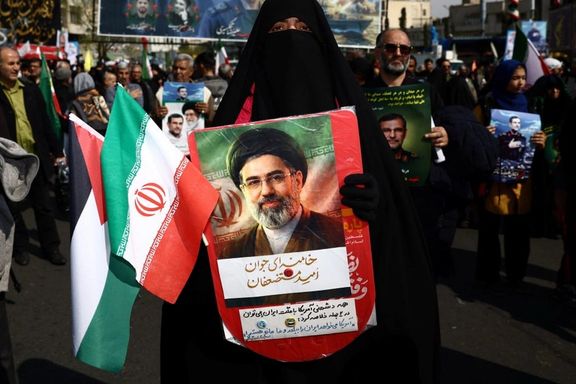
Iran’s Supreme Leader Mojtaba Khamenei said on Thursday that the future of the region would be free of US presence.
“The presence of American forces in the Persian Gulf is the main source of insecurity,” he said, marking Iran’s National Persian Gulf Day.
He said Iran’s management of the Strait of Hormuz would ensure stability and benefit regional nations, adding that foreign powers had no place in the region “except at the bottom of its waters.”
He also vowed to protect the Islamic Republic's nuclear and missile capabilities, which the United States and Israel have tried to curtail through airstrikes.
“Ninety million proud and honorable Iranians inside and outside the country regard all of Iran’s identity-based, spiritual, human, scientific, industrial and technological capacities — from nanotechnology and biotechnology to nuclear and missile capabilities — as national assets, and will protect them just as they protect the country’s waters, land and airspace,” read the message attributed to Khamenei.




Despite a history of sectarian and political friction, recent statements from Taliban officials point to an alignment with the Islamic Republic during a period of heightened regional confrontation.
Differences over border clashes, water rights from the Hirmand (Helmand) River and the treatment of Afghan refugees remain unresolved.
The clearest articulation came from Taliban spokesman Zabihullah Mujahid, who said the group does not favor war but supports Iran’s right to respond to attacks.
“We are not in favor of war… Iran is right; defense is Iran’s right,” Mujahid said in a February 15, 2026 interview with radio. “Whatever happens, Afghans are ready to sympathize with Iran in times of war and hardship and cooperate within their means.”
Mujahid added that any assistance would depend on Iran making a request and said that diplomacy remains preferable to escalation.
The spokesman had earlier condemned Israeli strikes on Iranian nuclear and military targets on June 13, 2025, describing them as a “violation of international law and national sovereignty.”
Foreign ministry stance
Taliban Foreign Minister Amir Khan Muttaqi also conveyed support in direct contacts with his Iranian counterpart Abbas Araghchi.
In a March 2, 2026 statement, the foreign ministry said Muttaqi condemned what he described as “US and Israeli aggression against Iran” and expressed sympathy following the reported death of Iran’s supreme leader.
Muttaqi urged a diplomatic resolution, calling “violations of national sovereignty unacceptable under international norms.”
Haqqani network figures
Figures linked to the Islamist Haqqani network reinforced this position through social media activity. Mohammad Jalal, a senior member of the Taliban’s cultural committee, circulated images of damage in Israeli cities after Iranian missile strikes, framing Tehran’s response as “legitimate self-defense.”
Jalal also shared posts by Iranian Parliament Speaker Mohammad Bagher Ghalibaf promoting a campaign encouraging volunteers to defend Iran, aligning with broader anti-Israel rhetoric within Taliban circles.
Anas Haqqani, another senior figure, published a poem referencing the Strait of Hormuz in support of Iran.
Pro-Taliban commentators
Media figures close to the Taliban have gone further, portraying Iran as a model of national unity. Abdullah Raihan, a Kabul-based commentator, praised defiance following US threats to target Iranian infrastructure.
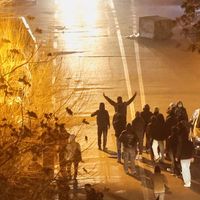
“Afghans should learn patriotism from Iranians,” Raihan wrote earlier in April, describing scenes of civilians gathering on bridges in response to threats of bombardment.
Raihan contrasted this with Kabul’s 2021 fall, arguing that “even critics of Iran’s government did not undermine national infrastructure.” He also condemned attacks on civilian sites and adding that foreign intervention is worse than domestic political shortcomings.
State media mirrors official line
Taliban-controlled national radio and television largely reflected official statements without advancing independent advocacy for Iran. Coverage focused on Mujahid’s interview and foreign ministry statements, framing developments through concerns about regional escalation and sovereignty.
Programming remained largely domestic in focus, though Iran-related coverage rose sharply during the most intense phases of the conflict.
Whether this limited convergence translates into tangible cooperation remains unclear, given enduring Iran-Taliban disputes and the Taliban’s preference for avoiding direct involvement in the conflict.


