Three layers of mistrust behind US-Iran deadlock

Ata Mohamed Tabriz
Iran analyst
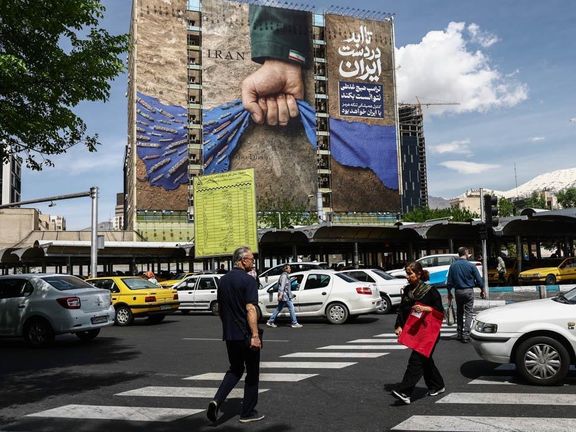
Deep-rooted mistrust continues to stand in the way of any meaningful thaw between Iran and the United States despite renewed diplomacy after weeks of war.
Iran analyst
Deep-rooted mistrust continues to stand in the way of any meaningful thaw between Iran and the United States despite renewed diplomacy after weeks of war.
After a 40-day war, Iran and the United States returned to the negotiating table in Islamabad for 21 hours of high-level talks that ended without agreement. A day later, US President Donald Trump announced a naval blockade of the Strait of Hormuz and Tehran said it would not negotiate under threat.
What the Islamabad talks made clear is that mistrust is not a single obstacle but a three-layered structure.
The first layer is structural, rooted in conflicting historical narratives and incompatible visions of the future. The second is tactical, visible in disputes over agenda, sequencing and guarantees. The third—and perhaps most acute in current circumstances—is mistrust in the negotiating teams themselves, both across the table and within each country’s political establishment.
Understanding these layers is essential to any realistic assessment of whether negotiations can succeed.
Structural mistrust
Washington often traces the hostility to the 1979 seizure of the US embassy in Tehran and the anti-American ideology that followed, from chants of “Death to America” to attacks by Iran-backed armed groups across the region.
Tehran begins its story in 1953, when the US and Britain backed the coup against Prime Minister Mohammad Mossadegh. Iranian officials portray Washington as a colonial power bent on undermining Iran’s sovereignty and independence.
Successive conflicts have deepened these narratives: the eight-year Iran-Iraq war, last year’s 12-day war, and now a 40-day conflict with the United States.
Iranian Foreign Minister Abbas Araghchi recently summed up the mood when he said hostility would endure “as long as America is America and the Islamic Republic is the Islamic Republic.”
In such an environment, diplomatic gestures are easily interpreted as tactical deception rather than genuine attempts at compromise. Compounding the problem is the absence of any shared vision for a post-war settlement.
Trump speaks of a “big deal” but has not clearly defined what that means in diplomatic or regional security terms. Tehran speaks of ending the war “with victory” without clarifying whether that means restoring the status quo or securing recognition of its regional role.
Negotiation without a shared end state is less a path to resolution than a continuation of war by other means.
This is one reason the 2015 nuclear deal, the Joint Comprehensive Plan of Action, proved fragile: both sides treated it as a temporary management tool, not a new beginning.
Tactical mistrust
Hardline Iranian lawmaker Mahmoud Nabavian, who was reportedly involved in the Islamabad talks, called the inclusion of the nuclear issue a “strategic mistake,” arguing it encouraged US demands such as removing nuclear material from Iran or suspending enrichment for decades.
Yet Washington has repeatedly framed the core issue as preventing Iran from obtaining a nuclear weapon. Trump has at times spoken of dismantling Iran’s nuclear infrastructure entirely.
Even third parties have hinted at confusion. Turkish Foreign Minister Hakan Fidan has suggested both sides have issues to discuss, but no agreed text or framework yet exists.
Tehran reportedly presented a 10-point proposal to end the war. According to Axios, Washington responded with a three-page counterproposal.
What is described publicly as negotiation often looks more like two parallel monologues.
Another unresolved question is sequencing. Iran says it will not negotiate under threat and has demanded an end to the naval blockade as a precondition. Washington expects Iran to reopen the Strait of Hormuz and present a unified proposal.
When Trump extended a ceasefire on April 21, he said it would last only until Iran’s leaders and representatives could produce “a unified proposal.” In Tehran, such language was interpreted less as an invitation to talks than as coercion.
Mistrust in negotiators
Layered on top of these disputes is growing mistrust in the negotiators themselves.
Many in Tehran doubt whether the US side has the authority to deliver. Mohammad-Amin Imanjani, editor of the hardline Iranian newspaper Farhikhtegan, dismissed Trump’s envoys as lacking sufficient understanding of Iran and failing to properly convey Tehran’s demands.
Iranian state media has echoed such doubts, particularly regarding the role and authority of US intermediaries.
For Washington, the issue is both Tehran’s authority to deliver and the belief that it is not negotiating with one voice.
The result was visible in the rhetoric after Islamabad. As he left the city, US Vice President JD Vance reportedly said Washington had presented its “best and final” offer and that walking away would hurt Iran more than America.
Iranian parliament speaker Mohammad Bagher Ghalibaf responded by accusing Washington of failing to earn Tehran’s trust. The two narratives barely intersect.
Is a deal still possible?
Negotiations built on three layers of mistrust are unlikely to produce more than temporary arrangements. To make progress, both sides would first need to restore confidence in the process itself.
But the deeper obstacle may remain unchanged: both sides appear to believe they still have more to gain through pressure than compromise.
Washington may calculate that military and economic pressure has not yet reached breaking point. Tehran may believe it has demonstrated enough resilience to extract concessions from a position of strength.
As long as both see escalation as more rewarding than accommodation, diplomacy will struggle.
The danger is that the conflict may not spiral through one dramatic rupture, but through a series of smaller decisions—each rational in isolation—that move both sides further from any durable agreement.