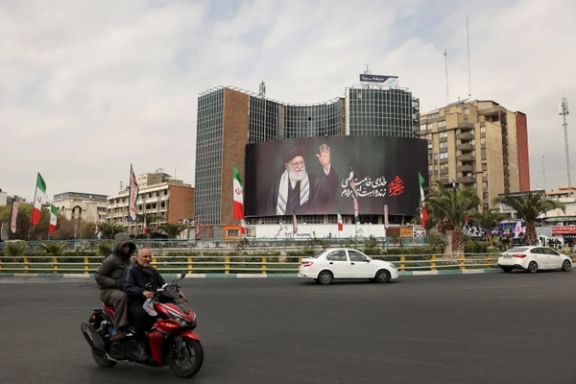
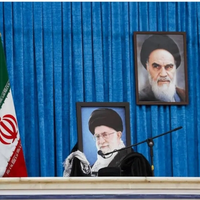
Despite the historic symbolism of his death, the system Khamenei built was designed to withstand precisely this kind of shock.
Power in Iran was never concentrated solely in one man, but embedded across military, political and security institutions capable of functioning even in the absence of a supreme leader.
“The Islamic Republic is not a one-bullet state,” Behnam Ben Taleblu told Iran International, arguing that one of Khamenei’s lasting achievements was institutionalizing authority across the regime.
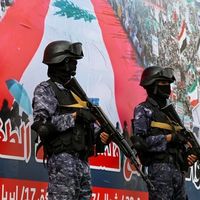
Iran’s defense and repression capabilities remain dispersed across the country’s provinces, allowing missile launches, drone operations and internal security functions to continue despite leadership losses.
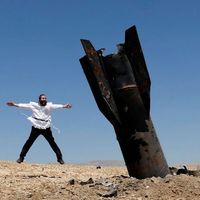
The Islamic Republic has continued firing missiles and drones despite the elimination of senior figures, showing the Islamic Revolutionary Guard Corps can sustain operations through a decentralized chain of command.
Decentralized power
Behind the scenes, however, the question of succession is fast becoming the Islamic Republic’s central uncertainty.
Jason Brodsky of United Against Nuclear Iran said power has become “diffuse,” now resting formally with a three-person interim leadership council while multiple political and clerical figures compete for influence.
“There used to be a centralized address for the final decision-making. Now there’s a wider array of people. So it’s flatter," said Brodsky.
Potential candidates, he said, include members of the interim leadership structure such as Alireza Arafi and Chief Justice Gholam Hossein Mohseni Ejei, as well as other clerical figures outside the council.
Brodsky pointed to Hassan Khomeini – grandson of the Islamic Republic’s founder – alongside conservative clerics including Mohammad Mahdi Mirbagheri, Mohsen Araki and Mohsen Qomi as individuals to watch.
At the same time, senior political figures such as Ali Larijani and Parliament Speaker Mohammad Bagher Ghalibaf remain influential actors shaping decision-making during the transition.
“With Khamenei and his family gone, that really leaves the succession race wide open,” Brodsky said.
Analysts say Tehran may delay formally appointing a new supreme leader during wartime, as any successor would immediately become a high-value military target.
On Tuesday, a member of Iran’s Assembly of Experts said choosing a new supreme leader would not take long, adding the body would make its decision based on religious criteria and its own judgment rather than individual preferences or political factions. Ali Moalemi added the body would select a person similar to Khamenei.
Attacking neighbors: Why?
Externally, Iran appears determined to widen the confrontation rather than retreat. Alex Vatanka of the Middle East Institute said Islamic Republic leaders are likely to regionalize the conflict in an effort to increase pressure on Washington and its partners.
“They will stay in this fight as long as they can,” Vatanka said, adding that Tehran is attempting to “put pressure on Trump” by expanding instability beyond its borders.
Events across the Persian Gulf suggest that escalation is already underway. Iranian officials have threatened to target shipping through the Strait of Hormuz, while an oil tanker was reportedly struck and forced to halt transit.
US-allied Persian Gulf states are bearing the brunt of retaliatory strikes.
In the United Arab Emirates, missiles and falling debris struck civilian areas in Dubai and Abu Dhabi, damaging luxury hotels, high-rise apartment towers and airport infrastructure – locations never designed to withstand ballistic missile or drone attacks.
Similar attacks and interceptions were reported in Bahrain and near Doha, as Iran targeted countries hosting US military forces, signaling a shift from purely military targets to economic and civilian centers across the Persian Gulf.
Attacks on regional energy infrastructure forced shutdowns at major Saudi and regional oil and gas facilities, sending global oil prices sharply higher.
US Central Command confirmed four American service members were killed following Iranian attacks in the region, while US forces struck Iranian naval and missile assets.
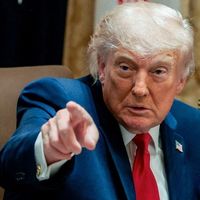
Speaking at the White House on Monday, US President Donald Trump signaled Washington is preparing for a longer campaign than initially anticipated.
“From the beginning, we projected four to five weeks, but we have capability to go far longer than that, we’ll do it,” Trump said, dismissing suggestions the United States might seek a quick exit.
“I don’t get bored.”
He framed the operation as a decisive effort to eliminate what he called “the intolerable threats posed by this sick and sinister regime,” insisting the United States would continue operations “whatever it takes.”
If Tehran had hoped escalation would shorten the war, early signals from Washington, Brodsky said, suggest the opposite may be unfolding.
Brodsky said much of Iran’s response is continuing through pre-planned wartime contingencies.
“A lot of the decision-making right now is essentially on autopilot,” he said, adding that the Revolutionary Guards’ decentralized structure allows operations to continue even amid leadership losses.
Even so, analysts say the balance of military power remains heavily tilted against Tehran, raising questions about how long the Islamic Republic can sustain simultaneous external confrontation and internal strain.
While scenes of celebration followed news of Khamenei’s death inside Iran, many Iranians recognize that removing one leader does not automatically dismantle a system built over more than four decades on repression.
"The bravery of the Iranian people and the sacrifice of the Iranian people. Too much blood has been spilled for historical opportunities to be missed. And I think no one knows that better than the Iranian people," said Taleblu.
“The question now is whether there is a plan for the day after,” said Vatanka.