Tehran skyline at sunset, with the city's iconic Milad Tower rising in the distance, January 2026
Iran stands at a pivotal moment. If political change brings institutional reform, the country could break decades of stagnation and return to sustained growth. But without credible governance, any transition risks replacing one failed equilibrium with another.
Iran’s recent nationwide protests, which were met with a deadly crackdown unmatched in the country’s modern history, stem directly from five decades of Islamic Republic rule.
More than half the population lives near or below the $3-a-day abject poverty line. The national currency is in free fall, with hyperinflation and famine in sight. The state seeks to control every aspect of citizens’ lives. Add to this systemic corruption, international isolation, apocalyptic environmental devastation, and a catastrophic brain drain that has driven more than 5% of Iranians to live outside the country.
During a period when most developing countries achieved major gains in living standards, Iran’s GDP per capita under the Islamic Republic has remained below its pre-revolution level for nearly half a century. Once competitive among middle-income nations, Iran’s per capita income has fallen behind war-torn Iraq and now more closely resembles that of low-income neighbors such as Pakistan.
The rulers in Tehran have proven unable to address urgent and mounting economic challenges: soaring inflation, a bankrupt financial system, a shrinking capital stock, and non-viable state-owned enterprises (SOEs).
Beyond these immediate crises, Iran faces deep structural problems that will persist for decades. The population is aging and the demographic window is closing. Soon, ever-larger cohorts will reach retirement with little or no savings. The water crisis is also unlikely to improve, constraining agricultural output and heightening food security risks.
These compounding crises, especially under external pressure, could trigger the Islamic Republic’s collapse—or at least force fundamental changes in its governing structure. Regardless of what political system emerges, Iran’s institutions must be aligned with both political and economic development objectives.
We believe any strategy capable of generating a virtuous cycle of change must prioritize one core objective: building a credible, stable, and legitimate state. Without this foundation, prescriptions for “sound” macroeconomic policy or state-capacity reforms will remain technocratic exercises that fail to take hold, endure, or deliver.
At the highest level, these political transformations can be summarized as follows:
1. State: scaling back
While Iran’s formal central government budget is relatively small (about $50 billion), the state’s true economic footprint is far larger, encompassing well over half of economic activity through para-statal foundations (bonyads), state-linked banks, and SOEs. Some efficiency gains may be possible through spending cuts, including transfers to ideological or religious bodies. But the core challenge is to rationalize and properly govern this broader quasi-state sector.
This requires consolidating and privatizing SOEs, gradually strengthening tax collection, and integrating off-budget entities into a transparent and accountable fiscal framework, while addressing longer-term structural challenges.
2. Democratic accountability
While democracy is an end in itself, strengthening democratic accountability plays a vital role in providing the legitimacy needed for the state to implement painful economic reforms and address short-term dislocations. A political leader elected through a free and meaningful process can better shield technocratic reformers from political pressures and enable difficult but necessary policy decisions.
3. Rule of law
Reforming the rule of law is the slowest and most complex task. While formal legal rules can be changed rapidly, transforming institutional practices and cultural norms is far more difficult. It is unlikely that any future judicial system will immediately apply the law equally to ordinary citizens and elites. But even a “good enough” system—as seen in countries such as China—could be sufficient to support sustained economic growth.
A successful transformation of political institutions could launch a new period of sustained growth. Optimism about a post-Islamic Republic Iran rests on its human capital, natural resources, and a highly capable diaspora able to invest and reconnect the economy to global markets.
Under a stable and legitimate system, near- to medium-term gains could come from lifting sanctions, activating underused capacity—especially in energy—attracting domestic and foreign investment, improving productivity, and expanding tourism and trade.
We estimate these channels could add $100–150 billion to output over five years, raising average incomes by only $3–5 per person per day. Claims of a trillion-dollar economy, as stated by some commentators, are as unrealistic as the Islamic Republic’s long record of unfounded projections.
History offers wide variation in the outcomes of institutional reform in post-authoritarian states. In the post-communist transition, for example, Russia endured a severe contraction of more than 40% of GDP, while Poland pivoted relatively quickly toward sustained growth. A decisive factor in Poland’s success was the prospect of joining the European Union, which provided a powerful external anchor for reform.
Unfortunately, Iran’s trajectory of political and economic transformation appears more likely to resemble Russia’s experience than Poland’s.
In the MENA region, Tunisia and Iraq have undergone post-authoritarian institutional reforms in recent decades. Tunisia, initially viewed as the Arab Spring’s only democratic success, has since regressed into authoritarianism, and its per-capita GDP remains roughly at pre-revolution levels.
Iraq, following the 2003 invasion, has seen per-capita GDP rise from about $1,500 to over $6,000, largely driven by increased oil production, while inflation has generally remained stable. Yet progress in controlling corruption has been limited, with only modest improvements in corruption perceptions.
A post-Islamic Republic government may initially enjoy high legitimacy, but that window will be brief. It must deliver tangible results quickly while managing overlapping crises and unavoidable distributional conflicts over who gains, who loses, and who must wait. Economic recovery and political stability will be tightly linked—and failure in one will undermine the other.
Experience from other transitions is sobering. Beyond early gains, post-authoritarian growth is often slow, fragile, and reversible. Stagnant living standards can create fertile ground for populist politicians who promise shortcuts.
Iran therefore needs a development strategy that integrates political and economic reform. Without it, the country risks remaining trapped in its current low equilibrium.
An F/A-18E Super Hornet, attached to Strike Fighter Squadron 151, launches from the flight deck of the USS Abraham Lincoln (CVN 72) while conducting routine flight operations in the Arabian Sea.
Escalating tensions between the United States and Iran sent oil prices sharply higher and kept gold near record levels on Thursday, as investors weighed the risk of a prolonged conflict in the Middle East and its impact on global markets.
Brent crude rose to around $70.50 a barrel after surging more than 4% in the previous session, while US crude climbed above $65, as traders priced in the possibility of supply disruptions from the oil-producing region.
“The balance of risks now tilts to a US strike after market close Friday,” said Michael Every, senior global strategist at Rabobank, adding that any military action could last weeks rather than ending quickly.
European shares also edged 0.1% lower on Thursday after a mixed set of corporate results, with energy stocks rising alongside firmer oil prices as US-Iran tensions kept investors cautious.
Increased US military activity in the region has left markets on edge, despite diplomatic efforts in Geneva this week aimed at narrowing differences over Iran’s nuclear program.
Safe-haven demand pushed spot gold up 0.5% to around $5,004 per ounce, after a more than 2% jump the previous day. US gold futures also edged higher.
“If there’s anything fundamental you could point to that would be supporting gold prices, it’s the prospect of conflict in the Middle East and the kind of safe-haven demand that goes along with it,” said Kyle Rodda, senior market analyst at Capital.com.
Gold has also drawn support from expectations that US interest rates could ease later this year, though minutes from the Federal Reserve’s January meeting showed policymakers were in no rush to cut rates and some remained open to further hikes if inflation stays elevated.
Asian equities were mixed, with gains in technology stocks offsetting caution over geopolitics. MSCI’s broadest index of Asia-Pacific shares outside Japan rose 0.4%, while Japan’s Nikkei gained 0.7%. South Korea’s Kospi jumped more than 3% to a record high, buoyed by renewed optimism over artificial intelligence-related shares.
Still, analysts said geopolitical risk was capping broader risk appetite.
“The two nations have long been at loggerheads over Iranian nuclear activity,” one market participant in Asia told Reuters, adding that any disruption to shipping routes or energy infrastructure could ripple through global supply chains.
For now, traders say oil and gold are likely to remain sensitive to headlines from Washington and Tehran, with volatility expected to persist as the prospect of military action looms.
A worker walks along a platform at the Tus-Sarakhs gas field in northeastern Iran, February 17, 2026
Capital flight from Iran is accelerating just as oil revenues decline, according to new data from the Central Bank of Iran—a convergence that helps explain the sharp fall of the national currency in recent months.
Central bank (CBI) figures show that, even before accounting for sanctions-evasion costs or discounts offered to Chinese buyers, the nominal value of Iran’s oil exports fell about 10 percent to $30.7 billion in the first half of the current Iranian fiscal year, which began on March 21, 2025.
Additional CBI data show that the nominal value of Iran’s total exports—including oil, non-oil goods and services—reached about $59 billion in the first six months of the fiscal year, while imports totaled roughly $48 billion.
On paper, that left a trade surplus of $11 billion. Yet during the same period, nearly $15 billion in capital left the country. That’s a record outflow that more than offset the surplus.
The outflows appear to be intensifying as Iran remains suspended between uncertain nuclear negotiations and the persistent risk of military escalation.
Earlier this month, US Treasury Secretary Scott Bessent said Iranian leaders were “wiring money out of the country like crazy,” but did not offer any more details.
CBI does not specify how much revenue was lost through sanctions circumvention. But a member of parliament’s Budget and Planning Commission recently said Iran earned only $20 billion from oil exports in the first eight months of the fiscal year—far below the nominal value of shipments.
Put simply, Iran’s actual oil income over eight months was substantially lower than the nominal value of exports recorded over six months, pointing to significant losses through price discounts and restricted access to proceeds.
Even those reduced revenues have not fully reached the government. Last month, Gholamreza Tajgardoon, head of parliament’s Joint Budget Commission, said only $13 billion of the $20 billion in oil export earnings had actually been received.
The figures underscore a dual constraint: Iran is not only earning less from its oil exports but is also struggling to access the revenue it does generate, limiting its ability to finance imports or stabilize domestic markets.
The gap has forced the government to rely increasingly on domestic borrowing.
Central bank data show that by November 2025, government debt to the banking system had risen 41 percent from a year earlier, while its debt to the central bank surged 68 percent. Commercial banks’ own borrowing from the central bank rose 63 percent over the same period.
In effect, the state has compensated for lost oil income by drawing on the banking system and expanding the money supply. Liquidity—a key driver of inflation and currency depreciation—rose more than 40 percent in November 2025 compared with a year earlier.
The consequences are visible in the exchange rate. The rial has depreciated roughly 75 percent since February last year.
Taken together, declining oil revenues, restricted access to export proceeds, record capital flight and rapid monetary expansion are reinforcing one another.
The prolonged state of geopolitical limbo appears to be amplifying those pressures, encouraging businesses and elites alike to move assets abroad and leaving the economy increasingly exposed to further instability.
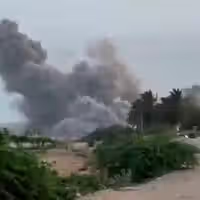
An explosion during an exercise in southern Iran, in this handout image obtained on February 17, 2026.
The latest round of Iran-US talks in Geneva on Tuesday would likely not have taken place without sustained pressure from regional powers that leveraged their close relations with Washington to help avert a wider war.
From Riyadh to Ankara and Doha, governments across the Middle East have moved with unusual urgency to contain the confrontation.
Their motives are not driven by abstract appeals for peace, but by hard calculation: war between Iran and the United States would expose their territory, economies and political stability to immediate risk.
This emerging consensus reflects a simple conclusion shaped by a decade of upheaval: a controlled crisis can be managed; a war cannot.
Turkey, Oman, Qatar, Saudi Arabia and Egypt have taken active diplomatic roles, encouraging negotiations and warning against escalation.
Iran, for its part, has sought to use these fears to its advantage, signaling that any US strike could trigger a broader regional conflict and effectively drawing its neighbors into the role of intermediaries.
Most of these states maintain closer ties with Washington than with Tehran. Yet their opposition to war is rooted less in sympathy for Iran than in their own vulnerability.
Mediators and stakeholders
Oman has played the most visible mediating role, hosting talks and serving as a trusted channel between the two sides. Muscat has repeatedly warned of the dangers to Persian Gulf security and maritime traffic, emphasizing diplomacy as the only viable path forward.
Qatar occupies a similarly delicate position. It hosts Al Udeid Air Base, the largest US military installation in the region, while maintaining functional ties with Tehran. Qatari officials have warned that any war would be “catastrophic,” and Doha’s dependence on uninterrupted gas exports makes it especially exposed to disruption.
Saudi Arabia, after years of confrontation with Iran, has adopted a more cautious posture. Crown Prince Mohammed bin Salman has emphasized avoiding escalation in contacts with both Tehran and Washington.
Saudi officials have also publicly supported diplomacy, reflecting concern that another regional war could threaten the kingdom’s economic transformation plans and expose its oil infrastructure to attack, as seen in the 2019 strikes on Aramco facilities.
Egypt, though geographically further removed, faces its own vulnerabilities. The security of the Suez Canal and Red Sea shipping lanes is critical to its economy, and Cairo fears a conflict could disrupt trade routes and deepen economic strain.
Turkey’s balancing act
Turkey, which shares a border with Iran and maintains deep economic ties with its neighbor, has intensified diplomatic efforts to prevent escalation.
President Recep Tayyip Erdoğan has repeatedly said Ankara does not want another war in the Middle East, while Foreign Minister Hakan Fidan has warned that military strikes would neither topple Iran’s leadership nor resolve the nuclear dispute.
War could trigger refugee flows, destabilize border regions and inflame ethnic tensions, particularly in Kurdish areas.
Yet Turkey’s NATO membership and longstanding security relationship with Washington limit its room for maneuver. In a conflict, Ankara would likely seek formal neutrality while quietly maintaining limited cooperation and positioning itself as a mediator.
Oppose war, prepare for it
Across the region, governments face a difficult reality: they depend on the United States for security while remaining exposed to Iran’s missiles, drones and allied militias.
This dual vulnerability explains their approach. They oppose war and are working to prevent it—but are also preparing for the possibility that diplomacy fails.
War could drive up oil prices, offering short-term gains for producers like Saudi Arabia and Qatar. But those benefits would be outweighed by the risks: attacks on infrastructure, disruption of shipping through the Strait of Hormuz or Suez Canal, and capital flight.
Their mediation efforts have helped create the conditions for talks in Muscat and Geneva. But their calculations remain shaped by geography and alliances.
If war breaks out, most would seek to avoid direct involvement while quietly aligning with Washington’s security framework to protect their territory and long-term interests.
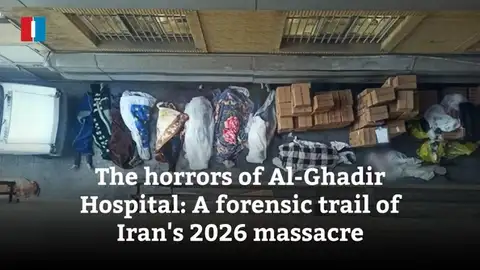
Iran’s President Masoud Pezeshkian on Tuesday urged police to manage public unrest with the least possible cost, over a month after a sweeping crackdown on protests in which more than 36,500 people were killed.
Speaking at a graduation ceremony for police cadets, Pezeshkian said authorities must maintain order while minimizing harm to security forces and civilians, as Iran continues to grapple with the aftermath of nationwide unrest.
“We must be able, as far as possible, to manage the country and society with the least damage and establish peace and security within it,” Pezeshkian said.
The protests were suppressed in a crackdown that left 36,500 people dead over two days in January, one of the deadliest episodes of unrest in modern history.
Pezeshkian said preventing unrest from escalating into crisis should be a priority.
“If there is dissatisfaction or a problem in society, we must not allow it to turn into a crisis. It must be prevented and treated,” he said. “In the third step, when an incident occurs, it must be managed with the minimum cost to the parties involved.”
At the same time, he stressed that those deemed responsible for disturbances should be detained firmly.
“You must manage the scene in such a way that the person who has created disorder is arrested with strength, authority and safety and handed over to the judiciary to be dealt with according to the law,” he said.
The president called for equipping police and security forces with new technologies to manage incidents without injury to officers, adding that the government would support law enforcement.
“We must not allow the health of our police forces to be put at risk,” he said. “All our efforts must be that none of you, as far as possible, are harmed in any scene.”
Iranian authorities have described the unrest as part of foreign-backed efforts to destabilize the country, while protesters have demanded political change and economic relief.
Pezeshkian said public security was essential and credited law enforcement as “the creators of security in Iran.”
Traditional Barbari breads on display in a Tehran bakery in this undated file photo
Rising bread prices have become a growing source of concern within Iran’s political establishment, with warnings that further increases could trigger unrest as inflation erodes living standards.
The hardline newspaper Kayhan, aligned with Supreme Leader Ali Khamenei, warned on Sunday that raising bread prices could have “catastrophic consequences,” cautioning that “Iranian society cannot tolerate a new shock.”
Kayhan urged the heads of Iran’s executive, legislative and judicial branches to intervene, calling the planned price increase “mysterious and suspicious” and accusing economic advisers to President Masoud Pezeshkian of “playing into the hands of Iran’s enemies.”
The warning came days after government spokesperson Fatemeh Mohajerani said bread prices would “most certainly” rise soon, signaling a politically sensitive move affecting a staple food relied upon by millions of low-income Iranians.
Iran’s Statistical Center reported inflation at about 60%, sharply reducing purchasing power and placing essential goods increasingly out of reach for poorer households.
Economists warn that price increases in staples such as bread can ripple across the economy, raising costs and accelerating inflation.
Blame game
Bread has long been a politically sensitive commodity in Iran, where subsidies have historically helped preserve social stability. Price increases or subsidy cuts affecting basic goods have previously triggered protests and unrest.
Kayhan linked the issue to recent protests, saying earlier subsidy cuts had already produced “heavy social and security consequences.” It said officials had “chosen the worst possible time” for further increases, given the country’s economic and political pressures.
The dispute reflects a broader pattern in Tehran, where competing factions often blame one another for economic hardship. Hardline outlets and political figures frequently accuse elected governments of mismanagement, while President Pezeshkian and his allies have said entrenched interests and powerful unelected institutions are obstructing efforts to stabilize the economy.
Rarely acknowledged in these public exchanges is the extent to which Iran’s economic trajectory is shaped by political and foreign policy decisions made at the highest levels of the system.
Under Iran’s constitution, Supreme Leader Ali Khamenei holds ultimate authority over key areas including foreign policy, defense and the nuclear program, decisions that have played a central role in triggering sanctions and shaping the country’s economic environment.
Cash payments
The newspaper also accused the government of disguising subsidy reductions through technical language, saying officials claim subsidies have merely been “shifted in the supply chain” rather than eliminated.
Such explanations, Kayhan said, “never convince the people and will certainly lead to crises.”
The government has said it plans to offset higher bread prices through cash payments to households.
But economic researcher Yaser Bagheri said the current monthly subsidy allows recipients to buy only three loaves of bread, highlighting the limited impact of compensation measures.
Iranian outlets including the moderate Rouydad24 reported last week that food prices rose by more than 13.7% in a single month, underscoring mounting pressure on household budgets.
Kayhan’s unusually blunt warning underscores growing concern within Iran’s political establishment that economic hardship—especially involving essential goods such as bread—could carry serious political consequences.