Trump authorized Iran attack after Tehran rejected deal - Washington Post
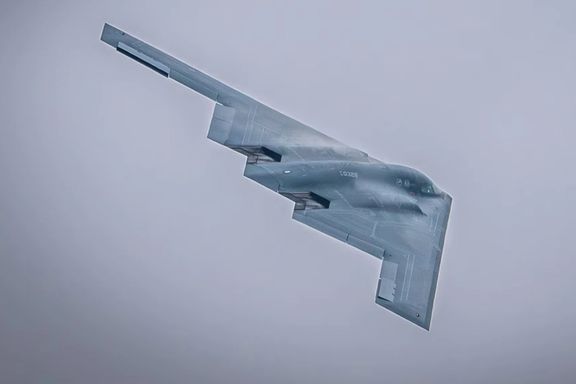
A US Air Force B-2 Spirit bomber performs a fly-over at Rosecrans Air National Guard Base in St. Joseph, Missouri, September 14, 2024.
US President Donald Trump made Iran a final offer for a deal which Iran refused in June, the Washington Post reported on Wednesday citing officials, prompting his authorization of a plan to attack its nuclear program.
The Trump administration proposal to Iran dated June 15 demanded Tehran end support for armed allies in the region including Hamas and Hezbollah along with “replacing” the Fordow nuclear site and “any other functioning facility” with sites which do not allow uranium enrichment.
According to the text quoted by the Washington Post, the United States in return would lift “ALL sanctions placed on Iran."
Shortly after it was conveyed via Qatari mediators, the proposed deal was rejected by Tehran, and Washington authorized the attacks which would come the following month, the Post reported citing a senior diplomat involved in the process.
The United States held five rounds of negotiations with Iran over its disputed nuclear program earlier this year, for which Trump set a 60-day deadline.
Trump accused Iran of dragging out the talks while Tehran said Washington's demands were unreasonable and undermined their sovereignty.
When no agreement was reached by the 61st day on June 13, Israel launched a surprise military offensive followed by US strikes on June 22 targeting key nuclear facilities in Isfahan, Natanz and Fordow.
Trump said the attacks "obliterated" Iran's nuclear program, in an assertion disputed by Tehran, which denies seeking a nuclear weapons. Tehran has said war damage means no enrichment is ongoing but the standoff over its nuclear ambitions persists.
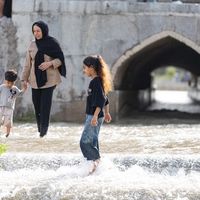
The front page of Iran's Hamshahri newspaper shows military personnel under the title "Champions of the Sky".
Israel is reassessing the impact of its June military campaign on Iran’s ballistic missile program as analysts say Tehran is keen to rebuild its core deterrent in a move that could set the stage for renewed war.
Iran’s ballistic missile stockpile appears largely intact following the June war, with roughly 2,000 heavy missiles still in its arsenal, according to Al-Monitor.
The outlet cited an Israeli security source saying that Israel's military intelligence had conveyed the assessment to the United States in an indication that Israel is urging Washington to again act to address the alleged threat.
A senior Israeli official told lawmakers in a closed Knesset briefing, according to Israeli outlet Ynet, that large-scale ballistic missile production has resumed roughly six months after the June war.
“Iran is taking steps to rebuild its missile production capabilities," Greg Brew, Iran analyst with the Eurasia Group think thank, told Iran International," which is not surprising given that it is imperative for the regime to strengthen its position following the war in June.”
Brew said rebuilding missile capacity is a more likely near-term goal than reviving the country's stricken nuclear program, which would carry significantly higher political and military risks.
Iran's Foreign Minister Abbas Araghchi said last month that Tehran had rebuilt its missile power beyond pre-war levels. Iran has also signaled its prowess publicly.
Last week, the Islamic Revolutionary Guard Corps announced major naval exercises in the Persian Gulf involving cruise and ballistic missiles with a reported range of 2,000 kilometers, as well as suicide drones.
The critical question, analysts say, is whether Iran’s rebuilding efforts will be tolerated.
“The real question is whether these steps will be enough to trigger action by Israel,” Brew said. “I’m inclined to think that Israel will act preemptively to prevent Iran from rebuilding a missile arsenal that could theoretically overwhelm Israeli air defenses.”
Such a move would almost certainly require American backing, Brew added.
While Israel’s campaign inflicted significant damage, analysts note it was always constrained in its ability to impose lasting limits on Iran’s missile program.
Farzin Nadimi, a senior fellow at the Washington Institute said Israeli strikes hit at least 15 of Iran’s 30 to 35 main missile industrial complexes and about 15 of 25 missile bases, with numerous mobile launchers also targeted.
But Iran’s hardened underground infrastructure blunted the long-term impact.
“Considering the industrial basis and hardened nature of IRGC missile tunnel complexes, it is almost beyond doubt that original Israeli estimates of sustainable damage caused to those facilities is over-optimistic,” Nadimi told Iran International, referring to the Islamic Revolutionary Guard Corps.
Israel and the United States expressed public satisfaction at the impact their joint war in June dealt to Iran, while Iranian officials have insisted their capabilities remain intact and have vowed retaliation for any future attacks.
For Shahram Kholdi, an expert on Middle Eastern military history, the reassessment reflects a recalibration of expectations rather than strategic failure.
“The June strikes were aimed at degrading and disrupting Iran’s missile program at a critical moment, not eliminating it outright,” he said.
As Israel and the United States reassess Iran’s missile trajectory, question may no longer whether Tehran is rebuilding, but whether its progress will cross red lines that prompt preemptive action — and whether Washington would support it.
Head of the Mossad intelligence agency David Barnea, right, attends a Hanukkah event in Jerusalem alongside Prime Minister Benjamin Netanyahu and President Isaac Herzog on December 16, 2025.
The head of Israel's Mossad intelligence agency said Iran will seek to revive its nuclear program if given the chance but that Israel would thwart its ambitions to acquire a weapon.
“The idea of continuing to develop a nuclear bomb still beats in their hearts. We bear responsibility to ensure that the nuclear project, which has been gravely damaged, in close cooperation with the Americans, will never be activated,” David Barnea said at an award ceremony for agents in Jerusalem late on Tuesday.
Iran denies seeking a nuclear bomb but Israel along with the United States and Western countries doubt its intentions.
Israel launched a surprise military campaign on Iran in June which was capped off with US strikes on the country's main nuclear sites.
The conflict came after two months of negotiations which failed to win Iranian agreement to a US demand that it end domestic uranium enrichment.
Israeli attacks killed Iranian nuclear scientists as well as hundreds of military personnel and civilians. Iranian counterattacks killed 32 Israeli civilians and an off-duty soldier.
Despite the military setbacks to Tehran, it insists enrichment is its right and called Israeli and US actions aggression which aimed at its sovereignty and progress.
“The ayatollahs’ regime woke up in a moment to discover that Iran is exposed and thoroughly penetrated, yet Iran has not given up its aspiration to destroy the State of Israel,” Barnea continued.
“Iran believes it can deceive the world again and realize another bad nuclear agreement,” he continued. "We did not and will not allow a bad deal to come to fruition.”
US President Donald Trump said his June 22 attacks had "obliterated" Iran's nuclear program and that any attempt at rebuilding will trigger renewed US strikes.
Iran has rejected US demands that it end enrichment, curb its missile program and rein in support for armed allies in the region, leaving diplomacy at a stalemate.
Russian Foreign Minister Sergei Lavrov and Iranian Foreign Minister Abbas Araghchi pose for a picture during a document signing ceremony following their talks in Moscow, Russia, December 17, 2025.
Iran and Russia signed a cooperation document between their foreign ministries on Wednesday after talks in Moscow, setting out a consultations program for the years 2026 to 2028.
The document was signed by Iranian Foreign Minister Abbas Araghchi and Russian Foreign Minister Sergey Lavrov at the end of their negotiations.
Lavrov said the consultations plan was drawn up following the entry into force of a comprehensive strategic partnership treaty between the two countries earlier this year.
“Without any doubt, the main and key document in our relations is the comprehensive strategic partnership treaty between the Russian Federation and the Islamic Republic of Iran, which was signed this year and has entered into force,” Lavrov offering no details on the consultations agreement.
He said the treaty formally set out the special nature of bilateral relations and established key areas of cooperation and a long-term, 20-year outlook.
'Treaty deepens long-term cooperation'
The comprehensive strategic partnership treaty, signed in January by Russian President Vladimir Putin and Iranian President Masoud Pezeshkian and ratified by both countries’ parliaments, commits Moscow and Tehran to closer cooperation across political, economic, security and technological fields.
While it does not include a mutual defense clause, the agreement provides for expanded military-technical cooperation, coordination on security issues, closer economic ties and efforts to reduce the impact of Western sanctions, including through financial and trade mechanisms outside the dollar system.
Lavrov said the signing of the 2026-28 consultations plan marked a first in the history of ties between the two countries.
“Today, for the first time in history, we are signing a consultations program between the foreign ministries of Russia and Iran for the years 2026 to 2028,” he said, adding that dialogue between the two ministries was regular and highly valuable.
Broader coordination under sanctions
Both countries have stepped up coordination as they face extensive Western sanctions. They cooperate in forums such as BRICS, the Shanghai Cooperation Organization and the Eurasian Economic Union, and have expanded ties in energy, transport, trade, technology and space.
Iran and Russia say the strategic partnership treaty and the newly signed consultations plan provide a structured roadmap for advancing those ties over the coming decades.
An Iranian cleric visiting the Islamic Revolutionary Guard Corps (IRGC) Aerospace Force Museum in Tehran.
US President Donald Trump’s new National Security Strategy (NSS) signals a more hands-off approach toward Iran and marks a departure from the outlook of his first term, according to veteran Iran-watcher and analyst Behnam Ben Taleblu.
The 2025 National Security Strategy reflects a narrowing of what Washington now defines as its core national interests, Taleblu said, with Iran mentioned just three times despite being labeled a central threat in Trump’s 2017 strategy.
“There’s a focus on the homeland, the Western Hemisphere, strategic competition with China and getting Europe to do more,” said Taleblu, an analyst for the Foundation for Defense of Democracies think tank in Washington DC, adding that Iran is absent from the list of top-tier threats outlined in the document.
The strategy released this month emphasizes reducing US involvement in the Middle East in favor of focusing on great power competition with China, threats in the Western Hemisphere and urging Europe to shoulder more security responsibility.
Iran appears to have slipped down Washington’s priority list following last year’s 12-day war between Israel and Iran, which the United States briefly joined.
“It seems like, at least for the Trump administration, they’re content to take that victory lap,” Taleblu said on Eye for Iran, saying the White House is attempting to declare success and move on following US strikes on Iran’s nuclear facilities.
The NSS suggests Washington is ready to “turn the page” on a region that has dominated US foreign policy for decades, he added, and it credits Trump’s energy policies, regional diplomacy and limited use of force for creating political space to step back from the Middle East.
US strikes on Iran included the use of 30,000-pound bunker-buster bombs carried by B-2 stealth bombers.
While President Trump has said Iran’s major nuclear sites were “obliterated,” US intelligence assessments indicate the program was set back but not completely destroyed, according to officials cited in US media reports.
Iran is believed to possess more than 400 kilograms of highly enriched uranium whose whereabouts remain unknown, and Iranian officials have said they rebuilt its missile capacity and would respond forcefully to any future attack.
“Iran may be weakened, but it is down and not out,” Taleblu added.
The strategy document implies that major regional crises — including the Gaza war, the Israel-Hezbollah conflict in Lebanon, Houthi attacks from Yemen and instability in post-Assad Syria — are either resolved or on track toward resolution.
The document does not appear to assess that Iran could strongly reverse recent setbacks to its nuclear program and its so-called Axis of Resistance coalition.
While Taleblu credited the Trump administration for reviving elements of its maximum pressure campaign of sanctions, he criticized what he called gaps. Iranian oil exports have reached record highs, and the administration has not issued a single new human rights designation related to Iran in 2025.
“While the regime is threatening the life of this very president and the first family, it is beyond me to be thinking about peace and prosperity without a clear strategy to contain Iran further,” Taleblu said, “There is a lot of room for improvement when I look at both this document and the administration’s track record this year.”
Venezuela's President Nicolas Maduro speaks at the Miraflores Palace in Caracas, Venezuela, November 11, 2025.
US Senator Lindsey Graham on Tuesday expressed disappointment that Washington had not more clearly committed to toppling Venezuelan President Nicolas Maduro, calling his continued rule a boon to Iran and terrorism.
Graham, a veteran foreign policy hawk representing South Carolina, was speaking to reporters after being briefed along with dozens of other senators on Venezuela strategy by Secretary of State Marco Rubio and Defense Secretary Pete Hegseth.
"If, after all this Maduro is still in power. That's the worst possible signal you could send to Russia, China, Iran," said Graham, "I want to reassert again, you cannot allow this man to be standing after this display of force."
The United States has ramped up a military deployment in the Caribbean as part of a pressure campaign on Venezuela and its leader Nicolas Maduro. US attacks on alleged drug boats there and in the Pacific have killed at least 87 people, in strikes which Democratic opponents and rights groups say violate the laws of war.
The Trump administration has branded Maduro a narco-terrorist and said drug flows from Venezuela kill innocent Americans and justify a wartime approach.
Trump has vowed to extend US attacks to the mainland and said in an interview last week that Maduro's "days are numbered," without elaborating.
His influential chief of staff Susie Wiles told Vanity Fair in an interview published on Tuesday that "(Trump) wants to keep on blowing boats up until Maduro cries uncle."
"I want clarity right here," Graham added in his remarks to reporters. "I want us to be level with the American people on what we're doing. I think we're doing a good thing. I think we're making us safer as a nation. We're cleaning up our backyard."
"Too many Americans have died ... he's aligned with Hezbollah. There's a million reasons you want Maduro to go, but just say it. Just say, this man in our backyard runs a narco-terrorist state along with international terrorists."
US Secretary of State Marco Rubio last week cast Venezuela as a regional platform for Iranian influence, describing Maduro’s government as a narcotics transit hub that hosts Iran’s Revolutionary Guards and its Lebanese ally Hezbollah.
Little public evidence exists about the security relationship Venezuela has with Iran or its armed allies. Tehran and Caracas boosted ties under Maduro's predecessor Hugo Chavez, who cast himself as a bulwark against what he called American imperialism.
Maduro has rejected US accusations that he runs a drug cartel and calls the military buildup in the region a bid to impose Washington's will on his oil-rich country.
Trump has presented himself as a peacemaker, as a leader who is ending wars as he puts it through a so-called peace through strength strategy.
The Trump administration's new National Security Strategy (NSS), released earlier this month, makes an argument for a hands-off approach to the Middle East, while showing clear willingness to lean into tensions with Venezuela.
While the Trump administration maintains their main efforts are about combatting alleged drug smuggling, Graham sees US posturing as signaling regime change, demanding clarity.
"I want clarity right here, President Trump is saying his days are numbered. That seems to me that he's got to go," Graham said.