US senator says failing to topple Venezuela's Maduro will embolden Iran
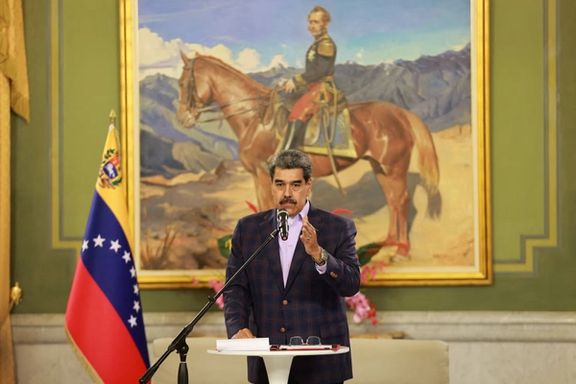
Venezuela's President Nicolas Maduro speaks at the Miraflores Palace in Caracas, Venezuela, November 11, 2025.
US Senator Lindsey Graham on Tuesday expressed disappointment that Washington had not more clearly committed to toppling Venezuelan President Nicolas Maduro, calling his continued rule a boon to Iran and terrorism.
Graham, a veteran foreign policy hawk representing South Carolina, was speaking to reporters after being briefed along with dozens of other senators on Venezuela strategy by Secretary of State Marco Rubio and Defense Secretary Pete Hegseth.
"If, after all this Maduro is still in power. That's the worst possible signal you could send to Russia, China, Iran," said Graham, "I want to reassert again, you cannot allow this man to be standing after this display of force."
The United States has ramped up a military deployment in the Caribbean as part of a pressure campaign on Venezuela and its leader Nicolas Maduro. US attacks on alleged drug boats there and in the Pacific have killed at least 87 people, in strikes which Democratic opponents and rights groups say violate the laws of war.
The Trump administration has branded Maduro a narco-terrorist and said drug flows from Venezuela kill innocent Americans and justify a wartime approach.
Trump has vowed to extend US attacks to the mainland and said in an interview last week that Maduro's "days are numbered," without elaborating.
His influential chief of staff Susie Wiles told Vanity Fair in an interview published on Tuesday that "(Trump) wants to keep on blowing boats up until Maduro cries uncle."
"I want clarity right here," Graham added in his remarks to reporters. "I want us to be level with the American people on what we're doing. I think we're doing a good thing. I think we're making us safer as a nation. We're cleaning up our backyard."
"Too many Americans have died ... he's aligned with Hezbollah. There's a million reasons you want Maduro to go, but just say it. Just say, this man in our backyard runs a narco-terrorist state along with international terrorists."
US Secretary of State Marco Rubio last week cast Venezuela as a regional platform for Iranian influence, describing Maduro’s government as a narcotics transit hub that hosts Iran’s Revolutionary Guards and its Lebanese ally Hezbollah.
Little public evidence exists about the security relationship Venezuela has with Iran or its armed allies. Tehran and Caracas boosted ties under Maduro's predecessor Hugo Chavez, who cast himself as a bulwark against what he called American imperialism.
Maduro has rejected US accusations that he runs a drug cartel and calls the military buildup in the region a bid to impose Washington's will on his oil-rich country.
Trump has presented himself as a peacemaker, as a leader who is ending wars as he puts it through a so-called peace through strength strategy.
The Trump administration's new National Security Strategy (NSS), released earlier this month, makes an argument for a hands-off approach to the Middle East, while showing clear willingness to lean into tensions with Venezuela.
While the Trump administration maintains their main efforts are about combatting alleged drug smuggling, Graham sees US posturing as signaling regime change, demanding clarity.
"I want clarity right here, President Trump is saying his days are numbered. That seems to me that he's got to go," Graham said.
IAEA chief Rafael Grossi shakes hands with Iranian foreign minister Abbas Araghchi at a ceremony in Cairo, Egypt on September 9, 2025.
Iran's mission to the United Nations signaled its opposition to the head of world body's nuclear watchdog becoming UN secretary general next year, saying Rafael Grossi's silence on US-Israeli attacks on Iran showed he did not value international law.
The replacement for António Guterres is due to be chosen next year and serve from 2027 to 2031. Argentina last month named its native son Grossi, 64, to fill the position and he is considered a top contender.
Since 2019, Grossi has led the International Atomic Energy Agency as it attempted to manage the still festering Iran nuclear dossier, which came to a head last year with surprise US and Israeli attacks on Iran's nuclear sites in a 12-day war in June.
Iran’s Ambassador and Permanent Representative to the United Nations, Amir Saeid Iravani appeared to single Grossi out without naming him in remarks to the Security Council on Wednesday.
“A candidate who has deliberately failed to uphold the UN Charter—or to condemn unlawful military attacks against safeguarded, peaceful nuclear facilities," he said, "undermines confidence in his ability to serve as a faithful guardian of the Charter and to discharge his duties independently, impartially and without political bias or fear of powerful States, as required under the Charter.”
Iran denies seeking a nuclear weapon but Israel and Western states doubt its intentions, especially after Grossi's IAEA flagged in the months running up to the conflict that Iran's enrichment activities were ramping up.
The country's uranium stock refined to up to 60% had hit nearly 275 kilograms, Grossi warned, which according to an IAEA yardstick was enough in principle for six nuclear bombs if enriched further.
No civilian purpose existed for such activities, Grossi warned.
The United States held five rounds of negotiations with Iran over its nuclear program earlier this year, for which US President Donald Trump set a 60-day deadline.
When no agreement was reached by the 61st day on June 13, Israel launched a surprise military offensive followed by US strikes on June 22 targeting key nuclear facilities in Isfahan, Natanz and Fordow.
The attacks killed nuclear scientists along with hundreds of military personnel and civilians. Iranian counterattacks killed 32 Israeli civilians and an off-duty soldier.
Grossi did not offer any assessment of the conflict but has worked to try to restore inspections of stricken sites in an effort Iran has largely opposed as diplomacy stays in a deep post-war freeze.
The United Nations has struggled to influence conflicts which have raged in the Middle East and Europe in recent years, earning the ire of both its critics and advocates who hope it can play a greater role in multilateral peace efforts.
Iran's intervention appeared to be the most substantive challenge yet to Grossi's bid.
Iravani said a UN secretary-general must have “a clear and non-derogable responsibility” to safeguard member states' rights and their equal participation in the global system.
“Failure to do so weakens the United Nations and erodes the principle of sovereign equality at the heart of the UN system,” he said.
File photo of former Israel air defense forces commander Zvika Haimovich in front of an Arrow II missile defense battery.
An Iran-linked hacker group said it was offering a $30,000 reward for information related to Israel’s military sector after releasing material it said identified people involved in designing Israeli missile defense systems.
The group, known as Handala, said it had released information on 13 individuals it described as key designers of systems such as Arrow and David’s Sling.
The material published by the group included photos, names, professional credentials, email addresses, locations and phone numbers.
“These individuals, who were once thought to be hidden in the shadows, are now fully exposed to the world,” the group said in a statement carried by Iran’s ISNA news agency, adding that it would pay $30,000 for what it called valuable information.
Israeli media outlets, including the Jerusalem Post, have not confirmed whether the information released by the group is accurate.
Who is Handala?
Handala is widely described by cybersecurity researchers and Western officials as tied to Iran’s Ministry of Intelligence.
Researchers say the group operates as part of a broader cyber unit known as Banished Kitten, also referred to as Storm-0842 or Dune, which they link to the ministry’s Domestic Security Directorate.
The group has been linked to cyber operations against Israeli infrastructure and public institutions for around two years.
In January, it claimed responsibility for a cyberattack on Israeli kindergartens that disrupted public address systems at about 20 locations. In August, the group was linked to hacks targeting multiple Israeli entities, including academic institutions, technology firms, media outlets and industrial companies.
Handala has also been linked to cyber operations targeting Iran International, a London-based Persian-language broadcaster. In July, Iran International said leaked materials published by Iranian state outlets originated from earlier hacks carried out in the summer of 2024 and January 2025.
The broadcaster attributed those hacks to a broader cyber unit known as Banished Kitten. The channel said the hackers may have installed malware through compromised Telegram accounts. “These cyberattacks are part of a broader campaign of threats targeting Iran International, including physical threats against our staff,” it said.
Iran International said its journalists have faced sustained harassment since the channel was founded in 2017, including threats of assassination and kidnapping, physical assaults, online abuse and hacking.
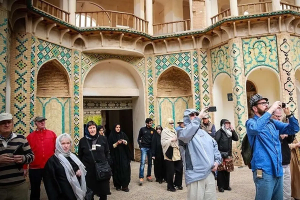
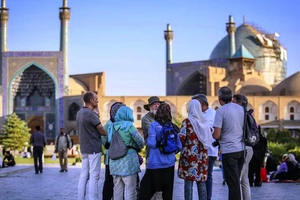
Iranian tourism and media officials said reshaping the country’s international image, particularly after the 12-day war, has become a central challenge for the tourism sector, expressing the need for a coordinated and credible narrative to support recovery and growth.
The message emerged at a joint meeting between media and tourism officials hosted by the strategic council of Iran’s Ministry of Cultural Heritage, Tourism and Handicrafts and the media affairs department of the Ministry of Culture and Islamic Guidance, according to ISNA.
Participants said tourism increasingly depends on professional narrative-building to counter negative perceptions and present Iran’s security and cultural capacity to foreign audiences.
Officials argued that media should move beyond a passive role and become an active partner in promoting tourism and related industries.
Mohammadreza Norouzpour, deputy media affairs minister, said tourism cannot gain visibility without media engagement and that effective communication requires sustained, credible storytelling.
He said developing a participatory model between media and tourism actors was essential to reposition the sector domestically and internationally.
Speaking at the meeting, Mohsen Haji Saeid, head of the tourism working group and chairman of the national association of tour guides, said restoring Iran’s image abroad – especially following the recent conflict – was now the core issue facing the tourism industry.
He criticized traditional promotional approaches and called for a comprehensive information bank to present data on safety and tourism potential.
Other speakers emphasized the role of private-sector participation, health tourism, visual content, and the use of tour guides as cultural ambassadors.
Officials also discussed leveraging major international events, such as the World Cup, to amplify Iran’s narrative.
The meeting concluded with agreement to continue the tourism working group’s activities on a permanent, issue-driven basis, aimed at strengthening media-tourism coordination and improving perceptions of Iran among domestic and international audiences.
Iranian President Masoud Pezeshkian visits the Iranian Atomic Energy Organisation in Tehran, Iran, November 2, 2025
Iran’s nuclear chief on Monday said the UN atomic watchdog has no right to demand inspections of sites attacked by the United States and Israel in June, deepening the stalemate over Tehran's disputed nuclear program.
Mohammad Eslami, head of the Atomic Energy Organization of Iran, said Tehran had allowed inspections at nuclear sites that were not attacked but drew a distinction with facilities that sustained military strikes.
“There must be a protocol in place for inspections of nuclear sites that have been attacked before permission can be given,” he told reporters, according to ISNA.
“The agency, which neither condemned the attacks nor has any guideline for such situations, has no right to claim inspections,” Eslami said.
He added that pressure from three European countries, the United States and Israel “is not important to us and has no impact.”
Eslami said International Atomic Energy Agency Director General Rafael Grossi should be held accountable, adding that Iranian nuclear facilities had been under IAEA supervision before the June attacks.
“The director general must answer to the world,” he said, adding that attacks on safeguarded nuclear sites could happen to any country and that the agency should clarify what procedures it has in place in such circumstances.
The IAEA has said it is seeking access to key Iranian sites following recent military strikes, arguing that oversight is essential to verify nuclear material and equipment.
Iran has repeatedly said its nuclear program is peaceful and rejects accusations that it is seeking nuclear weapons.
A police car stands by at the scene of a shooting incident at Bondi Beach, Sydney, Australia, December 14, 2025. REUTERS
Iranian state media and loyalists including a top general pushed conspiracy theories after a deadly shooting targeting Australia’s Jewish community on Sunday, with some portraying the attack as a possible false-flag operation and others even praising it.
The messaging emerged even as Iran's foreign ministry issued a formal condemnation of the shooting at a Hanukkah event in Sydney that killed 16 people and injured 40 others.
Tasnim News, which is affiliated with the Revolutionary Guards, ran the story under the headline “At Least 10 Zionists Slain in Hanukkah Festival in Australia,” in what appeared to be a celebration of the deaths.
The IRGC-affiliated Sabereen News also hailed the killing of British-born Rabbi Eli Schlanger, calling him "a staunch supporter of Gaza genocide who had met Zionist soldiers to voice his support for their war against Gaza."
Fellow IRGC outlet Fars News described the incident as a “murky story,” questioning the plausibility of a lone or independent attack. The outlet wrote: “It's not normal for individuals to open fire on hundreds of people at a public celebration,” framing the shooting as a product of “widespread anti-Zionist sentiments” and invoking the October 7 attack on Israel.
State-run Mehr News Agency advanced a more explicit accusation. Its headline read: “The primary suspect in the attack on Jews in Australia is the Zionist regime,” presenting the violence as a “false-flag” operation allegedly designed to serve Israeli interests.
IRGC general calls Israel 'sole beneficiary'
The narrative was reinforced by comments from Mohammad Reza Naghdi, a senior IRGC general and top adviser to the force’s chief commander, who publicly argued that Israel was the sole beneficiary of the attack.
In a lengthy statement published by Fars News, Naghdi asked: “Who benefits from the Sydney incident?” before asserting: “The answer is clear. The only one who benefits from the Sydney incident is the Zionist regime.”
Naghdi framed the shooting as a strategic move to suppress pro-Gaza activism in Australia, claiming Sydney had become one of the most prominent centers of “anti-Zionist” demonstrations in the West.
He questioned whether the attack would “facilitate anti-Zionist protests by the people of Sydney or open the hand of the Australian police to suppress them,” and suggested that portraying Jewish communities as unsafe would serve Israeli political goals.
He also raised a series of rhetorical questions about why the attackers targeted civilians and a place of worship rather than Israeli-linked businesses, shipping interests, or Israeli soldiers visiting Australia. “Why were ordinary people and a place of worship targeted?” Naghdi asked, concluding that any act diverting attention from Gaza ultimately “helps the Zionists.”
Outlets often labeled as moderate echoed similar themes in their reporting. Tabnak portrayed the shooting as a “false flag” meant to “revive Israel's antisemitism narrative” and warned of possible repercussions for Tehran, accusing Israel of “seeking to exploit the situation.”
Beyond official outlets and senior figures, Islamic Republic supporters and online commentators circulated celebratory and openly antisemitic reactions, according to social media posts monitored on Sunday. These responses praised the attack or dismissed it as staged, amplifying hostility toward Jews while denying responsibility for the violence.
A post on X by Islamic Republic insider Abdollah Ganji, the former head of IRGC's newspaper Javan
Australia severed diplomatic ties with Tehran in August, accusing Iran of involvement in threats and attacks against Jewish communities.
Also in November, the country officially designated the Islamic Revolutionary Guard Corps (IRGC) as a state sponsor of terrorism.