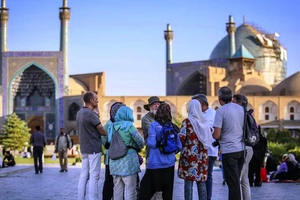
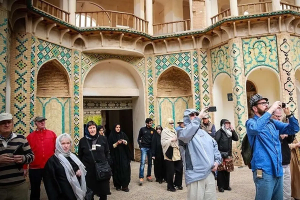
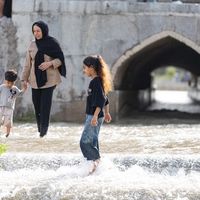
Iran tourism officials stress reshaping global image after war
Iranian tourism and media officials said reshaping the country’s international image, particularly after the 12-day war, has become a central challenge for the tourism sector, expressing the need for a coordinated and credible narrative to support recovery and growth.
The message emerged at a joint meeting between media and tourism officials hosted by the strategic council of Iran’s Ministry of Cultural Heritage, Tourism and Handicrafts and the media affairs department of the Ministry of Culture and Islamic Guidance, according to ISNA.
Participants said tourism increasingly depends on professional narrative-building to counter negative perceptions and present Iran’s security and cultural capacity to foreign audiences.
Officials argued that media should move beyond a passive role and become an active partner in promoting tourism and related industries.
Mohammadreza Norouzpour, deputy media affairs minister, said tourism cannot gain visibility without media engagement and that effective communication requires sustained, credible storytelling.
He said developing a participatory model between media and tourism actors was essential to reposition the sector domestically and internationally.
Speaking at the meeting, Mohsen Haji Saeid, head of the tourism working group and chairman of the national association of tour guides, said restoring Iran’s image abroad – especially following the recent conflict – was now the core issue facing the tourism industry.
He criticized traditional promotional approaches and called for a comprehensive information bank to present data on safety and tourism potential.
Other speakers emphasized the role of private-sector participation, health tourism, visual content, and the use of tour guides as cultural ambassadors.
Officials also discussed leveraging major international events, such as the World Cup, to amplify Iran’s narrative.
The meeting concluded with agreement to continue the tourism working group’s activities on a permanent, issue-driven basis, aimed at strengthening media-tourism coordination and improving perceptions of Iran among domestic and international audiences.
Iranian President Masoud Pezeshkian visits the Iranian Atomic Energy Organisation in Tehran, Iran, November 2, 2025
Iran’s nuclear chief on Monday said the UN atomic watchdog has no right to demand inspections of sites attacked by the United States and Israel in June, deepening the stalemate over Tehran's disputed nuclear program.
Mohammad Eslami, head of the Atomic Energy Organization of Iran, said Tehran had allowed inspections at nuclear sites that were not attacked but drew a distinction with facilities that sustained military strikes.
“There must be a protocol in place for inspections of nuclear sites that have been attacked before permission can be given,” he told reporters, according to ISNA.
“The agency, which neither condemned the attacks nor has any guideline for such situations, has no right to claim inspections,” Eslami said.
He added that pressure from three European countries, the United States and Israel “is not important to us and has no impact.”
Eslami said International Atomic Energy Agency Director General Rafael Grossi should be held accountable, adding that Iranian nuclear facilities had been under IAEA supervision before the June attacks.
“The director general must answer to the world,” he said, adding that attacks on safeguarded nuclear sites could happen to any country and that the agency should clarify what procedures it has in place in such circumstances.
The IAEA has said it is seeking access to key Iranian sites following recent military strikes, arguing that oversight is essential to verify nuclear material and equipment.
Iran has repeatedly said its nuclear program is peaceful and rejects accusations that it is seeking nuclear weapons.
A screengrab from Iran International's interview with Mideast analyst Merissa Khurma in Washington DC.
Heavy Israeli blows on Iran and its armed allies in two years of fighting after October 7, 2023 earned a fragile calm in the region, Mideast analyst Merissa Khurma told Iran International, but only US-Iran diplomacy can win peace.
"The one thing that could perhaps stop or delay the resurgence of Iranian proxies and further disruption of the peace process would be the restarting of negotiations between Iran and the United States, said Khurma, former director of the Middle East Program at the Wilson Center.
She added that Israel felt increasingly unrestrained in confronting adversaries but that the kaleidoscope of Iran-backed groups in the region was determined to fight back.
“Israel is going to preempt every threat they see as existential,” said Khurma, a longtime watcher of regional events and founder of Washington-based consulting firm AMENA Strategies.
The strikes have weakened Tehran’s network of allies, she said, but the calm is temporary. “Hamas was able to recruit and reboot. Similarly with Hezbollah. They have a recruiting strategy and resources,” Khurma said.
She said sanctions are putting pressure on Iran and have prompted outreach to US President Donald Trump.
“President Trump earlier said the Iranians asked whether US sanctions could be lifted. Also, Tehran appears willing to talk but insists Washington stop supporting Israel - a condition the United States is not prepared to meet."
Disarmament demands
Meanwhile a truce in Gaza clinched by US President Donald Trump in October appears to have stalled as Iran-backed Hamas militants have yet to disarm and Israeli attacks have killed hundreds despite a ceasefire.
“A US 20-point plan for Palestinian statehood could help curb militancy, but it requires steady pressure on Israel,” Khurma said. “Hamas should not be part of any future governance in Gaza.”
She addressed serious social challenged in the region as youth frustration and unemployment fuel discontent. She said joblessness has hit 45% in Jordan and 30% in Tunisia, while Moroccans are protesting poor governance.
“Democracy did not get me a job,” the analyst cited a young Tunisian as saying. US aid cuts, shed added, including an 83% reduction in USAID funding, have hampered Washington's ability to address the region's root problems.
“Yet online activism is growing. Afghan women teach despite Taliban bans and regional women’s groups are sustaining themselves, often inspired by Iran’s Woman, Life, Freedom movement,” Khurma said.
She called for a comprehensive US regional strategy that includes phased sanctions relief for Iran in exchange for concessions, investment to counter Iran-backed Iraqi militias and the safeguarding of Palestinian gains via leverage over Israel.
“Without such engagement, never-ending cycles of violence will radicalize youth. Saudi and Egyptian leaders support efforts to weaken extremists, and as Trump doubles down on America First, the region is watching for signs of dialogue over the stalemate,” Khurma said.
People walk as police officers stand guard on the street following a shooting incident at Bondi Beach, in Sydney, Australia, December 14, 2025.
Australian authorities are investigating whether Iran may be linked to a deadly shooting at a Jewish holiday event in Sydney, according to a Jewish community leader cited by The Times of Israel, after police declared the attack a terrorist incident that killed at least 12 people.
Police said gunmen opened fire at a Hanukkah gathering at Bondi Beach on Sunday. One suspected attacker was killed and another was in critical condition, New South Wales Police Commissioner Mal Lanyon told reporters, adding authorities were examining whether a third gunman was involved.
Jeremy Leibler, president of the Zionist Federation of Australia, told The Times of Israel that Australia’s foreign ministry was examining whether Iran could be behind the attack.
“The Foreign Ministry tells me it is investigating whether Iran is behind the shooting. To me, that says there is a real possibility,” he said.
Australian officials have not publicly confirmed any foreign involvement. Lanyon urged calm and said investigators were working through multiple lines of inquiry.
Later in the day, Iran’s foreign ministry spokesman Esmaeil Baghaei condemned the attack, saying: “We condemn the violent attack in Sydney, Australia. Terror violence and mass killing shall be condemned, wherever they’re committed.”
In August, Australia accused Iran of involvement in two antisemitic arson attacks and ordered its ambassador to leave the country within seven days.
Australian Prime Minister Anthony Albanese said intelligence gathered by the Australian Security Intelligence Organization showed Iran had directed attacks on a kosher restaurant in Sydney and a synagogue in Melbourne last year.
Israeli authorities said they were also investigating responsibility for the attack amid concerns it may have been orchestrated by a state actor or militant groups, Ynet said.
Israeli officials cited Iran as a primary suspect if a state were involved, while also examining possible links to groups including Hezbollah, Hamas and Pakistan-based Lashkar-e-Taiba, according to Israeli media reports.
An aerial view of emergency personnel working at the scene of a shooting incident at Bondi Beach in Sydney, Australia, December 14, 2025, in this screen grab from a video.
A senior Israeli security official told Israel Hayom that “in recent months there has been increased activity by Iran to orchestrate attacks against Israeli and Jewish targets around the world,” adding that investigators believed the “direction and infrastructure” of the attack originated in Tehran.
An Israeli intelligence source cited by the newspaper said activity by Iran and its allies had “markedly increased” in recent months. Iran has not commented on the allegations.
The Bondi Beach shooting came almost 11 years after the 2014 Lindt Cafe siege in Sydney. Two police officers were among those injured in Sunday’s attack, authorities said.
Leibler said the shooting could have lasting consequences for Australia’s Jewish community.
“I’m trying to process what impact this is going to have on the Jewish community of Australia,” he said, calling it one of the deadliest attacks on Jews globally in recent years. He added that concerns about antisemitism were already prompting some members of the community to consider leaving Australia.
Australian Prime Minister Anthony Albanese condemned the attack and said authorities would bring those responsible to justice.
A man gestures the victory sign as he holds a Hezbollah flag, on the second day of the ceasefire between Israel and Iran-backed group Hezbollah, in Tyre, southern Lebanon November 28, 2024
Iran said accreditation for its newly appointed ambassador to Lebanon remains pending and expects the process to proceed naturally, playing down talk of a diplomatic rift after reports about the Lebanese foreign minister delaying the file.
“We have accepted Lebanon’s new ambassador, and I hope the process of accepting our new ambassador in Lebanon will follow its natural course,” foreign ministry spokesperson Esmail Baghaei said during his weekly briefing on Sunday when asked about the reported suspension.
Baghaei rejected suggestions that diplomatic ties had been disrupted, saying relations between Iran and Lebanon were long-standing and ongoing.
Iran already has an ambassador in Beirut and that Lebanon’s new ambassador has recently taken up his post in Tehran, he added.
“The relevant process regarding Iran’s new ambassador in Lebanon has been underway for some time,” Baghaei said. “We hope this process will proceed in a normal manner in Lebanon as well, and that our new ambassador will be stationed there.”
Lebanon’s foreign minister, Youssef Raji, has declined to advance the administrative steps required to approve Iran’s proposed ambassador, including submitting the credentials to the cabinet and presidency, the Lebanese pro-Hezbollah daily Al-Akhbar reported on Saturday.
Iran’s role in Lebanon and the wider region had fueled instability, Raji told Al Jazeera on Friday, saying Beirut remained open to dialogue if Tehran stopped supporting Hezbollah and ended what he described as interference in Lebanon’s internal affairs.
Iran's Foreign Ministry Spokesman Esmail Baghaei
“Iran’s role in Lebanon and the region has been very negative,” Raji said. “We have a problem with Iran, but we are open to dialogue, provided it stops interfering in our internal affairs and halts funding an illegal organization in Lebanon.”
Iran has long backed Hezbollah and has rejected international and domestic calls for the group to disarm, arguing that continued Israeli actions justify its armed presence.
The diplomatic dispute followed an exchange earlier this month in which Iranian Foreign Minister Abbas Araghchi invited Raji to visit Tehran. Raji declined, citing unfavorable conditions, and suggested meeting in a third country.
Baghaei dismisses Venezuela meddling
In the same briefing, Baghaei brushed off comments attributed to Venezuelan opposition figure María Corina Machado accusing Iran of interference in Venezuela’s internal affairs. He said the claims were politically motivated and unrelated to facts on the ground.
“It is not appropriate to respond to the remarks of someone who has shown no value or attachment to her own country,” Baghaei said.
On reports of Iranian interference in Caracas, he said: “These remarks are irrelevant. Venezuela, as a sovereign country, sets its foreign relations according to its national interests, engages with partners on the basis of mutual respect, and shapes its foreign policy accordingly.”
US Secretary of State Marco Rubio this month cast Venezuela as a regional launchpad for Iranian influence, describing Maduro’s government as a narcotics transit hub that hosts Iran’s Revolutionary Guards and its Lebanese ally Hezbollah
Little public evidence exists about the security relationship Venezuela has with Iran or its armed allies. Tehran and Caracas boosted ties under Maduro's predecessor Hugo Chavez, who cast himself as a bulwark against what he called American imperialism.
Machado said on Wednesday that their influence in Venezuela amounted to an invasion while not directly addressing whether she supported stepped up US military attacks on the country to bring about Maduro's downfall.
“Venezuela has already been invaded,” she said at a news conference alongside the Norwegian Prime Minister Jonas Gahr Store on Thursday.
“We have the Russian agents, we have the Iranian agents, we have terrorist groups such as Hezbollah, Hamas, operating freely in accordance with the regime. We have the Colombian guerrillas, the drug cartels.”
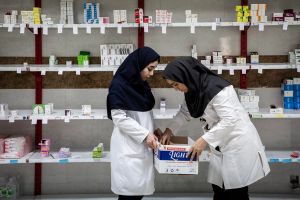
Iran’s medicine and infant-formula stocks average less than two months, with as many as 800 drug lines at risk of shortage within three months, industry representatives said, citing four-to-five-month delays in foreign-exchange allocation.
Babak Mesbahi, a presidium member of the Iranian Pharmacists Association, said sanctions are indirectly choking payment channels and logistics.
“Based on recent officials’ statements, the country’s medicine reserves on average are less than two months,” he said. “Infant formula faces a similar situation, and about 800 items will face shortages over the next three months.”
Mesbahi told Didban Iran that “Sanctions do not directly target medicine and infant formula, but their side effects are entirely palpable. Currency transfers have become difficult and allocation faces problems, and these issues are directly caused by sanctions.”
Asked whether the government has eased FX transfers, Mesbahi said: “As far as I know, nothing specific has been done. Right now there are pro forma invoices that have remained four to five months in the allocation and transfer queue,” he added.
The end of preferential exchange rates on many imported inputs has accelerated price rises for finished medicines and raw materials, according to pharmacists’ associations.
Hadi Ahmadi, a board member of the Iranian Pharmacists Association, said daily currency volatility and rising input costs are pushing up prices, even for common medicines.
“About 70% of production costs – packaging, auxiliaries and other inputs – follow the free-market exchange rate, and only roughly 30% relates to active ingredients, so price increases are unavoidable,” Ahmadi told ILNA.
“When prices rise and insurance does not keep pace, patients either take incomplete regimens or walk away, and the treatment path is disrupted.”
He added that only two to three million doses of influenza vaccine were imported versus a need of six to seven million for a population near 90 million, and distribution was late, which contributed to wider spread of flu.