Iran’s central bank says gold and FX reserves are secure
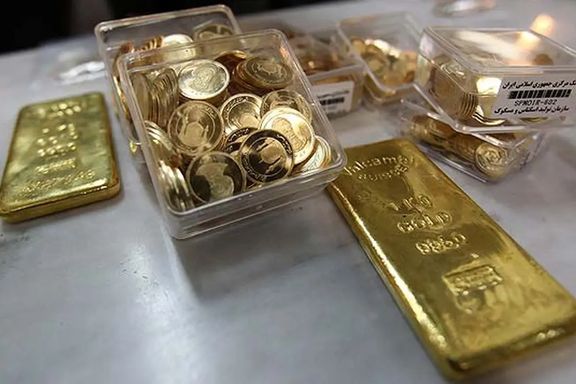
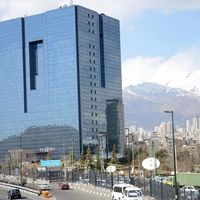
Iran’s central bank governor Mohammadreza Farzin sought to reassure business leaders on Tuesday that the country’s foreign exchange and gold reserves remain secure as UN snapback sanctions loom later this month.
Speaking at a meeting with the National Entrepreneurs Assembly, Farzin said the Central Bank of Iran (CBI) has “full security and access” to reserves held abroad and is preparing special measures to support exporters, ease access to hard currency and expand financing channels.
He announced plans for up to €200 million in sukuk Islamic bonds, new credit for export-oriented firms and a joint committee with entrepreneurs to resolve banking hurdles.
Farzin stressed that the CBI’s priority is to curb inflation and maintain financial stability, pledging that “all monetary and foreign exchange decisions will be taken with these objectives in mind.”
He also said the bank has introduced new instruments such as chain financing, gold-backed bonds and pre-sale of foreign currency to increase resilience in the market.
The remarks come as Iran braces for the automatic return of UN sanctions on September 28 after Britain, France and Germany triggered the mechanism last month.
The snapback would reinstate international restrictions suspended under the 2015 nuclear deal, compounding existing US and EU sanctions that have already slashed oil revenues and battered the rial.
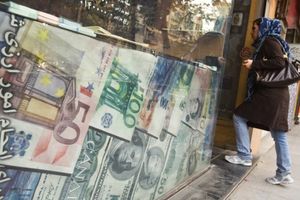
Iran’s currency has tumbled past 1,038,000 rials per dollar on the open market, while inflation hovers near 50%.
Analysts warn that renewed sanctions could push inflation above 60–90% and deepen negative growth.
Despite official assurances, businesses say access to foreign exchange remains a critical obstacle, with many entrepreneurs urging structural reforms and clear rules for investors.
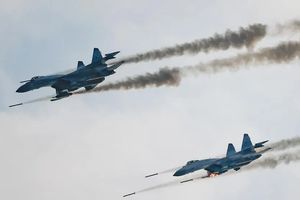
Russian MiG-29 and Su-30SM fighter jets fly in formation during a military parade in Moscow. (May 2025)
Russian MiG-29 fighter jets have arrived in Iran as part of a short-term plan to bolster its air force, with more advanced Sukhoi Su-35 aircraft to follow gradually, an Iranian lawmaker said on Tuesday.
Abolfazl Zohrevand, a member of parliament’s national security committee, told domestic media that the delivery of MiG-29s was intended as an interim measure while Tehran awaits the arrival of Su-35s “as a long-term solution.”
“Russian MiG-29 fighter jets have arrived in Iran and are stationed in Shiraz, while Sukhoi Su-35 jets are also on the way,” he said.
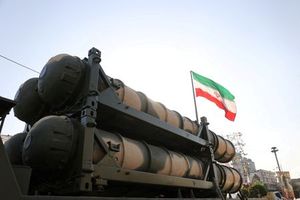
He also said that China’s HQ-9 air defense system and Russia’s S-400 system were being supplied to Iran “in significant numbers.”
Neither Moscow nor Beijing has confirmed the reported deliveries.
Iran has long sought to modernize its aging air force, which relies heavily on US-made jets purchased before the 1979 revolution and a small number of Russian and locally upgraded aircraft.
State media reported in January that the first Sukhoi Su-35s were formally handed over to Iran, but officials have not clarified how many are operational.
Western analysts say Iran’s request for 50 aircraftremains only partly fulfilled, with deliveries slowed by Russia’s own needs in Ukraine.
Tehran also faces vulnerability in air defenses after Israeli strikes earlier this year destroyed its last Russian-provided S-300 systems. Iran had acquired the four S-300 battalions from Russia in 2016.
Condom purchases in Iran jumped 26% during the country’s 12-day conflict with Israel in June, according to data from the country’s largest e-commerce platform Digikala.
The report on consumer behavior showed a surge in demand for a range of health-related products during the war, including sanitary pads, disinfectants, blood glucose test strips, medical bandages, nail extension supplies, blood glucose monitors, adult diapers, and sanitary underpads.
The report comes three months after Israel launched a surprise military campaign on June 13, striking military and nuclear facilities in Iran. Air attacks killed nuclear scientists along with hundreds of military personnel and civilians. Iran retaliated with drone and missile attacks which killed 31 Israeli civilians and one off-duty soldier.
The United States joined the conflict on June 22, conducting strikes on major nuclear sites including Fordow, Natanz and Isfahan, before brokering a ceasefire on June 24.
Global perspective
Similar spikes in condom sales have been reported in other countries during times of conflict or crisis. After North Korea’s nuclear test in October 2006, South Korean convenience stores recorded a surge, with condom sales averaging 1,930 per day, compared to about 1,508 per day previously.
In Russia, following the invasion of Ukraine in March 2022, major retailers reported sharp increases. The pharmacy chain Rigla noted a 26% rise, while online marketplace Wildberries saw sales climb by about 170% year-on-year, a surge linked to consumer fears of shortages and price hikes.
Similar behavior was documented in the United States during the early months of the COVID-19 pandemic, when condom makers such as Reckitt Benckiser reported sales jumps linked to consumer uncertainty and supply chain fears but not necessarily increased use.
Iranian serial killer Kolsoum Akbari, a 58-year-old woman convicted of murdering 11 former husbands over about 20 years by poisoning, was sentenced to 10 death penalties, Iranian media reported.
Born in 1967, Akbari allegedly used sedatives to kill her spouses, with the murders spanning the 1990s to the 2010s.
Arrested in September 2023 for attempting to murder her 82-year-old husband, she was caught after he grew suspicious and realized she was trying to kill him.
After several trial sessions, a court in Mazandaran in northern Iran sentenced Akbari to 10 death penalties.
Ten families demanded qisas (the eye-for-an-eye punishment, equivalent to the death penalty). The family of one victim agreed to forgo their right to qisas if she pays them blood money.
Akbari also received a 10-year sentence for an attempted murder.
She is the second known female serial killer in Iran, following Mahin Qadiri, who was executed in 2006 for murdering her seven husbands by poisoning them over 17 years.
The United Nations emblem is seen through a window in this file photo
The US state department on Monday announced it would limit the movement of Iran's delegation to the UN General Assembly annual meeting this week to prevent lavish shopping and the promotion of Tehran's "terrorist agenda."
"The United States took action this week to impose maximum pressure on the Iranian regime by restricting their UNGA delegation’s movement and access to wholesale club stores and luxury goods," the state department said in a statement.
"We will not allow the Iranian regime to allow its clerical elites to have a shopping spree in New York while the Iranian people endure poverty, crumbling infrastructure, and dire shortages of water and electricity."
Iran’s President Masoud Pezeshkian and Foreign Minister Abbas Araghchi are set to attend high-level meetings at the UN starting September 22 in New York.
The 80th session of the UN General Assembly opened on September 9, with world leaders due to arrive in New York this week.
"Secretary Rubio is also restricting the Iranian delegation to the areas strictly necessary to transit to and from the UN headquarters district to conduct their official UN business," the state department added. "The security of Americans is always our priority," it said, vowing to bar Iran the ability "to promote its terrorist agenda".
The 1947 UN Headquarters Agreement requires the United States to grant visas to UN representatives, including world leaders, for UN-related activities in New York, with exceptions only for proven security threats.
Washington earlier this month revoked or denied visas for most Palestinian officials to attend the UNGA, in a move seen as a protest about Western allies' looming move to recognize a Palestinian state.
The state department said its move was made in solidarity with the Iranian people.
"When the United States says it stands with the people of Iran, we mean it. Today’s actions affirm the United States’ unwavering commitment to supporting the Iranian people in their pursuit of accountability for the regime and for a better life."
International Atomic Energy Agency chief Rafael Grossi
Cooperation between Iran and International Atomic Energy Agency cannot be severed if UN sanctions resume as expected in less than a week, the UN nuclear watchdog's chief said on Monday, after Tehran threatened to cut its ties with the IAEA.
“Snapback, which is going to have – if it happens – a huge impact in terms of economic sanctions and other things, it’s one process," Grossi said, referring to UN sanctions on Iran invoked by European states which are due to resume on Sept. 28.
"Then we have something which is the relationship between the IAEA and Iran, which, in principle, must be permanent and not be contingent on the snap back being activated,” he said in an interview with Al Jazeera English.
"There is an ongoing cooperation. Is it all that we would aspire to get? Not now, but we are, I hope, on a way to get more of that cooperation. And so time for diplomacy is needed, yes,” Grossi added.
Robust diplomatic efforts which involve the United States are afoot to resolve the impasse, the IAEA chief said.
“Iran, for one, has said that this might affect the relationship and the cooperation with us,” he said, adding that “there is so much diplomatic activity… between those countries, ourselves, the United States as well, to try to find a way forward.”
"We have to remind them that they have obligations if they want to continue to be a member of the Nuclear Non-Proliferation Treaty (NPT)," Grossi said.
Israel and the United States attacked Iranian nuclear sites in a brief June war, setting back the nuclear program but leaving its fate unresolved. Tehran declined to allow IAEA inspectors to resume their work.
Iran's Supreme National Security Council warned on Saturday that the so-called snapback of UN sanctions could cause Tehran to end cooperation with the IAEA, amid calls by hardliners in Tehran for withdrawal from the NPT.
Dozens of Iranian lawmakers on Monday called for a fundamental shift in the country’s defense policy, urging authorities to consider building a nuclear weapon as a deterrent.
The United States and its European allies accuse Tehran of seeking the capability to produce nuclear arms, a charge Iran denies.
Iran has long insisted that its nuclear program is for peaceful purposes only and cites a religious injunction or fatwa from its Supreme Leader Ali Khamenei against nuclear weapons as proof of its intentions.