Gas-rich but power-poor: Iran risks 'terrifying' shortfall by 2040

Dalga Khatinoglu
Oil, gas and Iran economic analyst

Iran’s gas deficit will double in the next 15 years, reaching “terrifying” heights, a senior advisor to the president has warned.
Oil, gas and Iran economic analyst
Iran’s gas deficit will double in the next 15 years, reaching “terrifying” heights, a senior advisor to the president has warned.
“If the gas imbalance continues at this rate, by the year 2041 we will be facing a 512-million-cubic-meter shortfall. This figure is terrifying,” Ali Rabiei told Tehran media this week.
Such a gap would leave the government unable to meet two-thirds of domestic demand. The warning is stark given that Iran holds 33 trillion cubic meters of proven gas reserves, the world’s second largest after Russia.
Yet a mix of delayed field development, lack of energy diversification, declining reservoir pressure, and systemic inefficiencies has already created an unsustainable deficit.
Parliament’s Research Center estimates a current shortfall of 150 million cubic meters per day, rising above 250 million in peak winter—roughly equal to Turkey’s entire seasonal consumption.
Heavy reliance on gas
Around 70% of Iran’s energy consumption depends on natural gas, according to the Ministry of Petroleum. Clean energy contributes barely 1% of electricity generation, while over 90% comes from thermal power plants, most of them gas-fired.
By comparison, Turkey produces 40 times more electricity from renewables.
The International Energy Agency (IEA) puts Iran’s current daily output at about 750 million cubic meters. After a decade of 5% annual growth, production growth slowed to just 1% last year.
Even with new investments, the IEA projects output could shrink by as much as 40% without substantial investment by the decade’s end.
Decline and waste
Nearly three-quarters of Iran’s gas comes from South Pars, a giant offshore reservoir shared with Qatar.
The field entered the second half of its lifecycle last year, with output expected to fall by 30 million cubic meters annually due to declining pressure.
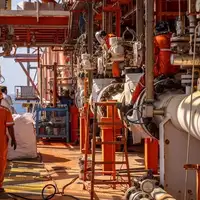
Qatar has invested heavily to offset this decline, deploying massive 20,000-ton platforms with industrial-scale compressors and signing $29 billion in contracts with global energy majors.
Iran once had a similar plan under a $5 billion deal with TotalEnergies and CNPC in 2015, but both firms withdrew three years later when US president Donald Trump pulled out of the nuclear deal.
The technology remains concentrated in Western companies, leaving Iran reliant on smaller 4,000-5,000-ton platforms that experts say will not halt decline.
Iran also loses huge volumes of gas to waste.
The IEA and World Bank estimate daily losses of 88 million cubic meters through leaks, flaring, and inefficiencies. This makes Iran the world’s second-largest gas flarer after Russia, and the fourth-largest methane emitter after China, the U.S., and Russia.
Iran’s paradox is clear: a country sitting on the world’s second-largest gas reserves is sliding toward a severe energy crunch.
Without major investment, technological access, and diversification, shortages will deepen—leaving households and industries exposed to chronic power cuts and mounting economic strain.