• العربية
  • فارسی
Brand
  • Iran Insight
  • Politics
  • Economy
  • Analysis
  • Special Report
  • Opinion
  • Podcast
  • Iran Insight
  • Politics
  • Economy
  • Analysis
  • Special Report
  • Opinion
  • Podcast
  • Theme
  • Language
    • العربية
    • فارسی
  • Iran Insight
  • Politics
  • Economy
  • Analysis
  • Special Report
  • Opinion
  • Podcast
All rights reserved for Volant Media UK Limited
volant media logo

Israel says Syria raids detained Revolutionary Guards-backed militants

Sep 12, 2025, 15:15 GMT+1Updated: 00:59 GMT+0
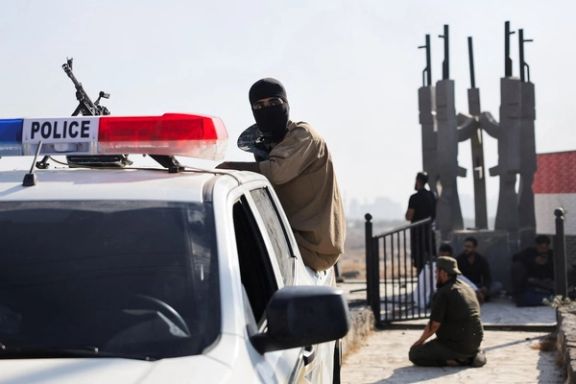
A Bedouin fighters sits on a car at an Internal Security Forces checkpoint working to prevent Bedouin fighters from advancing towards Sweida, following renewed fighting between Bedouin fighters and Druze gunmen, despite an announced truce, in Walgha, Suweida province, Syria July 19, 2025.

The Israeli military on Friday said commando raids into Syria earlier this year had detained operatives directed by Iran's Revolutionary Guards to smuggle weapons into the occupied West Bank and northern Israel.

The announcement follows months of security incidents in Syria which were blamed on Israel by Syrian officials but remained shrouded in mystery as Israel neither confirmed nor denied involvement.

Israel opposes Syria's new rulers, which hail in part from Sunni Muslim jihadist groups, despite their victory in a long civil war over the Iran-backed Assad dynasty.

"The IDF detained and transferred for interrogation operatives from several terrorist cells operated by Unit 840 - the Quds Force’s special operations unit," the Israeli Defense Force said in a statement.

"The terrorist cells were directed by the unit with the aim of carrying out terrorist attacks against the State of Israel," it added.

The United States and Arab states back the new authorities in Damascus as a bulwark against Iran and its Lebanese ally Hezbollah.

Sectarian clashes have blighted Syria's new era, and Israeli airstrikes on government buildings earlier this year signaled the Jewish state's growing opposition.

In the statement on Friday, Israel's military added that raids in March and April this year had detained two alleged Iran-backed operatives in Syria with Arabic names, and that Israeli attacks had assassinated two others in Lebanon last month.

"During the interrogations of the detained terrorists, it was revealed that some of them did not even know on whose behalf they were operating, and that many were recruited to Unit 840 without disclosure of the unit’s true motives and through financial bribes," it said.

Most Viewed

Ghalibaf defends Iran-US talks amid hardline backlash
1
INSIGHT

Ghalibaf defends Iran-US talks amid hardline backlash

2
INSIGHT

Iran diplomacy wobbles as factions compete to avoid looking soft on US

3
VOICES FROM IRAN

Bread shortages, soaring prices strain households in Iran, residents say

4
ANALYSIS

The politics of pink: how Iran uses cuteness to rebrand violence

5

War-hit homeowners feel abandoned as Iran’s reconstruction aid fades

Banner
Banner

Spotlight

  • The future has been switched off here
    TEHRAN INSIDER

    The future has been switched off here

  • Lights out, then gunfire: Witnesses recount Mashhad protest crackdown
    VOICES FROM IRAN

    Lights out, then gunfire: Witnesses recount Mashhad protest crackdown

  • Family told missing teen was alive, then received his body 60 days later
    EXCLUSIVE

    Family told missing teen was alive, then received his body 60 days later

  • Is Iran entering its Gorbachev moment?
    INSIGHT

    Is Iran entering its Gorbachev moment?

  • Iran crackdown reaches cemeteries as graves of slain protesters defaced
    EXCLUSIVE

    Iran crackdown reaches cemeteries as graves of slain protesters defaced

  • Iran diplomacy wobbles as factions compete to avoid looking soft on US
    INSIGHT

    Iran diplomacy wobbles as factions compete to avoid looking soft on US

•
•
•

More Stories

Israeli strike in Qatar puts normalization on ice, leaves Iran in suspense

Sep 12, 2025, 13:35 GMT+1
•
Kristian Coates Ulrichsen

More than any other act in the post-October 7, 2023 world, the Israeli airstrike on a busy residential neighborhood of Doha on Tuesday has the potential to upend prevailing assumptions on Persian Gulf security.

The likely impact of the attack against a meeting of Hamas political leaders will be at least as consequential as the September 2019 Iranian missile and drone strike on Saudi oil facilities.

That attack on Abqaiq and al-Khurais, during the first Trump presidency, caused shockwaves in Riyadh and other Gulf capitals after President Trump publicly drew a distinction between US and Saudi interests in remarks he made two days later.

Leaders in Saudi Arabia and the United Arab Emirates reached out to Iranian counterparts to engage in a process of regional de-escalation that culminated, in the Saudi case, in a March 2023 China-brokered agreement to restore diplomatic relations with Iran that had been cut in January 2016.

Now, during Trump’s second administration, the six Gulf Cooperation Council (GCC) states find themselves at a similar inflection point.

Qatar has come under attack from Israel a little more than two months after it took ballistic missile fire from Iran on June 23. Yet, whereas the Iranian attack was aimed at the Al Udeid US airbase away from urban areas, the Israeli attack struck at the heart of Doha in the middle of the afternoon.

Traces of Iranian missiles and air defences are seen over Doha, Qatar, June 23, 2025
100%
Traces of Iranian missiles and air defences are seen over Doha, Qatar, June 23, 2025

CENTCOM in focus

While the Iranian strike was a response to US airstrikes the previous day against three nuclear facilities in Iran and was thus the act of an adversary - from the US if not necessarily the Gulf perspective - Israel is not only the closest US ally in the region but has also been, since 2021, included in the Central Command (CENTCOM) area of responsibility.

Leaders in Qatar and the other Arab states around the Persian Gulf will likely be reaching out with urgency to the White House to assess who in the administration knew what and when in the run-up to the attack, as well as to determine the impact both for CENTCOM and the US security umbrella.

One CENTCOM member has undertaken a strike that violated the sovereignty of another and, moreover, within the near vicinity of the very airbase in Qatar that houses the forward headquarters of CENTCOM and is the largest and most important US base in the region.

Questions may be asked as to what information was picked up by the Combined Air Operations Center (CAOC) at Al Udeid and whether the strike used US-manufactured jets that showed up as friendly aircraft.

Reports that the US military spotted Israeli jets flying toward the Gulf and sought clarification from Israel may also generate additional questions as to why a facility designed to detect and deter aerial threats failed to prevent the strike.

While it remains improbable that GCC leaders will move away from the deep network of security and defense relationships with the US, the fallout from the attack is likely to trigger tense conversations within CENTCOM and between the US and Persian Gulf partners.

US president Donald Trump delivers a speech in Riyadh, Saudi Arabia, May 13, 2025
100%
US president Donald Trump delivers a speech in Riyadh, Saudi Arabia, May 13, 2025

Invective shift from Iran to Israel

Although President Trump assured Emir Tamim of Qatar that such an attack would not recur, there is a risk that the president has backed himself into a corner should Israel indeed act again.

Set against this backdrop, leaders and senior defense and security officials across the GCC are likely to reassess the security landscape and regional threat perception and may declare that an attack on one GCC state is an attack on all, paving the way for a collective response.

Should this be the case, pressure may mount on the UAE and Bahrain to downgrade their ties with Israel that were established in 2020 when the countries signed the Abraham Accords in a White House ceremony presided over by President Trump.

Statements from officials and public figures in GCC states have in recent months described Israeli actions in the Middle East in language formerly used about Iran, as a spoiler and a major threat to regional stability.

While Iran is unlikely to be a beneficiary of the estrangement between GCC states and Israel, the fact that further normalization is, for the moment at least, very much off the table is an indication of how far the regional landscape has shifted in the 23 months since October 7.

Israel says suspected Iranian hackers targeted actors in phishing attack

Sep 12, 2025, 08:49 GMT+1

Dozens of Israeli actors were targeted in a phishing attack believed to have originated from Iran, Israel's National Cyber Directorate said on Friday.

The Directorate said attackers hacked into an email account and posed as organizers of auditions for a new film by a well-known director. The emails asked for audition videos and personal details, including scans of ID cards, passports and home addresses.

According to the statement, dozens of actors provided the material and later received threatening messages attributing the operation to groups linked to Iran, in what officials described as an attempt to apply psychological pressure.

Israeli media, including Ynet, reported that one phishing email presented itself as an audition request for a project by filmmaker Ari Folman about the Oct. 7 Hamas attack on Israel. It asked applicants to record a personal video and submit supporting documents.

Broader Iranian cyber activity

The phishing campaign is the latest in a series of operations Israel and Western experts have tied to Iranian hackers. In June, following Israeli and US strikes on Iranian nuclear targets, security officials warned of potential retaliation in cyberspace.

But researchers told Reuters at the time that Iran’s hacking capability often appeared overstated. “The volume of attacks appears to be relatively low,” said Nicole Fishbein, a researcher at Israeli firm Intezer. “The techniques used are not particularly sophisticated.”

Some Iran-linked groups such as Handala Hack have boasted of breaching Israeli and Western companies, though analysts said their impact was modest. Israeli cybersecurity company Check Point said Iran’s Revolutionary Guard had used phishing to target Israeli journalists and academics, and in one case tried to lure a victim to a physical meeting in Tel Aviv.

Analysts compared the pattern to Iran’s missile program: a large volume of fire but limited strategic effect. “There is a lot of hot air, there is a lot of indiscriminate civilian targeting, and realistically there are not that many results,” said Yelisey Bohuslavskiy, cofounder of intelligence firm Red Sense.

Iranian lawmaker suggests Qatar host Revolutionary Guards missiles

Sep 12, 2025, 07:51 GMT+1

An Iranian lawmaker suggested on Thursday that Qatar expel US forces and allow Iran’s Revolutionary Guards to deploy missiles on its territory to counter Israel.

“I propose that the US army, accomplice of Israel, be expelled from Qatar, and that the Revolutionary Guard aerospace force deploy Fattah hypersonic missiles on your soil to defend your sovereignty,” Addressing Emir Sheikh Tamim bin Hamad Al Thani, Mojtaba Zarei wrote on X.

In a separate post, Zarei wrote: “The respected emir of Qatar should request support from the Revolutionary Guard aerospace force to station in Qatar.”

Iran accuses US of complicity

His remarks followed an Israeli strike in Doha this week that killed a Qatari security officer and several Hamas members. Iran’s military said the attack could not have happened without US support. “The US government is complicit in these crimes,” the armed forces said on Wednesday, accusing Washington of backing “the Zionist regime’s crimes.”

US President Donald Trump said Israel acted on its own and Prime Minister Benjamin Netanyahu said Israel “takes full responsibility.”

Tehran seizes on regional anger

Iranian leaders condemned the attack as a violation of Qatari sovereignty. President Masoud Pezeshkian called it “illegal, inhumane and anti-peace,” while national security chief Ali Larijani wrote in Arabic: “O countries of the region! Prepare yourselves for my upcoming dominance.”

Hardline activists in Tehran described the strike as a “lesson” for US allies. Commentator Reza Ghobeishavi said on X that it “benefits Iran’s camp and Israel’s opponents, while harming the camp that supports normalizing relations with Israel.”

Qatar-Iran relations

Qatar hosts the US Al Udeid Air Base, the largest American facility in the Middle East. While Iranian officials have voiced strong support for Qatar since the Israeli strike, Tehran itself targeted Al Udeid in June during its confrontation with the United States. Iran said at the time that Doha had been notified in advance, while Qatar condemned the attack but said it wanted to avoid escalation.

Israel state watchdog faults home front response in Iran war

Sep 12, 2025, 02:39 GMT+1

Israel’s comptroller published a report on Wednesday outlining a series of government shortcomings in responding to civilian needs during the 12-day war with Iran and called for fixing gaps in emergency response.

The report was compiled from hotline data, evacuation shelters and field inspections at sites hit by Iranian missiles.

Israel launched a surprise military campaign against Iran on June 13, targeting senior military and nuclear officials as well as sensitive nuclear and military facilities.

Iran responded with drone and ballistic missile strikes on Israel. During the conflict, Iranian missiles hit 50 sites in Israel, including 28 civilian locations, five military facilities, three energy infrastructure sites and one university.

Among the civilian sites identified were in the towns of Bat Yam, Ramat Gan and Be’er Sheva. No specific details were provided regarding the military or infrastructure targets.

According to the report, the shortcomings were divided into two categories: those directly under attack and the wider public affected by the aftermath, the Times of Israel reported Thursday.

A key finding was that Israel lacks a single national authority to coordinate government responses for citizens during emergencies.

During the war, Israel declared a state of emergency. Public services — including schools, civilian air travel and public events — were shut down, which the report said caused economic hardship and disrupted daily life.

State Comptroller Matanyahu Englman made several recommendations for the government, including raising preparedness levels, establishing clearer national coordination and improving support for displaced residents, particularly in cases of relocation or temporary housing.

Over the course of the 12-day conflict, 31 civilians and one off-duty soldier were killed in Israel. Around 11,000 residents were evacuated to hotels and guesthouses nationwide.

Israel’s strikes on Iran resulted in the deaths of 1,062 people, including 276 civilians.

Iranian security threat in Jordan on the rise, officials warn

Sep 11, 2025, 20:57 GMT+1

The threat from Iran and its regional allies has sharply increased in recent year, senior officials in Jordan told Iran International, in a setback to decades of stability in the Western-allied kingdom.

“Iran's threatening activities, finance and recruitment, has tripled for the last three years to the extent that there have been people in security associated with Iran who have been accused of spying for Iran," a security source told Iran International on condition of anonymity.

"For Iran, creating something in Jordan is important -- even if on a small scale.”

The source added that even after the official crackdowns earlier this year after a widely publicized raid uncovered a weapons cache initially attributed to the Muslim Brotherhood - a longtime political party in Jordan which was then banned.

Jordan at the time said it had arrested 16 people accused of manufacturing short-range missiles, possessing explosives and automatic weapons, concealing a ready-to-use missile and illegally recruiting and training militants.

Banned Brothers

The Muslim Brotherhood is a century-old pan-Arab movement opposed to Western influence and the erosion of religiosity in public life.

In Jordan its members have long held a significant influence in parliament and public life while its offshoot in the Israeli-occupied Palestinian territories is the Iran-backed armed group and political party Hamas.

“Hamas and Hezbollah were involved for money and training in Beirut,” the security source said. “Those training them were Palestinians from Hamas while Hezbollah facilitated the sites and expertise.”

“Iran wanted to created a front in Jordan as a backup to losing south Lebanon, before that happened last year,” the source added, referring to the weakening of Hezbollah following a punishing military campaign against the group last year.

'Iran influence on rise'

“It’s not a secret that the negative influence of Iran is still on the rise,” said another security source, saying that Jordanian citizens also perceive an increased threat.

“Public opinion in Jordan shows that the main threat to Jordanian national security 20-30 years ago was Israel but today it is Iran, and has been for the last 5-6 years,” he said.

In April last year, following an Israeli strike on Iran’s consulate in Damascus, the security head of the Iran-backed Iraqi militia Kata'ib Hezbollah. Abu Ali al-Askari said the group was "prepared to arm the Islamic Resistance in Jordan" with supplies for up to 12,000 fighters.

Their goal, he said, was to "defend the Palestinians and avenge the honor of Muslims" by targeting Israel, saying the group would start by "cutting off the land route that reaches the Zionist entity," referring to the Jordan-Israel border.

The perceived threat has seen Israel enhance its border security with Jordan in addition to carrying out a surprise drill for its forces in August, simulating a ground invasion from the Jordanian border.

“Weapons from Iran have also continued to be smuggled into Jordan and on to the West Bank from Syria," the security source added.

Friend of my enemy

Tehran continues to defy Amman, which it sees as an ally of Iran’s arch-enemies the United States and Israel, and a senior Jordanian official said protests through diplomatic channels have proven futile.

“We told them (Iran) they cannot fly their missiles over Jordan, but they did anyway,” the official said.

“They (Iran) don’t listen. We said they can fly over Syria, but they are adamant and have little regard for the consequences. This is a country that thinks they should be the masters of the Middle East.”

While the official said that Iran had lost influence in the region after military setbacks to its regional armed allies and a June war with Israel and the United States, the threat to Jordan abides.

“The desire and will is there to focus on Jordan because they lost cards with Hezbollah and Syria, but their ability has somewhat weakened. On the borders with Syria they’d love to do more damage but they lost a lot of their operatives there and Syria isn’t friendly to them.”