Tehran seizes on Israel’s Doha strike to bolster regional narrative

Israel’s strike in Doha targeting senior Hamas leaders has given Tehran a chance to present itself as the true defender of Arab sovereignty and Palestinian resistance.
Iran International

Israel’s strike in Doha targeting senior Hamas leaders has given Tehran a chance to present itself as the true defender of Arab sovereignty and Palestinian resistance.
The rare attack on Qatari soil—a US ally and mediator in the Israel-Hamas conflict—took place Tuesday during a Hamas leadership meeting to consider a US-backed ceasefire proposal. Qatar’s Prime Minister denounced the assault as “state terrorism,” saying it sabotaged peace efforts.
Iranian officials moved quickly to condemn the strike. President Masoud Pezeshkian phoned Qatar’s Emir Sheikh Tamim bin Hamad Al Thani within hours, calling the attack an “illegal, inhumane and anti-peace action.”
Foreign Ministry spokesman Esmaeil Baghaei described it as a violation of international law and Qatar’s national sovereignty, warning: “Global inaction in the face of Zionist regime’s crimes in Palestine and West Asia threatens all.”
National security chief Ali Larijani echoed the sentiment in Arabic.
“The message of the Zionist entity’s recent crime in Qatar: O countries of the region! Prepare yourselves for my upcoming dominance!” he posted on X.
Qatar-Iran relationship
Tehran’s framing draws on recent memory. Ismail Haniyeh, Hamas’s political bureau chief, was assassinated in Tehran in July 2024 while attending Pezeshkian’s inauguration—a killing Iran cast as part of a broader campaign to decapitate the Hamas leadership.
Iran has also sought to distinguish its conduct from Israel’s.
When it struck the US Al Udeid air base in June, Tehran notified Qatar in advance and emphasized that Doha was not the target. Qatar condemned the strike but acknowledged Iran’s outreach and later expressed hope for continued good ties.
On September 4, Pezeshkian sent a message through top diplomat Abbas Araghchi requesting Sheikh Tamim’s help in facilitating dialogue with the US and the E3 to resume nuclear negotiations.
‘Lesson for US allies’
Many in Tehran framed Israel’s strike as a gift to the Islamic Republic’s regional narrative.
Mohammad Mokhber, a former vice president and close advisor to Khamenei, said the incident shows the futility of relying on the Abraham Accords.
Hardline activist Hatef Salehi called it a “lesson” for US allies in the region.
“It demonstrated, in the clearest way, that no matter how much Arab states serve US interests … Washington’s absolute priority is always the protection of the Israeli regime,” he posted on X.
Even moderate voices highlighted potential benefits for Tehran.
Journalist Reza Ghobeishavi argued the incident may push Gulf states closer to Iran.
“Previously, there was an idea that Israel would defend the Gulf countries against Iran, but that notion has now been weakened,” he wrote on X. “Israel’s attack on Qatar benefits Iran’s camp and Israel’s opponents, while harming the camp that supports normalizing relations with Israel.”

Iran’s military on Wednesday accused the United States of involvement in an Israeli attack on Hamas in Qatar the previous day despite public denials by its two foes.
“The US government is complicit in these crimes and has no respect or regard for global public opinion or even for its own allies,” Iran’s General Staff of the Armed Forces said in a statement carried by state media.
"Through direct and indirect support for the Zionist regime’s crimes, the United States seeks to create insecurity in the world and the region, promoting international terrorism to advance its sinister, colonial, and exploitative goals," it added.
Israeli warplanes bombed a Hamas office in Doha on Tuesday, in what Israel described as an targeted attack against the group’s senior leadership.
They seemed to miss their intended targets, killing a Qatari security official and five lower-ranking Hamas personnel.
Qatar denounced the attack as “criminal and cowardly,” while Iran called it an “extremely dangerous” violation of sovereignty and international law.
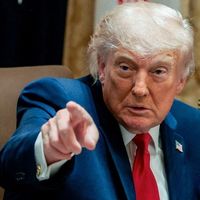
"This was a decision made by Prime Minister Netanyahu, it was not a decision made by me," US President Donald Trump said following the attack. Netanyahu said Israel acted alone and "takes full responsibility."
The US military's Al Udeid Air Base is the largest in the Middle East.
Hamas has long based its political leadership in the gas-rich Persian Gulf state, which has traditionally acted as a mediator in regional conflicts.
'Insane war machine'
Iran’s military also criticized Israel’s wider military campaigns in the region, calling for a united international response.
“There is an urgent need to halt this regime’s insane war machine and for all countries to sever ties with it,” the statement said. Tehran has long been ill at ease with Arab neighbors' improving ties with Israel.
Bahrain and the United Arab Emirates opened formal relations with Israel in the so-called Abraham Accords in 2020, but both condemned the attacks.
Iran's new national security chief Ali Larijani warned neighbors of what he described as Israel's hegemonic ambitions in a post in Arabic on social media on Wednesday.
“The message of the Zionist entity’s recent crime in Qatar is clear: O countries of the region! Prepare yourselves for my coming domination.”
Iran will likely cite the attack as a reason Arab states should beware of Israel, analysts told Iran International.
The Doha strike comes as Iran recalibrates its foreign policy after a June war with Israel and the United States battered its military and nuclear infrastructure.
Iran’s armed forces said support for what it called resistance to Israel around the region, adding it will “defend the defenseless and oppressed people of Palestine and Gaza.”

France, Britain and the United Kingdom on Wednesday said they were alarmed by the lack of clarity on Iran's stockpile of near-bomb-grade uranium and that Tehran must show not claim if it wanted to avoid more sanctions.
"To put it bluntly, there up to this moment near zero IAEA oversight of Iran’s nuclear programme, and there are thousands of kilos of enriched uranium in Iran which the IAEA has not been able to verify for nearly three months," the European troika said.
"It is not enough for Iran to make promises for tomorrow, we need to see evidence from Iran today that demonstrates it is ready for a diplomatic solution that addresses the international community’s concerns."
"That starts by showing, not claiming, that it is meeting the fair and reasonable conditions set by the E3 for a Snapback extension," the statement read.
The E3's remarks came in the form of an open letter to the International Atomic Energy Agency, which is tasked with inspections of Iranian nuclear sites.
"Iran is obfuscating the status and location of this material from the international community, and Iran refused to allow the Agency to verify this stockpile," it added.
Sanctions loom
The three powers last month triggered the so-called "snapback" mechanism within a 2015 international nuclear deal to which they are party along with Iran, giving Tehran 30 days to comply with the agreement or face restored international sanctions.
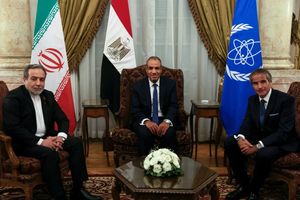
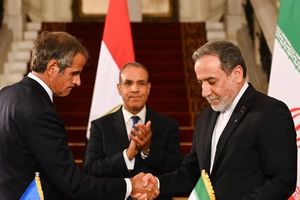
IAEA chief Raphael Grossi inked a deal to pave a way forward on resuming cooperation with Iran alongside its foreign minister Abbas Araghchi at a ceremony in Cairo on Wednesday.
Grossi said the new deal covers inspections at all of Iran’s declared nuclear sites, including those hit by Israeli and US strikes in June, in what he called a step in the right direction toward restoring safeguards.
IAEA inspectors quit the country for safety reasons during the war but subsequently returned, though they have not resumed most of their duties.
Araghchi said on Wednesday the deal does not currently allow inspectors into nuclear sites and access would be discussed in future talks, adding the accord’s survival depends on Western powers refraining from restoring UN sanctions.
'Critical jucnture'
The E3 in its letter said Iran must swiftly engage in diplomacy to provide an extension to the sanctions and meet what it called its "fair and achievable" conditions: unconditional talks with Washington, compliance with safeguarding obligations and transparency on its uranium stockpile.
"We are at a critical juncture," it wrote. "The E3 have been clear to Iran and the international community that we remain committed to diplomacy."
"It is now up to Iran to quickly take concrete steps to demonstrate it is serious about finding a diplomatic solution and to engage meaningfully with our offer, which will remain on the table during the 30-day window before snapback takes effect," the E3 added.
Iran’s parliament has since adopted a law suspending cooperation, a serious obstacle to renewed cooperation.
'No guarantee'
The IAEA-Iran agreement on Tuesday appears to provide few concrete guarantees on when the watchdog's work can resume and may give little impetus to the European powers to take a softer line.
"I understand that the European view is that Tuesday’s agreement is very UNLIKELY to shift the plans on SnapBack," Wall Street Journal correspondent Laurence Norman wrote on X on Wednesday.
"The Europeans see the absence of clear timelines and deadlines as a major problem — effectively guaranteeing nothing."

Iran said on Wednesday its new agreement with the UN nuclear watchdog does not currently allow inspectors into nuclear sites and will only move to define any access in later talks, adding the accord’s survival depends on Western powers refraining from restoring UN sanctions.
Foreign Minister Abbas Araghchi told state TV that the Cairo agreement with International Atomic Energy Agency (IAEA) chief Rafael Grossi “recognizes Iran’s legitimate security concerns,” aligns cooperation with a new domestic legal framework, and does not by itself reopen facilities to inspectors.
“Based on this agreement, no access is being granted to IAEA inspectors at the moment,” he said. “The nature and scope of inspectors’ access will be discussed in due course after Iran submits its reports, and any access will be negotiated at the appropriate time.”
Araghchi said one exception continues under an earlier decision. “No access is granted now except at the Bushehr power plant due to a fuel change. This access was approved by the Supreme National Security Council and is ongoing,” he said.
He stressed that the document reflects Tehran’s post-June war posture. “A new situation was created after the attacks on our nuclear facilities. Cooperation cannot be the same as before and must take a new form,” he said.
“The agreement has accepted Iran’s security concerns as legitimate, recognized Iran’s rights, and defines a new shape of cooperation with the Agency. This was exactly what we sought.”


Cairo pact cleared by top authorities
Araghchi said the government’s approach has been cleared at the highest level. “The negotiations and the provisions needed to meet our concerns were raised and approved at the Supreme National Security Council,” he said, adding that under Iran’s law “everything must be approved by the SNSC, and that pathway is recognized in this document.”
He also tied the accord’s implementation to the broader diplomatic track with Europe, which has triggered the UN “snapback” mechanism to restore sanctions unless monitoring advances.
“I must emphasize that the validity and continuation of this agreement depend on there being no hostile action against the Islamic Republic, including activation of snapback,” Araghchi said, echoing similar remarks by Grossi earlier in the day.
'Deal is void if sanctions return'
“I said clearly in the negotiations, to our Egyptian hosts and at the press conference, that if any hostile action is taken, including the reinstatement of cancelled UN Security Council resolutions, Iran will consider these practical steps null and void.”
Araghchi called the Cairo talks “a step in the right direction to remove pretexts” used by critics. “It disarms those who sought to exploit the situation for their own purposes,” he said, while thanking Egypt’s president and foreign minister for facilitating the discussions.
Grossi, briefing IAEA member states in Vienna earlier in the day, described the technical document as setting out procedures for inspections, notifications and reporting and said it is intended to restore safeguards activity across Iran’s declared program.
“This includes all facilities and installations in Iran, and it also contemplates the required reporting on all the attacked facilities, including the nuclear material present at those,” he said.
He added that safeguards approaches for each site would be reviewed at a technical level “in line with the rights and obligations of Iran and the Agency under the NPT Safeguards Agreement, which are not modified or amended as a result of these practical steps.”
Grossi said resuming work after the June strikes that forced inspectors to withdraw would not be “an automatic or simple bureaucratic process,” but welcomed what he called Iran’s stated decision to remain within the Nuclear Non-Proliferation Treaty framework.
“Iran and the Agency will now resume cooperation in a respectful and comprehensive way,” he said, while cautioning there could be “difficulties and issues to be resolved” during implementation.
Britain, France and Germany began the snapback process in late August, saying they would pause it only if Iran restored inspections, accounted for its highly enriched uranium stockpile and engaged in nuclear talks with the United States.
Diplomats say whether the new steps will be sufficient to head off sanctions will hinge on how quickly inspectors can resume work on the ground and whether Tehran provides a full accounting.
Araghchi emphasized that the new arrangement is calibrated to Iran’s internal law while keeping a door open to technical engagement. “The new framework moves exactly along the path set by the parliament’s law,” he said. “It pays attention to Iran’s security concerns, recognizes Iran’s rights, and defines a new shape of cooperation with the Agency. We hope this will advance a diplomatic solution—provided the other side is serious about one.”

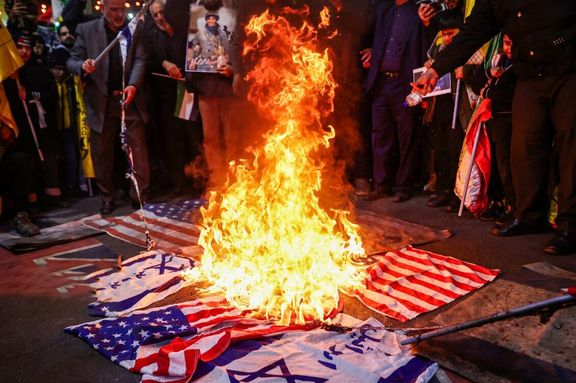
The head of the UN nuclear watchdog said on Wednesday that its new deal with Iran covers inspections at all of the country’s declared nuclear sites, including those hit by Israeli and US strikes in June, in what he called a step in the right direction toward restoring safeguards.
International Atomic Energy Agency (IAEA) Director General Rafael Grossi told member states in Vienna that the technical document signed in Cairo on Tuesday with Iranian Foreign Minister Abbas Araghchi sets out procedures for inspections, notifications, and reporting obligations.
“This includes all facilities and installations in Iran, and it also contemplates the required reporting on all the attacked facilities, including the nuclear material present at those,” Grossi said.
Grossi acknowledged the challenges posed by the aftermath of June’s Israeli and US airstrikes on Iranian nuclear facilities, which forced the withdrawal of inspectors for safety reasons.
“Safeguards approaches to each facility will be reviewed at technical level, always in line with the rights and obligations of Iran and the agency under the NPT safeguards agreement, which are not modified or amended as a result of these practical steps,” he said.
“Resuming this indispensable work would not be an automatic or simple bureaucratic process,” he said, adding that Iran’s parliament had since adopted a law suspending cooperation, creating the risk of non-compliance with safeguards obligations.
But he pointed to what he called “Iran’s declared willingness not to leave the NPT and to continue working inside the international nonproliferation regime” as a positive signal.
Grossi said the new arrangement reflected both Iran’s concerns and the agency’s technical requirements. “Iran and the agency will now resume cooperation in a respectful and comprehensive way,” he told diplomats.


He said the talks were aimed at finding ways to reconcile Iran’s new legislation with its binding treaty obligations, adding: “This required dialogue and a thorough understanding of the situation and Iran’s specific views.”
"Iran expressed concerns, and it is our duty as an international organization to listen to those and find ways and means to address them in a form which would reconcile these important parameters, Iran's new law and the existing legal obligations emanating from the NPT safeguards agreement”
While he cautioned that “there may be difficulties and issues to be resolved,” he underlined the broader importance of the agreement.
“It is my sincere hope that the resumption of our inspection activity in Iran may serve as a good sign, as a reference, an indication that agreements and understandings are possible,” Grossi said.
Iran suspended all cooperation with the IAEA following the June attacks, and last month Britain, France and Germany triggered a UN “snapback” process to restore sanctions unless inspections resumed and Iran provided clarity on its enriched uranium stockpile.
Araghchi, speaking in Cairo on Tuesday, said the agreement created “a practical mechanism for cooperation” but warned that Iran would void it if hostile measures, including renewed UN sanctions, were imposed.
Diplomats say whether the new steps will be sufficient to head off European sanctions will depend on how quickly inspectors can resume work and whether Tehran provides full accounting of its highly enriched uranium.

Tuesday’s strike on the leadership of the Iran-backed Palestinian group Hamas in Doha aims to intimidate Tehran but also sows unease among Arab states, Israeli and American experts told Iran International.
The airstrikes on Tuesday apparently sought to assassinate Hamas's leadership and negotiating team, drawing condemnation from Qatar and its Arab neighbors.
They seemed to miss their intended targets, killing a Qatari security official and five lower-ranking Hamas personnel.
Miri Eisin, a retired colonel in the Israeli military who served in the intelligence establishment, said the attacks' upshot for Israel remains unclear, but even if unsuccessful sends a message of strength to Iran.
“This is actually something that shows Israel’s intelligence prowess. Even if the operation wasn’t successful and the leaders of Hamas left a few minutes before, we still know where they were,” she said.
“It makes everyone go ‘oh my god, Israel has amazing intelligence and operational capabilities and that threatens Iran’," Eisin added.
A 12-day surprise Israeli campaign against Iran in June battered the Islamic Republic's military and nuclear infrastructure and killed hundreds of civilians and military personnel along with several top nuclear scientists.
Israeli leaders mooted assassinating Iran's Supreme Leader Ali Khamenei but apparently made no attempt to do so, while Iran's President Massoud Pezeshkian, the parliament speaker and the judiciary chief survived an attack.
32 Israelis were killed in Iranian counterattacks, even as Israeli attacks on Iranian air defenses appeared to give Israeli planes free reins in enemy skies.
“They see that we have Qatar, and anywhere in Iran," Eisin said. "That’s very threatening and has an intimidating effect on Tehran. However, it also intimidates a lot of our other allies like the UAE and Bahrain.”
Those two Persian Gulf states had opened formal relations with Israel in the so-called Abraham Accords in 2020, but both condemned the attacks.
Qatar’s Emir Sheikh Tamim bin Hamad Al Thani condemned what he called a “reckless criminal attack” in a phone call with US President Donald Trump according to an official readout, adding it was “a flagrant violation of its sovereignty and security."
Trump told reporters he was "very unhappy about it, very unhappy about every aspect."
'Loose cannon'
Former Israeli military intelligence chief, Danny Citronowicz, said the move may bring diplomatic fallout and that Iran may now seek to exploit the strikes to drive a wedge between the Persian Gulf powers and Israel.
“It makes Israel seem like a loose cannon so it’s something Israel must take into consideration,” Citronowicz said. “The possible risk of spillover will worry the UAE and Saudi Arabia. Iran will now be able to pressure these countries with connections to Israel and exploit this to push their own agenda.”
Saudi Arabia is widely seen as the an ultimate diplomatic prize for Israel's drive to normalize its relations with regional powers. The world's top oil exporter is weary of Iran's regional policies but has said it will not recognize Israel until a Palestinian state is established.
Benham Ben Taleblu, an Iran expert at the US think tank the Foundation for the Defense of Democracies (FDD), told Iran International that the strikes conveyed that Israel is prepared to carry out assassinations despite diplomatic risks.
"Israel’s strike against Hamas leaders in Doha is yet another sign to the Islamic Republic and its Axis of Resistance that its terrorist leaders will not be be safe hiding in plain sight," he said.
However, the Iranian-American director of FDD"s Iran program said Iran will capitalize on the Doha attack for its political gains.
"Tehran is trying to spin the attack as a growing ring of Israeli aggression and part of quest for hegemony, which is quite rich for a regime which just orchestrated a multi-front war against Israel," he added.