UN rapporteur demands revocation of prison sentence for Iran activist
Hasti Amiri
The UN Special Rapporteur on human rights defenders raised alarm over a three-year prison sentence for Iranian activist Hasti Amiri in Iran on Tuesday, calling for the sentence to be revoked.
Hasti Amiri, a human rights defender and prisoners’ rights activist, announced on August 18 that she had been sentenced in absentia by the Tehran Revolutionary Court to three years in prison, along with additional punishments including fines and a travel ban.
“Hearing disturbing news that Iranian human rights defender Hasti Amiri was sentenced to three years in prison,” UN Special Rapporteur Mary Lawlor posted on X.
“Her peaceful advocacy for prisoners' rights and against the death penalty is protected under international law, and I demand that the sentence be revoked immediately.”
Lawlor referenced the account of Iran’s Permanent Mission to the United Nations Office of the International Organizations in Geneva in her message.
Hasti Amiri’s full sentence includes two years in prison for “spreading falsehoods with the intent to disturb public opinion” and one year for “propaganda against the government.”
“Hasti’s presence in two gatherings in front of Evin Prison opposing the death penalty and Amiri’s writings, where she argues any death sentence in Iran is a political execution, has been identified by the Revolutionary Court as spreading lies and propaganda against the government,” a source familiar with the case told Iran International on condition of anonymity.
The Revolutionary Courts of Tehran also fined her 500 million rials ($480) for “spreading false information” and 33 million rials ($31.8) for “appearing in public without the mandatory hijab.”
Additionally, the sentence includes a two-year travel ban and a two-year ban on membership in political or social organizations.
The “Woman, Life, Freedom” movement erupted in Iran in 2022 after the killing of Mahsa Amini in morality police custody, with women burning hijabs and demanding an end to mandatory Islamic dress codes and discriminatory laws.
Despite a state crackdown that killed hundreds and detained thousands, acts of defiance continue, with many women refusing to wear hijabs in public.
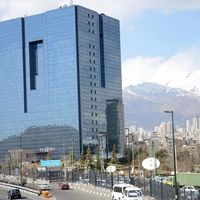
The US State Department on Tuesday denounced Iran’s closure of the Tehran Journalists’ Association, calling it a direct attack on press freedom and part of the Islamic Republic's broader effort to silence independent voices.
“The Iranian regime has intensified its attempts to extinguish independent voices in the media," the department’s Persian-language account, @USABehFarsi, said in a post on X.
"Its recent decision to shut down the Journalists’ Association building is a direct assault on freedom of expression and the right of journalists to report without censorship."
The department added, "The people of Iran deserve transparency and the opportunity to be informed about the crimes this corrupt regime secretly commits.”
The Tehran Journalists’ Association itself denounced the eviction as a “blatant assault on trade union independence, the professional freedom of journalists and the pluralism of society.”
Its offices were sealed on August 20 by order of Tehran’s municipality, which is led by hardline mayor Alireza Zakani.
Authorities insist the move was procedural, citing the expiration of a two-year lease and plans for a street expansion project.
But the Committee to Protect Journalists rejected the explanation, urging the city to reverse course or provide the group with an alternate space.
“We strongly oppose the forced closure of the Tehran Journalists’ Association offices,” said CPJ Regional Director Sara Qudah in an online statement.
A member of Tehran’s City Council, Naser Amani, also criticized the decision, saying any changes to the contract should have first been reviewed by the council.
The move follows evictions targeting other civil society groups, including the Iranian Sociological Association and the House of Humanities Thinkers.
Press freedoms in Iran are tightly restricted, with state control over broadcasters and frequent arrests of journalists.
Chinese President Xi Jinping welcomes Russian President Vladimir Putin during a ceremony at the Shanghai Cooperation Organization (SCO) summit in Tianjin, China August 31, 2025.
Russia and China have circulated a new UN draft resolution to delay the reimposition of UN sanctions on Iran, a Wall Street Journal correspondent reported, adding that it still faces long odds of approval despite tilting toward Western positions.
A similar resolution had been drafted by Russia in late August calling for a six-month technical extension of Resolution 2231, which underpins the 2015 Iran nuclear deal.
The original draft's text, seen by Iran International, said that the Security Council would suspend "any substantive consideration of matters related to resolution 2231 and the Joint Comprehensive Plan of Action (JCPOA)" during the extension.
That clause led observers to view the draft as doomed, since it effectively deprived France, Britain and Germany (the E3) of their right to trigger the so-called snapback mechanism during the six-month period.
Now the new resolution "eliminates the clause that was seen previously as outlawing snapback if UNSCR2231 was extended," according to Wall Street Journal's Laurence Norman.
However, the new draft too "is very unlikely to make the cut," he said in a post on X on Tuesday.
"The problem is twofold. It leaves ambiguous whether under this new draft, snapback would in fact be allowed ... That ambiguity will need clarifying if it has any chance of advancing."
The "far bigger problem", Norman said, is that "it makes no demands of Iran to get a six-month extension, contradicting the very clear US/E3 stance."
It is not yet clear when the new Chinese-Russian draft resolution will be tabled.
It "will ultimately depend on whether Russia is interested in a resolution that could actually win agreement. Or is simply focused on a blame game where they can say they sought to avert crisis but the E3/US refused," he said.
The snapback mechanism, created under UN Security Council Resolution 2231, allows any signatory to the now mostly lapsed 2015 Joint Comprehensive Plan of Action (JCPOA) to restore previous UN sanctions if Iran is judged to be in major violation.
Once invoked, sanctions return automatically after 30 days unless the Council votes to extend relief. The provision expires in October 2025.
On August 28, Britain, France and Germany formally triggered the process, citing Iran’s accumulation of highly enriched uranium.
On Monday, Iran, Russia and China sent a joint letter to the UN Secretary-General and Security Council slamming European attempts to restore international sanctions on Tehran, Iran's foreign minister wrote on X.
Abbas Araghchi, who signed the letter with his Russian and Chinese counterparts at a foreign ministers’ summit in Tianjin in China, said the powers were united in condemning Europe's "politically destructive" move.
The newly minted head of Iran's Supreme National Security Council said on Tuesday that Tehran remains open to nuclear talks with the United States but accused Washington of evasion.
Larijani, a former parliament speaker and veteran nuclear negotiator, was appointed last month to lead the powerful body in charge of key security decisions, where he also holds a parallel role as Supreme Leader Ali Khamenei's personal representative.
His mandate places him at the center of Tehran’s decision-making apparatus following a 12-day war with Israel in June, and his comments marked the most dovish yet on renewing US diplomacy by a top security official since the conflict.
“The path for negotiations with the US is not closed; yet these are the Americans who only pay lip service to talks and do not come to the table — and they wrongfully blame Iran for it,” Larijani wrote on X, posting on behalf of the council.
"WE INDEED PURSUE RATIONAL NEGOTIATIONS. By raising unrealizable issues such as missile restrictions, they set a path which negates any talks."
Speaking separately to Iranian media managers, Larijani dismissed Western demands that Iran scale back its missile program as unacceptable.
“The enemy says we must back down from our missile capability. Which honorable Iranian today would want to hand over his weapon to the enemy?” he said. “We also see negotiations as the path to resolving the nuclear issue. But by raising issues such as missiles, (it shows) they don’t want talks to take shape.”
His remarks underscore Tehran’s refusal to link missiles to nuclear diplomacy. The 2015 Joint Comprehensive Plan of Action (JCPOA) restricted Iran’s nuclear program but did not directly address missiles. However, UN Security Council Resolution 2231, which endorsed the deal, included language urging restraint on missile development.
Larijani argued that Washington is using the missile issue to derail diplomacy.
“At present, the Americans do not want to negotiate. After all, the war broke out at a time when we were in the middle of negotiations,” he said, referring to the recent 12-day war with Israel.
Larijani's comments come amid escalating nuclear tensions. Britain, France and Germany — the E3 — have triggered the UN’s “snapback” mechanism under Resolution 2231, seeking to restore pre-2015 sanctions over what they call Iran’s serious non-compliance.
Tehran, backed by Russia and China, has rejected the move as null and void. Iranian lawmakers have even threatened to withdraw from the Nuclear Non-Proliferation Treaty (NPT) if sanctions are reimposed.
The SNSC chief’s statement on Tuesday called restrictions on Iran’s missile program “unrealizable,” signaling that while Tehran insists negotiations remain possible, it will not make concessions on what it considers a core pillar of its defense doctrine.
A closer satellite view shows the ridge at Fordow underground complex, after the US struck the underground nuclear facility, near Qom, Iran June 22, 2025
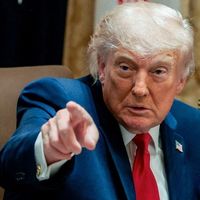
President Donald Trump said his decision to bomb Iranian nuclear sites in June forestalled a nuclear war and provided a major boon to Israel, adding new superlatives to his positive assessment of the attacks.
“Nobody has done more for Israel than I have, including the recent attacks on Iran, wiping that thing out,” Trump said in an interview with Daily Caller published on Sunday.
Trump ordered a United States military campaign dubbed Midnight Hammer on June 22, targeting the nuclear sites at Esfahan, Natanz and Fordow in Iran.
“I stopped seven wars and wiped out a nuclear war that would have happened with Iran. That was going to happen,” Trump said.
The attack involved B-2 stealth bombers armed with 30,000-pound Massive Ordnance Penetrators (MOPs), so-called bunker buster bombs designed to destroy fortified underground facilities.
The Trump administration had set a 60-day deadline to secure a nuclear agreement with Iran. On day 61, with four rounds of negotiations completed and a fifth looming, Israel launched a surprise military attack on Iran on June 13.
France, Germany and the United Kingdom are pressuring Iran to resume talks with the US and resolve disputes over its nuclear program.
The European troika, which are party to a 2015 nuclear deal with Iran, had set a deadline for Tehran to make an effective and tangible move toward diplomacy by the end of August.
The E3 notified the United Nations in late August that they would pursue the reimposition of UN sanctions under the so-called "snapback" mechanism unless Iran returned to nuclear talks, granted inspectors wider access and provided details on its highly-enriched uranium stockpile.
European governments have stressed that there is still time for diplomacy before sanctions formally return.
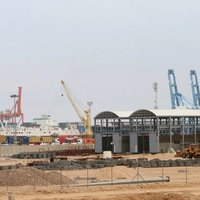
People navigate boats near Nahr Bin Umar oil field, in Basra, Iraq June 30, 2024.
The US Treasury on Tuesday imposed sanctions on an Iraqi-Kittitian businessman and a network of companies and vessels accused of smuggling Iranian oil disguised as Iraqi crude.
The sanctions target Waleed Khaled Hameed al-Samarra’i, based in the United Arab Emirates, along with his firms Babylon Navigation DMCC and Galaxy Oil FZ LLC, and nine Liberia-flagged tankers.
Washington said the network covertly blended Iranian and Iraqi oil through ship-to-ship transfers in the Persian Gulf and in Iraqi ports, marketing it as solely Iraqi in origin.
The Treasury estimated the operation generated about $300 million annually for both Iran and al-Samarra’i.
It accused the group of using shell companies in the Marshall Islands to obscure ownership of vessels and employing tactics such as night transfers and location spoofing to hide activity.
“Iraq cannot become a safe haven for terrorists, which is why the United States is working to counter Iran’s influence in the country,” Treasury Secretary Scott Bessent said in a statement.
“By targeting Iran’s oil revenue stream, Treasury will further degrade the regime’s ability to carry out attacks against the United States and its allies.”
The measures follow sanctions announced in July against another network accused of blending Iranian and Iraqi oil.
For two consecutive years, Chinese records show imports of “Iraqi” oil exceeding Iraq’s declared shipments by around 100,000 barrels per day—worth more than $2.5 billion annually.
The gap has grown since 2021, suggesting a persistent pattern of disguised flows, according to experts.
Iraq’s oil minister Hayyan Abdul-Ghani acknowledged earlier this year that Iranian tankers were using forged Iraqi documents and said the matter had been reported to the United States.