US condemns Iran for shutting down journalist union's offices
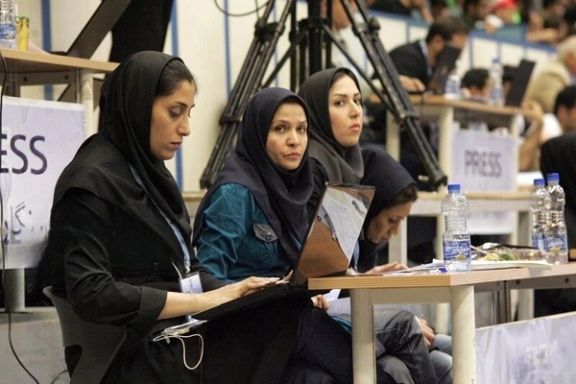
A group of Iranian female reporters
The US State Department on Tuesday denounced Iran’s closure of the Tehran Journalists’ Association, calling it a direct attack on press freedom and part of the Islamic Republic's broader effort to silence independent voices.
“The Iranian regime has intensified its attempts to extinguish independent voices in the media," the department’s Persian-language account, @USABehFarsi, said in a post on X.
"Its recent decision to shut down the Journalists’ Association building is a direct assault on freedom of expression and the right of journalists to report without censorship."
The department added, "The people of Iran deserve transparency and the opportunity to be informed about the crimes this corrupt regime secretly commits.”
The Tehran Journalists’ Association itself denounced the eviction as a “blatant assault on trade union independence, the professional freedom of journalists and the pluralism of society.”
Its offices were sealed on August 20 by order of Tehran’s municipality, which is led by hardline mayor Alireza Zakani.
Authorities insist the move was procedural, citing the expiration of a two-year lease and plans for a street expansion project.
But the Committee to Protect Journalists rejected the explanation, urging the city to reverse course or provide the group with an alternate space.
“We strongly oppose the forced closure of the Tehran Journalists’ Association offices,” said CPJ Regional Director Sara Qudah in an online statement.
A member of Tehran’s City Council, Naser Amani, also criticized the decision, saying any changes to the contract should have first been reviewed by the council.
The move follows evictions targeting other civil society groups, including the Iranian Sociological Association and the House of Humanities Thinkers.
Press freedoms in Iran are tightly restricted, with state control over broadcasters and frequent arrests of journalists.
The newly minted head of Iran's Supreme National Security Council said on Tuesday that Tehran remains open to nuclear talks with the United States but accused Washington of evasion.
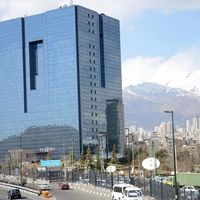
Larijani, a former parliament speaker and veteran nuclear negotiator, was appointed last month to lead the powerful body in charge of key security decisions, where he also holds a parallel role as Supreme Leader Ali Khamenei's personal representative.
His mandate places him at the center of Tehran’s decision-making apparatus following a 12-day war with Israel in June, and his comments marked the most dovish yet on renewing US diplomacy by a top security official since the conflict.
“The path for negotiations with the US is not closed; yet these are the Americans who only pay lip service to talks and do not come to the table — and they wrongfully blame Iran for it,” Larijani wrote on X, posting on behalf of the council.
"WE INDEED PURSUE RATIONAL NEGOTIATIONS. By raising unrealizable issues such as missile restrictions, they set a path which negates any talks."
Speaking separately to Iranian media managers, Larijani dismissed Western demands that Iran scale back its missile program as unacceptable.
“The enemy says we must back down from our missile capability. Which honorable Iranian today would want to hand over his weapon to the enemy?” he said. “We also see negotiations as the path to resolving the nuclear issue. But by raising issues such as missiles, (it shows) they don’t want talks to take shape.”
His remarks underscore Tehran’s refusal to link missiles to nuclear diplomacy. The 2015 Joint Comprehensive Plan of Action (JCPOA) restricted Iran’s nuclear program but did not directly address missiles. However, UN Security Council Resolution 2231, which endorsed the deal, included language urging restraint on missile development.
Larijani argued that Washington is using the missile issue to derail diplomacy.
“At present, the Americans do not want to negotiate. After all, the war broke out at a time when we were in the middle of negotiations,” he said, referring to the recent 12-day war with Israel.
Larijani's comments come amid escalating nuclear tensions. Britain, France and Germany — the E3 — have triggered the UN’s “snapback” mechanism under Resolution 2231, seeking to restore pre-2015 sanctions over what they call Iran’s serious non-compliance.
Tehran, backed by Russia and China, has rejected the move as null and void. Iranian lawmakers have even threatened to withdraw from the Nuclear Non-Proliferation Treaty (NPT) if sanctions are reimposed.
The SNSC chief’s statement on Tuesday called restrictions on Iran’s missile program “unrealizable,” signaling that while Tehran insists negotiations remain possible, it will not make concessions on what it considers a core pillar of its defense doctrine.
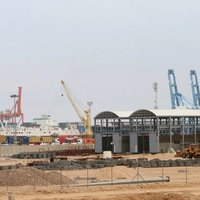
People navigate boats near Nahr Bin Umar oil field, in Basra, Iraq June 30, 2024.
The US Treasury on Tuesday imposed sanctions on an Iraqi-Kittitian businessman and a network of companies and vessels accused of smuggling Iranian oil disguised as Iraqi crude.
The sanctions target Waleed Khaled Hameed al-Samarra’i, based in the United Arab Emirates, along with his firms Babylon Navigation DMCC and Galaxy Oil FZ LLC, and nine Liberia-flagged tankers.
Washington said the network covertly blended Iranian and Iraqi oil through ship-to-ship transfers in the Persian Gulf and in Iraqi ports, marketing it as solely Iraqi in origin.
The Treasury estimated the operation generated about $300 million annually for both Iran and al-Samarra’i.
It accused the group of using shell companies in the Marshall Islands to obscure ownership of vessels and employing tactics such as night transfers and location spoofing to hide activity.
“Iraq cannot become a safe haven for terrorists, which is why the United States is working to counter Iran’s influence in the country,” Treasury Secretary Scott Bessent said in a statement.
“By targeting Iran’s oil revenue stream, Treasury will further degrade the regime’s ability to carry out attacks against the United States and its allies.”
The measures follow sanctions announced in July against another network accused of blending Iranian and Iraqi oil.
For two consecutive years, Chinese records show imports of “Iraqi” oil exceeding Iraq’s declared shipments by around 100,000 barrels per day—worth more than $2.5 billion annually.
The gap has grown since 2021, suggesting a persistent pattern of disguised flows, according to experts.
Iraq’s oil minister Hayyan Abdul-Ghani acknowledged earlier this year that Iranian tankers were using forged Iraqi documents and said the matter had been reported to the United States.
People walk past a billboard with a picture of nuclear scientists killed in Israeli strikes and Iranian centrifuges, on a street in Tehran, Iran August 29, 2025.
Iran’s refusal to cooperate with international nuclear inspectors could invite further US military action, the Washington Post editorial board wrote on Tuesday, citing June’s airstrikes on three major Iranian nuclear sites.
“The most hopeful explanation is that Iran is blocking the inspectors because it fears independent confirmation that its costly 30-year nuclear program has been destroyed — but hope has never been an effective counterproliferation strategy,” the board wrote.
The opinion piece said lingering uncertainty about how much of Iran’s program was destroyed in the strikes at Fordow, Natanz and Isfahan risked fueling new confrontation. Inspectors have been allowed to visit the Bushehr reactor, but not the facilities targeted by US bombers.
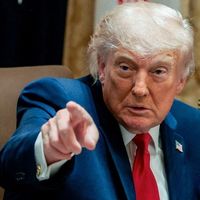
According to the editorial, “If Tehran takes any lesson from June, it should be that the United States is not afraid of using military force to prevent Iran from getting nuclear weapons. Trump resisted pressure from the vocal isolationist faction in his base, and he could do so again if he feels it is necessary to protect the nation’s security.”
The board said Iran’s stonewalling, along with missing stockpiles of near-weapons-grade uranium, underscored the need for full access for International Atomic Energy Agency inspectors. It argued that Tehran must also reenter negotiations on a strictly civilian nuclear program if it wants to avoid further conflict.
Britain, France and Germany last week triggered the UN “snapback” mechanism, starting a 30-day process to restore international sanctions unless Iran resumes full cooperation with the agency, agrees to direct talks with Washington and provides an accounting of the uranium.
Iran has threatened a “harsh response” if sanctions are reimposed, including the possibility of withdrawal from the Nuclear Non-Proliferation Treaty.
Iran’s Foreign Ministry on Tuesday denied sending negotiation signals to Washington, after Iran International reported that senior officials privately acknowledged the White House had ignored at least 15 messages from Tehran seeking renewed talks.
“I never said we sent signals to America and they did not respond,” ministry spokesperson Esmail Baghaei told reporters in Tehran.
His comments followed an exclusive report by Iran International, which said senior Iranian officials admitted in private meetings that the White House ignored at least 15 messages from Tehran seeking renewed negotiations.
Deputy Foreign Minister Majid Takht-Ravanchi told told editors of Iranian print and online media in a private meeting on Saturday that US officials had disregarded Iran’s outreach. In a separate session, deputy foreign minister for legal affairs Kazem Gharibabadi said Iran had used different channels to contact Washington but received no reply.
Elsewhere during his press conference, Baghaei added that Iran remained skeptical about US intentions. “In relation to America, we must always consider the reality that we were confronted with Israeli aggression and US support in the middle of a negotiating process. Certainly, we cannot talk about the future without taking past experiences into account.”
Baghaei accused Washington of undermining diplomacy. “In the past ten years America has disrupted diplomatic processes two or three times. These instances show that Washington did not have goodwill from the beginning,” he said.
The European powers -- Britain, France and Germany -- triggered the 30-day snapback process last week, demanding that Iran resume talks with the United States, allow full IAEA inspections, and clarify its stockpiles of enriched uranium or face restored UN sanctions.
Baghaei also addressed remarks he made in an interview with the Guardian suggesting Iran was ready to reduce enrichment levels to the 3.67% cap under the 2015 nuclear deal if a comprehensive agreement was reached.
On Tuesday, he said: “I explained that if the other side fulfills its commitments, we will do the same. But we are very far from that point.”
Washington has insisted Iran halt all uranium enrichment on its territory, a condition repeatedly rejected by Iranian leaders as a red line. Baghaei repeated that position, describing Europe’s conditions as lacking seriousness and goodwill.
A screengrab from a video showing a man holding a small dog stands atop the clock tower at London’s King’s Cross station after unfurling a flag with anti-Iranian government slogans, September 2, 2025
A man scaled the clock tower at London’s King’s Cross railway station on Tuesday morning with a small dog and unfurled a large flag carrying anti-Iranian government slogans, prompting a major emergency response.
The flag, which read “Iran belongs to its people” and “Freedom for Iran,” was attached to a backpack and dropped from the 100-foot (34-meter) tower ledge as crowds gathered below, according to witnesses.
Videos posted on social media showed the man holding the dog, believed to be a Pomeranian, while displaying the banner.
British Transport Police (BTP) said officers were called at around 8 a.m. after reports of “a person in a precarious position.”
“The incident is ongoing and officers are in attendance alongside other emergency services, working to bring the incident to a safe conclusion,” a BTP spokesperson said before noon.
The London Fire Brigade and London Ambulance Service were also deployed, with fire crews setting up an aerial ladder platform as a precaution. A police cordon was put in place around the busy transport hub in central London.
The protest comes amid heightened tensions in the Iranian diaspora in Britain. In June, seven Iranian nationals were charged with grievous bodily harm with intent after a fight broke out outside Iran’s embassy in London, in what police described as a clash between activists opposed to and supportive of the Islamic Republic.
By late morning on Tuesday, the man remained on the tower as authorities negotiated with him. Passengers continued to use the station, one of London’s busiest, although parts of the concourse near the tower were restricted.
There was no immediate comment from the Iranian embassy in London.