Tehran installs loudspeakers in city squares for when internet access is cut
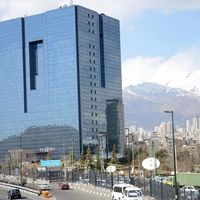
Tehran has begun installing loudspeakers in major city squares to help inform the public during emergencies when authorities cut internet access, a city council member said on Saturday.
“With internet outages during crises, we must use loudspeakers for public alerts,” said Mehdi Babaei, a member of Tehran’s City Council. “A number of these loudspeakers have been installed in main squares and the work is still ongoing.”
Babaei said the system is designed to function both in normal and emergency conditions. “These systems will play the call to prayer during routine times,” he said. “In crises, we need to decide how to use them for public announcements.”
He said mobile networks could also be disrupted during wartime. “In the 12-day war, the communications ministry had to limit internet access at times,” he said. “We may even have to temporarily block mobile phones. So we need different ways to alert people.”
“These systems can play both sirens and voice messages,” he said. “It depends on what city managers or crisis teams decide during emergencies.”
During last month's 12-day war, the Iranian government imposed a widespread internet blackout across the country, cutting off mobile networks and home internet services for millions.
The shutdown left people unable to access information, contact family members, or carry out basic tasks such as banking and navigation.
Monitoring group NetBlocks said it was the most severe connectivity crisis since the November 2019 protests.
Iranian President Masoud Pezeshkian on Saturday called for the return of Iranians living abroad and urged coordination between the judiciary and intelligence services to ease concerns, despite past detentions of returnees.
“We must create a framework for Iranians abroad to return comfortably and without fear, and this requires coordination with the judiciary and the Ministry of Intelligence,” Pezeshkian said during a meeting at the foreign ministry.
“These individuals are also assets of this land,” he added, appealing for their reintegration. His remarks followed a state media interview one day earlier in which Cultural Heritage, Tourism and Handicrafts Minister Reza Salehi Amiri said, “This land belongs to you, and we are rolling out the red carpet.”
Yet the government’s invitation comes against a record that has left many expatriates wary. In recent years, dual and foreign-based nationals returning to Iran have faced arrests, lengthy interrogations, and prison sentences often without formal charges being made public.
Nasrin Roshan, an Iranian-British dual citizen, was detained at Tehran’s Khomeini airport in November 2023 while trying to leave the country. She was held for 550 days before being freed in May, after repeated inquiries by rights groups and British officials.
In another case, Iranian-American journalist Reza Valizadeh returned to Iran in early 2024 after a 14-year absence. Within days, he was taken to Evin Prison’s Ward 209 and sentenced in December to 10 years by the Revolutionary Court. His family said he had returned only for a family visit.
The Iranian parliament last week passed the general outline of a bill titled “Support for Iranians Abroad,” backed by 209 lawmakers. The draft law includes measures such as easing entry and exit, offering consular support, reviewing dual citizenship policies, and facilitating academic and investment opportunities.
But critics in parliament questioned its likely impact.
“Until domestic issues such as administrative corruption, a weak banking system, and lack of meritocracy are resolved, this bill will not encourage Iranians to return,” MP Ahmad Fatemi of Babol said earlier this month.
Despite the doubts, Pezeshkian has consistently urged diaspora engagement. In a July 14 message, he told expatriates, “We must join hands and strive for the dignity of our country.”
A nationwide survey in December 2024 titled “Migration of Iranians: Causes and Motives” found that while 19 percent of 12,000 respondents lived abroad, only a fifth of them expressed any interest in returning.
Only 16 percent of Iranians are not considering emigration, according to this study.
Reza Pahlavi, the exiled son of Iran’s last shah, told Politico that at least 50,000 government and military insiders have registered with his defection platform to help topple the Islamic Republic.
“There’s tens of thousands — the last estimate is over 50,000 at least, maybe more,” Politico quoted Pahlavi as saying in an interview published on Saturday, adding that his office is giving priority to those within key state institutions.
He said his team is working to verify identities and assess the credibility of registrants. A second site for civilian supporters is expected to go live in the coming weeks.
Pahlavi to convene opposition conference in Munich
The Convention of National Cooperation, scheduled for Saturday in Munich, is expected to bring together around 500 regime opponents from inside and outside the country. Pahlavi said it will be “perhaps the largest gathering ever” of anti-regime voices since the 1979 revolution, aiming to project unity among opposition groups and reach audiences inside Iran via smuggled internet services, such as Starlink.
He said all participants back three core principles: preserving Iran’s territorial integrity, defending individual freedoms and equality, and separating religion from the state.
Nine people, including three assailants, were killed and 20 others wounded in an armed attack on a courthouse in the southeastern Iranian city of Zahedan on Saturday, Iranian state media reported.
Fars News Agency, affiliated with the Islamic Revolutionary Guard Corps, said gunmen stormed the judiciary building in the restive Sistan and Baluchestan province and opened fire, first targeting court offices and then shooting at civilians outside.
Security personnel helped court staff and visitors leave the area as gunfire and an explosion were heard from inside the building, Fars said. The cause of the explosion has not been announced. Local speculation pointed to a possible suicide bomber, though this remains unverified.
According to the rights group Haalvsh, the attackers entered through Azadi Street and directly targeted the judges’ offices. Eyewitnesses said several judiciary employees and security forces were hit. The area remains under tight lockdown.
Jaish al-Adl, a Sunni armed group rooted in Iran’s Baluch minority, claimed responsibility for the attack. The group had recently threatened retaliation over the execution of Baluch prisoners in Iran.
The province has seen a sharp rise in executions this year. Iran Human Rights (IHR) NGO recorded at least 343 executions in the first four months of 2025, a 75-percent increase compared to the same period last year.
Baluch prisoners accounted for nearly one-third of all executions in April, including four men hanged on April 30. Rights groups have warned of the possible execution of 85 Baluch inmates in Zahedan Central Prison.
Jaish al-Adl, which has claimed a series of past attacks on military positions including those of the IRGC, is designated as a terrorist organization by both the Islamic Republic and the United States.
Sistan and Baluchestan has long been a center of unrest, frequently targeted by armed factions like Jaish al-Adl, known for ambushes, bombings, and raids that have killed both civilians and security personnel.
An Iranian police force stands on a street during the revival of morality police in Tehran, Iran, July 16, 2023
The defense and foreign ministers of Australia and Britain hit out on Friday at what they called Iran's rising use of the death penalty and ongoing repression of women, girls and human rights defenders.
“Ministers condemned Iran’s unjust detention of foreign nationals and raised ongoing concerns over the human rights situation in Iran,” said the joint statement by the four ministers, who met for consultations in Sydney on Friday.
It cited “the escalation of the use of the death penalty as a political tool during the 12-day conflict, and the ongoing repression of women, girls, and human rights defenders.”
Their broad remarks also covered shared policy toward many other countries.
Iran’s judiciary chief announced on Wednesday that around 2,000 people were arrested during and after the 12-day war with Israel. Some detainees, accused of collaborating with Israel, could face the death penalty.
“Some of these individuals face severe punishments, including the death penalty, while others may receive lighter sentences,” Judiciary Chief Gholamhossein Mohseni Ejei said in an interview with state TV.
The UN Special Rapporteur on human rights in Iran Mai Sato urged Tehran last month to end what they described as a “post-ceasefire crackdown.”
Australia and the UK also called on Iran to fully cooperate with the International Atomic Energy Agency (IAEA) and “refrain from actions that would compromise efforts to address the security situation in the Middle East.”
Iranian Foreign Ministry spokesperson Esmail Baqaei said a senior IAEA official is expected to visit Tehran in the coming weeks to discuss a new cooperation framework.
“Ministers stated their determination that Iran must never develop a nuclear weapon,” the UK-Australia joint statement added.
Sogand Pakdel, an Iranian trans woman, killed by her uncle in Iran.
A 25-year-old transgender woman, Sogand Pakdel, was shot in the head by her own uncle in an alleged honor killing at a family wedding near Shiraz in southern Iran last month.
Her death was the latest in a series of murders of queer Iranians by their own relatives, according to human rights groups, and testament to the grim practice's persistence in the Islamic theocracy.
Pakdel, a well-known trans activist in Iran, attended her cousin’s wedding despite threats from her family.
Upon arrival, her uncle allegedly fired a warning shot into the air before killing her, according to the Human Rights Activists News Agency (HRANA). The murder took place just days before the start of the 12-day war between Israel and Iran last month.
Pakdel had faced years of abuse, including beatings, abduction and death threats from family members.
The Norway-based Hengaw Organization for Human Rights cited a source saying she had been living in a Shiraz guesthouse after being ostracized yet remained active in Iran’s trans community.
“She never stayed silent,” the source told Hengaw, noting that Pakdel frequently used social media to advocate for trans rights and speak out against discrimination.
"As a transgender woman with lived experience in Iran, hearing this news is not only deeply distressing for me, but also traumatizing," said Shaya Goldoust, an Iranian trans activist now living in Vancouver, told Iran International. "It brings back the pain and fear I endured throughout three decades of life in that country."
Goldoust, who had gender affirmation surgery in 2012, said she feared for her life in Iran. She fled to Turkey in 2016, where she also faced discrimination, before eventually seeking refuge in Vancouver in 2020.
"Iran is a country where being different can cost you your life, and where even death is met with celebration by some," Goldoust added. "The reactions on social media, where many users justified or even welcomed her death simply because of her identity, are a chilling reminder of that truth."
Pakdel was a member of the Qashqai tribe known as “Galleh Zan.” Her killing was reportedly aimed to restore so-called family honor, a term used to justify such murders where they occur in traditional, socially conservative communities.
HRANA reported that her funeral was held in near-secrecy under family pressure, with only a small number in attendance. Her uncle later confessed and turned himself in.
No protection under the law
Shadi Amin, director of the Iranian LGBTQ+ rights group 6Rang, said Pakdel’s killing highlights how vulnerable trans people remain under Iran’s legal system.
Her murder occurred in a legal vacuum in which queer Iranians lack any formal protections and remain vulnerable to systemic abuse and lethal violence.
"As a trans person, Sogand should have been protected by the law—but they weren’t. Their murder by their uncle exemplifies the deadly intersection of patriarchy, heteronormativity, and systemic violence against the LGBT+ community," she told Iran International.
"To prevent such tragedies, we need profound political, cultural, and legal transformation."
Arsham Parsi, a queer Iranian-Canadian activist, was resigned.
“This is yet another heartbreaking and tragic incident from Iran. Sadly, it is not the first time a member of the LGBTQ+ community has been killed by their own family simply for being different — and tragically, it may not be the last,” he told Iran International.
Parsi, who founded Iran’s first underground LGBTQ+ support group in 2001, now lives in Toronto, where he leads the International Railroad for Queer Refugees (IRQR) and the Marjan Foundation, both of which support LGBTQ+ communities across the Middle East.
While being transgender is not criminalized under Iranian law, trans and queer Iranians face widespread violence, exclusion, and discrimination. Homosexuality, by contrast, is punishable by death under the Islamic Republic’s penal code.
In September 2022, two women — Zahra Sedighi-Hamadani and Elham Choubdar — were sentenced to death by the Islamic Revolution Court of Urumieh for defending LGBTQ+ rights online.
Amnesty International said the verdicts were based on their “perceived sexual orientation and gender identity.” Despite international outcry, Iranian authorities stood by the sentences.
Such honor-based killings continue to surface. In February 2024, a man in Tabriz murdered his 17-year-old queer child, Parsa, and was released after serving only six months. In May 2021, Alireza Fazeli Monfared, 20, was killed by male relatives in Ahvaz for being gay—one of the few publicly acknowledged cases.
These murders typically go unpunished and underreported, ignored by the judiciary and state-run media. Activists warn that only international pressure and public scrutiny can disrupt the cycle.
“We know the Iranian regime consistently fails to take meaningful action to prevent such violence or protect LGBTQ+ individuals," Parsi told Iran International.
That’s why the responsibility falls on us — activists, human rights defenders, and allies — to raise awareness, challenge harmful norms, and advocate for change."
But with threats continuing to grow at home, many queer Iranians seek to flee the country in search of safety abroad.