Several countries express solidarity after Iran port explosions
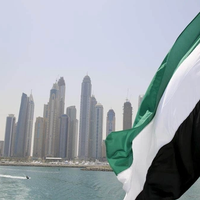
Several countries including the United Arab Emirates, Oman, Saudi Arabia, Iraq, Japan, and Russia have expressed condolences after the explosions at Rajaei port in Bandar Abbas.
Saudi Arabia said it was ready to provide any assistance requested by Iran, while Russia’s embassy in Tehran said any request for help would be immediately relayed to Moscow.
Iraq’s foreign ministry also offered support, and Prime Minister Mohammed Shia al-Sudani ordered officials to coordinate aid with Iran.
Iran’s health ministry has declared a public health emergency in Bandar Abbas following the explosion at Shahid Rajaei Port, warning of the spread of hazardous pollutants including "ammonia, sulfur dioxide, and nitrogen dioxide."
In a directive to Hormozgan University of Medical Sciences, the ministry ordered the formation of emergency response teams and urged residents to stay indoors, avoid outdoor activities, and keep windows closed.
Vulnerable groups, including people with respiratory or heart conditions, children, pregnant women, and the elderly, were advised to wear N95 or P2 masks.
Authorities also recommended frequent face washing and the use of protective clothing.
A large fire continued to burn at Rajaei Port on Saturday night, and as the flames spread to other containers, new explosions occurred in the area, according to media reports.
Explosions could still be heard from the port compound, videos shared on social media show.
The fire at the dock and container yard of Rajaei Port remains large and widespread.
The massive blast at Iran's Rajaei port "was reportedly the result of improper handling of a shipment of solid fuel intended for use in Iranian ballistic missiles,” the Associated Press reported citing private security firm Ambrey.
Earlier in January, the Financial Times reported that two Iranian cargo ships, the Golbon and the Jairan, left China loaded with 1,000 tons of sodium perchlorate, a crucial ingredient for making solid rocket propellant.
Citing unnamed security officials in two western countries, the FT said the chemicals were being shipped to the Iran's Revolutionary Guard Corps (IRGC) in Bandar Abbas.
Ship-tracking data analyzed by AP put one of the vessels believed to be carrying the chemical in the vicinity in March.
The Maritime Executive also reported in March that one of the ships mentioned by the Financial Times, the MV Jairan, was passing through the Strait of Malacca en route to Bandar Abbas.
CNN reported in February that the Golbon, the first of two Iranian cargo vessels carrying sodium perchlorate from China, had anchored off the Iranian port of Bandar Abbas after departing from Taicang Port on January 21.
Iran has not publicly acknowledged receiving the shipments and has denied that Saturday's explosion is related to the country’s oil industry.
Israel's denial of playing any role in Saturday morning’s explosions in southern Iran is part of the country’s usual and routine practice, an Israeli source told Iran International.
Earlier, the Jewish state's Channel 12 cited Israeli officials as saying the country was not involved in the explosion.
Iran has yet to announce the cause of the explosion which has left over 700 injured and at least five dead, according to official figures.
The number of people injured in the explosion at Rajaei Port in Bandar Abbas has surpassed 700, the head of Hormozgan Province’s Crisis Management Organization said on Saturday.
Six people are also missing, according to Ali-Akbar Javidan, a local police chief.
All those injured have been transferred to hospitals across Bandar Abbas, IRGC-affiliated Tasnim news agency quoted Mehrdad Hassanzadeh as saying on Saturday.
The number of casualties could continue to rise, Hassanzadeh added.
Tasnim also reported that blood supplies were dispatched from the provinces of Gilan, Tehran, Yazd, Hamedan, Kerman, North Khorasan, and Isfahan to help treat the injured in Bandar Abbas.