• العربية
  • فارسی
Brand
  • Iran Insight
  • Politics
  • Economy
  • Analysis
  • Special Report
  • Opinion
  • Podcast
  • Iran Insight
  • Politics
  • Economy
  • Analysis
  • Special Report
  • Opinion
  • Podcast
  • Theme
  • Language
    • العربية
    • فارسی
  • Iran Insight
  • Politics
  • Economy
  • Analysis
  • Special Report
  • Opinion
  • Podcast
All rights reserved for Volant Media UK Limited
volant media logo

Khamenei’s preacher travels to Thailand on propaganda mission

Sep 5, 2024, 08:04 GMT+1Updated: 15:58 GMT+0
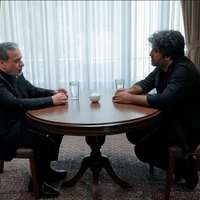
Meysam Motiee, a eulogist, (left) talking to Iran's Supreme Leader Ali Khamenei

The eulogy reciter of Iran's Supreme Leader's office, Meysam Motiee, has traveled to Thailand in a bid to export the country's ideology abroad.

The trip, like many other initiatives by Iran’s clerical rulers, has stirred controversy and renewed criticism over the Islamic Republic’s efforts to expand its ideological influence abroad.

Motiee, seemingly a PhD holder and religious reciter, is celebrated by Khamenei as one of the system's "miracles," a symbol of how the revolution has penetrated the academic world, as Khamenei says. His close ties with the Supreme Leader's office have turned him into one of the most prominent figures used by the Islamic Republic to project its narrative, domestically and internationally.

Meysam Motiee among female students of Al-Mostafa University branch in Bangkok
100%
Meysam Motiee among female students of Al-Mostafa University branch in Bangkok

While Iranian state-affiliated media tout Motiee's journey to Thailand as a cultural and religious mission, many see it as yet another example of the Islamic Republic’s broader strategy of exporting its ideology under the guise of religious outreach.

Iran has consistently dispatched thousands of missionaries and operatives to countries worldwide, in an ongoing effort to promote Shiism, and to bolster Tehran's political clout abroad.

Muslims are Thailand's largest minority, constituting around 12 percent of the 62.5 million population, though just one percent of them is Shia Muslim.

According to IranWire, Motiee rose to fame in 2017 when, during Eid al-Fitr prayers led by Khamenei in Tehran, he recited a poem sharply criticizing the nuclear deal and President Hassan Rouhani’s administration.

Despite backlash from Rouhani’s supporters, Khamenei himself publicly defended Motiee, further solidifying his status within the country's political system.

But Motiee’s influence extends far beyond Iran's borders. His eulogies have frequently aligned with Tehran’s political messaging, particularly in support of the "Axis of Resistance", the Tehran-backed network of militias and political groups across the Middle East. In his performances, he has repeatedly expressed opposition to Israel and Saudi Arabia, echoing the system’s aggressive foreign policy positions.

Under Khamenei's leadership, eulogists or "maddahs," who once earned their livelihood by performing lamentations for the deceased in graveyards or reciting tragic tales during Muharram, have now become key political figures in the Islamic Republic.

They hold significant influence in political circles and government offices, using their close ties to Khamenei to expedite various business matters, often for a fee.

During election seasons, eulogist associations engage in political propaganda on behalf of candidates, charging substantial sums. The closer a maddah is to Khamenei, the higher his fees and the greater his sway.

In 2005, a group of 100 maddahs endorsed Mahmoud Ahmadinejad for president.

Motiee’s trip to Thailand is far from unique. The Islamic Republic has long used religion as a tool to spread its influence globally. One of its most significant institutions in this endeavor is Al-Mustafa International University, a religious and educational center based in Qom.

Established under Khamenei’s orders in 2008, Al-Mustafa serves as an instrument in the ideological expansion. It operates in over 60 countries and receives significant funding from Iran’s budget, over $23 million in 2024 alone.

Despite claiming to be an academic institution, Al-Mustafa has been accused of serving as a base for the Quds Force, the overseas arm of the Islamic Revolutionary Guard Corps (IRGC).

With nearly 40,000 foreign students, many of whom hail from conflict-ridden regions like Afghanistan and Pakistan, the institution has played a key role in recruiting fighters for Tehran’s proxy wars.

The US government has sanctioned Al-Mustafa for its connections to Iran's military operations, yet it continues to operate globally, attracting students from over 130 countries, many of whom return home as loyal followers of Tehran’s ideological project.

In recent years, the Islamic Republic’s clerics, despite their anti-Western rhetoric, have shown a clear preference for international travel, often under the guise of religious outreach. Figures like Hamid Rasaee, a hardline cleric and MP close to the system, and the late cleric and Shia political theorist Taqi Mesbah Yazdi have made similar trips to Europe and even the United States.

Taqi Mesbah Yazdi (left) during a trip to the US (Undated)
100%
Taqi Mesbah Yazdi (left) during a trip to the US

The irony of these foreign trips is not lost on Iran’s beleaguered population. While the Islamic Republic continues to chant anti-Western slogans and promote isolationist policies, its officials travel freely, often to Western nations under the banner of promoting Shiism.

Meanwhile, the cost of these overseas missions is shouldered by the Iranian people, who have been hit dramatically by the country's economic crisis which has forced many below the poverty line.
Most Viewed

Iran diplomacy wobbles as factions compete to avoid looking soft on US
1
INSIGHT

Iran diplomacy wobbles as factions compete to avoid looking soft on US

2
VOICES FROM IRAN

Bread shortages, soaring prices strain households in Iran, residents say

3
ANALYSIS

The politics of pink: how Iran uses cuteness to rebrand violence

4

Scam messages seek crypto for ships’ safe passage through Hormuz, firm warns

5
EXCLUSIVE

Family told missing teen was alive, then received his body 60 days later

Banner
Banner

Spotlight

  • Diplomacy tolls at Hormuz as conflict returns to its doorstep
    OPINION

    Diplomacy tolls at Hormuz as conflict returns to its doorstep

  • Opposition to US talks grows in Tehran as ceasefire deadline nears
    INSIGHT

    Opposition to US talks grows in Tehran as ceasefire deadline nears

  • Tehran moderates see ‘no deal–no war’ limbo as worst outcome
    INSIGHT

    Tehran moderates see ‘no deal–no war’ limbo as worst outcome

  • The future has been switched off here
    TEHRAN INSIDER

    The future has been switched off here

  • Lights out, then gunfire: Witnesses recount Mashhad protest crackdown
    VOICES FROM IRAN

    Lights out, then gunfire: Witnesses recount Mashhad protest crackdown

  • Is Iran entering its Gorbachev moment?
    INSIGHT

    Is Iran entering its Gorbachev moment?

•
•
•

More Stories

Iran escalates cyber campaign to disrupt US 2024 election

Sep 4, 2024, 21:45 GMT+1

Iran has intensified its efforts to interfere in the US election, targeting the campaigns and supporters of both candidates, in an attempt that seems to be coordinated with Russia and aimed at sowing internal discord, according to the US officials and cybersecurity experts.

In the last few weeks only, giant tech companies Google, Microsoft and Meta have all reported malign activities with connections to Iran, warning that Iranian efforts may become “extreme”, even inciting violence against political figures to create chaos and undermine the integrity of the upcoming elections.

“It seems that there’s coordination between Tehran and Moscow’s information operation,” Marcus Kolga, head of DisinfoWatch told Iran International. “The US and all western democracies need to be paying close attention and exposing them. The combined information and influence operations of Iran, Russia and China represent a serious threat to all western democracies - which we cannot afford to ignore.”

Up until a few years ago, Iran was no match for Russia and China in cyber attacks. But that seems to have changed according to recent US intelligence assessments that underlined Iran’s continued efforts to hack American individuals and organizations. "Iran is becoming increasingly bold in its attempts to stoke discord and erode trust in our democratic institutions," the US Director of National Intelligence said in July.

Iranian officials, however, have dismissed all such reports, calling them “unsubstantiated.”

The escalating cyber activities from Iran come at a critical time as the US prepares for the 2024 presidential election in November. Iranian operations seem to be directed mainly towards former president Donald Trump, fearing, perhaps, that he would take a tougher stance against the ruling elite in Tehran if elected president.

Earlier this year, Iranian operatives reportedly hacked the emails of Roger Stone, a longtime Trump adviser, and attempted to infiltrate the Harris campaigns. Last month, Meta (formerly Facebook) revealed it had detected similar efforts on its WhatsApp messaging platform targeting both political campaigns.

Most Iranian cyber attacks are believed to be orchestrated by IRGC
100%
Most Iranian cyber attacks are believed to be orchestrated by IRGC

A New York Times report Wednesday named three websites that it claimed are linked to Iran’s disinformation efforts, posing as legitimate news outlets catering for Americans of varying political persuasion. According to the report, Savannah Time, NioThinker and Westland Sun target conservatives, progressives and Muslim communities respectively, publishing tailored content that aims to deepen divisions in the US.

The scope of Iran's activities extends beyond disinformation. In yet another recent report, Microsoft and Google warned about attempts to breach U.S. presidential campaigns in the lead-up to the November election.

Meta disclosed on 24 August that it had thwarted attempts by Iranian hackers to compromise the WhatsApp accounts of US officials connected to Joe Biden and Donald Trump. The hackers allegedly posed as technical support representatives from companies like Google and Microsoft to gain unauthorized access. Meta said it had quickly intervened, blocking the accounts before any significant breaches occurred.

As tensions between the two nations remain high, the possibility of foreign interference adds another layer of complexity to an already fraught political landscape.

Continued decline in Iran's marriage rates despite Supreme Leader's growth push

Sep 4, 2024, 20:12 GMT+1

New data highlights a persistent decline in Iran's marriage rates since 2011, exposing the ineffectiveness of the Supreme Leader’s prolonged efforts to boost population growth amid deteriorating economic conditions.

The latest findings from the state-run National Population Research Institute suggest that the average age of marriage for women has reached 24, while men are marrying at around 28 years old.

According to the head of the Institute, Mohammad-Javad Mahmoudi, the number of registered marriages in Iran has dropped dramatically since 2011,with almost half a million marriages registered – a fall from the peak of 891,627 marriages in 2010.

This downward trend has persisted despite repeated calls from Supreme Leader Ali Khamenei for policies to facilitate marriage and boost population growth.

The figures also suggest that the trend kickstarted the year international sanctions tightened their grip on the Iranian economy in 2011. At the end of that year, the US blocked oil importers from making payments through Iran's central bank and imposed measures that restricted Iran's access to foreign currencies. These sanctions were a response to Iran's defiance of international norms on nuclear weapons development, aiming to limit its nuclear proliferation potential and enforce global demands for transparency and accountability.

The figures also reveal that before the downward trend, there was a dramatic rise in the number of marriages in Iran with registrations soaring nearly ninefold from 152,411 to 891,627 between 1966 to 2010. This surge represents the highest recorded marriage rate in over fifty years.

Iran’s Supreme Leader Ali Khamenei believes Iran’s population needs to increase to 150 million. (undated)
100%
Iran’s Supreme Leader Ali Khamenei believes Iran’s population needs to increase to 150 million.

Khamenei’s rhetoric on population growth has been matched by a series of laws and regulations designed to encourage young Iranians to marry and have children. However, these initiatives are being undermined by significant economic challenges, including the impacts of international sanctions that have made it increasingly difficult for many young Iranians to afford the costs of starting a family.

Iran observers often highlight that the country’s economic struggles are largely a consequence of sanctions imposed due to its support for regional terrorism and severe human rights abuses. The US and EU have targeted Iran for backing militant groups like Hezbollah and Hamas, as well as for its widespread suppression of political dissent and activism.

The decline in marriage rates also reflects a broader demographic shift in Iran. Over the past 57 years, the average age at which women first marry has risen by approximately five and a half years, while for men, it has increased by about three and a half years.

This delay in marriage, coupled with economic uncertainty, has also led to a decline in birth rates. In the first nine months of 2023, Iran experienced the lowest number of births in the past decade, intensifying worries about the country’s future population growth. Abortion rates have also been on the rise in recent years.

Mahmoudi also warned that the number of women of reproductive age will sharply decline after 2029. This is due to the government’s failure to capitalize on the peak reproductive years between 2010 and 2022. "We have not yet optimally utilized the 12-year period between 2010 and 2022, during which we had a peak in the number of women of reproductive age," Mahmoudi admitted.

The hands of the bride are decorated with henna or hina in some wedding ceremonies in Iran, especially in southern regions (Undated)
100%
The hands of the bride are decorated with henna or hina in some wedding ceremonies in Iran, especially in southern regions

These demographic challenges emerge as Khamenei has once again instructed government officials to eliminate barriers to population growth. On September 3, Health Minister Mohammad-Reza Zafarghandi announced that discussions had been held on population growth policies and that experts were tasked with addressing these issues.

The Rejuvenation of the Population and Protection of the Family (RPPF) law, enacted by the Iranian Parliament in 2021 under Khamenei’s directive, has yet to produce significant results. While the law imposes penalties for actions against childbearing and marriage, economic pressures on young Iranians continue to outweigh these measures.

In a recent effort to tackle the population decline, the Central Bank of Iran announced on September 1 that it will allocate 500 trillion rials (over $830 million) from bank deposits for marriage and childbearing loans. An investigation by Iran International, however, revealed that this funding will fall short of meeting the actual demand for these loans.

This underscores the inadequacy of the government's measures and its failure to address the crisis effectively. Despite the large financial commitment, the government's approach is criticized for not sufficiently addressing the needs of young Iranians and failing to mitigate the broader economic pressures contributing to the decline in marriage rates and birth rates.

Iran's population growth rate has thus sharply declined to 0.6 percent, down from 1.23% just two years ago and a significant drop from the 4.21% rate seen in 1984.

Despite this, the Supreme Leader appears bent on boosting the population to 150 million by 2050. The relentless pursuit of demographic growth, frequently at the expense of individual rights and well-being, according to many observers, highlights the Islamic Republic’s disregard for the health and rights of its citizens, especially women and children, in favor of ideological ambitions.

Pezeshkian: A president lacking media leverage and messaging tools

Sep 4, 2024, 17:12 GMT+1

The Pezeshkian administration's relationship with the media seems to be the weakest link in its efforts to connect with the Iranian public—a link that appears to have been broken from the very beginning.

When Pezeshkian assumed office in late July, some observers hoped for shifts in the media landscape that would provide the new president with greater influence over public opinion.

Throughout the presidential campaign, Pezeshkian’s supporters frequently claimed that state TV’s coverage was biased in favor of his political rival, Saeed Jalili, whose brother oversees the network. When Pezeshkian participated in his first televised interview following the election, his supporters once again criticized the state TV presenters, accusing them of asking questions that reflected Jalili’s agenda rather than addressing the concerns of the nation.

Some observers suggested that Pezeshkian should have allowed the public to submit their questions via social media, which could then be passed on to the TV presenters. Instead, the two state TV hosts repeated the same questions from the campaign debates, seemingly in an attempt to suggest that Pezeshkian had nothing new to offer. However, in fairness to state TV, it’s worth noting that Pezeshkian does have a tendency to speak repetitively.

Centrist website Entekhab also suggested that the state TV does not represent public opinion. It also pointed out that the state TV's questions were too general, too dull and too insignificant. It also suggested that Pezeshkian should have invited independent journalists to ask questions that matter to the people.

Pezeshkian not only appears to be excluded from utilizing state TV as a vital link to the nation but is also hindered by Iran Daily, the administration’s official newspaper. Journalists in Tehran have noted that individuals appointed by Jalili's team during former President Raisi’s tenure remain in place, continuing to push their previous agenda, which works against Pezeshkian's efforts.

While state TV and Iran newspaper remain unable to advance Pezeshkian's messaging, his two spokespersons have also struggled to make an impact. Elias Hazrati, his news dissemination officer and the managing editor of the reformist Etemad newspaper, has faced criticism from journalists and others for accepting the role, raising questions about his alignment and effectiveness. As a result, Pezeshkian’s administration faces significant obstacles in effectively communicating its message to the public.

Iranian journalist Zeynab Esmaeili wrote in a post on X: "Elias Hazrati's decision to accept a government position has exposed a deeper crisis within the Iranian media. The fundamental principle that an independent media outlet should remain separate from government influence has been compromised. The involvement of media figures in government roles suggests that the spirit of criticism and independent journalism has been significantly weakened, raising concerns about the erosion of journalistic integrity and the freedom of the press in Iran."

The government spokeswoman Fatemeh Mohajerani, has yet to formally speak on behalf of the administration, but her two social media videos reveal her speaking style. While she is articulate, her delivery resembles that of a preacher or schoolteacher rather than a politician skilled in addressing sensitive issues transparently. Her use of flowery language and an overly dramatic tone detracts from the clarity needed in her role. Additionally, her promises in the videos suggest she's responsible for executing government plans rather than effectively conveying its messages in a clear and credible manner.

This situation reveals that the government is not fully established yet. Some of its officials such as the spokesperson and Peseshkian’s labor minister do not seem to be clear about the boundaries of their responsibilities and official mandate.

While Pezeshkian appears to manage domestic affairs, excluding areas under the Interior and Intelligence Ministries, foreign policy is largely in the hands of ex-foreign minister Javad Zarif's former team, Abbas Araghchi and Majid Takht Ravanchi, who answer directly to Supreme Leader Ali Khamenei. Meanwhile, Pezeshkian faces a lack of effective media tools, compounded by attacks from hardline newspapers like Kayhan.

‘Iranians for Trump’ to mobilize community for 2024 US elections

Sep 4, 2024, 14:03 GMT+1

A new political group, Iranians for Trump, has officially launched with the goal of engaging and mobilizing Iranian-American voters in support of former President Donald Trump's 2024 presidential campaign.

The group is focused on advocating for policies they believe will strengthen US national security and promote a tougher stance toward the government of Iran.

During his administration, Trump’s foreign policy, especially regarding the Middle East, was characterized by a strong opposition to Iran. His administration withdrew from the 2015 Joint Comprehensive Plan of Action (JCPOA) in May 2019, also known as the Iran nuclear deal, and imposed strict sanctions against Iran.

Iranians for Trump supports these policies, viewing them as critical measures to counter Iran’s influence. The organization emphasizes Trump’s previous administration’s role in addressing issues related to Iran’s sponsorship of terrorism and its regional destabilizing activities, which the group argues threaten global security.

“While the Biden-Harris administration has struggled to effectively confront the threats posed by Iran’s regime, President Trump’s leadership is marked by unwavering commitment to safeguarding American national security and supporting the Iranian people in their struggle for freedom,” said Nasim Behrouz, Persian-language spokesperson for Iranians for Trump.

Iranians for Trump will focus on voter registration and advocacy to ensure that the Iranian-American community’s concerns, particularly regarding US foreign policy toward Iran, are considered by political leaders.

Sarah Raviani, the English-language spokesperson for the group, signaling the group' activism also in Congressional races added, “Our mission is to mobilize Iranian-American voters to support leaders who prioritize policies that protect US national security and promote democratic values both at home and abroad.”

According to figures from Iran’s High Council of Iranian Affairs Abroad in 2020, 47% of the Iranian diaspora (1,905,813 people) live in the Americas, with an estimated 1,500,000 living in the United States.

100%

Meanwhile, according to data from the Migration Policy Institute citing tabulations from the US Census Bureau 2019 American Community Survey (ACS), the Iranian diaspora in the United States comprises more than 577,000 individuals born in Iran or reported Iranian ancestry.

100%

Even considering the US Census Bureau, Iranian-American voters, have the potential to play a role in the November elections. While many Iran-Americans live in states like California and Texas, smaller but notable populations exist in swing states such as Virginia, Florida, Georgia, and Nevada.

100%
100%

US arrests Iranian dual national over UAV technology exports

Sep 4, 2024, 12:41 GMT+1

In an escalation of US efforts to block Iran from acquiring sensitive military technology, Gholam Reza Goodarzi, a 76-year-old dual US-Iranian citizen, was arrested at George Bush International Airport.

Goodarzi, a resident of Porter, Texas, also known as Ron Goodarzi, faces charges of smuggling parts critical for unmanned aerial vehicles (UAVs) and other manned aircraft from the United States to Iran, a move that officials say poses a direct threat to US national security.

According to Assistant Attorney General Matthew G. Olsen of the Justice Department’s National Security Division, Goodarzi, arrested last Friday, attempted to “For years, the defendant allegedly used proxy destinations to try to smuggle UAV components and other controlled technology to Iran, even concealing controlled items in his own luggage.”

Iran has long sought access to advanced technologies that could enhance its aerial combat capabilities and strengthen its influence across the Middle East, potentially endangering US allies in the region.

US Attorney Alamdar S. Hamdani for the Southern District of Texas emphasized that the prosecution is part of a broader commitment to enforcing sanctions and holding accountable individuals like Goodarzi.

“Smuggling aircraft parts into Iran endangers U.S. national security by potentially enhancing Iran's military capabilities, enabling them to advance their aerial combat potential, increase regional power and threaten U.S. allies and interests in the Middle East,” Hamdani stated, adding that such actions could advance Iran's regional power and threaten American interests.

Investigators uncovered a trove of evidence implicating Goodarzi, including emails with suppliers and customers acknowledging the difficulty of shipping parts to Iran due to sanctions.

Court documents reveal that from December 2020 through July 2023, Goodarzi illegally exported aircraft parts to Iran, often through Dubai. On several occasions, authorities searched his luggage and found aircraft parts hidden in clothing, some of which were consistent with components for UAVs and other sensitive applications.

Goodarzi, who lacks the required licenses to export such items to Iran, now faces up to 10 years in prison and a maximum fine of $250,000 if convicted.

His case forms part of a broader crackdown on Iranian smuggling networks, with US law enforcement targeting those attempting to supply Tehran with advanced military technology. Just weeks before Goodarzi’s arrest, the Department of Justice indicted two Iranian brothers and a Pakistani national for aiding Iran’s weapons program. In addition, Washing recently announced a $10 million reward for information on Iranian hackers linked to attacks on US infrastructure.

On August 14, the US Department of Justice also charged Jeffrey Chance Nader, a 68-year-old Iranian-American, with attempting to illegally export US aircraft parts to Iran.

Nader was arrested in California, and according to the indictment, he conspired with others to acquire and illegally export nearly three dozen aircraft components from the United States to Iran. Many of these parts are vital for the operation of military aircraft, such as the F-4 fighter jet, which is used by Iran's armed forces.

Despite these efforts, future prisoner swaps between the US and Iran raise concerns about the long-term impact of such prosecutions. In September 2023, a deal involving the transfer of $6 billion in Iranian funds and the release of five Iranians from US custody has prompted questions about whether legal actions like Goodarzi’s arrest will have lasting effects.

Among the Americans freed by Iran was Siamak Namazi, who spent nearly eight years imprisoned in Tehran's infamous Evin prison before his release. Meanwhile, an undisclosed number of dual-nationals remain detained in Iran on fabricated espionage charges, as the regime continues its practice of diplomatic hostage-taking.