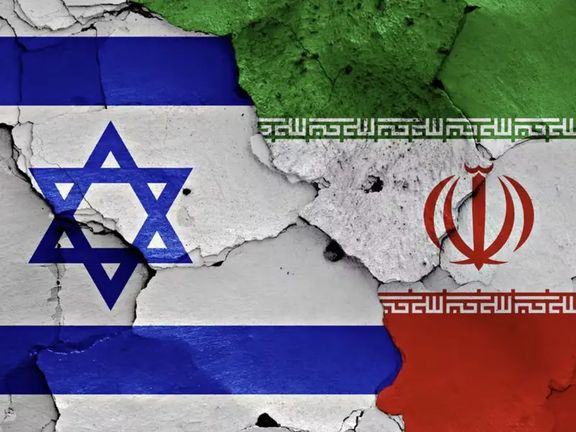
The daily headlines predicting an 'imminent attack' from Iran against Israel since the killing of Ismail Haniyeh haven't materialized and may never do so—but the psychological warfare may be just as tormenting for civilians.
Iran continues to vow revenge against Israel for the assassination of the Hamas political chief in Tehran on July 31 and has even said a ceasefire in Gaza is 'unrelated' to its retaliation plans, despite previously stating that a ceasefire would halt their attack.
Ali Fadavi, the Deputy Commander of the Islamic Revolutionary Guard Corps (IRGC), said on Monday there is an "uproar" in Israel amid fears of an imminent Iranian attack. He said they are "waiting day and night for Iran's response", and that is "harder than waiting for one's death."
On Tuesday, Ali-Mohammad Naini, the spokesperson for the IRGC, said there could be a long wait for retaliation against Israel, according to state media.
Jason Brodsky, the policy director for United Against Nuclear Iran (UANI), attributes Naini's statement to his role as one of the IRGC's top "experts" in psychological warfare.
The chance of war has been stowed deep into the cervices of both Israeli and Iranian psyches, with the only difference being that Iranians have become 'desensitized' to Iran's psychological games, according to psychotherapist Azadeh Afsahi.
Afsahi, who was born in Iran and now lives in the West treating patients, said Iran has been using phycological war as a tactic for 45 years on Iranian people.
The strategy is to make people feel anxious and unsure of what will happen next, keeping someone in state of hopelessness, fear and a feeling of sickness, she said. The Islamic Republic is intentionally not consistent with their actions, so that they leave people in a constant fearful state of the unknown, she said. Now Tehran is likely trying to keep Israelis in a state of anticipation and apprehension.
"We've been dealing with this psychological warfare of not knowing, and we have surrendered our mind to the Islamic Republic with this game that they play. And this is exactly what they do. They are occupying you with something so they can strike somewhere else," said Afsahi.
"Psychological games are the worst game you can play with people."
Israeli resident Meital Brown told Iran International that the mood is stressful and that she feels like she's "stuck in a bad feeling that's not ending."
The mother of three young kids said she started feeling this way when Iran vowed to strike Israel after the Haniyeh strike. For about a week she and her family didn't leave the house and even postponed seeing family in Tel Aviv out of fear of the so-called imminent attack.
Meital Brown at the site of the memorial at the music festival site where Hamas killed 364 people.
She and her family finally made the trip to Tel Aviv from their home near the border with Gaza, when a car bomb exploded Sunday night. Hamas claimed responsibility for the bombing that shook the city as Secretary of State Antony Blinken arrived to promote a U.S.-backed cease-fire proposal.
"I am feeling so stressful. When the kids are at summer camps for summer holidays, I wonder..maybe they will attack there and I'm not with the kids?," said Brown.
Israeli resident Dror Trabelsi isn't letting the threats from the Iranian regime bring down his spirits, and he continues to solder on, motivated to do something positive after October 7.
"It's really the same morning over and over again since October 7th."
Photos of people killed and taken hostage by Hamas militants, displayed at the site near Kibbutz Re'im
Since the atrocities of October 7 where around 1, 200 people, mostly civilians were killed by Hamas, Dror and his brothers Kobi and Eliran created an oasis for IDF soldiers exiting Gaza. The post, known as the 'Shuva brothers' is equipped with showers, coffee, hot meals and other supplies like clean clothes - all free for the soldiers.
Dror Trabelsi serves 2,000 meals a day to IDF soldiers at rest stop he created with is brothers in Southern Israel near the Gaza border.
Trabelsi said he avoids watching the news and finds the constant talk analyzing when and how Iran may attack Israel only fuels negativity and plays into their psychological games.
"This whole Iran thing is only in the news. It's not a real thing."
He said Israelis are strong and is disappointed to see so many leaving to the West out of fear of a possible war.
"It's literally a psychological game, which by the way, they [Iran] win. If one person is leaving Israel, they win."
Nurses in Iran continue their protests and strike on August 19, 2024.
As labor unrest continues to simmer across Iran, with strikes and protests by nurses spreading through various cities, the Union of Truck Owners and Drivers has now thrown its weight behind the healthcare workers.
The union's support signals an intensification of the widespread labor discontent within the country.
In a statement issued Monday, the truck drivers declared their solidarity with the nurses' struggle, warning that if the demands of the medical staff are not addressed, they too will engage in strikes and protests.
"We warn that if the just demands of the nurses are not met, we, the truck drivers and drivers nationwide, will strike and protest in their support," the union's statement reads.
The wave of protests by nursing groups and medical staff has continued unabated this month, with demonstrations and strikes reported in cities including Mashhad, Ahvaz, and Isfahan. In Mashhad, nurses rallied, while their counterparts in other cities extended the nationwide strike. Videos obtained by Iran International reveal that nurses at the Kashani Educational-Treatment Center in Isfahan joined the growing movement, chanting slogans such as "Nurse, shout out, demand your rights."
Average monthly salaries for nurses is around $220, close to the government-set minimum wage, while they often work long hours without receiving overtime pay.
Nurses in Shiraz, southern Iran, on strike on August 10, 2024.
Meanwhile, in Ahvaz, nurses gathered in front of the Khuzestan Governorate, voicing their frustrations with slogans like "We have seen no results/ Only heard promises" and "We fought COVID, saw no support."
On August 17 and 18, the unrest spread further, with nursing groups and medical staff in Arak, Jahrom, Qazvin, Mashhad, and Yasuj staging protests to highlight their ongoing issues. The protesters have expressed a range of grievances, including inadequate overtime rates, unrealistic tariffs. Their demands also call for the implementation of laws regarding hard and harmful jobs and an end to compulsory overtime.
Mohammad Reza Sharifi-Moghaddam, Secretary-General of the Nursing House says “For the first time in the 100-year history of modern nursing in the country, we are witnessing protests in the form of work stoppages. When nurses stop working, we become very concerned. Unfortunately, the authorities are not paying any attention, have not received the message, and do not understand the situation.”
The current wave of strikes follows the death of Parvaneh Mandani, a 32-year-old nurse who died on August 2 due to excessive workload, a condition known as "Karoshi Syndrome" in medicine. Her death has further galvanized nurses across the country, leading to an expansion of the strikes.
A student coalition has urged the entire community, particularly medical students, to support the nurses' cause. This broadening of support underscores the deepening crisis within Iran's healthcare system, which has seen repeated protests over the past months.
Fereydoun Moradi, a member of the Supreme Nursing Council, revealed that between 150 to 200 nurses emigrate each month due to the untenable work conditions and inadequate compensation. The dissatisfaction among medical staff has been compounded by frequent attacks and a lack of supportive measures.
Iran's Foreign Ministry Spokesman Nasser Kanaani during his weekly briefing on August 19, 2024
Iran's Foreign Ministry said on Monday that the ongoing discussions for a ceasefire in Gaza have no bearing on Tehran's plans to retaliate against Israel for the killing of Ismail Haniyeh in Tehran on July 31.
The ministry's spokesman Nasser Kanaani's comments reflect Iran's position amid escalating tensions in the Middle East, as the country remains determined to avenge the killing of Haniyeh.
"We are not looking for intensification of insecurity in the region. We support efforts with good intentions regarding the ceasefire. Meanwhile, we insist on Iran's legal right in realizing its rights and punishing the aggressor and creating deterrence against a terrorist regime. We will use it at the appropriate time," he said.
The assassination of Haniyeh in the Iranian capital has not been claimed or denied by Israel, a move that only heightens the already tense relations between Tehran and Tel Aviv.
The conflict in Gaza, which began on October 7 of last year with an attack by Hamas militants on Israeli soil killing almost 1,100 people, has dragged on for ten months. Over 40,000 people have been killed in the Gaza Strip according to Palestinian health authorities. Despite ongoing negotiations, the prospects for a lasting peace remain bleak, with both sides entrenched in their demands.
The US, under the leadership of Secretary of State Antony Blinken, has been pushing for a ceasefire, labeling it "probably the best, maybe the last opportunity" to achieve peace in the region. However, Kanaani accused the US and Israel of using the negotiations as a tactic to further their own political goals. "The ball is in the US and the Zionist regime’s court," he asserted.
“The US government must show whether the holding of these negotiations is a political maneuver to achieve its own political goals and buy time for the Zionist regime (Israel) to continue the killing of the Palestinian people or is actually meant to create conditions to establish a ceasefire,” Kanaani went on to say.
Amid the diplomatic maneuvers, Iran's defense policy and its support for Hamas and Hezbollah remains unchanged. Proposed Defense Minister Aziz Nasirzadeh for President Pezeshkian administration reiterated on Monday Iran's support for the "Resistance Front." Nasirzadeh pledged to bolster military exports to Iran's allies, despite international sanctions imposed on Tehran for its involvement in the Ukraine war, where it supplied explosive drones to Russia.
“The Resistance Front is not separate from us; when we talk about the armed forces, the Resistance Front is also included," Nasirzadeh declared, signaling Iran's intention to continue its controversial military activities.
He also underscored Iran's military strength as a key factor in deterring enemy aggression: "Our deterrence and power prevent the enemy's audacity."
Yasser Hashemi in front of a portrait of his father Ali Akbar Hashemi Rafsanjani
Yasser Hashemi, the son of Iran’s former president and influential cleric Akbar Hashemi Rafsanjani, publicly criticized ex-President Hassan Rouhani's handling of his father's death.
In a note, he accused Rouhani's administration of rushing to close the case surrounding Rafsanjani's death.
Hashemi's criticism came after the resignation of former Foreign Minister Mohammad Javad Zarif from Masoud Pezeshkian’s Strategic Council for Transition.
On August 11, Zarif posted on Instagram, expressing his dissatisfaction with the lack of progress in the ministerial selection committees and his inability to make a difference in this regard. He wrote, "I am ashamed... These shortcomings have set the course for me to continue at the university."
Addressing his note to Zarif, Hashemi did not shy away from drawing parallels between the treatment of his father by Rouhani’s inner circle and the actions of Masoud Pezeshkian’s allies.
Photos of former President Ali Akbar Hashemi Rafsanjani on the cover of Iranian newspapers to mark his seventh death anniversary (January 2024)
According to him, Rafsanjani, who played a crucial role in supporting Rouhani during the 2013 presidential election, was met with disrespect by Rouhani’s close associates after the election.
Hashemi singled out Hossein Fereydoun, Rouhani's brother, as well as Mahmoud Vaezi the chief of staff of Rouhani and Mohammad Baqer Nobakht, the Head of Plan and Budget Organization, for their behavior towards his father, noting that even Rouhani himself had shown "unkindness" and "ingratitude" towards Rafsanjani.
On January 8, 2017, it was announced that Rafsanjani had suddenly died after swimming at the Koushk pool, a facility belonging to the Expediency Discernment Council he chaired. Officially, his death was attributed to a "heart attack," but suspicions quickly arose, fueled by Rafsanjani’s complex political legacy.
Former President Ali Akbar Hashemi Rafsanjani's son Yasser Hashemi
Yasser Hashemi suggested that the intelligence ministry under Rouhani, along with other security agencies, was more concerned with swiftly closing the case than with providing a thorough and transparent investigation.
“The intelligence ministry of the eleventh government, instead of convincing Iranians and the world, alongside other intelligence and security agencies in the country, hurried to close that perpetually open case,” he added.
Rafsanjani's family has consistently voiced concerns that he may have been murdered, citing several suspicious factors. These include delays in transporting him to the hospital, the lack of access to CCTV footage from both the swimming pool and his office, the absence of a post-mortem examination despite their requests, a hurried burial, and the disappearance of highly confidential documents, such as his diaries and last will and testament, from his office safe shortly after his death.
In 2019, Rafsanjani’s daughter, Fatemeh Hashemi, revealed in an interview with Etemad newspaper that two months before her father's death, two individuals had approached her at the university, warning that her father “would be killed in a way that would make it appear as a natural death.”
Fatemeh Hashemi, the daughter of the former President Ali Akbar Hashemi Rafsanjani, speaking during a ceremony to mark the seventh death anniversary of her father in Tehran (January 2024)
Despite the warnings, the official investigation, led by Ali Shamkhani, then Secretary of the Supreme National Security Council, concluded that Rafsanjani's death was "completely natural, without any ambiguity."
Rafsanjani's other son, Mohsen Hashemi, stated in an interview published by the reformist Etemad Online website on January 15, 2022, that the Islamic Republic had adopted a policy of attributing his father's death to natural causes. He further criticized the investigation conducted by the Supreme Council of National Security, describing it as "superficial."
Mohsen Hashemi in front of a portrait of his father
Rafsanjani's death is not an isolated case. The Islamic Republic has a history of suspicious deaths among its officials. One such case is that of Mohammad Rouhani, the son of President Hassan Rouhani, who was murdered in his home located on a military base in southern Tehran in 1996. At the time, Mohammad Rouhani was a flight student, and his death has been shrouded in secrecy. Hossein Mousavian, a former Iranian diplomat and deputy to Rouhani when he headed the Supreme National Security Council, told the Time magazine that Mohammad Rouhani was killed for political reasons. Yet, the details of his murder have never been fully disclosed.
Mousavian revealed that Hassan Rouhani pursued the matter for years but eventually decided to remain silent and not pursue the issue further.
The Iranian government executed at least eight more prisoners early Monday morning, according to reports from human rights groups, with hundreds already hanged in 2024.
This latest round of executions, which took place in Yazd and Shiraz prisons, is part of a broader trend that has seen the number of state-sanctioned killings skyrocket in 2023 and 2024, drawing international condemnation and sparking renewed calls for an end to the death penalty in Iran.
The systematic execution of prisoners has become a routine practice, drawing condemnation from international human rights organizations. As the Iranian government intensifies its crackdown on dissent, political prisoners in the women's ward of Evin Prison have vowed to continue their fight against the death penalty, despite the brutal pressures they face.
Haalvash, a website dedicated to Baluch community news, reported that five individuals were executed in Yazd Prison. These included three Baluch citizens and two Afghan nationals, all condemned on charges related to drugs or murder. The Oslo-based Iran Human Rights organization confirmed that three more people were executed in Adelabad Prison in Shiraz too.
A masked executioner prepares a noose for a public hanging in Iran
Amnesty International says 853 people were executed in Iran in 2023, marking the highest number of executions in the country in the last eight years. This figure represents a 48% increase from 2022 and a 172% spike from 2021. Iran's Islamic government executed 345 people this year, until August 9. The only time when there were fewer execution was during election periods in March and June.
This wave of executions is part of a broader strategy by the Iranian government to instill fear and suppress any form of resistance. Since the nationwide protests in 2022, triggered by the death of Mahsa Amini in morality-police custody, Iran has weaponized the death penalty as a means of crushing dissent and tightening its authoritarian grip on the nation.
Meanwhile, Maryam Yahyavi, a political prisoner in Evin Prison, confirmed reports of a recent raid by guards on women protesting death sentences. In a letter published Sunday, Yahyavi described the violent crackdown: "They gathered all their strength in their arms and struck us down."
The women had gathered as part of the “No to Executions Tuesdays” campaign, protesting the execution of Reza Rasaei, a 34-year-old Iranian arrested during the 2022 anti-government protests in Kermanshah. Rasaei was executed earlier this month, and those who dared to protest his death faced repercussions, including beatings and a ban on visits and phone calls.
Despite the measures, the resolve of political prisoners remains unshaken. Yahyavi stressed that their opposition to the death penalty would continue unabated.
Another political prisoner, Golrokh Iraee, also emphasized in a letter published Monday that all citizens, regardless of their political stance, must condemn and actively oppose the death penalty.
The UN High Commissioner for Human Rights, Volker Türk, recently expressed deep concern over the ongoing executions in Iran.
Over the past decade, the Middle East has witnessed a surge in drug manufacturing and trafficking, largely fueled by the Syrian conflict, with Iran proxies playing a major role.
The security vacuum and collapse of government control have turned the country into a fertile ground for this illicit trade, with Syria and Iran establishing it as a central hub for drug production and distribution in the region.
Captagon, a drug combining amphetamines and caffeine, plays a pivotal role in the illicit drug trade orchestrated by the two countries. These allies appear to have strategically identified Captagon as the most effective substance for penetrating markets in Saudi Arabia, the UAE, and other Arab states bordering the Persian Gulf, owing to its low production cost and widespread availability.
As the world's leading producer of Captagon, Syria in all likelihood uses the drug trade as a crucial revenue stream for Bashar al-Assad's regime. Smuggling operations, facilitated by Iran-linked militias, channel Captagon into Persian Gulf countries, turning this trade into more than just an illicit economic activity – serving as a major financial lifeline for numerous armed groups, further fueling violence and instability across the region.
Iran-aligned militant groups in Lebanon and Iraq, including Hezbollah, Kata'ib Hezbollah, and Asa'ib Ahl al-Haq, play a significant role in smuggling Captagon, capitalizing on their influence over local governments. Despite concerted efforts by Jordan, Saudi Arabia, and the UAE to combat the Captagon trade—ranging from airstrikes to targeting traffickers and their warehouses—these measures have had limited success in curbing the flow of the drug.
Addressing the growing challenge of Captagon may require Arab countries to consider adopting new strategies, such as shifting the focus from punishment to treatment for users, enhancing law enforcement practices, and improving intelligence-sharing among regional nations.
The situation could also benefit from increased support and assistance from the United States. With the looming threat of Captagon being overtaken by even more destructive substances like methamphetamine, there is a sense that efforts to combat drug trafficking may need to be intensified. This could include targeting methamphetamine labs, cutting off supply chains, and closing avenues that might exacerbate the drug problem.
The rise of Captagon
Since the onset of the Syrian conflict in 2011, the country has experienced a severe decline in security and a loss of government control across vast regions. This security vacuum has allowed warlords and armed groups to take over key areas, exploiting them for various illicit activities. In the absence of government oversight, drug production factories have rapidly proliferated throughout Syria. These facilities have become major producers of Captagon, often referred to as the "poor man's cocaine," a drug containing amphetamines, caffeine, and theophylline.
Numerous reports suggest that Syria is responsible for producing around 80% of the world's Captagon, solidifying its status as the undisputed "Captagon capital." The Syrian regime stands accused of actively facilitating the production and export of Captagon to generate economic profits, particularly in the face of international sanctions, though the government continues to deny these allegations.
These factories are often operated by armed groups affiliated with the Syrian regime or supported by Iran, further complicating efforts to combat the Captagon trade. The drug trade has evolved into a crucial source of funding for military activities within Syria, exacerbating the conflict and prolonging its duration. Captagon is primarily smuggled into Jordan and Gulf countries, where authorities are intensifying efforts to curb the trade through stricter laws and large-scale seizures. The impact of the Captagon trade, however, extends well beyond Syria's borders, threatening the social and economic security of neighboring countries and the broader Persian Gulf region.
Warlords and drug lords
Warlords in Syria have become key organizers of the manufacturing and distribution networks within the drug trade. Captagon has become one of the most important sources of income for these warlords, providing them with the necessary funding to continue their military and political operations.
These chieftains have established a complex network of factories and logistical routes to smuggle drugs out of Syria. Their networks include alliances with other armed groups, human traffickers, and external parties, making tracking and stopping their operations extremely difficult. The operations are often managed by individuals with military and political influence in their areas of control.
Iran, playing a crucial role, uses the drug trade as part of a broader strategy to destabilize the region, exploiting weak security apparatuses and ongoing wars to expand its influence. Tehran’s proxy militias use profits from the Captagon trade to fund their terrorist and military activities, further complicating the security situation in the region.
Captagon is predominantly smuggled into countries such as Saudi Arabia and the UAE through intricate land and sea routes. The regular seizure of hundreds of millions of Captagon pills underscores the vast scale of production and the significant demand for this drug in the region.
Exacerbating violence and instability across the region, the implications of the Captagon trade naturally reach far beyond Syria's borders. This makes the fight against the Captagon trade a pressing regional security challenge, necessitating international cooperation and coordinated efforts among the affected countries.
Target markets
Driven by their dense populations and robust economies, the countries bordering the Persian Gulf represent a lucrative market for drug trafficking networks – making them prime targets for illicit activities.
Iran also plays a pivotal role in this context. International reports implicate Iran as a key player in smuggling networks, with drugs being routed through Iranian territory to reach Persian Gulf countries.
In response to the growing drug trafficking challenges, particularly from sources like Lebanon and Syria, Persian Gulf countries have taken several measures, such as banning imports from these regions and tightening inspection procedures at border crossings. The formation of joint task forces aimed at dismantling smuggling networks and prosecuting offenders on an international scale reflects a concerted effort to address the issue. However, the escalating Captagon trade presents significant obstacles, with corruption, strained resources, and the complexity of smuggling routes complicating enforcement efforts.
Despite ongoing security campaigns, the difficulty in curbing the trade underscores the challenges these countries face. There is a noticeable focus on enhancing security coordination with neighboring states and developing comprehensive strategies to combat drug trafficking. This includes investment in modern technology and increased cooperation with international organizations for intelligence sharing. The multifaceted approach highlights the complexity of the issue and the need for sustained, collaborative efforts to mitigate its impact.
Impact on healthcare systems, communities
The drug trade, particularly the proliferation of Captagon, has profound impacts on communities in Persian Gulf countries and Syria. Users face severe health consequences, including addiction, loss of functional capacity, and a rise in drug-related crime. The financial strain on healthcare systems, as they attempt to manage the fallout, further exacerbates the burden on public institutions.
In light of these challenges, there is a growing recognition of the need to bolster preventive and treatment strategies to mitigate the effects of addiction on communities.