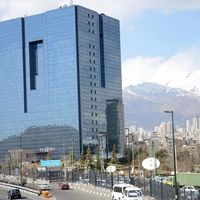
Contradictory statements by Iranian officials this week have observers and journalists scrambling to understand what the government wants to do with imports.
First the news came that the government was planning to restore the policy of offering cheap dollars to importers of essential goods, which would completely reverse its decision in early May to remove the indirect subsidy. Then it was clarified that the government is lowering its calculation for import taxes of some goods to prevent further rise in its already 55-percent annual inflation.
One thing which is clear is that top economic officials are contradicting one another about how they exactly want to mollify the effects of their “major economic surgery” in May that led to prices doubling for many essential goods. Reports say the government has presented a bill to somehow lower cost of imports for consumers.
Removing the indirect subsidy of offering cheap dollars ($1=42,000 rial) to importers has resulted in a massive hike in prices for most commodities including basic foods, medicine and medical equipment, animal feed and many other commodities despite government’s promises that it would not affect the prices of anything other than bread, chicken, eggs, oil and dairy products.
Reportedly, the new bill submitted to the parliament Monday, will lower import taxes for some basic commodities, but the mechanism remains foggy. The most likely decision will be to calculate import duties not by the actual rate of the dollar in the local market, but a fictitious rate eightfold lower, which applied when importers were receiving cheap dollars from the government until April.
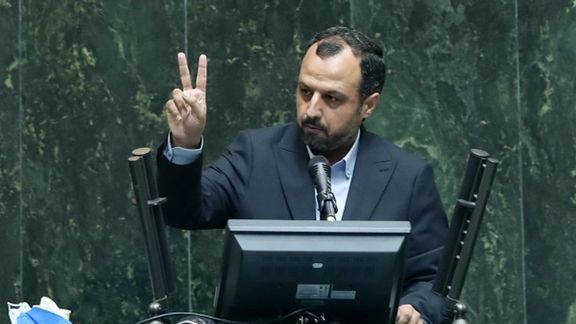
Economy Minister Ehsan Khandouzi has explained that the government took the decision to prevent further price hikes in coming months.
Abbas Argoun, a member of Tehran Chamber of Commerce, told Etemad newspaper that the higher rate in the calculation of import taxes results in cash flow problems for producers and businesses, because imported raw materials become more expensive and production costs rise.
But Argoun explained that lowering import duties now will cut into government tax revenues to the tune of one billion dollars.
Ali Ghanbari, expert in international economy, told Fararu news website that the decision is unlikely to reduce prices of imported goods or the cost of production.
“Instead of such hasty policies, the government must be seeking fundamental solutions to control inflation and high prices,” he said, adding that inflation and prices of basic commodities will continue to increase given the continuation of US sanctions and uncertainties regarding restoration of the 2015 nuclear deal.
Criticizing the government's decision to revive the 42,000 rial rate in import tax calculations, Hamidreza Salehi, a member of Tehran Chamber of Commerce, said to bring prices down the government could have reduced tariffs instead which could cause much less confusion and problems.
To compensate the hike in the prices of essential foods the government is paying around 4 million rials (about $15) to 30 percent of the population at the lowest-income groups, and around 3 million to 60 percent of the population each month. This means the government must spend the equivalent of $850-900 million a month to placate an impoverished population. It cannot afford such a huge cash handout every month and in fact, it has not paid the July stipend.
The special exchange rate was introduced in 2018 to control inflation when the United States pulled out of the Obama-era nuclear agreement known as JCPOA and imposed crippling sanctions on the Islamic Republic.
US President Joe Biden reiterated upon arrival in Israel on Wednesday that the only thing worse than Iran now is an Iran with nuclear weapons.”
Biden told Israel’s Channel 12 that he still believes the US should return to the 2015 nuclear deal – formally known as the Joint Comprehensive Plan of Action (JCPOA), noting that the decision is now in Iran’s hands.
About whether the US would use force to stop Iran from attaining a nuclear weapon, Biden said "as a last resort, yes."
He, however, once again rejected Iran’s demand that the Revolutionary Guards (IRGC) be taken off Washington’s list of foreign terrorist organizations as part of any agreement. Asked if he would hold to that position even if it meant no deal, Biden said, “Yes.”
Israel was a staunch opponent of the 2015 nuclear deal and welcomed then-President Donald Trump’s decision to unilaterally withdraw from it, which led to its unraveling, a decision Biden calls a “gigantic mistake” that accelerated Iran’s progress towards a nuclear weapon.
He declined to comment on any discussions with Israel about using military force against Iran, but assured Jerusalem that he will work with whomever is elected as Israel’s next prime minister, even Benjamin Netanyahu, with whom he has had strained relations. “We’re committed to the state, not an individual leader.”
“In order to stop regimes like Iran, economic sanctions are not enough, diplomatic sanctions are not enough. There is no way to stop Iran without a credible military threat,” said Netanyahu, who was not part of the official greeting ceremony for the US president but did shake his hand.
A group 'Mothers for Justice' with pictures of their children killed by security forces during protests
The United Nations office of Human Rights has expressed concerns about Iran’s recent detention of film directors, civil society activists and family members of victims of human rights violations.
The Office of the High Commissioner for Human Rights (OHCHR) told Iran International on Wednesday, “So far in July, over 13 people have been arrested... We note with concern the continued crackdown against civil society actors and their fundamental rights in Iran.”
“We are particularly concerned that detentions are being made on the basis of overbroad national security and espionage charges, which would render them arbitrary under international human rights law,” the office said in response to Iran International’s Maryam Rahmati.
“Civic and democratic space continue to be restricted, with human rights defenders and civil society actors operating within a coercive environment where violations are committed with impunity,” the OHCHR said, referring to the latest report by UN Secretary General António Guterres on the human rights situation in Iran presented to the Human Rights Council on 21 June.
Also on Wednesday, the US State Department’s Bureau of Democracy, Human Rights, and Labor condemned the increasing arrests of rights activists by the Islamic Republic, saying “The recent arrests in Iran are a reprehensible crackdown on peaceful dissent, including against political activists, filmmakers, and brave women protesting mandatory hijab laws. The United States condemns Iran’s continued efforts to prevent the exercise of freedom of expression.”
A mosaic photo of a number of Iranian environmentalists who are jailed by the Islamic Republic
About 2,800 environment protection academics, lawyers and artists have written to Iran’s chief justice, asking him to reconsider the case against a group of environmentalists detained since 2018.
The signatories emphasized that the four-member committee of the former administration to examine the issue, comprised of ministers of interior, intelligence and justice as well as the legal advisor to the president, had found no evidence to prove charges of espionage against them.
Nine environmentalists and ecologists were arrested in 2018 on charges of espionage. All were members of the Persian World Heritage Foundation, an NGO dedicated to conserving wildlife in Iran, and are serving sentences from four to 10 years. Kavous Seyed-Emami, the NGO’s founder, was found dead in his cell two weeks after his detention, with the authorities reporting suicide and the family denying the claim.
Human Rights Watch has reported the detainees have been subject to ‘torture’ during incarceration, and that no evidence of any crime has been produced in public, with convictions obtained in special security courts.
US National Security Adviser Jake Sullivan Wednesday warned of the threat of Russian President Vladimir Putin's attempts to deepen relations with Iran to could harm Ukrainian civilians.
Sullivan made the remarks from Air Force One as President Joe Biden embarked on his tour to the Middle East.
"Russia deepening an alliance with Iran to kill Ukrainians is something that the whole world should look at and see as a profound threat," Sullivan said.
His comments come as US officials have said Iran is preparing to help supply Russia with several hundred drones, including some that are weapons-capable, to use in Ukraine, while Putin is expected to visit Tehran next week. Sullivan called the timing of the Putin trip "interesting."
An official of Ukrainian President Volodymyr Zelenskyy’s political party told Iran International on July 12 that the news of Tehran planning to arm Russia with drones has shocked Ukrainian officials.
Yevheniia Kravchuk, who is also a member of the Ukrainian parliament, said that Tehran’s decision would lead to the death of more Ukrainian civilians.
Sullivan said on July 11 that “Our information indicates that the Iranian government is preparing to provide Russia with up to several hundred UAVs, including weapons-capable UAVs on an expedited timeline,” adding that Iran is “preparing to train Russian forces to use these UAVs with initial training sessions slated to begin as soon as early July.”
Tehran has not officially taken side with Russia on Ukraine but many officials, including President Ebrahim Raisi, have implicitly accused Ukraine of instigating Russia to attack by seeking to join NATO.
Iran’s Intelligence Ministry says it has arrested 10 armed members of a Kurdish separatist group in northwestern parts of the country, calling them part of “a terrorist network.”
In a statement on Wednesday, the ministry claimed they had plans to attack Iran’s vital economic centers and facilities.
The group was comprised of several cells with various missions to destroy vital facilities of the country, to create roadblocks and extort money from the people, especially successful local entrepreneurs, the ministry claimed.
Describing the report as "fake news," Kaveh Bahrami, the head of armed wing of Democratic Party of Iranian Kurdistan called it an attempt to justify an “atmosphere of pressure, threats and more executions".
The network had entered the country through the border areas of West Azarbaijan province with the support of terrorist groups in the Kurdistan region of Iraq, read the statement, adding that advanced communication technology and weapons, including various types of guns, rocket-propelled grenades, hand grenades, explosives and ammunition have been discovered and confiscated from the group.
The Islamic Republic calls the Kurdish armed groups in the western provinces of Iran, "terrorist groups" or "anti-revolutionary" but these groups say that the goal of their armed campaign is "defending the rights of the Kurds".
Generally, the Kurdish parties − including Komala and the Kurdistan Democratic Party of Iran (KDPI) − favor Kurdish autonomy within a federal Iran. Pejak (the Free Life Party of Kurdistan), an affiliate of the Kurdistan Workers Party (PKK), formed in Turkey but also based in northern Iraq, has generally favored a unified, independent Kurdistan uniting Kurds in Syria, Iraq, Turkey, and Iran.