Iraqis, Afghans Helped Crush 2019 Iran Protests, London Tribunal Told

Afghans and Iraqis were involved in curbing Iranian protests in November 2019, the 'Iran Atrocities Tribunal' was told Saturday.
Afghans and Iraqis were involved in curbing Iranian protests in November 2019, the 'Iran Atrocities Tribunal' was told Saturday.
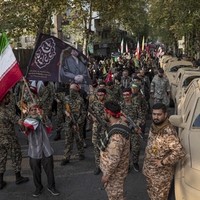
‘Witness 458’ told the unofficial tribunal in London, which is meeting behind closed doors and not open to most media, that as a member of Iran’s ‘Imam Ali’ anti-riot brigades he had seen the deployment of “violent criminals” as well as members of the Iraqi Popular Mobilization Forces, and the Afghan Fatimiyoun militia.
Speaking online with a covered face, witness 458 said Imam Ali brigades had set gas stations ablaze to blame the fires on the protesters and so justify suppression, and had been authorized to shoot protesters in the torso and head to end the unrest.
Witness 458 told the tribunal he had witnessed the killing of five protesters and that members of the Basij, the state-run paramilitary group, as young as 15 had helped deal with the protests, which followed a rise in rationed fuel prices from 7 cents to 10 cents a liter.
Iraq’s Popular Mobilization Forces (Hashd al-Shaabi) consist mainly of Shia Muslims and played a leading role fighting the Islamic State group (Isis) in Iraq after 2014 in coordination with Iraqi Kurdish forces and Iran’s Revolutionary Guards (IRGC). The Fatemiyoun brigades (Liwa al-Fatimiyun) are an Afghan Shia militia funded and trained by the IRGC who have been fighting in Syria to keep Iran’s ally, Bashar al-Assad in power.
In another presentation to the tribunal, Ali Rezaei played a recording of a phone call, made he said on November 17 in Karaj, from a third party taking his brother Naser Rezaei to hospital. "He has been shot in the eye,” the speaker said. “He is unconscious.” The Rezaei family have said they do not believe they can get justice for Naser, who died, through the Iranian legal system.
Assembly and collusion
Amnesty International reported the killing of at least 304 protesters including at least 23 minors during the November 2019 protests – but its report made no reference to evidence of the involvement of Iraqi or Afghan militias. Reuters in December 2019 reported that around 1,500 civilians were killed by orders of Supreme Leader Ali Khamenei to suppress the protests.
Iran has not announced figures for deaths or arrests, nor tried anyone over killing protesters, but has prosecuted and passed heavy sentences including the death penalty on protesters on charges including “assembly and collusion.” Over 700 banks as well as gas stations and police stations were targets of violence.
Saturday was the resumption of the ‘Iran atrocities tribunal’ set up in November 2020 on the first anniversary of the protests by the London-based Justice for Iran, the Oslo-based Iran Human Rights (IHR), and the international anti-capital punishment organization Ensemble Contre la Peine de Mort (Together Against the Death Penalty).
The tribunal stated its aim as investigating “atrocities” and “human rights violations by Iran” during the protests. The tribunal has so far ‘indicted’ 160 Iranian officials, but its ‘verdicts’ will be symbolic. Iran has dismissed the tribunal, with media calling it a stunt and “puppet show” with findings decided in advance.