• العربية
  • فارسی
BrandBrand
  • Iran Insight
  • Politics
  • Economy
  • Analysis
  • Special Report
  • Opinion
  • Podcast
  • Live TV
  • Iran Insight
  • Politics
  • Economy
  • Analysis
  • Special Report
  • Opinion
  • Podcast
  • Live TV
  • Theme
  • Language
    • العربية
    • فارسی
  • Iran Insight
  • Politics
  • Economy
  • Analysis
  • Special Report
  • Opinion
  • Podcast
  • Live TV
All rights reserved for Volant Media UK Limited
volant media logo

Iran turns on Pakistan as Saudi defense pact takes effect

Maryam Sinaiee
Maryam Sinaiee

Iran International

Oct 9, 2026, 15:23 GMT+1Updated: 16:41 GMT+1
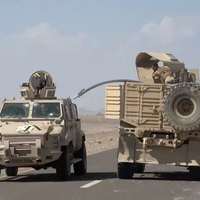
Military vehicles travel along a road during what Saudi-backed Yemeni government forces say was an advance against the Iran-backed Houthis, near Dhubab, Taiz Governorate, Yemen, in this still image taken from video released October 5, 2026.

Iran has sharpened its criticism of a Saudi Arabia-Pakistan-Turkey defense pact after it became operational, warning against intervention in Yemen and questioning Pakistan’s role as a mediator between Tehran and Washington.

The trilateral pact entered its operational phase on October 5 following an escalation in Houthi missile and drone attacks on Saudi infrastructure. Turkey and Pakistan said they had begun taking measures to support Saudi Arabia.

Under arrangements discussed by the three countries, Pakistani and Turkish forces are expected to provide military, technical and intelligence support to Saudi Arabia, including defensive capabilities inside the kingdom. Officials have said the forces will not take part in offensive operations in Yemen.

Iranian Foreign Ministry spokesman Esmail Baghaei, asked on Sunday about reports that tens of thousands of Pakistani troops could be deployed to Saudi Arabia, said: “We have also heard this rumor, and we hope it is not true.”

“The countries of the region are well aware that any intervention in the Yemen issue could have undesirable consequences for the region,” he added, expressing hope that pacts such as the Mecca agreement would not be used “against the interests and welfare of the Muslim community.”

The Saudi Arabia-Turkey-Pakistan defense pact, signed in August in Mecca, stipulates that an attack on any one of the three countries will be treated as an attack on all three.

‘Begging for security’

Foreign Minister Abbas Araghchi, without directly referring to the pact, called on neighboring countries to pursue “self-reliance” and a policy based on “genuine brotherhood.” He also said such agreements would not constrain Iran.

Several lawmakers dismissed the pact as largely symbolic. Ahmad Bakhshayesh, a member of parliament’s National Security and Foreign Policy Commission, called it a “paper and political pact.”

Sharper criticism came from committee member Ebrahim Rezaei.

“The Saudis should know that a paper agreement with Turkey and Pakistan will not bring them security, just as years of one-sided milking of the Americans did not bring them security,” he wrote on X. “Correct your policies so that you do not have to beg others for security.”

That tone has hardened as the pact has moved into its operational phase.

Alaeddin Boroujerdi, a member of parliament’s National Security and Foreign Policy Committee, said Thursday that Turkish and Pakistani involvement in the Saudi conflict with Ansarullah, as the Houthis are formally known, would neither weaken the group nor restrict its ability to operate in the Bab al-Mandeb Strait.

“The entry of Pakistan and Turkey will definitely work to their own detriment,” he told ISNA. “They should learn from history ... Saudi Arabia once had a coalition with a large number of countries, but after seven years of war in Yemen, it was defeated.”

‘Regional intervenor’

Iranian criticism has focused more heavily on Pakistan than Turkey, in large part because of Islamabad’s prominent role in mediating between Tehran and Washington.

Lawmaker Ahmad Naderi wrote on X that “Pakistan’s entry alongside Saudi Arabia into the war against the people of Yemen … shows that Pakistan should no longer be considered a mediator but a regional intervenor.”

The Tabnak news website went further, saying Iran viewed the deployment of Pakistani forces to Saudi Arabia as a threat to its security and “will not tolerate Pakistan’s military presence for military operations in the Yemen war.”

It also warned that Pakistan’s increasingly overt alignment with Saudi Arabia could heighten sectarian tensions at home and bring instability to the Iranian-Pakistani border.

Conservative commentator Hassan Hanizadeh similarly accused Saudi Arabia of seeking to create a religious divide, describing a recent meeting in Riyadh involving Saudi, Pakistani and Turkish officials as a sign of “the formation of a Shiite-Sunni polarization in the region.”

Boroujerdi pointed to potential domestic opposition in Pakistan, saying its people were “revolutionary, Muslim and highly sensitive to such issues” and that Islamabad would not have an easy path if it entered the war.

‘Alliance against the oppressed?’

Iranian state media have adopted a more confrontational tone as the pact has become operational, while giving extensive coverage to warnings from Houthi officials directed at Turkey and Pakistan.

Tasnim described the development as “Turkey and Pakistan join the Saudi war against the Yemeni people,” while Nour News, which is close to Iran’s Supreme National Security Council, asked: “Mecca alliance or alliance against the oppressed people of Yemen?!”

In a Thursday commentary, Tasnim warned that if Ankara and Islamabad participate in attacks on Yemen, “they may be directly harmed through attacks on their ships, interests and perhaps even their own territory.”

Most Viewed

Iran looks for escape routes as US sanctions close in
1
INSIGHT

Iran looks for escape routes as US sanctions close in

2
ANALYSIS

China shifts to Iraqi oil: is Iran using old workaround to beat US blockade?

3
ANALYSIS

From talks to war: Tehran sees the gap narrowing

4
VOICES FROM IRAN

Iran's reported $200 million Hezbollah aid angers cash-strapped citizens

5

Kayhan attacks Ghalibaf’s role in talks. Didn’t Khamenei approve it?

Banner
Banner

Spotlight

  • Iran turns on Pakistan as Saudi defense pact takes effect

    Iran turns on Pakistan as Saudi defense pact takes effect

  • US pressure hits Iranians harder than rulers, 68% in poll say
    VOICES FROM IRAN

    US pressure hits Iranians harder than rulers, 68% in poll say

  • Saudi Aramco hires US firm to upgrade shared oil field as Iran lags behind

    Saudi Aramco hires US firm to upgrade shared oil field as Iran lags behind

  • Iran's reported $200 million Hezbollah aid angers cash-strapped citizens
    VOICES FROM IRAN

    Iran's reported $200 million Hezbollah aid angers cash-strapped citizens

  • Iran looks for escape routes as US sanctions close in
    INSIGHT

    Iran looks for escape routes as US sanctions close in

  • China shifts to Iraqi oil: is Iran using old workaround to beat US blockade?
    ANALYSIS

    China shifts to Iraqi oil: is Iran using old workaround to beat US blockade?

Banner
Banner
•
•
•

More Stories

Iranian security forces face wave of deadly attacks in restive southeast

Oct 9, 2026, 09:07 GMT+1
100%

At least five Iranian military and police personnel were killed and several others wounded in four armed attacks across southeastern Iran within 24 hours, local rights group Haalvsh reported, as violence targeting security forces continued across the area.

Haalvsh, which covers developments in Sistan and Baluchestan, said more than 12 personnel were killed or wounded overall between Wednesday evening and Thursday evening in Nikshahr, Nosratabad, Faryab and Jalq, but cautioned that the final toll could be higher because some casualties had not yet been identified.

The People's Fighters Front took responsibility for the attacks in Nikshahr, Nosratabad and Jalq, according to Haalvsh. The alliance, announced in late 2025, includes several Baluch armed groups, among them Jaish al-Adl. The group had not taken responsibility for the killing in Faryab.

Nikshahr and Nosratabad attacks

In the Nikshahr area, Haalvsh said two vehicles carrying military personnel were attacked. Mohammadreza Okati was killed and five others were wounded, according to the outlet, which identified the wounded as Ali Najafi, Mohammadreza Hosseini, Mojtaba Mir and two others identified by the surnames Keikha and Iranmanesh.

Haalvsh said those casualties were taken to Mohammad Rasoulallah Hospital in Nikshahr, while other wounded personnel were evacuated by helicopter to medical facilities in Chabahar, Konarak and Iranshahr. It said it had not established their number or identities.

Iran's army separately confirmed on Thursday that Okati was killed when personnel from its 88th Armored Division came under fire while traveling for a shift change, but said three people were wounded.

In the Nosratabad area near Zahedan, Haalvsh said at least three security personnel were killed and two wounded when gunmen attacked a police commando patrol on the Lakhshak road. It identified two of those reported killed as Vahid Enayat and Abbas Aghaei.

  • Police officer killed in armed attack near Zahedan as violence continues in southeast Iran

    Police officer killed in armed attack near Zahedan as violence continues in southeast Iran

  • Five killed in roadside attack as violence spreads in southeast Iran

    Five killed in roadside attack as violence spreads in southeast Iran

  • IRGC says six gunmen killed in clash in Iran's restive southeast

    IRGC says six gunmen killed in clash in Iran's restive southeast

Iranian police had earlier confirmed only Enayat's death, saying officers returned fire and that several attackers were wounded before fleeing.

Police major killed in Faryab

In Faryab, Haalvsh reported that Major Mehdi Jamshidi was shot dead while traveling in a private vehicle in the center of the county.

The outlet said Jamshidi was struck by seven bullets. It also cited reports that he had been among police personnel present during a confrontation involving women and other protesters in the village of Pashmuki in June.

The People's Fighters Front had not issued a statement taking responsibility for Jamshidi's killing, Haalvsh said.

Jalq police headquarters attacked

The fourth attack targeted the police command headquarters in Jalq, the administrative center of Golshan County, on Wednesday evening.

Haalvsh said the People's Fighters Front announced that its fighters had used a mine, rocket-propelled grenades and other weapons in the attack and said six police personnel were hit.

Videos obtained by Haalvsh showed heavy gunfire around the facility and at least one support vehicle being targeted, according to the outlet. Haalvsh said it had not independently established the final number or identities of those killed or wounded. IranWire also reported an explosion and gunfire around the police facility.

Attacks follow weeks of violence

The latest incidents follow a series of attacks on Iranian security forces in the southeast. Earlier this week, gunmen attacked two military vehicles in Bampur, while last week a roadside attack near Zahedan and clashes in Rask and other areas produced further casualties.

Official Iranian accounts and reports from Haalvsh have repeatedly differed over casualty numbers in recent attacks. Haalvsh said the toll from the four latest incidents should therefore be treated as provisional, particularly because some wounded personnel were transferred to hospitals outside the areas where the attacks occurred.

Iraq creates PMF unit to take faction drones as arms plan advances - Erem News

Oct 9, 2026, 08:12 GMT+1
100%
Members of Iraqi Popular Mobilization Forces (PMF) take part in a military parade in Diyala province Iraq, June 26, 2021. Media Office PMF Handout via REUTERS

Iraq has created a specialized unit within the Popular Mobilization Forces to take control of drones held by armed factions as part of Prime Minister Ali Faleh al-Zaidi’s plan to bring weapons under state authority, Erem News reported on Friday, citing an Iraqi security source.

The source said three of the five factions covered by the plan had completed agreed handovers, but had not surrendered their entire arsenals. The process instead focused on heavy and specialized weapons and dismantling separate military headquarters.

The Popular Mobilization Forces, which the report said formally operates under Iraq’s commander-in-chief, had received the weapons and military headquarters covered by the agreements. It had also begun integrating faction members and severing their previous political and administrative affiliations, according to the source.

Drones placed under PMF structure

The new drone unit is intended to absorb the factions’ unmanned-aircraft capabilities into official state structures rather than leave them under independently run organizations, the source told Erem News.

But the source stressed that the agreements “do not mean complete disarmament.” Instead, they involve transferring specialized weapons and reorganizing armed formations within the PMF.

Erem News said effective control over those military capabilities would depend on completing the integration process and establishing the chain of command responsible for authorizing their use. The report did not identify the three factions that had completed the handover.

  • Iran’s security chief to push Iraqi Shia factions to approve militia integration law

    Iran’s security chief to push Iraqi Shia factions to approve militia integration law

  • Iran, Iraq discussed tighter curbs on Kurdish groups in Larijani visit, sources say

    Iran, Iraq discussed tighter curbs on Kurdish groups in Larijani visit, sources say

  • Iraq’s Iran-backed PMF militia fears terrorist label by the US

    Iraq’s Iran-backed PMF militia fears terrorist label by the US

Government seeks changes to PMF leadership

A political source close to Iraq’s Coordination Framework told Erem News that the government was also seeking amendments to the law governing the PMF, including limiting the term of its chairman to two years and bringing professional officers from the regular military into senior posts.

The proposal would directly affect the position of current PMF chairman Falih al-Fayyadh, according to the report. The source said the plan faced opposition within the Coordination Framework, particularly from Nouri al-Maliki’s State of Law coalition, which wanted any changes tied to a broader political agreement.

Two factions continue to resist

Erem News said Kataib Hezbollah and Harakat al-Nujaba remained opposed to surrendering their weapons, while other factions had accepted the principle of integration into state security institutions.

Zaidi has set June 30, 2027, as the deadline for completing the weapons-control plan and has said decisions on war and peace belong exclusively to Iraq’s constitutional authorities. According to the political source, he has also told Coordination Framework leaders that he intends to continue implementing the plan even if political agreement on some of its details stalls.

The source said Zaidi warned that failure by groups with armed wings to meet agreed commitments could expose Iraq to security, economic and political consequences, including additional sanctions or pressure, while adding that the prime minister still favored negotiations over a direct military confrontation with factions resisting the plan.

Trump rules out Iran attack before midterms, Tehran says ready for prolonged war

Oct 8, 2026, 22:57 GMT+1
100%
US President Donald Trump in Sparrows Point, Maryland, October 6, 2026. White House

US President Donald Trump said Thursday the United States would not attack Iran before the November 3 midterm elections and that "productive" talks were underway, after reports of US preparations for possible large-scale strikes.

Trump said on Truth Social that Washington was having “productive discussions” with Iran and would not attack the country before the November 3 elections. He said, however, that the US blockade of Iranian ports would remain in place.

Trump had made similar remarks ahead of previous military action against Iran. In June 2025, he said he would decide within two weeks whether the United States would join Israel’s war against Iran, citing a “substantial chance” of negotiations. US forces struck Iranian nuclear sites days later.

Also days before the 2026 war, Trump said he preferred a diplomatic solution with Iran while also laying out the case for possible military action.

The remarks offered the clearest timeline yet for a pause in renewed US strikes, while leaving open the possibility of military action after the elections.

On the Iranian side, President Masoud Pezeshkian said during a meeting with Russian President Vladimir Putin that Tehran had not left the negotiating table and was working on its response to the latest US proposal.

Foreign Minister Abbas Araghchi provided further detail Thursday, saying Iran had received Washington’s response to Tehran’s “seven-day plan” and was reviewing it.

Araghchi said Tehran would deliver its response within the next few days and that messages continued to pass between Iran and the United States through mediators.

Reports of US military preparations

The talks are continuing as Washington prepares for the possibility of renewed military action.

Senior US officials told Israeli military chief Eyal Zamir earlier this week that the White House and Pentagon had instructed US forces to prepare for a possible large-scale attack on Iran within the next three weeks, Israel’s Channel 12 reported Thursday.

The network cited a senior US official and another source briefed on the conversation. Zamir warned that an attack within that timeframe could lead to the postponement of Israel’s October 27 election, based on an assessment that Iran would respond with heavy missile fire against Israel.

Trump’s pledge not to strike Iran before the US midterms appears to rule out that timeline, but does not remove the prospect of renewed military action after the November 3 vote.

No boots on the ground

Defense Secretary Pete Hegseth said Thursday Washington was not seeking to “nation build” in Iran or deploy large numbers of ground troops to control territory, framing the US objective as preventing Tehran from obtaining a nuclear weapon.

Hegseth said Iran could achieve that outcome “the easy way or the hard way,” but that Trump would ultimately decide how to proceed. If military action became necessary, he said, it would be “swift and decisive.”

Mediators are also seeking more room for diplomacy. They have asked Trump to give them additional time for negotiations before any potential attack on Iran, Al Hadath reported Thursday, citing a US source.

In his meeting with Putin, Iran’s Pezeshkian said there was no end to the war in sight as long as the United States continued what he described as unilateralism.

Iranian Defense Ministry spokesperson Reza Talaei-Nik also told the state TV that the country’s arms-production capacity was sufficient to sustain a prolonged war.

“We currently have the production capacity needed for a sustained and prolonged war within our production system,” Talaei-Nik added.

He said Defense Ministry personnel were working alongside missile launch crews, drone units and Revolutionary Guards and army naval and air forces to use battlefield experience to upgrade weapons and equipment based on emerging threats.

Hormuz remains a flashpoint

Iran’s warnings also focused on the Strait of Hormuz, a key issue in negotiations with Washington.

Revolutionary Guards commander-in-chief Ahmad Vahidi said Thursday that the United States and other “extra-regional” powers had no right to interfere in the strait or the Persian Gulf, warning that threats or unauthorized naval movements would face a forceful response.

Vahidi described the Strait of Hormuz as a strategic “red line” for the Islamic Republic and said the Guards’ naval forces were equipped with precision-guided missiles, attack drones, fast boats, electronic warfare capabilities and coastal defenses.

His warning came as tensions over shipping intensified. Reuters reported Thursday that vessel traffic through the strait had fallen to its lowest level in more than two months following a surge in attacks on tankers, while Tehran warned regional countries against attempts to establish oil-export routes it had not authorized.

Police officer killed in armed attack near Zahedan as violence continues in southeast Iran

Oct 8, 2026, 09:28 GMT+1
100%

An Iranian police officer was killed on Thursday when gunmen attacked a patrol near Zahedan in Sistan-Baluchestan, the latest in a series of deadly attacks and clashes involving security forces in southeastern Iran.

Zahedan governor Jamshid Rakhshani-Nasab said a vehicle belonging to a police commando unit came under fire in the Nosratabad area and that officers returned fire.

Sistan-Baluchestan police said the patrol was attacked on the main road in the Lakhshak area while carrying out a security mission. The officer killed was identified as Vahid Enayat.

Police said several attackers were wounded and fled the scene. Security forces were searching the area for those responsible, according to the statement.

Army minibus attacked on Makran coast

In a separate incident on Thursday, gunmen attacked a minibus carrying personnel from the Iranian Army’s 88th Armored Division stationed along the Makran coast, Mehr news agency reported.

The division said the personnel were traveling for a shift change when the vehicle came under fire. One person, identified as Mohammadreza Okati, was killed and three others were wounded.

Series of attacks in Sistan-Baluchestan

No group immediately took responsibility for Thursday’s attack.

The incident came three days after gunmen attacked two military vehicles in Bampur, also in Sistan-Baluchestan. Rights group Haalvsh reported at least three people killed in that attack, while Iranian state media reported lower casualty figures.

Last week, another roadside attack near Zahedan killed several people, according to differing accounts from Iranian authorities and Haalvsh. The IRGC confirmed that one of its fighters was killed in a bombing, while Haalvsh reported a higher toll and said those killed were members of the Iran-backed Fatemiyoun militia.

Repeated clashes in the southeast

The province has also seen recent fighting in Rask, Saravan and other areas, including attacks on police positions and security facilities.

Iranian authorities regularly describe armed groups operating in Sistan-Baluchestan as terrorist organizations. The province has seen repeated armed attacks, insurgent activity and clashes between security forces and gunmen in recent weeks.

From talks to war: Tehran sees the gap narrowing

Oct 8, 2026, 02:57 GMT+1
•
Maryam Sinaiee
100%
People carry Iranian and religious flags during a state-organized rally in Mashhad, October 6, 2026

Fears of renewed war with the United States, Israel or both are growing in Iran, as military officials talk openly about pre-emptive action and analysts warn that the distance between diplomacy and another round of fighting is becoming dangerously short.

The warnings come as Tehran and Washington continue indirect discussions, mediated by Qatar and others, over a framework for reopening the Strait of Hormuz and ending the conflict, while military preparations and explicit threats complicate the diplomatic track.

Morteza Maki, a senior international relations analyst, wrote in Etemad newspaper that another war was not inevitable, but pressure had reached a point where “the boundary between the threat of war and the start of war has become more fragile than before.”

Ruydad24 similarly warned Wednesday that the most important message from recent developments may not be that Washington has decided to go to war, but that “the distance between the path of negotiations and the path of military escalation has once again become very short.”

Fararu described “strategic ambiguity” as one of the defining features of the current crisis, warning that contradictory claims and uncertainty over the rules of engagement could lead to miscalculation.

The Strait of Hormuz, it said, “has now reached a point where every action there is not merely a tactical move, but a strategic statement.”

Iran signals readiness to strike first

The concerns have taken on greater significance as Iranian military officials increasingly describe pre-emption as part of Tehran’s strategy.

Brig. Gen. Mohammad Akrami-Nia, an army spokesman, told Fars that Iran had carried out pre-emptive operations in the past and would do so again under the framework of self-defense if necessary.

If Iran concludes that an enemy attack is imminent, he said, it will “definitely” launch a pre-emptive operation.

Akrami-Nia described an Iranian attack on a US base in Jordan as pre-emptive and said last week that Iran had shifted its strategy toward pre-emptive warfare following the 12-day war.

The statements have added to concerns that confrontation could escalate not only through a deliberate decision to start a war, but through either side acting on the assumption that an enemy attack is imminent.

Israeli preparations draw scrutiny

Iranian media have also focused on Israeli preparations for a possible new operation against Tehran.

Ruydad24 cited warnings by Israeli Prime Minister Benjamin Netanyahu about a possible Iranian attack alongside reports of Israeli military preparations as reasons the prospect of renewed conflict was being taken more seriously.

The outlet argued, however, that Iran’s ability to launch a pre-emptive attack should not be confused with an intention to do so, saying such an operation would carry significant costs for Tehran.

Fears of a trigger

The possibility of an incident providing the trigger for a wider conflict has become a recurring theme in Iranian commentary.

Journalist Ahmad Zeidabadi warned that Israel could stage a false-flag operation and attribute it to Iran, or conduct such an operation through infiltrators inside the country. He urged Iranian decision-makers not to fall into what he described as Netanyahu’s trap.

Foreign Ministry spokesman Esmail Baghaei raised similar concerns Wednesday in a video about alleged false-flag operations by the United States and Israel.

“False flags are an old craft: manufacture the incident, assign the blame, and harvest the consequences,” Baghaei wrote on X.

Ruydad24 warned that the greatest danger may be an ambiguous incident that sets off a wider escalation.

“The biggest danger for Tehran is not merely a direct attack; it is becoming trapped in a scenario in which a limited action, an ambiguous incident or an operation attributed to Iran becomes the pretext for another round of war,” it wrote.

War or pressure for a deal?

Despite the increasingly alarmed tone, some Iranian analysts believe a direct confrontation before the US elections remains unlikely.

Jafar Ghanadbashi, an international affairs analyst, told ILNA that “one should not expect a war before the US elections.”

He argued that the approaching elections and recent Israeli moves could instead produce efforts to create the impression that war was imminent in order to extract concessions from Iran.

That assessment offers a different reading of the military signaling: the threat of war may itself be a tool of pressure, without either side necessarily having decided to initiate another conflict.

The central concern running through Iranian commentary is not that either side has necessarily decided to start another war, but that pre-emptive military doctrines, strategic ambiguity and fears of a triggering incident have left little distance between confrontation and full-scale conflict.