• العربية
  • فارسی
Brand
  • Iran Insight
  • Politics
  • Economy
  • Analysis
  • Special Report
  • Opinion
  • Podcast
  • Live TV
  • Iran Insight
  • Politics
  • Economy
  • Analysis
  • Special Report
  • Opinion
  • Podcast
  • Live TV
  • Theme
  • Language
    • العربية
    • فارسی
  • Iran Insight
  • Politics
  • Economy
  • Analysis
  • Special Report
  • Opinion
  • Podcast
  • Live TV
All rights reserved for Volant Media UK Limited
volant media logo

Economic crisis puts Iran’s coal miners at greater risk

Sep 21, 2026, 10:29 GMT+1
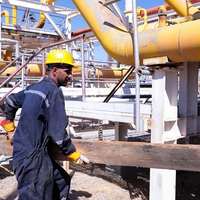
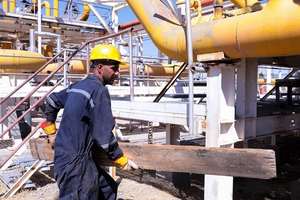
A coal miner works at a mine in Iran.

Iran’s economic crisis and rising currency costs are making essential safety equipment harder for coal mines to obtain, increasing risks for workers already operating in dangerous conditions, labor news agency ILNA reported on Monday.

Rising foreign exchange rates, sanctions and difficulties obtaining specialized equipment have become major challenges for the industry, where many mines still rely on traditional or semi-mechanized methods, said the report.

“There is an inverse relationship between the exchange rate and the provision of equipment; the more expensive foreign currency becomes, the less financial capacity employers have to provide safety,” Ebrahim Rahimian, executive secretary of the Tabas Workers’ House, told ILNA.

Many components used in mine monitoring and safety systems are imported and have no domestically produced alternatives, Rahimian said.

Employers, he added, still have options to obtain equipment if they prioritize worker safety, including raising the necessary funds to purchase imported products at market exchange rates.

Deadly record in Iran’s mines

Workplace accidents, according to ILNA, remain a persistent problem in Iran, with coal mines among the most dangerous workplaces because of the conditions involved in underground extraction.

A collapse at the Parvadeh Tabas Coal Company mine killed a worker on April 29 in one of the latest fatal accidents.

A methane explosion at a coal mine in Tabas killed 53 workers in September 2024, drawing renewed attention to safety standards in Iran’s mining industry.

The economic pressures affecting mine operators have intensified as the rial has lost value, making imported machinery and specialized equipment more expensive.

100%

Sharp currency fluctuations have also complicated financial planning for businesses as Iran contends with sanctions and persistent inflation.

Underground mines need advanced monitoring

Coal miners working underground require more than personal protective equipment such as boots and gloves, Rahimian said.

Advanced systems, he added, are needed to continuously monitor gas concentrations and pressure in layers above underground workings, providing information directly connected to workers’ safety.

Workers at mining companies in Tabas, Kerman, Zarand and Jiroft continue to operate using traditional or semi-mechanized methods, with only one company providing an exception, according to Rahimian.

Training is another essential part of reducing the dangers workers face underground, particularly in preparing them to respond to emergencies, he said.

“Continuous training and retraining is the minimum right of the workforce and must not be stopped at any cost.”

The combination of aging mining practices, costly imported safety technology and mounting economic pressure has left workers exposed to hazards that previous deadly accidents have already demonstrated can carry severe consequences.

Banner

Most Viewed

Trump weighs Iran options; Tehran signals Hormuz leverage
1

Trump weighs Iran options; Tehran signals Hormuz leverage

2

Iran threatens regional strikes as MPs question nuclear policy

3

Iran mobilisation drive extends to children under 15

4
ANALYSIS

Iran factories face deepening raw material shortages

5

Frozen embryos advertised for sale online in Iran

Banner
Banner

Spotlight

  • Flying to or from Iran? What to know as US pressure squeezes air links

    Flying to or from Iran? What to know as US pressure squeezes air links

  • Iran factories face deepening raw material shortages
    ANALYSIS

    Iran factories face deepening raw material shortages

  • Will shutdowns forced by US blockade damage Iran’s oil wells?
    ANALYSIS

    Will shutdowns forced by US blockade damage Iran’s oil wells?

  • Tehran sees ‌Beijing as potential bridge to Washington
    ANALYSIS

    Tehran sees ‌Beijing as potential bridge to Washington

  • Tehran ‘ashamed’ as Iranians struggle to make ends meet

    Tehran ‘ashamed’ as Iranians struggle to make ends meet

  • Iran faces postwar winter with major gas capacity still offline
    ANALYSIS

    Iran faces postwar winter with major gas capacity still offline

Banner
  • Iran oil workers protest pay conditions at offshore platforms, Assaluyeh

    Iran oil workers protest pay conditions at offshore platforms, Assaluyeh

  • Iranian workers report  layoffs, months of unpaid wages

    Iranian workers report layoffs, months of unpaid wages

•
•
•

More Stories

Iran factories face deepening raw material shortages

Sep 20, 2026, 18:34 GMT+1
•
Dalga Khatinoglu
100%
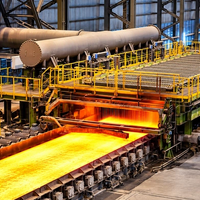
File photo of a steel production line at an industrial facility in Iran.

Iranian manufacturers are rapidly running down stocks of raw materials as supply disruptions and rising costs deepen pressure on industrial production, according to the latest survey by the Iran Chamber of Commerce.

The index measuring manufacturers’ raw material inventories fell to 39.3 in August from about 44.5 in July, while the Purchasing Managers’ Index for the overall economy dropped to 46.9, according to the survey. A reading below 50 indicates contraction.

Continued depletion of raw material inventories, combined with weakness elsewhere in the supply chain, could become one of the “most serious constraints on industrial production growth” in the coming months, the Iran Chamber of Commerce warned.

War damage adds to supply pressure

Part of the shortage cannot be explained by restrictions on imports alone. Iran was a major producer and exporter of several affected products, including petrochemicals and steel, before the war.

  • Iran faces postwar winter with major gas capacity still offline

    Iran faces postwar winter with major gas capacity still offline

Major petrochemical facilities in Asaluyeh and Mahshahr and the Mobarakeh Steel and Khuzestan Steel complexes were targeted during the war. Asaluyeh and Mahshahr together accounted for roughly three-quarters of Iran’s petrochemical production before the strikes.

Mobarakeh and Khuzestan Steel also sustained damage to production infrastructure.

The chamber attributed pressure on raw material stocks to limited access to foreign currency, difficulties with imports and customs clearance, goods being held at customs, logistical disruptions and higher procurement costs.

The oil and gas products sector recorded the lowest raw material inventory index at 23.3, followed by vehicles and related parts at 28.7. Rubber and plastics and the clothing and leather industries each recorded 32.2.

100%
Workers on an automobile production line at a factory in Iran.

Only the food industry and the wood, paper and furniture sector recorded raw material inventory readings above 50.

Input costs climb

Manufacturers also reported a sharp rise in raw material costs, with the purchase-price index increasing to 88.2 in August from 80.4 in July.

The index exceeded 100 for oil and gas products, while machinery and household appliances and non-metallic mineral products recorded readings above 92. Raw material purchase-price indices were above 50 across every industrial sector surveyed.

Other major PMI components remained below 50, including output or service activity at 47.8, new customer orders at 47.5, suppliers’ delivery times at 48.6 and employment at 47.3. All deteriorated from July except employment, which was unchanged.

Consumer prices were more than 84% higher in August than a year earlier, while annual inflation stood at about 69%, according to the Statistical Center of Iran.

  • Iran's appliance industry is collapsing, and so is the market it was built for

    Iran's appliance industry is collapsing, and so is the market it was built for

The sharp increase in manufacturers’ input costs adds to inflationary pressure on consumer prices. The Chamber warned that shrinking inventories could also reduce production capacity and disrupt or halt some production lines if current conditions persist.

Iran mobilisation drive extends to children under 15

Sep 20, 2026, 02:56 GMT+1
100%
Children carrying rifles take part in a Janfada mobilisation rally in Iran, September 18, 2026

The spokesman for Iran’s mass mobilisation campaign said children under 15 could be introduced to military concepts, while denying that minors were receiving formal weapons training as authorities expand a civilian defence drive launched during the war.

Sasan Zare, spokesman for the Janfada campaign, said the main organisation of volunteers would be based around adults aged 18 and over, but acknowledged that younger people were also being brought into the initiative.

“The stronger their value system is formed from childhood, and the more familiar they become with concepts such as patriotism and self-sacrifice, the more significant the impact can be on their future,” Zare told the Iranian news agency ILNA.

Those registered with the campaign were over 15, he said, while women taking part in its training courses were over 18. For children below that age, Zare said the emphasis should be on patriotism, responsibility, first aid, safety and what he called a “culture of self-sacrifice and resistance.”

The Islamic Republic has stepped up a broad campaign to mobilise civilians since the US-Israeli war began in February.

The Janfada initiative was launched in late March, and authorities have since promoted registration through mosques, Basij bases and public events, alongside plans for military and emergency-response training.

The campaign has drawn scrutiny over the involvement of minors, with rights groups accusing Iranian authorities of recruiting children into the Basij and using them at checkpoints.

Amnesty International said in April that Iranian law allows children under 15 to join as ordinary Basij members, while those aged 15 and over can become active Basij members and collaborate with the Revolutionary Guards on assigned missions.

The rights group said it had verified evidence of children as young as 12 deployed at checkpoints and patrols, including some carrying rifles.

Iran International has separately received accounts from several provinces describing children and teenagers taking part in checkpoint operations and handling weapons at state-sponsored gatherings.

Asked specifically about teenagers being used at checkpoints, Zare said he did not know how such deployments were being carried out because checkpoints fell under the authority of local police and security bodies.

His campaign, he said, provided training related to urban and public security, while the units deploying volunteers would decide whether they were used at checkpoints.

Will shutdowns forced by US blockade damage Iran’s oil wells?

Sep 19, 2026, 22:15 GMT+1
•
Mehdi Moslehi
100%
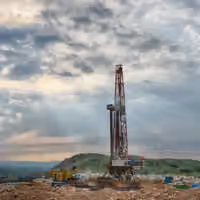
File photo: An oil rig in Iran

The sharp fall in Iran’s oil loadings is forcing it to curb production, raising costs beyond lost sales, from restarting aging wells to maintaining reservoir pressure and protecting shared fields. But could the shutdowns cause lasting damage?

Iranian officials often speak about oil as if the only question were whether crude can be sold today or tomorrow. In that telling, if exports stop, the oil simply stays underground until sanctions or a blockade ease, after which production can resume from where it left off.

Oil Minister Mohsen Paknejad said earlier this month that Iran’s oil exports did not stop “even for an hour” during the 40-day war. He had previously said there was not even a single day of production decline during that period.

Even if those claims are accurate for the war itself, they do not answer a more important question about what followed: how much production must be shut in when exports collapse and storage fills, and what will it cost to bring those wells and facilities back?

Energy intelligence firm Kpler estimated Iranian oil loadings fell from about 1.83 million barrels per day in March to around 255,000 bpd in August. It also estimated crude production dropped from about 3.24 million bpd to 1.755 million bpd, while inventories at terminals, refineries and other onshore storage sites increased.

Some Iranian crude may still be discharged in China, but much of that oil had already left Iran before the blockade intensified and remained for a time on tankers in Asian waters. Selling those cargoes is not the same as moving fresh crude out of Iranian wells and export terminals.

When exports fall, producers can initially divert crude into onshore storage, refineries and tankers. But storage is finite. Once it fills, the pressure moves upstream, forcing the National Iranian Oil Company to reduce production from some wells or shut them altogether.

An oil field is not an underground warehouse

An oil reservoir is sometimes imagined as an underground lake that can simply be tapped, closed and reopened months later.

In reality, oil sits within porous rock and networks of natural fractures. Its movement toward a producing well depends on reservoir pressure, rock properties, fluid composition and the way the field is managed.

That means shutdowns do not affect every well in the same way.

Some conventional Middle Eastern reservoirs can tolerate short shutdowns without serious damage. In certain fractured reservoirs, temporarily reducing output may even allow pressure to recover and oil to migrate from the rock matrix into fractures.

Robin Mills, a researcher at Columbia University’s Center on Global Energy Policy, has argued that production shutdowns are unlikely to cause catastrophic or permanent damage across most of Iran’s oil industry.

He has pointed to Iran’s relatively rapid production recovery after previous declines caused by sanctions and the Covid-19 pandemic.

That distinction matters. There is little basis for claiming that shutting production will inevitably destroy Iran’s oil wells.

But recoverable does not mean free, immediate or risk-free.

Iran has many mature fields and aging wells. Ahvaz, Marun, Gachsaran and Aghajari, among the country’s most important producing areas, have been in operation for decades.

Low-pressure wells, or wells producing large volumes of water alongside crude, may fail to flow naturally after a prolonged shutdown. Restarting them can require pumping, nitrogen injection, chemical treatment or other well-servicing operations.

During a shutdown, mineral scale, asphaltenes and other heavy compounds can accumulate around the wellbore, in production tubing or in flow lines.

Corrosion, sand and solids deposition, pump failures and unwanted flows between zones with different pressures are also recognized risks.

An analysis by the Society of Petroleum Engineers’ Reservoir Advisory Committee on prolonged shut-ins warned that corrosion, deposits, pump damage and plugging can leave some wells requiring repairs, stimulation or recompletion before they return to production.

For weak-performing wells, remediation can also become expensive enough to call their economics into question.

None of those costs appears in a simple calculation of barrels that were not sold.

Rotating shutdowns also cost money

NIOC has experience managing production cuts during earlier rounds of sanctions.

One option is to rotate shutdowns among wells rather than take an entire field offline, reducing the amount of time any single well remains idle.

That can limit the risks, but it requires continuous monitoring of reservoir pressure, fluid composition, gas injection, corrosion, pumps and surface facilities.

Repeated shutdowns and restarts, changes in chemical injection and the recalibration of processing equipment also add to operating costs.

In other words, not producing oil still costs money.

If falling oil revenues squeeze maintenance budgets, what begins as a manageable shutdown can develop into a far more expensive repair problem.

The question is therefore not whether every shut well will be lost. It is how many will return without additional work, how long the others will take to restart and how much that process will cost.

Gas injection links the oil problem to Iran's gas crisis

Many of Iran’s mature oil fields rely on gas injection to maintain reservoir pressure and improve recovery.

Kpler has estimated historical gas injection into Iranian oil fields at about 4.8 billion cubic feet per day. Even before the current crisis, Iran was injecting less gas than its reservoirs required.

That problem could become more acute.

Gas production from South Pars also produces condensate. If Iran becomes unable to export, store or consume enough of that condensate, it may eventually have to reduce gas output.

The government would then face harder choices over how to allocate gas among households, power plants, industry, exports and injection into oil reservoirs.

Lower gas injection does not destroy a well overnight. But over time, it can reduce reservoir pressure and potentially lower ultimate oil recovery.

A crisis that begins with crude exports can therefore feed back into oil production through constraints on condensate and natural gas.

This part of the cost rarely features in official statements.

Iranian officials emphasize continued exports and efforts to circumvent restrictions, but disclose little about how much gas, equipment and investment is needed to maintain reservoirs while production is being curtailed.

Shared fields create another risk

Not all Iranian fields can be treated in the same way.

Azadegan and Yadavaran are shared with Iraq, Forouzan with Saudi Arabia and Salman with the United Arab Emirates, with production taking place from different parts of connected geological structures.

A reduction in Iranian output does not mean crude immediately flows across a border toward a neighboring country’s wells. Reservoir behavior is more complicated and depends on geology.

But if Iran reduces production and development for an extended period while the other side continues drilling and extracting oil, Iran’s economic position in those shared resources can weaken.

Oil left underground in such fields is not necessarily being preserved exclusively for Iran to produce later.

Continued extraction across the border can, in some reservoirs, reduce Iran’s future recoverable share or economic opportunity.

The real cost of shutting production

The impact of a forced production cut cannot be measured by lost sales alone.

It also includes the cost of storing crude, maintaining idle wells, carrying out repairs and restarts, any loss in future productive capacity or reservoir recovery, and missed opportunities in shared fields.

There can be broader consequences as well.

Lower gas production would put more pressure on power generation, petrochemical feedstock and industrial consumption, forcing the government to make increasingly difficult choices over scarce energy supplies.

A prolonged blockade and collapse in exports therefore affects more than the Islamic Republic’s immediate oil revenue.

If wells and facilities are not adequately maintained, part of the cost can persist long after exports recover.

Paknejad can point to uninterrupted exports or production during a limited period, but more important questions remain unanswered.

How many Iranian wells are now producing at full capacity? How many have been throttled back or shut? How has gas injection changed? How much is being spent to manage shut-ins, maintain equipment and eventually restore production?

Without those figures, claims of continued production offer only a partial picture of the state of Iran’s oil industry.

Most Iranian wells may eventually be recoverable. But shutting them is neither cost-free nor necessarily quick to reverse.

The longer production remains constrained, the more maintenance, reservoir management and restart costs may accumulate — costs whose full scale cannot be known without far greater transparency about the condition of Iran’s wells and fields.


Tehran ‘ashamed’ as Iranians struggle to make ends meet

Sep 18, 2026, 17:07 GMT+1
•
Behrouz Turani
100%
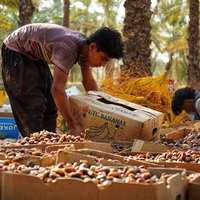
Workers sort freshly harvested dates in a palm grove in Bushehr province, southern Iran, September 15, 2026

Iran’s economic hardship has grown so acute that senior government officials are increasingly acknowledging in public the scale of the pressure on ordinary households.

“We are ashamed that the public’s income does not cover their expenses, especially for wage earners,” First Vice President Mohammad Reza Aref said Thursday. “You cannot increase salaries by 20% when inflation is running above 60–70%.”

Government spokeswoman Fatemeh Mohajerani has disclosed a roughly 310-trillion-toman shortfall in expected tax revenues during the first half of the current year, while the head of the Food and Drug Administration says medicine prices have risen roughly 103% this year.

President Masoud Pezeshkian has offered an equally stark assessment of the public mood, invoking the 2019 fuel-price protests as a warning against imposing further economic pressure.

“People are now on the edge; if I impose another pressure, they may fall off,” he said.

The warning has not prevented the government from doubling the gasoline price for high-volume consumers, highlighting the difficult choices facing Tehran as it tries to contain household pressure while confronting the economic costs of war.

The household squeeze

The free-market dollar has traded at around 2.30–2.33 million rials this week, with the Iranian currency losing roughly 44% of its value against the dollar over the past six months.

Food and beverage inflation has officially exceeded 127% year on year, contributing to a sharp contraction in consumption of protein, dairy products and legumes among urban working-class households.

State-run ILNA has published unusually blunt reports on the cost of living, including unofficial bread-price increases in Tehran, families cutting meat from their diets and rents doubling.

The financial daily Donya-ye Eghtesad has warned of signs of a “new inflationary regime” in which persistent price rises are shaping contracts, expectations and everyday economic decisions, making confidence in the rial increasingly difficult to restore.

The approaching academic year provides another measure of the squeeze.

According to Donya-ye Eghtesad, equipping a single primary or secondary-school student with basic uniforms, a schoolbag, shoes and stationery now costs between 150 million and 200 million rials.

A basic pack of notebooks that cost around 3.5 million rials last year now costs approximately 15 million, forcing some lower-income families to reuse old school supplies.

War adds to the strain

Iranian oil exports have reportedly fallen from around 2 million barrels per day before the war to approximately 220,000–255,000 barrels per day in August, sharply reducing one of Tehran’s principal sources of foreign currency.

The Economy Ministry has established an “Economic War Headquarters” as officials increasingly frame the economic crisis as part of the broader confrontation with Washington. But falling oil revenues leave the government with fewer resources to cushion households against rising prices and a weakening currency.

Oil-industry workers have staged weekly Monday protests over pay and taxes at offshore platforms and in Assaluyeh, while nurses demonstrated in Kermanshah on September 8 over unpaid wages.

Accounts in Iranian media offer a more immediate picture of the pressure behind such discontent: street vendors struggling with higher rents, households going months without eating meat and parents weighing school expenses against basic food costs.

The combination of high inflation, declining purchasing power and sharply reduced oil revenues leaves Tehran with increasingly limited room to ask households to absorb further economic costs from the war.

Iran faces postwar winter with major gas capacity still offline

Sep 18, 2026, 11:49 GMT+1
•
Umud Shokri
100%
A worker during maintenance operations at facilities in Iran's northeastern Khangiran gas field, September 13, 2026

Iran is racing to restore gas infrastructure before winter after attacks knocked about 230 million cubic meters a day of gas-processing capacity offline, adding to shortages in an energy system already struggling to meet demand.

Iranian officials have said attacks knocked about 230 million cubic meters a day of gas capacity offline. Executive Vice President Mohammad Jafar Ghaempanah compared that figure with roughly 650 million cubic meters of daily gas production, although industry data indicate the two figures may refer to different stages of gas production and processing.

Tehran has begun trying to claw some of that capacity back. Officials have said roughly 100 million cubic metres a day could be restored in the coming months, still less than half the capacity reported lost.

But restoring production is only part of the problem. Rystad Energy estimated in April that repairing damage to Iran’s energy infrastructure could cost as much as $19 billion, affecting gas processing, refining and export facilities.

That figure covers physical repairs rather than the wider economic consequences of lost production, disrupted exports and industrial shutdowns. Rystad has also identified shortages of critical equipment and workers as major obstacles to recovery.

Winter could provide the first major test of whether Iran can repair enough of its energy system quickly enough to prevent wartime damage from developing into a broader economic crisis.

A system already under pressure

Iran entered the war with an energy system already struggling to match supply with demand.

The US Energy Information Administration has said sanctions slowed development of the country’s natural-gas infrastructure and that limited storage capacity left Iran poorly equipped to manage seasonal swings in consumption.

In 2022, residential and commercial consumers accounted for 33% of Iran’s gas consumption, industry including petrochemicals for 27%, and electricity generation for another 28%, according to the EIA.

Household and commercial gas consumption rises during winter, while demand from the electricity sector is highest during summer.

The loss of production capacity therefore leaves Tehran having to allocate a reduced supply among households, power stations, petrochemical plants and other industrial users.

The problem is not simply how much gas Iran has underground. Gas reserves alone do not guarantee reliable supply: the country also needs functioning processing plants, pipelines and storage facilities, as well as electricity, maintenance, equipment and skilled workers to keep the system operating.

Damage beyond gas

Reduced gas supplies to power plants could constrain electricity generation, while restrictions on industrial users could hit petrochemicals and energy-intensive sectors such as steel, aluminum and cement.

That means the eventual cost of the damage cannot be measured solely by the reconstruction bill. Lower production can also translate into weaker industrial output and exports at a time when Tehran needs resources to finance repairs.

Iran's broader energy sector is already under severe financial pressure. The war and US naval blockade have sharply curtailed Iranian oil exports, leaving tens of millions of barrels stranded in storage and depriving Tehran of crude export revenue.

The combination creates the risk of a cycle in which energy shortages constrain economic activity while reduced revenues make restoring the energy system more difficult.

A longer-term problem

The war has also magnified structural weaknesses that predate the conflict.

South Pars, which Iran shares with Qatar, is the country's largest non-associated natural-gas field and the centre of its gas industry. But the EIA had already warned before the war that without additional investment Iran could struggle to satisfy domestic demand while meeting its export commitments.

Sanctions have restricted access to foreign investment, technology and specialized equipment, leaving Tehran with an existing infrastructure challenge before US and Israeli attacks added an urgent reconstruction burden.

Rystad said delays in procuring critical equipment were likely to determine how quickly damaged energy infrastructure could be restored, while shortages of workers were another major obstacle.

The winter test

For Tehran, the immediate question is how much of the reported 230 million cubic meters a day of lost gas capacity can be restored before colder weather drives household demand higher. How severe the remaining deficit becomes will depend on demand, further repairs and whether additional infrastructure is damaged.

Tehran may have to balance household heating against industrial production and electricity generation while trying to rebuild infrastructure under sanctions.

Rystad's $19 billion estimate gives a sense of the potential physical repair bill. The larger test is whether Iran can restore enough of the system to prevent damaged gas infrastructure from feeding through into electricity shortages, industrial disruption and further economic pressure.

The coming winter should provide the clearest indication yet.