• العربية
  • فارسی
Brand
  • Iran Insight
  • Politics
  • Economy
  • Analysis
  • Special Report
  • Opinion
  • Podcast
  • Iran Insight
  • Politics
  • Economy
  • Analysis
  • Special Report
  • Opinion
  • Podcast
  • Theme
  • Language
    • العربية
    • فارسی
  • Iran Insight
  • Politics
  • Economy
  • Analysis
  • Special Report
  • Opinion
  • Podcast
All rights reserved for Volant Media UK Limited
volant media logo

Iran International says it won’t be silenced after London arson attack

Apr 16, 2026, 19:01 GMT+1

An attempted attack near the London studios of Iran International has heightened concerns over what the broadcaster says is a growing campaign of intimidation targeting its staff.
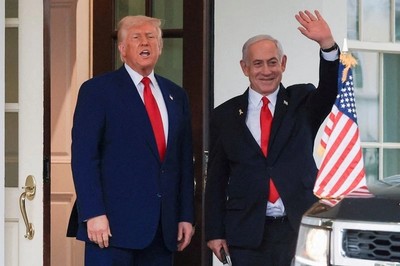
A suspicious vehicle was denied entry at the main entrance of its site on the evening of April 15. Shortly afterward, incendiary devices were thrown into the car park of a neighboring building just meters from its studios.

“Our security team responded immediately, and the police and fire brigade arrived shortly afterwards. We are grateful to them for their swift response,” Iran International’s editorial board said in a statement.

London’s Metropolitan Police said on April 16 that three people aged 16, 19 and 21 had been arrested after an ignited container was thrown toward Iran International’s offices in north-west London. The container landed in a car park without causing damage or injury.

Police said the case is not currently being treated as terrorism but is being investigated by Counter Terrorism Policing London.

The incident comes amid a sharp increase in threats and pressure directed at Iran International journalists and their families, particularly following the recent war involving Iran.

“In recent months, particularly following the recent military operation in Iran, there has been a marked increase in harassment targeting the relatives of Iran International journalists inside Iran,” the statement said.

Security agents have raided the homes of the parents and close relatives of several journalists, questioning them and confiscating phones and other electronic devices.

The intimidation campaign has intensified at a time when Iran has imposed sweeping internet shutdowns across the country. The current near-total blackout has lasted more than six weeks, making it the longest nationwide shutdown on record.

Iran’s IRGC-affiliated Fars News Agency recently reported that prosecutors ordered the seizure of assets and freezing of bank accounts belonging to more than 100 individuals, including 63 journalists working for Iran International.

State media in Iran have also broadcast repeated threats against the channel, including calls for the network to be targeted by missiles.

“These actions amount to a campaign of transnational intimidation aimed at silencing independent journalism,” Iran International said.

In May 2024, United Nations experts warned that threats and violence against Iran International formed part of a broader pattern of repression targeting Persian-language journalists working abroad.

The channel temporarily relocated its operations from London to Washington in February 2023 following intelligence warnings of state-backed threats.

In March 2024, one of its presenters was stabbed outside his London home in an attack investigated by counter-terrorism police.

Iran International’s editorial board said the latest incident underscores the risks faced by journalists reporting on Iran from abroad.

“Journalists must not be threatened or attacked, and their families must not be used as a means of pressure,” the broadcaster said. “Such actions constitute an attack on individual safety, press freedom, and the public’s right to know.”

Most Viewed

Ideology may be fading in Iran, but not in Kashmir's ‘Mini Iran'
1
INSIGHT

Ideology may be fading in Iran, but not in Kashmir's ‘Mini Iran'

2
INSIGHT

Hardliners push Hormuz ‘red line’ as US blockade tests Iran’s leverage

3
VOICES FROM IRAN

Hope and anger in Iran as fragile ceasefire persists

4

US sanctions oil network tied to Iranian tycoon Shamkhani

5

Iran International says it won’t be silenced after London arson attack

Banner
Banner

Spotlight

  • Hardliners push Hormuz ‘red line’ as US blockade tests Iran’s leverage
    INSIGHT

    Hardliners push Hormuz ‘red line’ as US blockade tests Iran’s leverage

  • Ideology may be fading in Iran, but not in Kashmir's ‘Mini Iran'
    INSIGHT

    Ideology may be fading in Iran, but not in Kashmir's ‘Mini Iran'

  • War damage amounts to $3,000 per Iranian, with blockade set to add to losses
    INSIGHT

    War damage amounts to $3,000 per Iranian, with blockade set to add to losses

  • Why the $100 billion Hormuz toll revenue is a myth
    ANALYSIS

    Why the $100 billion Hormuz toll revenue is a myth

  • US blockade targets Iran oil boom amid regional disruption
    ANALYSIS

    US blockade targets Iran oil boom amid regional disruption

  • Iran's digital economy battered by prolonged blackout
    INSIGHT

    Iran's digital economy battered by prolonged blackout

•
•
•

More Stories

Zoroastrian religious figure arrested in Iran

Apr 13, 2026, 00:38 GMT+1

Hooman Forouhari, a Zoroastrian religious figure, was arrested in Kerman on March 14 by the intelligence branch of Iran’s Revolutionary Guards, according to reports.

A source close to him told Iran International that Forouhari is under severe pressure to give a forced confession.

Forouhari's wife, Minou Mehrbani—a Zoroastrian researcher and cultural activist—was also arrested during the first week of Nowruz.

The couple ran a Telegram channel called “Poyandegan Rah Asha,” which focused on teaching Zoroastrian religious content.

The charges against them have not been announced, and there is no information about their health or current condition.

France gets two citizens back from Iran as questions linger over swap terms

Apr 8, 2026, 13:16 GMT+1

Iran has released French nationals Cécile Kohler and Jacques Paris after more than three and a half years in detention, closing one chapter of a case Paris has long held up as emblematic of what it calls Iran’s practice of detaining foreign nationals on politicized grounds.

The two left Iran on Tuesday and were received in France on Wednesday, after traveling via Azerbaijan, with President Emmanuel Macron saying their return marked the end of a “terrible ordeal.”

Kohler, 41, and Paris, 72, were arrested in May 2022 during a tourist trip to Iran and later accused of espionage and other national-security offenses, charges France said were unfounded.

They were held in Tehran’s Evin prison before being moved in November 2025 to the French embassy in Tehran under a form of house arrest that still left them unable to leave the country.

Macron’s office said the two left Iran by road “without any special coordination with the US and Israeli forces” operating in the region.

Their release appears to have come out of a broader understanding between Paris and Tehran, though both sides have publicly avoided describing it as a straightforward swap.

Iran’s official IRNA news agency said the two were freed under an understanding that France would in turn release Mahdieh Esfandiari, an Iranian student living in Lyon, and that France had earlier withdrawn its complaint against Iran at the International Court of Justice.

Reuters reported that Esfandiari, convicted in France in late February for glorifying terrorism in social media posts, had already been released after serving nearly a year and was appealing the conviction.

Le Monde, citing diplomatic and expert sources, reported that Esfandiari’s case had become tied in practice to the fate of the French pair: after she was released under judicial supervision in October 2025, Iran allowed Kohler and Paris to leave prison for the French embassy, but their full departure from Iran came only after Esfandiari’s house arrest in France was lifted.

There is also evidence of other concessions already on the table. The ICJ case France had filed against Iran over the detention of Kohler and Paris was formally removed from the court’s list in September 2025 at France’s request.

Reuters reported that French officials declined to spell out the full terms that secured the pair’s departure, while Le Monde said no explicit bargaining was publicly acknowledged by Paris even though the sequence of events pointed to a negotiated quid pro quo.

The timing has fueled debate in France over whether geopolitics also played a role.

Reuters wrote that the release came as Paris sought to distance itself from the US-Israeli war effort, while Le Monde quoted analysts who described the move as a calculated Iranian gesture toward France at a moment when Macron had criticized Washington’s approach and France had resisted force-based measures around the Strait of Hormuz.

Reuters reported that the release came as Paris was trying to put some distance between itself and the US-Israeli war effort, while Le Monde cited analysts who saw it as a calculated Iranian signal to France at a time when Macron had openly criticized Washington’s approach and Paris had opposed using force around the Strait of Hormuz.

French officials deny softening their position toward Tehran. But the case fits a broader pattern in which Iran has been accused by Western governments and rights advocates of using detained foreigners or dual nationals as leverage in disputes with other states.

France itself has repeatedly described Kohler and Paris as “state hostages,” a phrase that reflects that view, even as Iran rejects the accusation.

Iran refuses to return body of executed teen protester to family

Apr 7, 2026, 08:56 GMT+1
•
Farnoosh Faraji

Iranian security forces have still not returned the body of 18-year-old protester Amirhossein Hatami to his family, four days after his execution, in what informed sources described as further pressure on relatives already reeling from his death.

Information obtained by Iran International shows that Hatami, who was executed on April 2, remains unburied as authorities continue to withhold his body.

Hatami was one of the defendants in a case linked to a fire at the Mahmoud Kaveh Basij base on Namjoo Street in eastern Tehran during the January protests.

Others in the same case included Mohammadamin Biglari, Shahin Vahedparast Kalur, Abolfazl Salehi Siavashani and Ali Fahim, all of whom were sentenced to death.

Biglari and Vahedparast were executed on April 5, while Fahim’s execution was carried out on Monday, April 6.

Informed sources told Iran International that Hatami’s body has not been released because his name appeared on a website linked to the Mojahedin-e Khalgh organization, an allegation his family strongly rejects.

  • Iran executes two men as protest-related hangings continue

    Iran executes two men as protest-related hangings continue

Sources familiar with the case said Hatami was an industrial design student at the University of Tehran and was fluent in three languages.

A source with knowledge of the events of January 8 said the case involved seven defendants, none of whom had any role in starting the fire.

According to the source, Hatami and the others entered the Basij base with around 50 other people only after the fire had already broken out.

Minutes later, another fire began. Many managed to escape, but seven people, including Hatami, were unable to flee.

They went to the rooftop, where they were detained by Basij forces and severely beaten, the source said.

Judicial authorities later accused the defendants of trying to gain access to the armory.

After their arrest, the detainees were subjected to severe interrogations and then transferred to Ghezel Hesar prison.

They were denied in-person visits throughout their detention and were allowed only phone calls.

Their trial was presided over by Judge Abolghasem Salavati, and they were denied access to lawyers of their own choosing.

Death sentences were issued on February 7.

Sources told Iran International that the confessions in the case were extracted under pressure and coercion, and that the judicial process ended in executions carried out without the defendants and their families having full knowledge of the proceedings.

In the same case, 28-year-old Shahin Vahedparast was also executed on April 5, and his body, too, has still not been returned to his family, according to informed sources.

Those sources said Vahedparast’s wife was four months pregnant at the time of his execution.

Relatives said he had dreamed of opening a restaurant with her.

Intensive strikes on eve of Trump deadline killed dozens in Iran - HRANA

Apr 7, 2026, 02:20 GMT+1

The heaviest wave of attacks in more than a week struck Iran on Monday, killing at least 49 civilians and injuring 58 others as the war between Iran, rights group HRANA reported ahead of President Trump's Tuesday deadline to hit Iranian power plants.

The strikes were spread across 20 provinces, according to the Washington-based monitoring group Human Rights Activists News Agency, and represented the highest rate of attacks recorded in the past 10 days.

Among those killed were four children and two women, HRANA said, adding that the figures remain preliminary and could rise as more information emerges.

In total, the group documented at least 573 individual strikes across 215 separate incidents during the past day, a scale of bombardment that analysts say reflects a widening focus on strategic sectors of Iran’s economy.

Many of the attacks targeted infrastructure linked to the country’s core industries, including elements of Iran’s energy sector, HRANA reported.

The latest wave of strikes comes as President Trump has warned that the United States could launch sweeping new attacks on Iranian infrastructure if Tehran does not agree to negotiations by Tuesday evening.

In a statement Monday, the White House said Iran would be “sent back to the stone ages tomorrow night if they fail to engage in a serious way” with diplomatic efforts.

The war, now in its sixth week, has already inflicted heavy losses across the region.

Iranian authorities and monitoring groups estimate that more than 2,000 people have been killed inside Iran since the conflict began. Israeli officials say at least 26 people have been killed there, while missile and drone attacks launched by Iran have also caused dozens of casualties in the Persian Gulf countries.

With negotiations uncertain and attacks intensifying on both sides, Tuesday is shaping up as one of the most consequential moments in the conflict since it began more than five weeks ago.

Iran executes at least five in week of wartime crackdown

Apr 5, 2026, 22:20 GMT+1

Iran has executed at least five men over the past week in cases linked to anti-government protests and security-related charges, as human rights groups warn of an escalating use of capital punishment against political detainees.

The latest executions took place on Sunday, when authorities hanged Mohammadamin Biglari and Shahin Vahedparast, accused of attempting to storm a military site during the January protests and trying to reach an armory, according to the judiciary’s news outlet Mizan.

State media said the two were part of a group that entered a military facility in Tehran, damaged the site and attempted to access its weapons storage area.

Authorities also accused the group of planning to enter other military and security locations, including police stations and Basij bases, to obtain weapons.

The executions followed the hanging on Saturday of two other prisoners, Abolhassan Montazer and Vahid Bani-Amerian.

Iran’s judiciary described the pair as “terrorists,” saying they had been convicted of “armed rebellion,” membership in the opposition Mojahedin-e Khalq (MEK) and plotting attacks using rocket launchers.

Both men had been sentenced to death in December 2024 by Tehran’s Revolutionary Court.

Earlier in the week, authorities executed Amirhossein Hatami, an 18-year-old protest detainee convicted in connection with a fire at a Basij base in Tehran during the January protests.

Hatami was among a group of detainees held responsible for events at the “185 Mahmoud Kaveh” Basij base on January 8.

Families of those arrested told Iran International that Hatami and others had been pushed into the building by unidentified armed individuals during the protests and became trapped inside when the base caught fire.

Human rights groups say the executions form part of a broader rise in capital punishment tied to protest-related cases.

Amnesty International recently warned that at least 11 men detained during the January protests are at risk of imminent execution.

The organization said detainees had been subjected to torture and other ill-treatment in custody and convicted in trials it described as grossly unfair and based on forced confessions.

Rights groups have called for an immediate halt to executions linked to the protests, warning that the rapid pace of death sentences could deepen the crackdown on dissent.