Iran says no peace talks with US unless Lebanon issue resolved - Fars
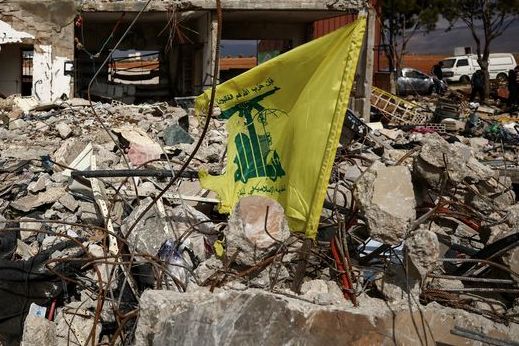
With attacks on Lebanon ongoing, Iran considers negotiations “strategically meaningless and futile," a source cited by the IRGC-affiliated Fars News Agency said, ahead of peace talks slated for Friday in Pakistan.
“The issue of Lebanon and a ceasefire in that country are a firm and non-negotiable precondition of the Islamic Republic of Iran for entering any new negotiation process," the source was quoted as saying.
The source added that Tehran had refused to accept a ceasefire until the United States, including President Donald Trump, formally acknowledged the overall framework of a proposed 10-point package.
The source emphasized that senior officials of the Islamic Republic are in full agreement on the issue, signaling a unified and coordinated stance from Tehran.
According to the source, Tehran's message is clear: unless the situation in Lebanon is resolved, there will be no negotiations.


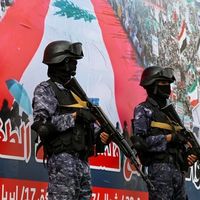
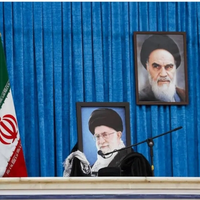
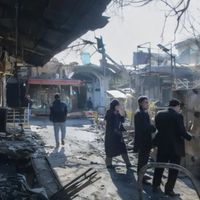

Footage shared on social media showed demonstrators gathering in the capital, where a speaker warned Parliament Speaker Mohammad Bagher Ghalibaf, reported to be leading upcoming talks with the United States, not to abandon retaliation after the killing of former Supreme Leader Ali Khamenei.
“Mr. Ghalibaf, whatever you have in this country is because of our martyred leader. Damn you if you want to trample on the blood of our leader,” the speaker said.
Other clips showed crowds chanting against “compromise” and calling for continued war with the United States and Israel. Some demanded allegiance to new leader Mojtaba Khamenei, while others questioned why earlier threats, including keeping the Strait of Hormuz closed, had not been carried out.
A woman in one video said, “We have not taken revenge for our leader. We want to remain enemies with America and Israel until the last drop of our blood. We do not want to negotiate.”
Hardline media rejects ceasefire
Hossein Shariatmadari, editor-in-chief of the hardline Kayhan newspaper, wrote on Wednesday that any temporary ceasefire or negotiation with the United States would only help Washington recover and prepare for further attacks.
Shariatmadari said even if the other side accepted all of Iran’s reported conditions, there was no reason to believe the United States would honor them.
State media debate exposes divisions
Disagreements over negotiations surfaced during live broadcasts on state television, where an analyst argued over whether to continue talks or escalate.
Mehdi Khanalizadeh, a commentator, said on Wednesday attacks had undermined the basis for diplomacy. “America and Israel have attacked the negotiating table and there is no longer a foundation for talks,” Khanalizadeh said.
This was not something new. On Saturday, hardline figures targeted officials who had advocated de-escalation, including former foreign minister Mohammad Javad Zarif and former president Hassan Rouhani.
Hamid Rasaei, a lawmaker, called on the judiciary to detain both men after Rouhani urged preparations to end the war and Zarif proposed a negotiated settlement.
In an article in Foreign Affairs, Zarif argued Iran should use its position to “declare victory and make a deal,” proposing limits on the nuclear program and reopening the Strait of Hormuz in exchange for lifting sanctions.
Rouhani said ending the conflict in a way that protects national interests required policy changes and coordination to safeguard strategic areas.
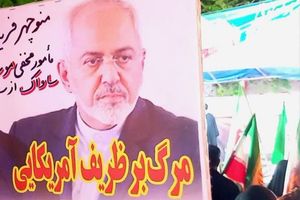
At rallies, demonstrators burned images of Zarif and Rouhani, accusing them of serving US interests. Saeed Haddadian, a maddah (religious eulogist and chant leader) close to the establishment, issued a direct warning.
“I give Zarif three days. If he does not say he screwed up, on the fourth night we will gather and go to his house,” Haddadian said.
State media reported that mourning processions started in the morning across several cities and would continue until 8 p.m. with organized groups moving through urban centers as part of coordinated nationwide commemorations.
Ali Khamenei was killed on February 28 minutes after the war began. Iranian state media confirmed his death the following day, and authorities announced 40 days of public mourning.
Officials have not said where or how he was buried, leaving room for claims that the burial was conducted in secret – or even that his body has yet to be formally interred or recovered.
In Shiite tradition, the fortieth day after death is closely tied to visits to a grave and large public gatherings. The absence of a confirmed burial site has set this commemoration apart, raising questions among observers.
Church ceremony triggers wave of mockery
A separate fortieth-day ceremony held at Tehran’s Saint Sarkis Church on Wednesday drew widespread attention and a flood of mocking reactions online.
The event, attended by Culture Minister Abbas Salehi, marked an unusual venue for a ceremony tied to a central figure in Shiite political and religious life.
“They held a fortieth in a church while his body has not even been buried,” one user wrote. “Someone who literally claimed to be the most devout Muslim still has not even had funeral prayers.”
Another comment took a more scathing tone: “Forty days have passed and his corpse is still lying around. The fortieth is a sacred day in Shiite tradition, when people gather at a grave for a proper ceremony. But for him, none of that is possible.”
Several users framed the situation as symbolic retribution. “This is karma,” one wrote. “They insulted people and denied dignity to the dead for years, and now he has no grave, no ceremony.”
Others directly referenced past state restrictions on mourning for protesters. “They used to prevent families from holding funerals, demand payment for burial, and intimidate mourners,” one user wrote. “Now the same has come back to them.”
The choice of a church as a venue became a focal point of ridicule. “From fear of the followers of Moses to taking refuge with the followers of Jesus,” one comment read.
Another user wrote: “They are holding the ceremony in a church because they know it will not be targeted,” suggesting the decision was driven by security concerns.
Others highlighted what they described as contradiction. “These same authorities arrested and persecuted Christians, and now they are holding a ceremony in a church after keeping his body for 40 days,” one comment read.
Ceasefire backdrop and continued tensions
The commemorations come after 40 days of conflict that continued until Tuesday night, followed by a temporary halt in fighting.
A two-week ceasefire between Tehran and Washington – with Israel backing it – was agreed after last-minute mediation led by Pakistan.
However, explosions and air defense activity were reported in multiple cities on Wednesday and Thursday night, according to local accounts, while strategic islands were targeted in strikes that some media attributed to regional actors.
Confident that US and Israeli strikes would avoid civilian areas, government supporters in recent weeks gathered at evening local events, repeating official narratives and calling for continued confrontation rather than negotiations.
The fortieth-day ceremonies have again provided a platform for such pro-government supporters.
Authorities emphasize continuity
The Islamic Revolutionary Guards Corps said in a statement marking the fortieth day that Khamenei’s death was as consequential as his life in advancing the Islamic Republic’s trajectory.
“The loss of the leader is difficult, but enduring his absence is made possible through the continuation of his path and the realization of promised outcomes,” the Guards said.
Videos circulating online also showed a visible presence of Afghan immigrant participants in ceremonies in Tehran, highlighting the broader networks mobilized for the commemorations.