Pezeshkian says Lebanon strikes violate ceasefire, warns talks at risk
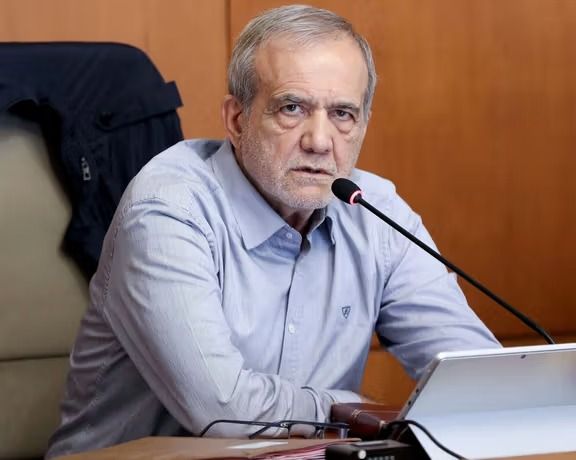
Iran’s President Masoud Pezeshkian said Israeli strikes on Lebanon violate the ceasefire agreement and warned that continued attacks would render negotiations meaningless.
“The repeated aggression by the Zionist entity against Lebanon is a flagrant violation of the initial ceasefire agreement and a dangerous indicator of deceit and lack of commitment to potential accords,” Pezeshkian wrote on X.
“The continuation of these aggressions will render negotiations meaningless; our hands will remain on the trigger, and Iran will never abandon its Lebanese brothers and sisters,” he added.

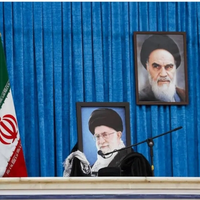

State media reported that mourning processions started in the morning across several cities and would continue until 8 p.m. with organized groups moving through urban centers as part of coordinated nationwide commemorations.
Ali Khamenei was killed on February 28 minutes after the war began. Iranian state media confirmed his death the following day, and authorities announced 40 days of public mourning.
Officials have not said where or how he was buried, leaving room for claims that the burial was conducted in secret – or even that his body has yet to be formally interred or recovered.
In Shiite tradition, the fortieth day after death is closely tied to visits to a grave and large public gatherings. The absence of a confirmed burial site has set this commemoration apart, raising questions among observers.
Church ceremony triggers wave of mockery
A separate fortieth-day ceremony held at Tehran’s Saint Sarkis Church on Wednesday drew widespread attention and a flood of mocking reactions online.
The event, attended by Culture Minister Abbas Salehi, marked an unusual venue for a ceremony tied to a central figure in Shiite political and religious life.
“They held a fortieth in a church while his body has not even been buried,” one user wrote. “Someone who literally claimed to be the most devout Muslim still has not even had funeral prayers.”
Another comment took a more scathing tone: “Forty days have passed and his corpse is still lying around. The fortieth is a sacred day in Shiite tradition, when people gather at a grave for a proper ceremony. But for him, none of that is possible.”
Several users framed the situation as symbolic retribution. “This is karma,” one wrote. “They insulted people and denied dignity to the dead for years, and now he has no grave, no ceremony.”
Others directly referenced past state restrictions on mourning for protesters. “They used to prevent families from holding funerals, demand payment for burial, and intimidate mourners,” one user wrote. “Now the same has come back to them.”
The choice of a church as a venue became a focal point of ridicule. “From fear of the followers of Moses to taking refuge with the followers of Jesus,” one comment read.
Another user wrote: “They are holding the ceremony in a church because they know it will not be targeted,” suggesting the decision was driven by security concerns.
Others highlighted what they described as contradiction. “These same authorities arrested and persecuted Christians, and now they are holding a ceremony in a church after keeping his body for 40 days,” one comment read.
Ceasefire backdrop and continued tensions
The commemorations come after 40 days of conflict that continued until Tuesday night, followed by a temporary halt in fighting.
A two-week ceasefire between Tehran and Washington – with Israel backing it – was agreed after last-minute mediation led by Pakistan.
However, explosions and air defense activity were reported in multiple cities on Wednesday and Thursday night, according to local accounts, while strategic islands were targeted in strikes that some media attributed to regional actors.
Confident that US and Israeli strikes would avoid civilian areas, government supporters in recent weeks gathered at evening local events, repeating official narratives and calling for continued confrontation rather than negotiations.
The fortieth-day ceremonies have again provided a platform for such pro-government supporters.
Authorities emphasize continuity
The Islamic Revolutionary Guards Corps said in a statement marking the fortieth day that Khamenei’s death was as consequential as his life in advancing the Islamic Republic’s trajectory.
“The loss of the leader is difficult, but enduring his absence is made possible through the continuation of his path and the realization of promised outcomes,” the Guards said.
Videos circulating online also showed a visible presence of Afghan immigrant participants in ceremonies in Tehran, highlighting the broader networks mobilized for the commemorations.

