Military site struck in northern Iran, southern port city hit
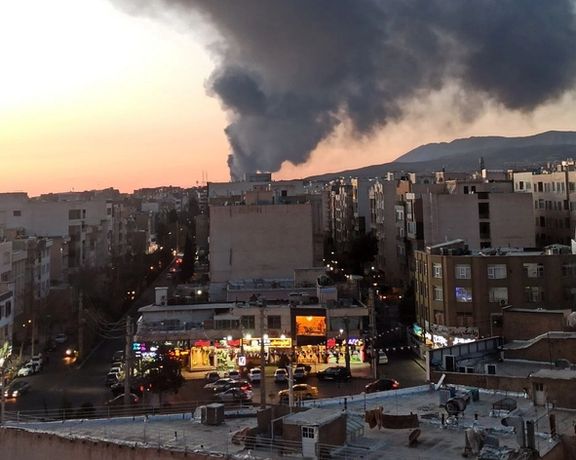
Powerful explosions were heard from a military site in northern Iran and an attack was reported in the southwestern city of Khorramshahr early on Monday, according to eyewitness accounts sent to Iran International.
Seven large blasts were heard at about 4:45 a.m. at the Fath military base, a helicopter production site between Malard and Meshkin Dasht in Alborz province.
Khorramshahr in Khuzestan province also came under attack on Monday morning, eyewitnesses said.



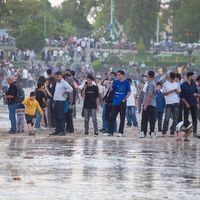
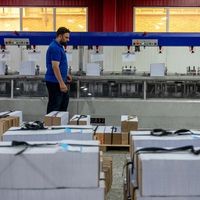
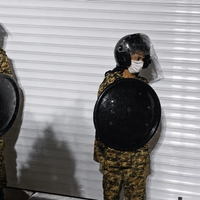
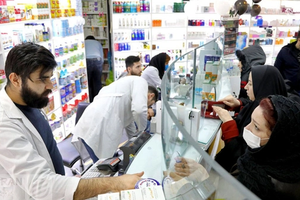
Several citizens said the price of Ryzodeg insulin jumped from 12 million rials (≈$8) to 76 million rials (≈$51). Five-dose packs of NovoRapid and Lantus now sell for 15–18 million rials (≈$10–$12).
A resident reported that the blood thinner Plavix, crucial to preventing strokes and heart attacks, rose from 7.5 million rials (≈$5) to 27 million rials (≈$18) in recent weeks.
An ordinary Iranian citizen earns approximately $100–$150 per month.
Shortages leave patients struggling
Before the war and US-Israeli attacks, insulin was already limited, with insurance covering only one dose per week. Residents say the scarcity has now reached crisis levels.
One citizen in Parand near Tehran said: “I couldn’t find my diabetes medications for a month, even without a prescription. Two types, Lantus and Apidra, usually last a week each, but I ran out completely.”
Another said his mother had to travel from Karaj to Qazvin (over 110 km) to obtain essential medicines. Tehran residents report difficulty finding Asentra (sertraline) for depression and Iran-made blood thinner Osvix.
Supply chain disruptions deepen crisis
Residents link shortages to halted imports from Turkey and Dubai. A transit driver said fewer registered shipments have reduced cargo flow. Local distributors have paused sales, while pharmacies face delayed deliveries and payments.
“Our city has more pharmacies than any other shop, but even acetaminophen is unavailable,” a Sari resident in northern Iran said.
The shortages coincide with rising food prices and widespread business closures, adding to economic strain.
However, Mohammad Reza Aref, First Vice President, said on Wednesday that strategic drug reserves are in good condition and ordered “immediate import” of essential medicines. Residents, however, continue to report high prices and irregular availability.
Global healthcare impact
NHS England chief executive Sir Jim Mackey warned that the Iran war could disrupt healthcare supplies internationally. Speaking to LBC Radio on Wednesday, Mackey said syringes, gloves, and intravenous bags may become scarce due to the closure of the Strait of Hormuz.
“A team has been set up across the NHS to assess risks through the supply chains. Almost everything may be at risk, as Britain relies heavily on imports for medicines and healthcare equipment,” Mackey said.
Medicines UK chief executive Mark Samuels said Britain could face further shortages if the conflict prolongs, noting that 85 percent of NHS medicines are generic and largely sourced from India.
The strongest reaction has come from people in cities where the forces have reportedly been seen, especially in the southwest.
Viewers who contacted Iran International said the arrival of Hashd al-Shaabi fighters in Abadan had made the city feel “unsafe and frightening,” and said residents were worried about their children.
One viewer described the forces as “terrorists” and said their entry into Iran, particularly in Ahvaz, Khorramshahr and Abadan, was aimed at “another massacre of the people.”
Another message asked: “Hashd al-Shaabi convoys entered Iran with armored vehicles. Why are Israel and America not targeting them?”
A message from Abadan said: “I’m sending this message from Abadan. The presence of these forces with flags and military uniforms has made the city frightening.”
Another viewer said: “These forces have come to kill people. We have not forgotten the January killings, when the government used them to help kill people.”
Anger was also directed at the cost of hosting such forces at a time of economic hardship.
One viewer wrote: “In these terrible economic and inflationary conditions that people are facing, why should the Islamic Republic pay for Hashd al-Shaabi terrorists and even house and feed their families for free?”
Other messages sent to Iran International suggested a wider pattern of deployment.
One said Hashd al-Shaabi forces had gathered in warehouses belonging to the Arvandan company in Dehloran county in Ilam province.
Another said the forces had been stationed since the previous day at the Persian Gulf Hotel in Genaveh, Bushehr province.
A more detailed message from Abadan said: “Around 1:30 a.m. on March 30, Hashd al-Shaabi forces arrived with several Hilux vehicles at the Basij base opposite the City Center to be stationed there, and along the route there were several checkpoints with a large number of IRGC forces inspecting people so they could not film.”
The reports followed footage circulated this week showing a convoy of Iran-backed militias in Iraq moving toward Iran.
Iran International audiences also reported on Sunday that Iraqi militias had been housed in residential units belonging to Revolutionary Guards personnel on Otobusrani Street in Bandar Abbas.
Dadban, a legal advisory and training center for activists, warned this week that the purpose of deploying Hashd al-Shaabi forces inside Iran was “participation in repression.”
According to its report, Iraqi militias crossed into Iran and entered Abadan and Khorramshahr in Khuzestan province, where they were received by officials of the Islamic Republic.
Dadban said the organized and armed presence of foreign forces inside the country, without going through a legal process, had no legal basis and pointed to Article 146 of Iran’s constitution, which bars the establishment of foreign military forces in Iran.
It also warned that using foreign forces to suppress domestic protests would amount to an escalation in violations of citizens’ fundamental rights, including the right to assembly and personal security.
Reaction on social media echoed many of the concerns raised in messages sent to Iran International.
Users described the presence of Hashd al-Shaabi as a violation of national sovereignty and a sign that the authorities were preparing for a harsher phase of internal repression.
One user, referring to reports of their presence in Khorramshahr, wrote: “God freed Khorramshahr, and with the help of the disgraceful Islamic Republic it has been occupied again.”
Another wrote: “Hashd al-Shaabi terrorists have officially entered Iran. This is the invasion of Iranian soil by a foreign ground force. We must stand against it completely.”
Another user mocked pro-government rhetoric by writing: “What happened to the people who said domestic problems must be solved inside the family? Is Hashd al-Shaabi family too? Here, a foreign force is acceptable? But if we ask for help, we are traitors?”
Another post said the government knew “the final battle will be decided on the streets of the big cities, especially Tehran,” and argued that Hashd al-Shaabi had been brought in to help defend the state at that front.
Together, the messages and online reactions suggest that for many Iranians, the issue is not only the arrival of an allied militia, but what its presence may signal about the Islamic Republic’s readiness to use outside forces to intimidate and suppress people at home.
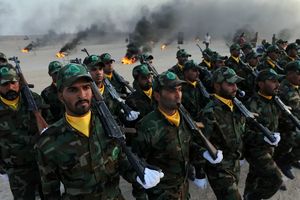
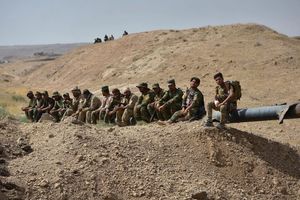
Iraqi criticism of support for Iran
The backlash has not been limited to Iran.
In an exclusive interview with Iran International, Sheikh Abdullah al-Jughayfi, a member of the Security and Defense Committee and adviser to the Anbar governorate, confirmed that “Hashd al-Shaabi forces in recent days have transferred financial and non-financial aid to Iran.”
He said the aid had been sent over the past three days “with Hashd al-Shaabi flags raised.”
Al-Jughayfi criticized the move and warned that “this action could further complicate Iraq’s relations with the United States and increase the likelihood of new sanctions.”
At the same time, Jalil al-Lami, deputy head of the Iraq Center for Strategic Affairs, told Iran International from Baghdad that the move amounted politically to “a clear alignment by Iraq” and warned that it effectively ended Baghdad’s balancing policy between Washington and Tehran.
He added that “the presence of Hashd al-Shaabi forces inside Iran could expand the range of targets inside Iraq, whether through direct attacks or indirect escalation, pushing the country toward an open atmosphere of confrontation.”