IRGC intelligence chief killed in attack, Guards say


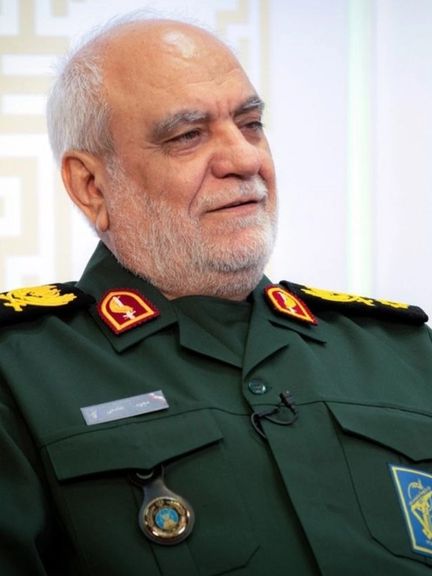
The head of the Islamic Revolutionary Guard Corps intelligence organization, Major General Majid Khademi, was killed in a US-Israeli strike, according to a Guards statement carried by Fars news agency on Monday.
The statement said Khademi had played a major role in Iran’s intelligence and security apparatus over nearly five decades.
It said funeral and burial arrangements would be announced later.


Iran is reviewing Pakistan’s proposal for an immediate ceasefire but is not open to a “temporary ceasefire,” a senior Iranian official told Reuters on Monday.
The official said Tehran would not reopen the Strait of Hormuz in exchange for a temporary truce and viewed Washington as not ready for a permanent ceasefire.
The official also said Iran would not accept pressure to make a decision under deadlines.
Iran and the United States have received a proposal to end hostilities that could take effect on Monday and reopen the Strait of Hormuz, according to Reuters citing a source familiar with the plan.
The source said a framework had been drawn up by Pakistan and exchanged overnight with both sides. It envisions a two-stage approach, with an immediate ceasefire followed by a broader agreement.
“All elements need to be agreed today,” the source said, adding that the initial understanding would take the form of a memorandum of understanding finalized electronically through Pakistan, described as the sole communication channel in the talks.
According to the source, Pakistan’s army chief, Field Marshal Asim Munir, had been in contact “all night long” with US Vice President JD Vance, special envoy Steve Witkoff and Iranian Foreign Minister Abbas Araghchi.
Under the proposal, a ceasefire would begin immediately and the Strait of Hormuz would reopen, with 15 to 20 days set aside to finalize a wider settlement.
The source said the plan, tentatively called the “Islamabad Accord,” would include a regional framework for the strait and culminate in in-person talks in Islamabad.
Iran and the United States have received a proposal to end hostilities that could take effect on Monday and reopen the Strait of Hormuz, according to Reuters citing a source familiar with the plan.
The source said a framework had been drawn up by Pakistan and exchanged overnight with both sides. It envisions a two-stage approach, with an immediate ceasefire followed by a broader agreement.
“All elements need to be agreed today,” the source said, adding that the initial understanding would take the form of a memorandum of understanding finalized electronically through Pakistan, described as the sole communication channel in the talks.
According to the source, Pakistan’s army chief, Field Marshal Asim Munir, had been in contact “all night long” with US Vice President JD Vance, special envoy Steve Witkoff and Iranian Foreign Minister Abbas Araghchi.
Under the proposal, a ceasefire would begin immediately and the Strait of Hormuz would reopen, with 15 to 20 days set aside to finalize a wider settlement.
The source said the plan, tentatively called the “Islamabad Accord,” would include a regional framework for the strait and culminate in in-person talks in Islamabad.
Axios reported on Sunday that the United States, Iran and regional mediators were discussing a possible 45-day ceasefire as part of a two-phase deal that could lead to a permanent end to the war.
There was no immediate confirmation from US or Iranian officials.
Iranian officials have previously said Tehran is seeking a permanent ceasefire with guarantees against renewed attacks by the United States and Israel, and have said messages have reached Iran through mediators including Pakistan, Turkey and Egypt.
According to an analysis by IRGC media Tasnim on Monday, a proposed 45-day temporary ceasefire “under the shadow of war” has no place in Iran’s policy, because any pause that does not meet Tehran’s conditions for ending the conflict would only give its enemies time to regroup.
The analysis said Iran has repeatedly rejected temporary truces that leave open the possibility of renewed attack, arguing that Washington and Israel would use such a window to recover from pressure on the battlefield, ease ammunition and strategic strains, and continue to extract military, economic and political advantages while keeping Iran under threat.
It added that, under the framework Iranian officials have set out, the war can end only if there are concrete guarantees against renewed US and Israeli attacks along with other non-negotiable conditions, and said the Strait of Hormuz would not return to its pre-war status.
According to the source who talked to Reuters, a final agreement would be expected to include Iranian commitments not to pursue nuclear weapons in return for sanctions relief and the release of frozen assets.
But two Pakistani sources said Iran had not yet committed despite intensified civilian and military outreach.
“Iran has not responded yet,” one source said, adding that proposals backed by Pakistan, China and the United States for a temporary ceasefire had so far drawn no commitment.
The Strait of Hormuz cannot be held hostage by any country, diplomatic adviser to the UAE president, Anwar Gargash, said at a weekend briefing.
"The Strait of Hormuz cannot be held hostage by any country," he said, adding that freedom of navigation through the waterway "has to be part and parcel of the settlement of any conflict with clear agreement on that."
He said freedom of navigation through the waterway must be part of any settlement to the US-Iran war.
Gargash said the UAE wanted the war to end but warned against a ceasefire that failed to address Iran’s nuclear program and its missile and drone capabilities.
Such a deal would create “a more dangerous, more volatile Middle East,” he said.
“We don’t want to see more and more escalation,” he said. “But we don’t want a ceasefire that fails to address some of the main issues that will create a much more dangerous environment in the region...notably (Iran's) nuclear program, the missiles and drones that are still raining down on us and on other countries.”
Powerful explosions were heard from a military site in northern Iran and an attack was reported in the southwestern city of Khorramshahr early on Monday, according to eyewitness accounts sent to Iran International.
Seven large blasts were heard at about 4:45 a.m. at the Fath military base, a helicopter production site between Malard and Meshkin Dasht in Alborz province.
Khorramshahr in Khuzestan province also came under attack on Monday morning, eyewitnesses said.