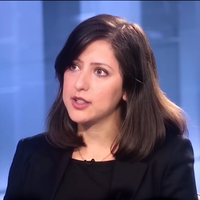
In an interview with Iran International, Charles W. Dunne, a non‑resident fellow at the Arab Center Washington DC and an adjunct lecturer at George Washington University’s Elliott School of International Affairs, said many in the West misread what sanctions, military strikes, and diplomatic isolation can achieve against Tehran.
“From a Western or an American point of view, this pressure that’s been exerted on the regime should have resulted in its collapse already,” he said. “But that’s not how this system works.”
The United States and Israel launched large‑scale attacks on Iran earlier this year, prompting Iranian missile and drone strikes against Israel, US positions, and Persian Gulf Arab states.
While President Donald Trump and Israeli Prime Minister Benjamin Netanyahu raised the possibility of regime change as a result of the airstrikes, the Islamic Republic has remained in place and has grown even more hardline, according to observers.
Dunne said the Trump administration’s shifting narrative points to a lack of strategic clarity at the top of the US government. “We’ve heard at least a dozen different explanations for why this war started in the first place,” he said. “Being completely honest with you, I’m not sure the administration knows to what end it is fighting.”
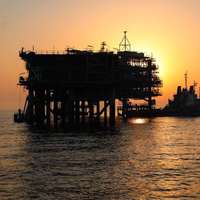
Dunne said talk of regime collapse and Venezuela‑style oil pressure ignores the Islamic Republic’s record of absorbing far greater punishment. Trump has suggested the US could one day seize Iran’s strategic oil hub of Kharg Island and “run” its energy sector “like we did in Venezuela”, but Dunne said the analogy is fundamentally flawed.
“In Venezuela the United States moved against a much smaller country, removed one leader and worked with a pliant figure inside an old regime that essentially survived,” he said. “That is not at all the scenario we face in Iran.”
Despite Trump’s saying that “regime change” already occurred, Dunne said Iran’s power structure has not collapsed and those now in charge “seem to be even more hardline and determined to prevail” than their predecessors.
Dunne added that the Islamic Republic has already shown far greater resilience, pointing to the 1980–88 Iran‑Iraq war, when the new revolutionary state suffered enormous casualties and damage yet fought Saddam Hussein’s Iraq to a standstill. “That war showed how much pain the regime is willing to accept in order to maintain its grip,” Dunne said. “Sanctions, oil export bans, a collapsing rial – none of that has brought the system to its breaking point yet.”
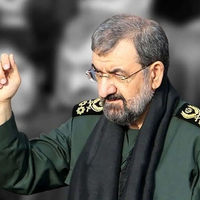
Dunne said repeated strikes on senior officials have not dismantled the state, but instead produced “more hardline, more aggressive personalities rising to the fore.” Iran’s regular army is backed by the Islamic Revolutionary Guard Corps (IRGC) and Basij paramilitaries, a layered security system designed to withstand both external attack and internal unrest.
“From their point of view, they are still in power, they still control the streets, and that is the main goal,” he said. “They believe they can inflict more political and even military pain than the United States is willing to bear over the next few months.”