At the diplomatic level, reports suggest indirect contacts are continuing, even as the gap between public rhetoric and behind-the-scenes diplomacy appears wider than ever.
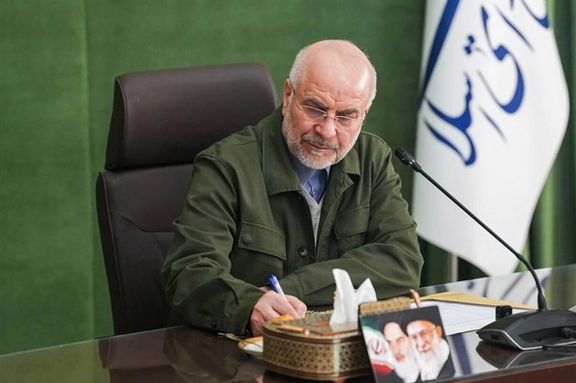
In Tehran, Mohammad Bagher Ghalibaf has emerged as a key voice. Reportedly playing a leading role in managing indirect contacts with Washington, he has maintained a consistently hard line.
In a four-page message issued on March 29 to mark the 30th day of the war, he dismissed recent US diplomatic messaging, including reports of a 15-point proposal, as unrealistic. He said Washington was trying “to achieve through talks what it could not win on the battlefield.”
Ghalibaf accused the United States of duplicity, saying Washington was publicly speaking of negotiations while privately preparing for escalation. He warned that Iranian forces were ready to inflict heavy losses on any US troops attempting a ground operation, as well as on their regional allies.
He also argued that US and Israeli objectives had already been scaled back. According to him, their objectives had shifted “from regime change to merely securing the Strait of Hormuz,” and disruptions to shipping had forced Iran’s adversaries to “beg” for talks.
Iranian military officials echoed the same defiant tone. A military spokesperson said on Sunday that Iranian forces had long awaited a possible US ground operation and warned Donald Trump not to “drag his soldiers into the jaws of captivity and death and not to plunge the American people into widespread mourning.”
Senior political figures reinforced the same line. First Vice President Mohammad-Reza Aref said negotiations over key issues such as the Strait of Hormuz would be possible only if Iran’s adversaries “pledge not to invade and recognize Iran’s international rights.”
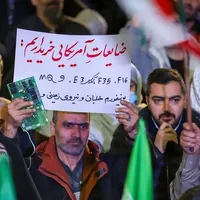
On social media, pro-government users in Iran also largely rejected the idea of compromise. One post on X said: “There continues to be no form of negotiation or message exchange between Iran and America… Iran's decision is to continue the war until the complete achievement of objectives.”
Washington: Optimism and threats
By contrast, Washington has projected a mix of cautious optimism and mounting threats.
US Secretary of State Marco Rubio said on Monday that indirect contacts with Iranian figures were continuing through intermediaries.
He said some figures within Iran’s leadership were “saying some of the right things privately,” but added that it was still unclear whether they had the authority to act.
Trump, however, has struck a much more aggressive tone. While insisting that talks are going “extremely well,” he has repeatedly threatened military action, including strikes on critical infrastructure.
In a post on Truth Social on Monday, he wrote: “If for any reason a deal is not shortly reached… we will conclude our lovely ‘stay’ in Iran by blowing up and completely obliterating all of their Electric Generating Plants, Oil Wells and Kharg Island.”
He also suggested the United States could maintain a presence there, adding to the pressure behind his warnings.
Claims and counterclaims
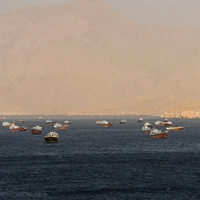
Trump has also said that Iran recently allowed 20 oil tankers to pass through the Strait of Hormuz “as a tribute” to the United States.
He said the permit was granted under the authority of Ghalibaf, whom he portrayed as playing an increasingly influential role within Iran’s power structure.
Iranian officials have not publicly confirmed the claim.
In an interview with the Financial Times, Trump said he was dealing with a “very reasonable” new group in Iran and suggested an agreement could be near. He also claimed Tehran had already accepted “most of the points” in his proposed framework.
Last week, Elias Hazrati, head of Iran’s government information council, dismissed reports of a US peace proposal as “media speculations” and a “wish list.”
Information warfare and market signals
Beyond the military and diplomatic rhetoric, both sides appear to be engaged in a parallel battle over information and perception.
In a widely shared English-language post, Ghalibaf accused Trump of trying to move financial markets through strategic messaging. He advised observers to treat such statements as reverse signals, writing: “Do the opposite: If they pump it, short it. If they dump it, go long.”
The post, which drew around 10 million views by Monday, showed Tehran’s awareness of what it sees as US information warfare aimed at influencing market volatility.
Online reactions reflected the same view. One Iranian user commented: “They’re playing mind games with the American public to crash the market. And honestly, they’re playing it well. Extremely, extremely well.”