Supporters attend a pro-government gathering in Iran, where one man holds a placard reading “We buy American scraps,” alongside references to US military equipment including F-16 and F-35 fighter jets, MQ-9 drones and naval destroyers.
Iran’s ruling establishment has increasingly turned to threats and combative rhetoric as it faces mounting economic problems at home and growing diplomatic strain abroad, expanding a wartime language into everyday governance.
Over recent months, hardline clerics, parliamentarians, military figures and diplomats have all adopted a similar tone in speeches, television appearances and social media posts: projecting strength through intimidation.
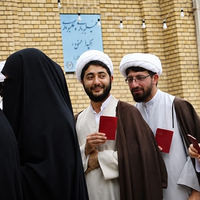
Pro-government religious speakers have threatened domestic critics during large religious gatherings.
Mahmoud Nabavian, a senior lawmaker on parliament’s national security committee, warned Persian Gulf Arab rulers that “none of their palaces would remain intact” in the event of conflict.
Foreign Minister Abbas Araghchi has spoken on social media of a “long and painful response” to Iran’s adversaries, while foreign ministry spokesman Esmail Baghaei has adopted similarly confrontational language in diplomatic briefings.
Judiciary chief Gholamhossein Mohseni Ejei has also framed Iran as unwilling to bow to outside pressure, while former Revolutionary Guards commander Hossein Kanaani Moghaddam openly described aggressive rhetoric as a method of confronting enemies.
The increasingly coordinated language across state institutions reflects what analysts describe as a deliberate political strategy rather than isolated remarks.
Religious tradition behind the rhetoric
The approach is rooted in a concept drawn from Islamic tradition that emphasizes victory through fear and intimidation.
The idea has historical and religious significance in parts of the Islamic Republic's revolutionary ideology and was widely used during the Iran-Iraq war in the 1980s.
At that time, religious singers and propagandists used emotional chants and battlefield slogans to encourage Iranian fighters and intimidate opponents.
Those performances were largely limited to military fronts and ideological ceremonies.
The same style has now spread into nearly every branch of the Iranian state.
Diplomats increasingly use the language of confrontation rather than negotiation. Members of parliament issue military-style warnings instead of focusing on legislation and economic policy. Judicial officials speak in ideological slogans rather than legal terms.
Men raise their fists during a pro-government gathering in Iran.
Even Iran’s negotiating teams often use the same tone heard in hardline religious gatherings, blurring the line between diplomacy, domestic propaganda and military messaging.
Pressure at home and abroad
The shift reflects the Islamic Republic’s weakening position rather than growing confidence.
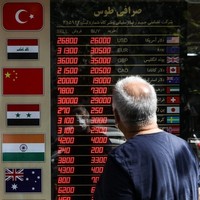
Iran continues to face severe economic difficulties, including soaring inflation, unemployment, currency depreciation and repeated public protests.
The government has also struggled to ease international isolation or achieve major diplomatic breakthroughs despite years of regional confrontation.
Therefore, the aggressive rhetoric has become one of the few remaining ways for the leadership to project authority both domestically and internationally.
The strategy appears aimed at two audiences simultaneously: foreign rivals, who are warned of military escalation, and the Iranian public, where activists, journalists and critics continue to face arrests, interrogations and pressure from security agencies.
But the tactic may also carry political costs. Constant threats can eventually signal weakness and anxiety rather than power, particularly to a population already frustrated by economic hardship and political restrictions.
For many Iranians dealing with inflation, internet disruptions and declining living standards, the increasingly dramatic language from officials has become less a source of fear than a sign of a leadership struggling to maintain control.
Outside the building of the General Directorate of Prisons of Semnan Province
A Swiss citizen Iran says died by suicide in prison was a 64-year-old tourist, a Swiss foreign ministry spokesman told Iran International, adding that Switzerland is seeking more details on his arrest and death from Tehran.
The foreign ministry added on Friday that the individual had been living in South Africa for the past 20 years and was traveling in Iran as a tourist.
The email response from the ministry said that the Swiss embassy in Iran was earlier denied access to the prisoner and now wants Tehran to provide full information about his arrest and death.
"Since Switzerland was informed of the arrest, the Swiss Embassy in Tehran has been in daily contact with the Iranian authorities to obtain more information about the circumstances of the arrest and to gain access to the detained Swiss citizen," the foreign ministry said.
"However, due to the accusations (espionage – national security), the requested consular access was not granted," it added. "Switzerland is demanding that the Iranian authorities provide detailed information."
The Swiss citizen who allegedly committed suicide in Semnan Prison on Thursday had been arrested while collecting soil samples in Iran’s central desert during an Israeli airstrike, media affiliated with Islamic Revolutionary Guard Corps reported.
Meanwhile, local media quoted unnamed Iranian official as saying that person was conducting espionage when he was arrested. The name of the Swiss citizen and the circumstances of his arrest and death remain unclear.
“This individual used prior intelligence training to take their own life during a specific opportunity,” Mashregh News, a publication affiliated with the Islamic Revolutionary Guard Corps (IRGC), reported late Thursday, citing an unnamed security official.
"Switzerland is demanding that the Iranian authorities provide detailed information on the reasons for his arrest and a full investigation into the circumstances of his death," the Swiss foreign ministry said.
The individual, detained by the IRGC Intelligence Organization, was accused of gathering information in a sensitive area during Israel's October air attack. The media report specifically said that this occurred during the Shahroud attack, which targeted an IRGC missile facility. Satellite imagery from Planet Labs later revealed significant damage to the site, known for building ballistic missiles and launching rockets as part of Iran’s space program.
After their arrest, the person was transferred to Semnan Prison, where they allegedly revealed information about their network and communication links, according to the outlet.
A local judiciary official confirmed the death on Thursday, saying that the Swiss national, facing espionage charges, had committed suicide in their cell.
Switzerland has also confirmed the death. "The FDFA confirms the death of a Swiss citizen in Iran," spokesperson Pierre-Alain Eltschinger told Iran International. "The Swiss Embassy in Tehran is in contact with the local authorities to clarify the circumstances of the death in an Iranian prison," he added.
According to Mizan, Iran's judiciary news website, the detainee asked their cellmate on Thursday morning to purchase food from the prison canteen. While alone in the suite, the detainee reportedly took their own life. "Prison officials immediately intervened to save the individual, but their efforts were unsuccessful," Mohammad Sadegh Akbari, a local judiciary official, was quoted as saying. “Suicide has been definitively confirmed.”
Iran has arrested dozens of dual nationals and foreigners in recent years, often on charges of espionage or security-related offenses. Some of these detainees have been released in exchange for deals involving Iranians held in foreign prisons.