Trump plays down Iran talks, leans on allies over Hormuz
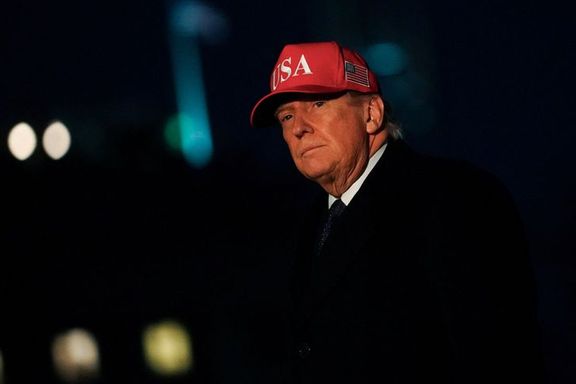
President Donald Trump said the United States remains in contact with Iran but voiced doubt that Tehran is ready for serious negotiations.
President Donald Trump said the United States remains in contact with Iran but voiced doubt that Tehran is ready for serious negotiations.
Speaking to reporters aboard Air Force One on Sunday, Trump hinted that there were talks but said that “I don’t think they are ready.”
"I think they will negotiate at some point," he added. "We are doing very well with respect to the whole situation in Iran."
Earlier on Sunday, Iran’s foreign minister Abbas Araghchi dismissed suggestions Tehran was seeking talks. “
We never asked for a ceasefire, and we have never asked even for negotiation,” he told CBS. “We are ready to defend ourselves as long as it takes.”
As the US-Israeli war with Iran entered its third week, tensions around the Strait of Hormuz continued to roil global energy markets.
Trump said his administration was in talks with seven countries about helping to secure the strait and called on them to protect shipping through the vital waterway that Tehran has largely blocked to tanker traffic.
“I’m demanding that these countries come in and protect their own territory, because it is their territory,” Trump told reporters aboard Air Force One while traveling from Florida to Washington on Sunday.
He did not say which countries he meant. Australia has already said it will not send naval ships to help reopen the strait.
He also told the Financial Times that NATO allies faced a “very bad future” if they failed to do more to support US efforts against Iran.
Oil giants concerned
The chief executives of ExxonMobil, Chevron and ConocoPhillips warned Trump administration officials that disruption to flows through the Strait of Hormuz is likely to worsen the global energy crisis, according to The Wall Street Journal.
The executives cautioned that prolonged instability around the strategic waterway could sustain volatility, tighten supplies and risk shortages of refined products.
In a separate social media post, Trump accused Iran of using artificial intelligence and sympathetic news outlets to spread false battlefield claims.
He rejected reports of damage to US aircraft and ships and said media organizations that carried such accounts could face legal consequences, suggesting some should be charged with treason.





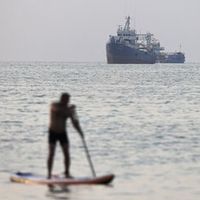
While Iran has effectively choked off oil exports by its Arab neighbors through the Strait of Hormuz, it has continued shipping its own crude largely uninterrupted.
Since the start of joint US–Israeli strikes on February 28, Iran has targeted at least 16 vessels and tankers, sharply curbing flows through one of the world’s most critical energy chokepoints.
Data from the commodity intelligence firm Kpler, seen by Iran International, shows Iranian crude exports averaging more than 1.5 million barrels a day (bpd) so far this month through the strait.
Discharges at Chinese ports have also risen, increasing from about 1.17 million bpd in February to more than 1.25 million so far in March. Figures from the International Energy Agency and maritime intelligence provider Lloyd’s List similarly point to a surge in Iran’s shipments.
Last week, Iran also loaded a two-million-barrel cargo from Jask — its only export terminal outside the Strait of Hormuz — marking the first such shipment since October 2024.
Before the escalation, roughly 14.7 million barrels of crude and 4.8 million barrels of refined products moved daily through the strait — about one-fifth of global oil consumption.
Among Persian Gulf producers, only Saudi Arabia and the United Arab Emirates have pipeline routes bypassing Hormuz. Even those alternatives were already partly utilized.
According to Lloyd’s List, combined exports from Saudi Arabia, the UAE and Oman via non-Persian Gulf ports averaged about 3.5 million barrels a day in recent months but have climbed to roughly 6 million — still far short of offsetting lost flows.
President Donald Trump said Friday the US Navy would “soon” begin escorting oil tankers through the waterway, though officials have not outlined a timeline or operational details.
Iran’s foreign minister, Abbas Araqchi, pushed back Sunday on suggestions Tehran was seeking talks, telling CBS’s Face the Nation: “We have never asked for a ceasefire … we are ready to defend ourselves for as long as it takes.”
Lloyd’s List estimates that even with naval escorts, no more than about 10 percent of lost volumes could realistically be restored — echoing the limited recovery seen after Houthi attacks in the Bab el-Mandeb.
The IEA said Thursday that disruptions have cut global supply by about 8 million barrels a day of crude and another 2 million barrels of condensates and natural gas liquids.
In response, its 32 member countries plan to release roughly 400 million barrels from strategic reserves over 120 days beginning next week, including about 172 million barrels from the United States and 80 million from Japan.
Even so, US Energy Secretary Chris Wright said Sunday there were “no guarantees” oil prices would fall in the coming weeks.
Moscow may be benefiting from the war between Iran and the United States and Israel, but the longer it continues, the less it serves Russia’s interests.
As has been widely reported, Russia has provided limited direct assistance to the Islamic Republic against its attackers, despite Tehran’s extensive military support to Moscow since 2021.
This contrasts with how Tehran supplied large quantities of armed drones and ballistic missiles to Russia in its war against Ukraine.
Some see the ongoing war as yet another example of Putin doing little to help longstanding allies, as occurred with the downfall of long-time Syrian ally Bashar al-Assad, the American abduction of Venezuelan President Nicolas Maduro, and Russia’s lack of help to Tehran last year during the 12-Day War.
Moscow, though, has provided some help to Iran in this war. Russia has long supplied Tehran with surveillance and repression technologies used to prevent domestic unrest. This support may have contributed to the Islamic Republic’s ability to survive the killing of Supreme Leader Ali Khamenei and many other top leaders—at least so far.
Moscow has also reportedly provided Tehran with intelligence support for Iranian drone attacks against targets including US troops in Iran’s Persian Gulf neighbours, Israel, Turkey, Azerbaijan and elsewhere. T
hese attacks may have been undertaken in hopes of giving some of America’s Middle East partners an incentive to press Washington and Israel to halt strikes on Iran so Tehran would stop targeting them.
Putin may also see enabling Iranian drone attacks against US military targets in the region as payback for earlier US support to Ukraine for its drone strikes against Russian military targets both in occupied Ukraine and Russia itself. Putin’s desire for retribution on this score should not be underestimated.
Yet as gratifying as this may be to Putin, it has also created a problem for Russia that he may not have anticipated. Ukraine has offered to share its considerable experience in defending against drone attacks with countries now receiving them from Iran—an offer many have welcomed.
Perhaps this helps explain why Moscow has denied sharing intelligence with Tehran. But regardless of Russia’s role, the attacks themselves have given targeted states reason to value Ukraine and its survival more highly than before—something that is not in Russia’s interests.
This points to a larger tension: while Moscow and Tehran are both strongly anti-American, their interests are not fully aligned. While Tehran may view all countries cooperating with the United States or Israel as adversaries, Moscow has long sought pragmatic relations with many of them and tried to split some from Washington on key issues.
This approach paid off in the willingness of Saudi Arabia, the United Arab Emirates, Turkey and even Israel not to enforce Western sanctions against Russia. The longer Iranian attacks continue, however, the less willing these states may be to cooperate with Moscow if they believe it is complicit or unwilling to restrain Tehran.
At the same time, Moscow may appear less useful to Iran’s post-Ali Khamenei leadership if Putin cannot pressure or persuade Donald Trump to end his war against Iran.
Putin also seeks to preserve as much of Trump’s sympathy as possible regarding Ukraine. He would not want to provoke renewed large-scale US military support for Kyiv by appearing to obstruct Washington’s campaign against Tehran.
To some extent, the US-Israeli war on Iran has benefited Putin by diverting Western attention from Ukraine. Hostile Iranian actions that reduce Persian Gulf energy flows and push global oil and gas prices higher also benefit petroleum-exporting Russia.
Moscow has also gained from Trump’s reduced pressure on India over purchases of Russian oil, helping stabilize global supply and prevent prices from rising even further.
The longer the war continues, however, the more it risks imposing greater costs than benefits for Moscow. Prolonged conflict could deepen Middle Eastern reliance on Ukraine against Iranian drone attacks, strain Russia’s relations with regional states wary of Tehran, and further weaken the Islamic Republic, making it less useful to Russia.
For Putin, the war’s advantages are real—but they are likely to diminish the longer it lasts.
Lebanon’s Parliament Speaker Nabih Berri receives more than $500,000 per month from the Islamic Republic in order to support Tehran's interests and those of its allied group Hezbollah in Lebanon, informed sources told Iran International.
Officials in Tehran say the sums are meant to “buy” unity among Lebanon’s Shiite leadership to ensure that they “act in accordance with Iran’s interests, not Lebanon’s interests.”
Nabih Berri did not respond to Iran International’s request for comment. One of his advisers said that Berri would not comment on the matter at this time.
Berri has not publicly opposed Hezbollah’s attacks on Israel in support of Iran, the sources said, because he does not want to risk losing his financial resources.
The 88-year-old politician heads Lebanon's Amal Movement and holds significant sway in Lebanon’s domestic and foreign policy.
The Shiite organization, formed in the 1970s, remains one of the country’s main political actors. It maintains close political ties with Hezbollah, and both belong to Lebanon’s Shiite political camp.
On March 1, Hezbollah targeted Israel in support of Tehran. Israel launched a new military operation in retaliation.
The sources said Berri has been unwilling to support efforts by the Lebanese government to disarm Hezbollah because, in exchange for receiving large sums from Tehran, he must “advance measures in the Lebanese parliament that align with Tehran’s interests.”
In recent months, Lebanon’s President Joseph Aoun and Prime Minister Nawaf Salam have tried to pressure Hezbollah to disarm in order to reduce tensions with Israel and the international community.
Army forces have confiscated Hezbollah weapons in parts of southern Lebanon, but senior Lebanese officials have said that fully implementing the plan could trigger internal tensions, as Hezbollah has refused to hand over its entire arsenal.
Hezbollah Secretary-General Naim Qassem and officials of the Islamic Republic have repeatedly opposed disarming the group.
Following Hezbollah’s attack on Israel, the Lebanese government announced that the group's military activities would be banned.
On March 6, Israeli Defense Minister Israel Katz warned the Lebanese government that if it remains unable to fulfill its commitments regarding Hezbollah’s disarmament, Lebanon will “pay a very heavy price.”
Tehran considers Hezbollah one of the main pillars of the so-called Axis of Resistance—a term used by Iranian officials to refer to allied armed groups such as Hamas, Islamic Jihad, Hezbollah, Iraq’s Popular Mobilization Forces, and the Houthis in Yemen.
The Wall Street Journal reported in November 2025 that Tehran transferred hundreds of millions of dollars in oil revenue to Hezbollah in the preceding year through exchange offices, private companies and a financing network in Dubai.
Israel’s Kan network reported in December 2025 that Tehran had agreed to pay $1 billion to Hezbollah.
Neither report can be independently verified by Iran International.
The office of the Speaker of Lebanon’s Parliament, in a statement issued after the article was published, called the claim "false and baseless."
Regional reactions to the appointment of Mojtaba Khamenei as Iran’s new Supreme Leader have revealed growing anxiety about stability, with Tehran’s allies condemning the killing of his father and adversaries hardening their military posture.
Khamenei Jr’s continued absence from public view has fueled speculation among analysts and diplomats about how power is being exercised during the transition.
The message read on his behalf on state television on Thursday was viewed by some observers as closely aligned with the Revolutionary Guards (IRGC) messaging, prompting questions about the balance between formal leadership and the IRGC.
As expected, Tehran’s regional non-state allies in Iraq, Yemen and Lebanon have rallied around the new leader, calling him the “Leader of the blessed Islamic Revolution.” His ascendence to power is perceived by these armed groups as continuity in funding and weapons transfers.
Not many share this view in the region and beyond.
Arab neighbors
Across the Persian Gulf, Mojtaba’s appointment has been met with a mix of defensive military posturing, criticism, and calls for closer security coordination.
Tensions with Saudi Arabia rose sharply after his appointment when an Iranian strike hit a Saudi residential area. Prior reporting in US media, including The Washington Post, indicated Riyadh had privately urged Washington to use significant military force to prevent Iran from emerging stronger after the transition.
Elsewhere in the region, Tehran and its proxies have been blamed for strikes on civilian infrastructure—including a desalination plant in Bahrain.
Arab League Secretary-General Ahmed Aboul Gheit denounced Iran’s “reckless policy,” reflecting broader anxieties among smaller Gulf states.
Reactions from Qatar, Kuwait and the United Arab Emirates have reflected concern about escalation, as the leadership transition coincided with direct attacks on regional infrastructure.
Turkey
In Turkey, President Recep Tayyip Erdogan struck a supportive tone, calling Iranian officials “brothers” and expressing hope they would “get through this trap-filled period.”
Ankara has also criticized US strikes and appears likely to maintain pragmatic engagement with Iran’s leadership to avoid instability along its borders.
Russia, China and the EU
Russia’s President Vladimir Putin was among the first to respond, calling Ali Khamenei’s death a “cynical murder” and describing him as an “outstanding statesman.” His message to President Massoud Pezeshkian emphasized solidarity with Iran during the transition.
China adopted a more cautious tone, stressing respect for Iran’s sovereignty and opposing regime change. Chinese officials framed the succession as a constitutional matter and an internal Iranian process.
The European Union’s reaction has been more fragmented. Diplomats say some member states quietly hope the transition could open space for political change, while others fear instability could widen the conflict. Publicly, EU officials have emphasized de-escalation regardless of who leads Iran.
None of the three powers aligned with Tehran as the United Nations condemned IRGC-linked attacks on regional targets this week.
Israel
Israel was the only country in the region to explicitly question the legitimacy of Mojtaba’s appointment, describing it as a continuation of what it called the IRGC’s “terror regime.”
Even before the appointment, Defense Minister Israel Katz wrote on X that “any leader appointed to continue the plan to destroy Israel will be an unequivocal target for elimination.”
Public reactions across Iran and parts of the Arab world have been mixed. Some early expressions of relief at Ali Khamenei’s death gave way to concern about escalation as Mojtaba’s ties to the IRGC came into focus.
Across the region, officials and analysts say the leadership transition has reinforced fears that an already volatile conflict could widen further in the weeks ahead.
Iran’s new Supreme Leader Mojtaba Khamenei, in the first message attributed to him, called for continued military resistance and said the Strait of Hormuz should remain a tool of pressure, even as questions persist about his health and whereabouts.
The message was not delivered in person. Instead, it was read aloud by a state television anchor while a still photograph of Khamenei was displayed on screen, meaning that nearly two weeks after the conflict began, no video or audio recording of the new leader himself has been released.
Iranian authorities have provided no direct evidence of his condition following reports that he may have been injured during the strikes that killed his father and predecessor, Ali Khamenei.
In the written statement attributed to him, Khamenei addressed the war, domestic unity, regional tensions and retaliation against enemies.
War and military pressure
In the message, Khamenei praised Iran’s armed forces and called for continued military resistance against what he described as aggression by the United States and Israel.
“The demand of the masses of the people is the continuation of effective and regret-inducing defense.”
He also said Iran should continue to use the threat of closing the Strait of Hormuz as leverage in the conflict.
“Certainly the lever of blocking the Strait of Hormuz must continue to be used,” he wrote.
Khamenei added that Iranian officials were studying the possibility of expanding the war into additional fronts where adversaries were vulnerable.
“Studies have been conducted regarding the opening of other fronts in which the enemy has little experience and is highly vulnerable,” he said. “Activating them will take place if the state of war continues and if it serves our interests.”
The statement also praised what Iran calls the “Axis of Resistance,” thanking allied armed groups in the region for supporting Tehran.
“We consider the countries of the resistance front our best friends,” he wrote. “The resistance front is an inseparable part of the values of the Islamic Revolution.”
He specifically referred to Yemen’s Houthis, Lebanon’s Hezbollah and armed groups in Iraq, saying they had stood alongside Iran despite obstacles.
Calls for unity and public participation
Much of the message was directed at Iran’s domestic audience, urging unity and mobilization during wartime.
Khamenei said that during the days immediately following the killing of his father, when Iran had temporarily been without a supreme leader or commander-in-chief, the population itself had shown resilience.
“The insight and intelligence of the great nation of Iran in the recent events and its perseverance, courage and presence astonished friends and enemies alike,” he wrote.
He warned that leadership and government institutions could not function effectively without public support, urging Iranians to maintain active participation in society.
“If your power does not appear on the scene, neither leadership nor any of the institutions whose true role is to serve the people will have the necessary effectiveness,” read the statement.
The new leader also called on citizens to continue participating in political and social activities during the war, including rallies and demonstrations.
“I remind you of the importance of participation in Quds Day ceremonies, where the element of confronting the enemy must be emphasized.”
Threat of retaliation
A major portion of the message focused on retaliation against those responsible for deaths during the war.
Khamenei vowed that the Islamic Republic would continue pursuing revenge for those killed in the conflict. “We will not ignore revenge for the blood of your martyrs,” he wrote.
He said retaliation would not be limited to the killing of his father but would extend to all Iranian casualties.
“The revenge we seek is not only for the martyrdom of the great leader of the revolution,” he wrote. “Every member of the nation who is martyred by the enemy becomes an independent case for revenge.”
Khamenei said some retaliation had already occurred but that further actions would continue.
“A limited amount of this revenge has already taken place in practice. But until it reaches its complete extent, this case will remain open above all others.”
Warning to regional governments
Khamenei also issued a warning to governments in the Middle East whose territories host US military facilities.
He said Iranian forces had struck some of those bases during the war and suggested further attacks could follow.
“In the recent attack some military bases were used,” he wrote. “As we had clearly warned, and without attacking those countries themselves, we targeted only those bases.”
He added that Iran would continue striking such installations if they were used against the country.
“From now on we will be forced to continue doing this,” he wrote.
Khamenei urged regional governments to shut down foreign military bases.
“These countries must determine their position toward those who have attacked our homeland and killed our people,” he wrote. “I recommend they close those bases as soon as possible.”