Two arrested over shooting at Iranian lawmaker’s car, prosecutor says
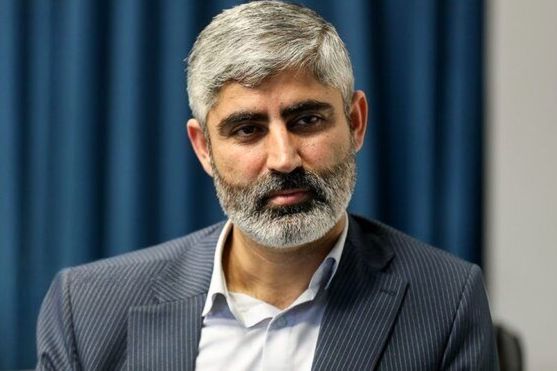
Two people have been arrested in connection with a shooting at the car of Iranian lawmaker Abbas Bigdeli, a provincial prosecutor said on Friday.
Two people have been arrested in connection with a shooting at the car of Iranian lawmaker Abbas Bigdeli, a provincial prosecutor said on Friday.
Ali Asghar Asgari, prosecutor of Qazvin, said the two suspects were detained over the use of a hunting weapon against Bigdeli’s vehicle. A judicial case has been opened against them, he added.
Asgari said the incident did not have a “terrorist” nature.
On Thursday evening, Salar Abnoush, head of the Qazvin provincial assembly of lawmakers, said the personal vehicle of Bigdeli, who represents Takestan in parliament, was hit by pellet gun fire. He said the lawmaker was unharmed.





US-Iran nuclear talks in Geneva ended on Thursday without any achievements, with Iran rejecting key US demands while Washington maintaining military readiness and top officials signaling a hardline stance, according to Iranian and Western media reports.
Delegations from Tehran and Washington met under Omani mediation for the third round of indirect talks, focusing on Iran’s nuclear program and sanctions relief, according to Iran’s foreign ministry.
Omani Foreign Minister Badr al-Busaidi said technical discussions would resume next week in Vienna.
While the Omani top diplomat spoke of “progress” in negotiations, US media said no breakthrough was achieved.
Iran rejected major US proposals, including transferring enriched uranium abroad, halting enrichment, and dismantling certain nuclear sites, The Wall Street Journal reported citing informed sources.
US military and political pressure continues
The talks took place amid a large US military presence in the Middle East. Shortly after the talks, CENTCOM chief Admiral Brad Cooper briefed President Donald Trump on potential options, ranging from limited strikes on nuclear and missile sites to broader operations involving Israel, carrying risks of escalation and regime change.
White House officials stressed that no decisions had yet been made.
In Washington, lawmakers signaled hardline positions. Senate Republicans posted on X that “Iran will never have a nuclear weapon.” Representative Carlos Gimenez warned that past deals “breathed new life into the regime” and argued that extraordinary measures may be needed to prevent a nuclear-armed Iran.
US Vice President JD Vance, cited by The Washington Post, said the United States would avoid another prolonged Middle East war while keeping both diplomatic and military options open.
The talks coincide with domestic pressures in Iran, where universities have shifted to online-only classes amid ongoing protests. Observers say the lack of breakthroughs highlights the fragile state of the diplomatic process.
Negotiators are expected to return next week. Core disagreements over enrichment and sanctions remain, leaving the outcome uncertain as Iran continues uranium enrichment and the US maintains military readiness in the region.
Famous Iranian footballer Rashid Mazaheri has had no contact with his wife for more than 48 hours after comparing Supreme Leader Ali Khamenei to Satan in a social media post condemning the Islamic Republic’s January massacre of protesters, she said.
Mazaheri on Wednesday posted an image on Instagram of Khamenei labeled “Satan,” with the caption: “Your command over this sacred land has ended.”
The post was later deleted, and her wife Maryam Abdollahi said the goalkeeper’s current whereabouts are unknown.
The Islamic Revolutionary Guard Corps (IRGC)-affiliated Fars News said on Wednesday that a summons had been issued for Mazaheri over an alleged 4-billion-toman - $80,000 - fraud, and that the footballer was "exploiting the country's situation and fabricating lies to avoid paying his debts."
Mazaheri's wife rejected the Fars report, calling them a “carefully engineered lie meant to cover up the truth.”
“Any reports suggesting his arrest over financial matters are fabricated lies meant to hide the truth," she posted on Instagram.
“Rashid knew about these traps and has stood courageously, remaining in his homeland. His bravery cannot be hidden behind these dirty scenarios," she said.
Mazaheri was a goalkeeper for Tehran giants Esteghlal and was even named in Iran's preliminary squad for the 2018 World Cup in Russia.
After decades of ideological expansion abroad and coercive control at home, Tehran’s rulers face a narrowed choice between two treacherous paths: Concession of power or deeper confrontation.
For forty-seven years, the Islamic Republic has anchored Iran to an ideology that promised dignity and independence but delivered isolation, economic decay and recurring crisis. What began as a revolutionary project hardened into a theocratic system sustained by confrontation abroad and repression at home.
Today, that closed strategic loop appears to be under strain.
January marked what many observers describe as a point of rupture. Security forces killed, wounded and arrested thousands during a nationwide crackdown whose brutality shocked even a society long accustomed to state violence.
The state crossed a political and social threshold, relying more visibly than ever on coercion to maintain control. Whatever legitimacy the regime ever claimed has gone.
Iran now faces a convergence of pressures: economic exhaustion, widespread public frustration, continued international isolation and a credible threat of force from the United States. The familiar formula—delay and deflect diplomatically, escalate through regional partners and expand military capabilities—no longer guarantees stability.
At the center of this crisis lies ideological overreach that has become financially burdensome and strategically counterproductive.
Tens of billions of dollars (or over $100 billion if we consider the entire economic burden) have been invested in uranium enrichment to preserve what officials describe as a “nuclear option.” Rather than delivering security, this path has triggered successive rounds of sanctions and intensified isolation.
Billions more have gone into hardened missile infrastructure and underground facilities designed to project deterrence beyond Iran’s borders.
Supporters call these systems defensive; critics see them as instruments of coercion that have deepened confrontation without producing durable stability.
The same logic shaped Tehran’s network of allied militias across the Middle East. Built to extend influence and encircle adversaries, this proxy architecture was intended to provide strategic depth at relatively low cost. Instead, it has drawn Iran into repeated confrontations with militaries vastly more powerful than its own and entrenched a cycle of escalation.
At home, the Revolutionary Guard and Basij remain the state’s primary instruments of control. Their central mission has increasingly been the suppression of domestic unrest.
Each protest wave met with force further widens the gap between state and society.Continued reliance on coercion risks destabilizing Iranian society and the wider region.
Meanwhile, the United States has shifted into what appears to be a posture of sustained coercive pressure. Strike aircraft supported by aerial tankers; strategic bombers waiting at home to embark on global strike missions; intelligence, surveillance and reconnaissance (ISR) aircraft; layered air and missile defenses, and a reinforced naval presence including two carrier strike groups near critical waterways signal both capability and resolve.
Washington now possesses credible means to target Iran’s air defenses, command structures, missile forces, naval assets and military and nuclear industries for major effects without repeating the large-scale ground wars of the past.
The message, however, is not that war is inevitable. Rather, it is that Iran’s long-standing brinkmanship strategy may be reaching its limits. It is time for Tehran to decide. This does not necessarily mean surrender, but strategic realism.
In 1988, after eight devastating years of war with Iraq, the Islamic Republic’s founder and first supreme leader Ruhollah Khomeini accepted a ceasefire he described as “drinking from poisonous chalice.” The decision was politically humiliating for many within the revolutionary establishment, yet it prevented further destruction and preserved the state.
Iran may now confront a comparable moment of transformation. Accepting strategic capitulation would not necessarily mean dismantling the state or abandoning national defense. It would mean relinquishing powers and institutions, such as IRGC and Basij, that have contributed to oppression and prolonged isolation, halting uranium enrichment, placing missile programs under verifiable constraints, severing relations with proxy militias as instruments of foreign policy and ending existential rhetoric toward regional adversaries.
In return, Iran could pursue what many of its citizens have long sought: economic recovery, sanctions relief and diplomatic normalization.
Yet, after the events of January 2026, those gains alone may not satisfy public expectations. A growing segment of Iranian society is demanding fundamental political change and a credible path toward secular democracy and free elections in Iran.
The alternative is military attrition layered atop economic fragility and domestic unrest. Infrastructure would degrade further. Isolation would deepen. Public anger would intensify. Repression might temporarily contain dissent but would likely compound long-term instability.
History is ruthless with rulers who mistake ideological stubbornness for strength.
Those ruling Iran still have a narrowing window to prioritize real national interests over ideological expansion. Durable power rests not only in centrifuge halls and missile tunnels, but in legitimacy, prosperity and social cohesion.
For decades, the Islamic Republic framed confrontation as strength and resistance as destiny. Now the shadow of war hangs over Iran. Whether it chooses a peaceful concession of power or renewed escalation with unforeseen consequences may determine not only its own future, but the trajectory of the country and the nation it currently governs.
The path less treacherous for Iran appears clear: stepping back from confrontation and allowing Iranians to choose their future, even if that means the end of an era for those ruling the country.
President Donald Trump warned in his State of the Union address on Tuesday night that Tehran is working on the development of advanced missiles that could eventually reach the United States.
“They've already developed missiles that can threaten Europe and our bases overseas, and they're working to build missiles that will soon reach the United States of America," the President said during his address.
The remarks come ahead of upcoming negotiations between Tehran and Washington in Geneva over Iran’s disputed nuclear program and concerns over the country’s expanding missile arsenal.
“They were warned to make no future attempts to rebuild their weapons program, in particular nuclear weapons,” he said, adding, “Yet they continue starting it all over, and are this moment again, pursuing their sinister ambitions.”
Reaffirming Washington’s longstanding position, Trump pledged that the Islamic Republic would not be allowed to obtain a nuclear weapon — a moment that drew visible bipartisan reaction in the chamber, with lawmakers from both parties rising as he reiterated the policy.
The president stressed that negotiations with Tehran were ongoing but warned the United States remained prepared to act if necessary.
For weeks, Trump has pointed to a large US naval buildup near Iran, including two aircraft carriers and multiple warships positioned in the region. Analysts say the scale of the deployment is comparable to past major US military operations, with advanced warplanes and strike capabilities in place.
“We are in negotiations with them. They want to make a deal, but we haven't heard those secret words ‘we will never have a nuclear weapon,” he said.
‘32,000 killed’
During the address, Trump also acknowledged the massacre that followed recent nationwide protests calling for an end to the Islamic Republic.
“And just over the last couple of months, with the protests, they've killed at least it looks like 32,000 protesters in their own country,” he said, adding that authorities had “shot them and hung them.”
“For decades since they seized control of that proud nation, 47 years ago, the regime and its murderous proxies have spread nothing but terrorism, death and hate,” Trump said.
Trump also referenced the US killing of Iranian commander Qassem Soleimani in 2020 during his first term.
“We took out Soleimani. I did that during my first term. Had a huge impact. He was the father of the roadside bomb.”
The Central Intelligence Agency on Tuesday published a direct message in Farsi on its official X account, urging Iranians to contact the agency securely amid ongoing domestic unrest and heightened Iran-US tensions.
“Hello. The Central Intelligence Agency (CIA) can hear your voice and wants to help you. Below is the necessary guidance on how to securely contact us virtually,” the post said, accompanied by a short video outlining encrypted communication methods.
The message marks the CIA’s most explicit Persian-language public outreach effort, similar to prior calls by Israel’s Mossad but rare for the US agency.
The move appears aimed at gathering intelligence on Iran’s nuclear and military programs, as well as domestic dissent, while providing support to potential informants.
In recent years, several intelligence services - especially the CIA, and to a lesser extent MI6 and Mossad - have normalized open, platform-based messaging that resembles advertising but is intended for secure outreach to potential sources.
In 2025, the head of MI6 used X to unveil “Silent Courier,” a Tor-only dark-web portal for people in hostile or high-risk states - particularly Russia - to contact the agency securely.
In October 2024, the CIA published text and infographic instructions in Mandarin, Korean, and Farsi on how to securely contact the agency through its public and dark‑web (onion) sites.