• العربية
  • فارسی
Brand
  • Iran Insight
  • Politics
  • Economy
  • Analysis
  • Special Report
  • Opinion
  • Podcast
  • Iran Insight
  • Politics
  • Economy
  • Analysis
  • Special Report
  • Opinion
  • Podcast
  • Theme
  • Language
    • العربية
    • فارسی
  • Iran Insight
  • Politics
  • Economy
  • Analysis
  • Special Report
  • Opinion
  • Podcast
All rights reserved for Volant Media UK Limited
volant media logo
ANALYSIS

Why Tehran’s business pitch to Trump won’t end nuclear deadlock

Umud Shokri
Umud Shokri

Senior visiting fellow, George Mason University

Feb 27, 2026, 17:05 GMT+0
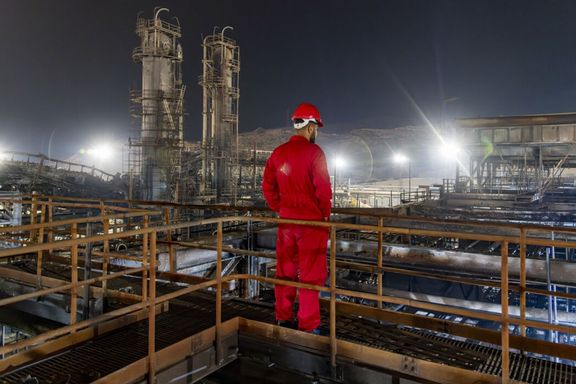
A worker stands on a platform at the Fajr-e Jam gas refinery in Iran's southern province of Bushehr, February 2026

Reports in major outlets that Tehran has floated a “commercial bonanza” to the Trump administration should be understood less as an investment roadmap than as a survival strategy.

As Donald Trump’s 10-to-15-day deadline for a “meaningful” deal with Iran enters its decisive phase, Iranian officials appear to be reframing diplomacy as a commercial opportunity rather than a strategic concession.

The Financial Times reported on February 26—as talks were underway in Geneva—that Tehran had offered access to major energy and mineral resources in an effort to steer Washington away from military escalation.

This is a shrewd pitch to the current White House. Trump has long favored foreign-policy outcomes he can present as concrete transactions, and Iran appears to be speaking directly to that instinct.

By holding out the prospect of access to one of the world’s largest underdeveloped energy systems, Tehran is trying to make de-escalation look like a win for American business rather than a concession to an adversary. It is hoping that profit would help create a future constituency for restraint in the United States.

In that sense, the proposal is about more than upstream contracts. It is an effort to reshape Washington’s political calculus.

Iran can make such a pitch because the underlying resource base is genuinely exceptional.

According to the US Energy Information Administration, Iran holds the world’s third-largest proven crude oil reserves and the second-largest proven natural gas reserves. The agency’s most recent country brief notes that full sanctions relief could raise output significantly within months.

Most of Iran’s crude and condensate exports already go to China, underscoring both the scale of the prize and the distortions created by sanctions. Tehran is trying to turn geological weight into diplomatic leverage at a moment of vulnerability.

That is also why the offer should be treated with caution. A regime confident that time is on its side does not place strategic sectors in front of an American president who is openly threatening it.

Trump has warned that “bad things” will happen if no meaningful deal is reached within roughly two weeks. The third round of talks ended without agreement, and major gaps remain over the terms of any settlement. The offer is being made because the central dispute remains unresolved, not because it is close to resolution.

On February 25, the US Treasury sanctioned more than 30 individuals, entities, and vessels tied to Iran’s shadow fleet and networks supporting ballistic-missile and advanced weapons procurement.

That is not the legal environment in which American firms begin planning long-term upstream projects. Even if some restrictions were waived, companies would still face compliance risks, financing obstacles, insurance complications, and the danger that any opening could be reversed by the next administration.

For corporate boards, Iran is not simply a market with upside. It is a sanctions minefield. American firms may also remember how quickly Iranian openings can collapse.

During the JCPOA window, Boeing signed a $16.6 billion agreement to sell 80 aircraft to IranAir, widely seen as a symbol of potential commercial normalization. The reimposition of sanctions after Washington left the nuclear deal turned that optimism into a lesson in sovereign and political risk.

Nor is the Venezuela analogy reassuring. Exxon chief Darren Woods was reported to have called the country “uninvestable” without major legal reforms even after Washington encouraged US companies to return.

If Venezuela appears risky even with direct US political backing, Iran looks far more uncertain.

Iranian officials have said they did not offer to suspend enrichment and that the United States did not explicitly demand zero enrichment in earlier exchanges. Yet Washington’s broader position remains that any agreement must prevent Iran from moving toward a nuclear weapon.

Reuters reported on February 26 that the United States is still seeking strict caps on enrichment and stockpiles, while the Associated Press said Iran remains resistant to shipping enriched uranium abroad.

This is not a minor technical disagreement. No serious US company is likely to regard Iran as bankable while that gulf exists. Investors move when the political architecture is credible, not when it is still being contested in Geneva hotel rooms.

That is why Iran’s “commercial bonanza” matters as leverage but not yet as policy. It is a sophisticated attempt to buy time, flatter Trump’s instincts, and raise the perceived cost of escalation by dangling future profits before Washington.

It may help preserve diplomacy for another round and give the White House an off-ramp it can market as commercially rational rather than strategically soft. But it is not a breakthrough. Oil and mining rights alone cannot override sanctions law, congressional hostility, nuclear mistrust, or the coercive logic that still governs US policy toward Iran.

Tehran is offering treasure. The problem is that the minefield around it remains fully intact.

Most Viewed

US blockade enters murky phase as tankers spoof signals and buyers hesitate
1
ANALYSIS

US blockade enters murky phase as tankers spoof signals and buyers hesitate

2
INSIGHT

Ideology may be fading in Iran, but not in Kashmir's ‘Mini Iran'

3
INSIGHT

Hardliners push Hormuz ‘red line’ as US blockade tests Iran’s leverage

4
VOICES FROM IRAN

Hope and anger in Iran as fragile ceasefire persists

5

US sanctions oil network tied to Iranian tycoon Shamkhani

Banner
Banner

Spotlight

  • Hardliners push Hormuz ‘red line’ as US blockade tests Iran’s leverage
    INSIGHT

    Hardliners push Hormuz ‘red line’ as US blockade tests Iran’s leverage

  • Ideology may be fading in Iran, but not in Kashmir's ‘Mini Iran'
    INSIGHT

    Ideology may be fading in Iran, but not in Kashmir's ‘Mini Iran'

  • War damage amounts to $3,000 per Iranian, with blockade set to add to losses
    INSIGHT

    War damage amounts to $3,000 per Iranian, with blockade set to add to losses

  • Why the $100 billion Hormuz toll revenue is a myth
    ANALYSIS

    Why the $100 billion Hormuz toll revenue is a myth

  • US blockade targets Iran oil boom amid regional disruption
    ANALYSIS

    US blockade targets Iran oil boom amid regional disruption

  • Iran's digital economy battered by prolonged blackout
    INSIGHT

    Iran's digital economy battered by prolonged blackout

•
•
•

More Stories

IAEA says cannot assure Iran’s nuclear program is exclusively peaceful

Feb 27, 2026, 14:30 GMT+0

The UN nuclear watchdog warned it will not be in a position to provide assurance that Iran’s nuclear program is exclusively peaceful unless Tehran restores access to key facilities, according to confidential reports seen by Bloomberg and the Associated Press.

International Atomic Energy Agency Director General Rafael Grossi said the agency has been unable to verify the status and location of Iran’s stockpile of highly enriched uranium since military strikes by the United States and Israel hit several nuclear sites in June.

The IAEA said it has not been granted access to Iran’s four declared enrichment facilities and has therefore lost “continuity of knowledge” over previously declared nuclear material at affected sites. As a result, it cannot verify whether Iran has suspended all enrichment-related activities or confirm the current size, composition or whereabouts of its enriched uranium stockpile.

Grossi said his agency “will not be in a position to provide assurance that Iran’s nuclear program is exclusively peaceful” until Iran improves its cooperation.

Inspectors have observed regular vehicular activity at bombed sites, including the underground complex at Isfahan and the enrichment facilities at Natanz and Fordow, through satellite imagery. However, Grossi said that without on-site inspections the agency cannot determine the nature or purpose of those activities.

According to the IAEA, Iran holds 440.9 kg (972 pounds) of uranium enriched up to 60% purity, a short technical step from weapons-grade levels of 90%. Grossi has previously said that while such material does not mean Iran has a nuclear weapon, it could, in theory, be sufficient for multiple bombs if further enriched.

The warning comes as Iran and the United States continue indirect talks over Tehran’s nuclear activities. Iran maintains that its nuclear program is exclusively peaceful.

Trump rhetoric signals shift toward conflict, experts say

Feb 27, 2026, 10:38 GMT+0
•
Negar Mojtahedi

President Donald Trump’s recent remarks on Iran, including his State of the Union address and frustration with ongoing nuclear talks, signal a shift beyond diplomacy to national security and human rights concerns, analysts told Eye for Iran.

A panel of security and policy analysts said the tone and structure of the administration’s messaging suggest Washington is increasingly reframing the Iran challenge around multiple justifications simultaneously, including ballistic missile threats, regional destabilization and mass killings inside Iran.

Janatan Sayeh, a research analyst focusing on Iranian affairs at the Foundation for Defense of Democracies (FDD), said the speech reflected three distinct pillars that historically have shaped US decisions to escalate foreign policy crises.

“If you look at all these three pillars,” he said, referring to nuclear ambitions, ballistic missiles and human rights violations, “they have been historically used to explain why the United States would get involved in a foreign conflict.”

According to Sayeh, the evolving rhetoric reflects growing pessimism in Washington about the prospects for diplomacy.

From nuclear file to broader threats

For years, US policy discussions surrounding Iran largely centered on the nuclear program. But Trump’s recent remarks placed greater emphasis on Tehran’s missile capabilities, warning they could eventually threaten the US homeland as well as American bases overseas.

“They’ve already developed missiles that can threaten Europe and our bases overseas, and they’re working to build missiles that will soon reach the United States of America," said Trump during his State of Union address this week.

Shayan Samii, a former US government appointee, said the messaging appeared designed to build a political and public framework for possible escalation.

“President Trump tried to create basically a framework for what a military intervention would be and why there is a need for a military intervention,” Samii told Eye for Iran.

He added that referencing the reported killing of tens of thousands of protesters carried particular significance.

“When he validates the number 32,000, that basically is telling the world that a massacre has occurred and we need to have a collective response for it,” Sami said.

The framing, he argued, was aimed not only at Trump’s political base but also at building broader bipartisan support in Washington.

Tehran’s defiant posture

Despite increasingly forceful rhetoric from Washington, analysts said Tehran appears to be continuing escalation while dismissing the significance of US warnings.

Middle East historian and political analyst Shahram Kholdi said Islamic Republic leaders are behaving as though the shift in tone does not signal imminent action.

“They are reacting as if they have not heard anything that President Trump has said,” Kholdi said.

He described Iran’s posture as a pattern of “passive-aggressive… escalatory behavior,” arguing that the regime is rebuilding military capabilities damaged in earlier confrontations during the 12-day war in June.

“They are rebuilding everything… the ballistic missile program, air defense systems,” he said, adding that Tehran appears to view Washington as “all rhetoric and no action.”

Diplomacy meets deterrence

The day after the latest round of talks concluded Thursday, Trump signaled growing frustration with negotiations.

“I’m not happy with the fact that they’re not willing to give us what we have to have… We’ll see what happens,” Trump told reporters Friday. “No, I’m not happy with the way they’re going.”

The remarks come amid a substantial US military deployment already positioned in and around the Middle East, including carrier strike groups, advanced fighter aircraft and additional naval assets — a buildup analysts say increases pressure while diplomacy continues.

Sayeh argued that extended negotiations may serve a strategic purpose by demonstrating that diplomatic avenues have been exhausted.

“As the talks drag out… it signals to the world that the West has exhausted all diplomatic options,” he said.

The combination of military buildup, shifting rhetoric and bipartisan concern marks a notable turning point in how Iran is being discussed in Washington.

Historian and political analyst Shahram Kholdi described the US military buildup as “a world war scale force,” comparing it to the kind of power Washington brought to bear during World War II’s Operation Torch.

As negotiations continue alongside escalating military signaling, the central question remains unresolved: whether the current posture is intended to force concessions from Tehran or to prepare the ground for a more decisive action.

Geneva talks end with no breakthrough as US continues war preparations

Feb 27, 2026, 02:23 GMT+0

US-Iran nuclear talks in Geneva ended on Thursday without any achievements, with Iran rejecting key US demands while Washington maintaining military readiness and top officials signaling a hardline stance, according to Iranian and Western media reports.

Delegations from Tehran and Washington met under Omani mediation for the third round of indirect talks, focusing on Iran’s nuclear program and sanctions relief, according to Iran’s foreign ministry.

Omani Foreign Minister Badr al-Busaidi said technical discussions would resume next week in Vienna.

While the Omani top diplomat spoke of “progress” in negotiations, US media said no breakthrough was achieved.

Iran rejected major US proposals, including transferring enriched uranium abroad, halting enrichment, and dismantling certain nuclear sites, The Wall Street Journal reported citing informed sources.

US military and political pressure continues

The talks took place amid a large US military presence in the Middle East. Shortly after the talks, CENTCOM chief Admiral Brad Cooper briefed President Donald Trump on potential options, ranging from limited strikes on nuclear and missile sites to broader operations involving Israel, carrying risks of escalation and regime change.

White House officials stressed that no decisions had yet been made.

In Washington, lawmakers signaled hardline positions. Senate Republicans posted on X that “Iran will never have a nuclear weapon.” Representative Carlos Gimenez warned that past deals “breathed new life into the regime” and argued that extraordinary measures may be needed to prevent a nuclear-armed Iran.

US Vice President JD Vance, cited by The Washington Post, said the United States would avoid another prolonged Middle East war while keeping both diplomatic and military options open.

The talks coincide with domestic pressures in Iran, where universities have shifted to online-only classes amid ongoing protests. Observers say the lack of breakthroughs highlights the fragile state of the diplomatic process.

Negotiators are expected to return next week. Core disagreements over enrichment and sanctions remain, leaving the outcome uncertain as Iran continues uranium enrichment and the US maintains military readiness in the region.

Tehran swings between alarm and defiance as talks unfold in Geneva

Feb 26, 2026, 19:23 GMT+0
•
Behrouz Turani

The anxiety splashed across the front pages of Tehran outlets on Thursday did little to quiet the bluffs, threats and illusions that have defined a week of anticipation over possible Israeli or US strikes on Iran.

With officials apparently convinced that the Geneva talks would not satisfy Washington’s demands over Tehran’s nuclear and missile programs, the government rallied more than 500 Iranians—described as celebrities, academics and public figures—to sign a letter headlined “No to War.”

Many signatories were reformist figures of varying prominence, along with individuals whom Iranian lawyer Hassan Assadi Zeidabadi described in a post on X as “employees of the President’s Office, advisers to cabinet ministers, and staff of state-owned companies and government funds presented as political activists.” He called the initiative deceptive.

Published by the government-owned Iran newspaper and echoed by other outlets, the letter urged the public to press foreign powers to halt any planned attack before it materializes.

The appeal for restraint did not stem the flow of bravado from Iranian politicians and military commanders.

Former Foreign Minister Manouchehr Mottaki addressed the United States using slang associated with Tehran’s street toughs (jahel)—a coded signal that “this time, we mean it.” His remarks were widely mocked online.

Hardline MP, Abolfazl Zohrehvand, warned Washington against targeting Khamenei or his son in coarse language. Only days earlier, he had declared: “Trump is not brave enough to attack Iran.”

As the Geneva talks began, several outlets openly acknowledged the risk of conflict.

The official IRNA news agency wrote that “if the negotiations fail, the situation will move toward dangerous ambiguity and a possible military conflict,” adding that “successful negotiation in Geneva is the only way to prevent a new war.”

Headlines in IRNA and Fararu were blunt: “If we do not reach an agreement today, we will be moving toward war.”

Later on Thursday, Oman’s foreign minister, Badr Albusaidi, announced that the third round of talks had concluded and would resume next week in Vienna.

Axios reported, citing a source familiar with the discussions, that chief US negotiators Steve Witkoff and Jared Kushner were “disappointed” by what they heard from Iran’s foreign minister during the morning session.

'At any price'

Meanwhile, economic outlets in Tehran spoke of “early alarms of high war risk.” Eghtesad News reported that traders were rushing to convert assets into foreign currency or gold “at any price” to hedge against a potential collapse in talks.

The unease spilled into consumer behavior. Iranians bought gas canisters, candles and emergency supplies amid fears of fuel shortages, power cuts or casualties. Fararu described the rush as a reflection of growing public anxiety.

Universities shifted classes online—officially to contain ongoing student protests, but also as a precaution against possible conflict. According to Nour News, even calm and remote provinces such as Yazd were affected.

Even Kayhan, closely aligned with Khamenei and typically focused on projecting stability, acknowledged that reports of US aircraft carrier deployments had unsettled public sentiment.

Still, it insisted that “although some 40,000 US troops have been deployed to the region, Iran is capable of inflicting serious harm on Israel and the United States, even at high cost.”

​​The oscillation between alarm and defiance points to a system projecting strength while betraying unease—an establishment at once threatening war and visibly anxious about it.

Confront or concede: Iran’s brinkmanship reaches its limits

Feb 25, 2026, 21:47 GMT+0
•
Farzin Nadimi

After decades of ideological expansion abroad and coercive control at home, Tehran’s rulers face a narrowed choice between two treacherous paths: Concession of power or deeper confrontation.

For forty-seven years, the Islamic Republic has anchored Iran to an ideology that promised dignity and independence but delivered isolation, economic decay and recurring crisis. What began as a revolutionary project hardened into a theocratic system sustained by confrontation abroad and repression at home.

Today, that closed strategic loop appears to be under strain.

January marked what many observers describe as a point of rupture. Security forces killed, wounded and arrested thousands during a nationwide crackdown whose brutality shocked even a society long accustomed to state violence.

The state crossed a political and social threshold, relying more visibly than ever on coercion to maintain control. Whatever legitimacy the regime ever claimed has gone.

Iran now faces a convergence of pressures: economic exhaustion, widespread public frustration, continued international isolation and a credible threat of force from the United States. The familiar formula—delay and deflect diplomatically, escalate through regional partners and expand military capabilities—no longer guarantees stability.

At the center of this crisis lies ideological overreach that has become financially burdensome and strategically counterproductive.

Tens of billions of dollars (or over $100 billion if we consider the entire economic burden) have been invested in uranium enrichment to preserve what officials describe as a “nuclear option.” Rather than delivering security, this path has triggered successive rounds of sanctions and intensified isolation.

Billions more have gone into hardened missile infrastructure and underground facilities designed to project deterrence beyond Iran’s borders.

Supporters call these systems defensive; critics see them as instruments of coercion that have deepened confrontation without producing durable stability.

The same logic shaped Tehran’s network of allied militias across the Middle East. Built to extend influence and encircle adversaries, this proxy architecture was intended to provide strategic depth at relatively low cost. Instead, it has drawn Iran into repeated confrontations with militaries vastly more powerful than its own and entrenched a cycle of escalation.

At home, the Revolutionary Guard and Basij remain the state’s primary instruments of control. Their central mission has increasingly been the suppression of domestic unrest.

Each protest wave met with force further widens the gap between state and society.Continued reliance on coercion risks destabilizing Iranian society and the wider region.

Meanwhile, the United States has shifted into what appears to be a posture of sustained coercive pressure. Strike aircraft supported by aerial tankers; strategic bombers waiting at home to embark on global strike missions; intelligence, surveillance and reconnaissance (ISR) aircraft; layered air and missile defenses, and a reinforced naval presence including two carrier strike groups near critical waterways signal both capability and resolve.

Washington now possesses credible means to target Iran’s air defenses, command structures, missile forces, naval assets and military and nuclear industries for major effects without repeating the large-scale ground wars of the past.

The message, however, is not that war is inevitable. Rather, it is that Iran’s long-standing brinkmanship strategy may be reaching its limits. It is time for Tehran to decide. This does not necessarily mean surrender, but strategic realism.

In 1988, after eight devastating years of war with Iraq, the Islamic Republic’s founder and first supreme leader Ruhollah Khomeini accepted a ceasefire he described as “drinking from poisonous chalice.” The decision was politically humiliating for many within the revolutionary establishment, yet it prevented further destruction and preserved the state.

Iran may now confront a comparable moment of transformation. Accepting strategic capitulation would not necessarily mean dismantling the state or abandoning national defense. It would mean relinquishing powers and institutions, such as IRGC and Basij, that have contributed to oppression and prolonged isolation, halting uranium enrichment, placing missile programs under verifiable constraints, severing relations with proxy militias as instruments of foreign policy and ending existential rhetoric toward regional adversaries.

In return, Iran could pursue what many of its citizens have long sought: economic recovery, sanctions relief and diplomatic normalization.

Yet, after the events of January 2026, those gains alone may not satisfy public expectations. A growing segment of Iranian society is demanding fundamental political change and a credible path toward secular democracy and free elections in Iran.

The alternative is military attrition layered atop economic fragility and domestic unrest. Infrastructure would degrade further. Isolation would deepen. Public anger would intensify. Repression might temporarily contain dissent but would likely compound long-term instability.

History is ruthless with rulers who mistake ideological stubbornness for strength.

Those ruling Iran still have a narrowing window to prioritize real national interests over ideological expansion. Durable power rests not only in centrifuge halls and missile tunnels, but in legitimacy, prosperity and social cohesion.

For decades, the Islamic Republic framed confrontation as strength and resistance as destiny. Now the shadow of war hangs over Iran. Whether it chooses a peaceful concession of power or renewed escalation with unforeseen consequences may determine not only its own future, but the trajectory of the country and the nation it currently governs.

The path less treacherous for Iran appears clear: stepping back from confrontation and allowing Iranians to choose their future, even if that means the end of an era for those ruling the country.