• العربية
  • فارسی
Brand
  • Iran Insight
  • Politics
  • Economy
  • Analysis
  • Special Report
  • Opinion
  • Podcast
  • Iran Insight
  • Politics
  • Economy
  • Analysis
  • Special Report
  • Opinion
  • Podcast
  • Theme
  • Language
    • العربية
    • فارسی
  • Iran Insight
  • Politics
  • Economy
  • Analysis
  • Special Report
  • Opinion
  • Podcast
All rights reserved for Volant Media UK Limited
volant media logo
INSIGHT

Reports of power shifts in Tehran put spotlight on Larijani

Maryam Sinaiee
Maryam Sinaiee

Iran International

Feb 27, 2026, 20:38 GMT+0
Iran's national security chief Ali Larijani arrives in Muscat, Oman, February 10, 2026

Recent reports in Western outlets on alleged shifts inside Iran’s ruling establishment—particularly the growing role of Ali Larijani—have triggered a mix of denials, dismissals and cautious commentary in Tehran.

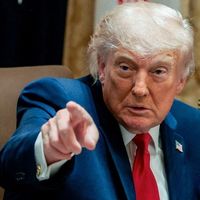
The reports come amid heightened tensions between Iran and the United States, as indirect talks continue while President Donald Trump has repeatedly warned that military strikes remain an option if diplomacy fails and Washington has expanded its military presence in the region.

The New York Times cited Iranian officials this week as saying Tehran has prepared contingency plans in case of war with the United States or Israel, including scenarios in which senior leaders—even Supreme Leader Ali Khamenei—could be killed.

According to the report, the planning is designed to ensure continuity of the Islamic Republic under extreme circumstances, with several senior figures named as part of that contingency structure, including security chief Larijani, parliament speaker Mohammad Bagher Ghalibaf and former president Hassan Rouhani.

The report also suggested that Larijani’s expanding role has reduced the visible influence of President Masoud Pezeshkian in day-to-day governance.

Separately, Le Figaro published a controversial account alleging that during the height of nationwide protests Khamenei was the target of an internal effort led by Rouhani to sideline him from crisis management.

According to the French newspaper, Rouhani gathered several political figures—including former foreign minister Mohammad Javad Zarif, clerics from Qom and individuals linked to the Revolutionary Guards—to discuss an alternative leadership arrangement.

Le Figaro said the effort ultimately failed, partly because Larijani did not support the initiative. Rouhani’s office rejected the account outright, describing it as a US-Israeli “fabrication” aimed at “creating doubt and concern in Iranian public opinion.”

Larijani has not publicly addressed either report.

Following the 12-day war with Israel, Khamenei appointed Larijani as secretary of the Supreme National Security Council, despite the Guardian Council previously disqualifying him from running in the presidential election.

Salar Velayatmadar, a member of parliament’s National Security and Foreign Policy Commission, said Larijani now plays “a decisive role in policymaking.”

“The council’s view is central in indirect negotiations with the United States,” he said. “Basically, the negotiations are taken from this council, word by word.”

Iranian media widely republished the New York Times and Le Figaro reports but mostly avoided detailed analysis.

The conservative newspaper Farhikhtegan dismissed the French report as a “fictional scenario” and a “diverse basket of strategic lies,” arguing that such narratives were designed to undermine “national cohesion.”

By contrast, the news outlet Eghtesad24 suggested the New York Times report portrays Larijani as a “crisis manager” operating across multiple arenas—from nuclear diplomacy to regional strategy and wartime planning.

Despite relying on unnamed sources, the outlet wrote, the report reflects an apparent effort by Iran’s political system to adapt to a more dangerous regional environment by strengthening internal coordination and resilience.

Most Viewed

US blockade enters murky phase as tankers spoof signals and buyers hesitate
1
ANALYSIS

US blockade enters murky phase as tankers spoof signals and buyers hesitate

2
INSIGHT

Ideology may be fading in Iran, but not in Kashmir's ‘Mini Iran'

3
INSIGHT

Hardliners push Hormuz ‘red line’ as US blockade tests Iran’s leverage

4
VOICES FROM IRAN

Hope and anger in Iran as fragile ceasefire persists

5

US sanctions oil network tied to Iranian tycoon Shamkhani

Banner
Banner

Spotlight

  • Hardliners push Hormuz ‘red line’ as US blockade tests Iran’s leverage
    INSIGHT

    Hardliners push Hormuz ‘red line’ as US blockade tests Iran’s leverage

  • Ideology may be fading in Iran, but not in Kashmir's ‘Mini Iran'
    INSIGHT

    Ideology may be fading in Iran, but not in Kashmir's ‘Mini Iran'

  • War damage amounts to $3,000 per Iranian, with blockade set to add to losses
    INSIGHT

    War damage amounts to $3,000 per Iranian, with blockade set to add to losses

  • Why the $100 billion Hormuz toll revenue is a myth
    ANALYSIS

    Why the $100 billion Hormuz toll revenue is a myth

  • US blockade targets Iran oil boom amid regional disruption
    ANALYSIS

    US blockade targets Iran oil boom amid regional disruption

  • Iran's digital economy battered by prolonged blackout
    INSIGHT

    Iran's digital economy battered by prolonged blackout

•
•
•

More Stories

Protests and crackdown spill into Iranian sport

Feb 27, 2026, 18:54 GMT+0
•
Maryam Sinaiee

The Islamic Republic’s harsh response to recent protests has spilled beyond politics into sport, where athletes now face a stark choice: compete in silence or risk reprisal.

As families hold 40th-day memorials and students continue demonstrations on university campuses, the country’s widening crisis has left athletes weighing personal conscience against state pressure.

In the early days of unrest, athletes across disciplines signaled support through Instagram posts. Before the January crackdown, former national football team captain Mohammad Khakpour responded online to the Supreme Leader’s characterization of protesters as “rioters.”

“One cannot expect perpetual silence from the people who are being crushed under the burden of high prices, unemployment, and insecurity and then have their voices silenced by labeling them as rioters.”

He added: “The people who come to the streets defenselessly have neither weapons nor a platform; they only have voices. Silencing their voices with force, bullets, batons, or fear neither solves the problem nor makes the wound smaller."

Some have gone further. Goalkeeper Rashid Mazaheri, long known for outspoken criticism, published a defiant Instagram post on Wednesday addressing the Supreme Leader directly: “Khamenei, beware that your rule on this divine land has ended.”

In the same message, he wrote that being a champion means standing against injustice, not winning medals: “We won’t bow our heads to you!”

The post was removed within hours. His wife wrote on Instagram that she feared for his life and would hold the government responsible for his safety. Supporters interpreted the message as confirmation he had been detained, though authorities have not commented and his whereabouts remain unclear.

The pressure has also reshaped national team rosters. Two women’s national team footballers preparing for the Women’s Asia Cup in Australia this month—Zahra Alizadeh and Kousar Kamali—publicly withdrew from the squad.

Kamali wrote: “When the heart is wounded and the soul is exhausted, football is no longer a refuge. I can’t pretend everything is normal.”

“This decision is not born of anger, but of awareness; it is not out of disrespect, but out of respect for my conscience. I say goodbye not to football, but to the national team — in the hope that one day it will again be possible to play for the people with a peaceful heart.”

Symbolic gestures have also drawn scrutiny. In recent weeks, some footballers have refrained from celebrating goals altogether or marked them with muted gestures reflecting protest or solidarity rather than triumph.

In several competitions, players have reportedly been barred from wearing black armbands or other signs of mourning.

According to Sami Sport FC, match supervisors have been instructed to suspend games if players use black clothing, ribbons or armbands. Facing possible disqualification and citing mounting security pressure, the club announced it would withdraw from the remainder of the season.

Two weeks earlier, Sami Sport players entered the pitch in black kits and armbands. After scoring, they covered their faces in a gesture of mourning rather than celebrating.

The episodes echo earlier moments when Iranian athletes declined to sing the national anthem—reminders that even arenas meant for national unity have become sites of political contest.

The stakes are likely to rise further this year. Iran has qualified for the World Cup, and all three of its group-stage matches are scheduled to be played in the United States. The tournament will place the team under intense international scrutiny, including from a large Iranian diaspora that has become increasingly vocal.

During the 2022 World Cup, many fans harshly criticized the national team and even called for a boycott, accusing players of indifference to the “Women, Life, Freedom” protests and to the state’s violent crackdown.

This time, the political climate is even more charged. Iranian society has grown more radicalized, repression much harsher and mistrust deeper than three years ago.

The government is likely to exert tight control over players to prevent any gestures of dissent on the sport’s biggest stage. But with global attention fixed on the team, even silence—or the absence of it—may carry political meaning.

Tehran downbeat after Geneva talks, pins hopes on Oman mediation

Feb 27, 2026, 18:37 GMT+0
•
Behrouz Turani

Tehran appeared noticeably downbeat about the outcome of Thursday’s negotiations with Washington in Geneva, with signs of disappointment emerging first on the website of the government’s news agency.

In a commentary published Friday, IRNA said the two sides’ clashing positions were jeopardizing the talks, laying the blame for such an outcome at Washington’s door.

It also made clear that Tehran is placing considerable hopes in Oman’s foreign minister, Badr Albusaidi, whose quiet mediation has been central to the negotiations.

Albusaidi now carries a “grave responsibility,” the piece argued, with his role beginning in Muscat, continuing through two rounds of talks in Geneva and now entering “another important step” when he meets US Vice President JD Vance in Washington.

Tehran’s official outlet even hinted at the mediator’s message to the American side: a warning that a war with Iran would not remain limited, that regime change is unattainable and that even heavy damage to Iranian targets would not achieve the goals emphasized by President Donald Trump, “just as they did not in the June attacks.”

Iranian media outlets have also begun outlining the main sticking points in the negotiations.

The news website Fararu reported Friday that the talks remain deadlocked over fundamental issues including enrichment levels, sanctions relief and the dismantling of parts of Iran’s nuclear infrastructure.

Another major obstacle, it said, is Iran’s refusal to export enriched nuclear material, with Tehran insisting on maintaining domestic fuel production.

Axios reported that some of Trump’s advisers, including Jared Kushner and Steve Witkoff, were disappointed with Araghchi’s proposals, arguing that they fell short of US expectations.

Trump himself signaled frustration with Tehran on Friday, telling reporters he was “not happy” with Iran but expected further talks to take place.

Asked about the possibility of using military force, the president said he hoped it would not be necessary but did not rule it out.

Speaking before leaving the White House for a trip to Texas, Trump said he still wants to reach an agreement with Iran but reiterated that Tehran “cannot have a nuclear weapon.”

Fararu suggested Washington may be pursuing a dual-track strategy, combining diplomacy with the threat of limited military strikes to maintain pressure.

The negotiations, it concluded, have entered a “complex and decisive” phase: a potential framework is beginning to take shape, but deep structural disagreements and continued US military signaling are sustaining a high level of uncertainty.

In a separate interview with the website, foreign policy analyst and former Iranian diplomat Jalal Sadatian said President Trump’s tone toward Iran had recently become noticeably “sharper, more decisive and more alarming.”

Sadatian also warned that Iran’s “asymmetric capabilities” mean that even limited military action could quickly escalate in unpredictable ways.

Tehran swings between alarm and defiance as talks unfold in Geneva

Feb 26, 2026, 19:23 GMT+0
•
Behrouz Turani

The anxiety splashed across the front pages of Tehran outlets on Thursday did little to quiet the bluffs, threats and illusions that have defined a week of anticipation over possible Israeli or US strikes on Iran.

With officials apparently convinced that the Geneva talks would not satisfy Washington’s demands over Tehran’s nuclear and missile programs, the government rallied more than 500 Iranians—described as celebrities, academics and public figures—to sign a letter headlined “No to War.”

Many signatories were reformist figures of varying prominence, along with individuals whom Iranian lawyer Hassan Assadi Zeidabadi described in a post on X as “employees of the President’s Office, advisers to cabinet ministers, and staff of state-owned companies and government funds presented as political activists.” He called the initiative deceptive.

Published by the government-owned Iran newspaper and echoed by other outlets, the letter urged the public to press foreign powers to halt any planned attack before it materializes.

The appeal for restraint did not stem the flow of bravado from Iranian politicians and military commanders.

Former Foreign Minister Manouchehr Mottaki addressed the United States using slang associated with Tehran’s street toughs (jahel)—a coded signal that “this time, we mean it.” His remarks were widely mocked online.

Hardline MP, Abolfazl Zohrehvand, warned Washington against targeting Khamenei or his son in coarse language. Only days earlier, he had declared: “Trump is not brave enough to attack Iran.”

As the Geneva talks began, several outlets openly acknowledged the risk of conflict.

The official IRNA news agency wrote that “if the negotiations fail, the situation will move toward dangerous ambiguity and a possible military conflict,” adding that “successful negotiation in Geneva is the only way to prevent a new war.”

Headlines in IRNA and Fararu were blunt: “If we do not reach an agreement today, we will be moving toward war.”

Later on Thursday, Oman’s foreign minister, Badr Albusaidi, announced that the third round of talks had concluded and would resume next week in Vienna.

Axios reported, citing a source familiar with the discussions, that chief US negotiators Steve Witkoff and Jared Kushner were “disappointed” by what they heard from Iran’s foreign minister during the morning session.

'At any price'

Meanwhile, economic outlets in Tehran spoke of “early alarms of high war risk.” Eghtesad News reported that traders were rushing to convert assets into foreign currency or gold “at any price” to hedge against a potential collapse in talks.

The unease spilled into consumer behavior. Iranians bought gas canisters, candles and emergency supplies amid fears of fuel shortages, power cuts or casualties. Fararu described the rush as a reflection of growing public anxiety.

Universities shifted classes online—officially to contain ongoing student protests, but also as a precaution against possible conflict. According to Nour News, even calm and remote provinces such as Yazd were affected.

Even Kayhan, closely aligned with Khamenei and typically focused on projecting stability, acknowledged that reports of US aircraft carrier deployments had unsettled public sentiment.

Still, it insisted that “although some 40,000 US troops have been deployed to the region, Iran is capable of inflicting serious harm on Israel and the United States, even at high cost.”

​​The oscillation between alarm and defiance points to a system projecting strength while betraying unease—an establishment at once threatening war and visibly anxious about it.

Hope and hedge: Tehran braces for decisive Geneva talks

Feb 25, 2026, 17:51 GMT+0
•
Behrouz Turani

The mood in Tehran on the eve of the third round of talks with Washington appears to be a mix of guarded hope and tightening anxiety.

Negotiators are set to meet in Geneva on Thursday in discussions that could prove decisive, particularly if reports are accurate that Washington has set informal deadlines for progress.

Public messaging inside Iran reflects both anticipation and unease as officials brace for what could be a pivotal round.

Late Tuesday, just before departing for Geneva, Foreign Minister Abbas Araghchi struck an optimistic tone.

“We have a historic opportunity to strike an unprecedented agreement that addresses mutual concerns and achieves mutual interests,” he wrote on X. “A deal is within reach, but only if diplomacy is given priority.”

Government-aligned newspapers such as Iran and Etemad described the talks as “an exit route for both sides” and “the last resort to prevent military confrontation.” The phrasing carried urgency — and an implicit acknowledgment of rising stakes.

At the same time, outlets close to security circles worked to downplay the prospect of imminent war.

Tabnak, run by a former IRGC commander, and Nour News, affiliated with senior adviser Ali Shamkhani, dismissed Western reporting on possible US military action as “media terrorism inspired by Trump’s manifesto in The Art of the Deal.” The suggestion was clear: Washington’s threats are part of a pressure campaign, not a prelude to attack.

The heightened tone followed President Donald Trump’s State of the Union address, in which he referenced Iran’s nuclear and missile programs — remarks that reverberated quickly across Iranian media and political circles.

Other commentary reflected a careful hedge. Fararu and Iranian Diplomacy, which is close to the Foreign Ministry, outlined potential military scenarios—from limited symbolic strikes to targeted attacks on infrastructure or senior officials—but argued that the cost of escalation makes a prolonged conflict unlikely.

Official rhetoric has remained firm. ISNA reported that Iran warned the United Nations it would “respond swiftly to any aggression,” including attacks on “all assets and military bases of belligerent parties in the region,” which Tehran would treat as legitimate targets.

Yet markets betrayed public sensitivity to the tension. The dollar climbed to 1,660,000 rials amid the renewed uncertainty.

Among the more measured assessments was an article in Fararu by Mohsen Jalilvand, who argued that “there will be no war,” and that the likelihood of regional countries joining a confrontation is “near zero.”

Still, he acknowledged the impasse. “There is a wide gap between the demands of the two sides,” he wrote, warning that even if sanctions were lifted immediately, “it would take at least 15 years for the country to return to normal conditions.”

His closing note captured the broader sentiment: “We cannot afford excessive optimism.”

Trump’s speech leaves Iranians guessing before Geneva talks

Feb 25, 2026, 16:48 GMT+0
•
Maryam Sinaiee

Iranians at home and abroad watched President Donald Trump’s State of the Union address late Tuesday searching for clues about war or peace—and emerged more uncertain than before.

Across Iran and the diaspora, many stayed up through the night to follow the speech via satellite television and livestreams, many hoping to detect signals about the likelihood of a US military strike in the coming days.

By morning, Persian-language social media reflected a swirl of alarm, anticipation and skepticism.

In his address, Trump accused Tehran and its proxy forces of spreading “terrorism and hatred” and said Iran continues to pursue missile and nuclear capabilities despite years of US pressure.

“As president, I will make peace wherever I can, but I will never hesitate to confront threats to America wherever we must,” he added.

For some Iranians, the balance of menace and ambiguity less than two days before the third round of talks between Tehran and Washington suggested escalation was near.

“President Trump issued the order for a military strike and put the final nail in the coffin of the Islamic Republic,” one user wrote on X. “In the coming hours, we will certainly witness very important events.”

Another focused on Trump’s reference to ballistic missiles—an issue Tehran insists should not be part of current negotiations—arguing it signaled the likelihood of military action may be greater than that of a deal.

“When Trump explicitly declares that the missiles of this criminal cult will soon reach American soil, it means that all paths of diplomacy have reached their final dead end,” a third wrote.

Yet others pushed back against what they saw as over-interpretation.

One user described the speech as “a bucket of cold water poured over warmongers,” arguing that Trump largely repeated familiar themes without announcing new measures.

“This speech, in no way, met the expectations of those who were waiting for a new step,” he wrote.

Another suggested Washington’s military buildup in the region told a different story than the speech itself. “The negotiations are less about reaching an agreement and more a tool for managing public opinion and buying time to prepare militarily,” he argued.

The divergence in reactions underscored the high stakes ahead of Thursday’s talks in Geneva, widely seen as a potentially decisive round amid reports that Washington has set informal timelines for progress.

Iranian officials sought to project steadiness.

President Masoud Pezeshkian said negotiations were proceeding under the guidance of Supreme Leader Ali Khamenei and expressed hope the country could move beyond its current state of “neither war nor peace.”

Foreign Minister Abbas Araghchi struck a similar dual tone. “

The Islamic Republic is prepared for both war and peace,” he told India Today, warning that any confrontation could quickly escalate into a “devastating” regional conflict while insisting that a “fair, balanced, and just” agreement remains attainable.

Parliament Speaker Mohammad Bagher Ghalibaf, however, warned that Iran would respond forcefully if the United States took military action while talks are underway.

Outside official circles, analysts also offered competing readings. Jason Brodsky, policy director at United Against Nuclear Iran, wrote on X that Trump appeared to be laying “public groundwork” for a military strike.

While there was “a brief nod to diplomacy,” he said, most of the speech underscored “the threat and the lethality of the regime,” suggesting limited optimism about negotiations.

As interpretations ricocheted across platforms, one post seemed to capture the broader mood: “These words reeked of war. May God preserve Iran.”