• العربية
  • فارسی
Brand
  • Iran Insight
  • Politics
  • Economy
  • Analysis
  • Special Report
  • Opinion
  • Podcast
  • Iran Insight
  • Politics
  • Economy
  • Analysis
  • Special Report
  • Opinion
  • Podcast
  • Theme
  • Language
    • العربية
    • فارسی
  • Iran Insight
  • Politics
  • Economy
  • Analysis
  • Special Report
  • Opinion
  • Podcast
All rights reserved for Volant Media UK Limited
volant media logo

Rubio to brief lawmakers on Iran ahead of State of the Union - Politico

Feb 24, 2026, 14:18 GMT+0

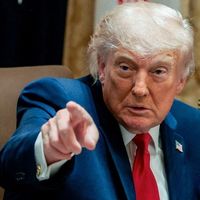
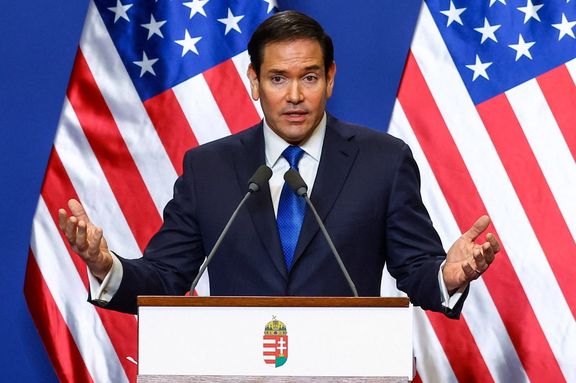
Marco Rubio will brief top lawmakers at the White House on Tuesday on Iran as the administration weighs possible strikes, Politico reported, citing two people familiar with the planned meeting.

The briefing will include House and Senate leaders and the top members of the intelligence committees and will take place hours before Donald Trump delivers his State of the Union address at the Capitol.

The administration has been building up US forces in the Middle East as Trump has warned of consequences if no deal is reached with Tehran over its nuclear program. Some lawmakers have pushed for a vote requiring congressional approval before any use of force against Iran, though such a resolution is not expected to pass in the House.

Most Viewed

Ideology may be fading in Iran, but not in Kashmir's ‘Mini Iran'
1
INSIGHT

Ideology may be fading in Iran, but not in Kashmir's ‘Mini Iran'

2
INSIGHT

Hardliners push Hormuz ‘red line’ as US blockade tests Iran’s leverage

3
VOICES FROM IRAN

Hope and anger in Iran as fragile ceasefire persists

4

Iran International says it won’t be silenced after London arson attack

5

US sanctions oil network tied to Iranian tycoon Shamkhani

Banner
Banner

Spotlight

  • Hardliners push Hormuz ‘red line’ as US blockade tests Iran’s leverage
    INSIGHT

    Hardliners push Hormuz ‘red line’ as US blockade tests Iran’s leverage

  • Ideology may be fading in Iran, but not in Kashmir's ‘Mini Iran'
    INSIGHT

    Ideology may be fading in Iran, but not in Kashmir's ‘Mini Iran'

  • War damage amounts to $3,000 per Iranian, with blockade set to add to losses
    INSIGHT

    War damage amounts to $3,000 per Iranian, with blockade set to add to losses

  • Why the $100 billion Hormuz toll revenue is a myth
    ANALYSIS

    Why the $100 billion Hormuz toll revenue is a myth

  • US blockade targets Iran oil boom amid regional disruption
    ANALYSIS

    US blockade targets Iran oil boom amid regional disruption

  • Iran's digital economy battered by prolonged blackout
    INSIGHT

    Iran's digital economy battered by prolonged blackout

•
•
•

More Stories

Trump’s State of the Union may test appetite for Iran strikes

Feb 24, 2026, 14:11 GMT+0
•
Arash Sohrabi

President Donald Trump will step into the House chamber on Tuesday night for a State of the Union address shadowed by the prospect of new US military action on Iran, as his administration sends envoys back to nuclear talks in Geneva and builds up forces in the region.

The prime-time speech offers Trump his most prominent platform yet to signal whether he is still betting on diplomacy in the days ahead, or preparing the public for strikes if talks fail.

While advisers have urged him to focus on affordability, immigration and the economy ahead of November’s midterm elections, the buildup toward a potential confrontation with Iran has overshadowed the run-up to the address.

Mainstream outlets have widely previewed Trump’s State of the Union address, highlighting how he might frame Iran alongside domestic political pressures.

Reuters wrote that the speech could be Trump’s best opportunity to rally skeptical voters behind his approach to Iran, including the possibility of military strikes if negotiations fail.

Trump on Monday brushed aside reports of internal dissent about military action, writing on social media: “I am the one that makes the decision… if we don’t make a deal, it will be a very bad day for that country.”

Democrats have sharply criticized his approach. Senator Tim Kaine said Trump was “bumbling his way toward war,” arguing he had scrapped a 2015 nuclear agreement that had constrained Iran’s program.

Bloomberg similarly described Iran as a major flashpoint Trump may address as he seeks to reset the political narrative after domestic setbacks.

The Associated Press said the address offers Trump a chance to make his case for possible action against Iran, citing polling that shows broad public unease with his handling of foreign affairs.

Iran in past State of the Unions

References to Iran in State of the Union speeches have typically surfaced at inflection points–the hostage crisis, regional conflict and terrorism, nuclear negotiations, or moments when presidents sought public backing for a tougher coercive strategy.

In the Cold War alliance era, Iran appeared mainly as a country whose stability and relationships mattered to Western cohesion.

President Dwight Eisenhower’s 1955 State of the Union message cited “Britain and Iran” among nations that had “resolved dangerous differences,” framing Tehran in terms of security and diplomacy rather than direct confrontation with Washington.

After the 1979 Islamic Revolution and the hostage crisis, Iran became the crisis itself.

Jimmy Carter’s 1980 address opened by saying that 50 Americans were still being held in Iran, calling the episode “terrorism and anarchy” and warning that if the hostages were harmed, “a severe price will be paid.”

After 9/11, Iran references shifted into the terror-and-WMD architecture of US strategy, placing Tehran within a broader post-attack security doctrine.

In 2002 and 2003, George W. Bush repeatedly cast Iran as a serious security threat, famously labeling it part of the “axis of evil” and describing its government as pursuing weapons of mass destruction, supporting terrorism and repressing its people, while distinguishing between the regime and Iranians who “speak out for liberty.”

President Barack Obama repeatedly used the address to press for diplomatic compromise while stressing that the United States would prevent Iran from obtaining a nuclear weapon.

In 2014, Obama said diplomacy had halted the advance of Iran’s nuclear program, warned he would veto sanctions that could derail negotiations, and argued war should be a “last resort.”

In 2015 and 2016, he defended the nuclear agreement reached with Tehran, asserting that it had helped the world avoid another war.

During his first term, Trump invoked Iran to justify withdrawing from the 2015 deal and imposing sweeping sanctions under his “maximum pressure” campaign, portraying Tehran as a central destabilizing force in the Middle East.

In 2018, he said the United States stood with “the people of Iran” against a “corrupt dictatorship” and urged Congress to address what he called “the terrible Iran nuclear deal.”

In 2019, he called Iran the “world’s leading state sponsor of terror.” In 2020, he tied Iran to counterterrorism and deterrence, citing the killing of former IRGC-Quds commander Qasem Soleimani.

The pattern is consistent: presidents have used the nationally televised address to reset Iran policy at decisive moments–to sell diplomacy, justify confrontation, or redefine strategy.

Tuesday’s speech fits that same historical frame.
US forces seize third Iran-linked sanctioned oil tanker

Feb 24, 2026, 13:40 GMT+0

United States military forces have seized a sanctioned oil tanker in the Indian Ocean after tracking it from the Caribbean, the Pentagon said on Tuesday, calling it the third such interdiction.

The United States Department of Defense said on X that US forces boarded the tanker Bertha overnight without incident, accusing it of operating in defiance of Iran-related sanctions and President Donald Trump’s quarantine of sanctioned vessels in the Caribbean.

The Bertha, which flies under a Cook Islands flag and is linked to Shanghai Legendary Ship Management Company Limited, was under sanctions imposed in January 2020, according to the US Treasury’s Office of Foreign Assets Control. The Pentagon said US forces tracked the vessel from the Caribbean to the Indian Ocean before stopping it.

Trump prefers diplomacy on Iran but ready to use force - White House

Feb 24, 2026, 13:33 GMT+0

US President Donald Trump prefers diplomacy as a first option on Iran but is prepared to use lethal force if necessary, White House spokeswoman Karoline Leavitt told reporters on Tuesday.

"President Trump's first option is always diplomacy. But as he has shown ... he is willing to use the lethal force of the United States military if necessary," Leavitt told reporters at the White House. "The president is always the final decision maker around here."


US deploys more than 150 military aircraft near Iran - Washington Post

Feb 24, 2026, 11:38 GMT+0

The United States has moved more than 150 military aircraft to bases in Europe and the Middle East in recent days, satellite imagery and flight-tracking data reviewed by The Washington Post showed, after nuclear talks with Iran ended last week without a deal.

The newspaper said the buildup includes cargo planes, refueling aircraft and combat jets, and marks one of the largest US force deployments in the region in more than two decades. It added that the aircraft carrier USS Gerald R. Ford was near Crete, joining the USS Abraham Lincoln, as President Donald Trump has warned of possible military action if no agreement is reached on Iran’s nuclear program.

US defense officials acknowledged an increased flow of forces but declined to discuss operational details, the report said.

Iran should be fully prepared for war to avoid it, diplomat says

Feb 24, 2026, 10:24 GMT+0

Iran must be ready for war to prevent conflict, former Foreign Ministry spokesperson Ramin Mehmanparast said, as Tehran prepares for a third round of indirect nuclear talks with the United States in Geneva on Thursday.

Mehmanparast said Iran was fully prepared for a fair and respectful agreement and that “the ball is in the Americans’ court,” but rejected the idea that military threats could extract concessions.

“If we want war not to happen, we must be 100% ready for war,” he said, adding that Iran’s armed forces were at the highest level of readiness and that Tehran would not yield under pressure.