Iranian Christian women attend a weekly prayer ceremony at a church in Tehran, File Photo.
Iranian courts sentenced Christians to more than 280 years in prison in 2025, according to a joint report by four rights groups, in what advocates describe as a widening use of national security laws to suppress religious dissent.
The findings reveal a sharp escalation in repression as authorities increasingly label those who leave Islam as "security threats" and "Mossad mercenaries" following regional conflicts.
The report, titled "Scapegoats" and released on Thursday, documents 254 arrests in 2025, nearly double the number recorded the previous year. Rights advocates say the surge reflects a strategic shift by the Islamic Republic to use national security frameworks to crush religious dissent.
"The Islamic Republic is a religious apartheid state where non-recognized minorities like Christian converts are not considered citizens but just 'ghosts' in the eyes of the regime," said Fred Petrossian, an Iranian-Armenian researcher and journalist specializing in religious minorities, based in Brussels, who collaborates with Article 18.
The study was a collaborative effort by Article 18, Open Doors, Middle East Concern (MEC), and Christian Solidarity Worldwide (CSW).
Regional tensions fuel domestic raids
The report describes the 12-day war with Israel in June 2025 as a "pivotal moment" for domestic targeting. In the single month following the June 24 ceasefire, at least 54 Christians were detained across 19 cities.
Petrossian told Iran International that the state has moved to "choke the freedoms" of converts by framing their faith as an extension of foreign hostility.
"A religious holiday becomes criminalized when it represents both faith and collective identity outside state-approved boundaries," Petrossian said.
He pointed specifically to Christmas, which in recent years has gained wide popularity among ordinary Iranians despite official disapproval from clerics.
Shops in major cities openly sell Christmas trees and decorations, cafés display festive themes, and large crowds, many of them Muslims, gather outside churches such as those in Tehran and Isfahan.
Authorities, however, often respond to private Christmas gatherings of converts with raids, arrests, and intimidation.
Petrossian added that the struggle for Christian freedom in Iran is inseparable from the broader fight for human rights and civil liberties for all citizens.
He said that at least 19 Christians have lost their lives in the recent violence and unrest, reflecting how deeply intertwined religious persecution is with the wider crackdown affecting the Iranian society.
Authorities have increasingly weaponized Article 500 bis of the penal code, which criminalizes "propaganda contrary to the holy religion of Islam". The report found that nearly 90% of all charges against Christians in 2025 were brought under this amended article, which carries sentences of up to 10 years.
Systematic mistreatment in detention
The report paints a horrifying picture of the conditions faced by converts in the Iranian prison system, including psychological torture and the deliberate denial of healthcare.
Narges Nasri: A pregnant convert sentenced to 16 years in prison on International Women’s Day for her faith and for supporting the "Woman, Life, Freedom" protest movement on social media.
Aida Najaflou: A convert who fractured her spine in a prison fall and only received surgery after fellow prisoners protested on her behalf. She was later returned to her cell prematurely despite being at risk of paralysis.
Nasser Navard Gol-Tapeh: A convert in his sixties who suffered a stroke while in solitary confinement and was returned to his cell after just two days of hospital treatment.
The 'two-tier' propaganda machine
Petrossian pointed to a "two-tier" system where the state uses recognized ethnic Christians, such as those of Armenian or Assyrian descent, to project an image of tolerance while criminalizing the larger community of converts.
While ethnic Christians may worship in their own languages, they are strictly prohibited from preaching in Persian or welcoming converts.
"Recognition does not mean they have all rights," Petrossian said. "The moment members of these communities do not follow the state’s red line, they face repression similar to that experienced by converts."
The Islamic Revolutionary Guard Corps (IRGC) has taken an increasing role in these crackdowns, often acting with more brutality than traditional intelligence agencies.
In February, 20 plainclothes IRGC agents raided a gathering in Gatab – a town in Mazandaran province where they reportedly tore cross necklaces off several people and blocked emergency medical personnel from assisting the injured.
"IRGC agents go to homes without a legal warrant and arrest people. They say obscene and offensive things and insult and humiliate them," one convert testified in the report.
Petrossian added that the state’s efforts to control even personal life create a "dystopian system" where religious holidays like Christmas are criminalized because they represent a "collective identity outside state-approved boundaries".
The report concludes by calling on the international community to hold Iran accountable under Article 18 of the ICCPR, which guarantees the freedom to adopt and practice a faith of one's choosing.
An F/A-18E Super Hornet, attached to Strike Fighter Squadron 151, launches from the flight deck of the USS Abraham Lincoln (CVN 72) while conducting routine flight operations in the Arabian Sea.
Escalating tensions between the United States and Iran sent oil prices sharply higher and kept gold near record levels on Thursday, as investors weighed the risk of a prolonged conflict in the Middle East and its impact on global markets.
Brent crude rose to around $70.50 a barrel after surging more than 4% in the previous session, while US crude climbed above $65, as traders priced in the possibility of supply disruptions from the oil-producing region.
“The balance of risks now tilts to a US strike after market close Friday,” said Michael Every, senior global strategist at Rabobank, adding that any military action could last weeks rather than ending quickly.
European shares also edged 0.1% lower on Thursday after a mixed set of corporate results, with energy stocks rising alongside firmer oil prices as US-Iran tensions kept investors cautious.
Increased US military activity in the region has left markets on edge, despite diplomatic efforts in Geneva this week aimed at narrowing differences over Iran’s nuclear program.
Safe-haven demand pushed spot gold up 0.5% to around $5,004 per ounce, after a more than 2% jump the previous day. US gold futures also edged higher.
“If there’s anything fundamental you could point to that would be supporting gold prices, it’s the prospect of conflict in the Middle East and the kind of safe-haven demand that goes along with it,” said Kyle Rodda, senior market analyst at Capital.com.
Gold has also drawn support from expectations that US interest rates could ease later this year, though minutes from the Federal Reserve’s January meeting showed policymakers were in no rush to cut rates and some remained open to further hikes if inflation stays elevated.
Asian equities were mixed, with gains in technology stocks offsetting caution over geopolitics. MSCI’s broadest index of Asia-Pacific shares outside Japan rose 0.4%, while Japan’s Nikkei gained 0.7%. South Korea’s Kospi jumped more than 3% to a record high, buoyed by renewed optimism over artificial intelligence-related shares.
Still, analysts said geopolitical risk was capping broader risk appetite.
“The two nations have long been at loggerheads over Iranian nuclear activity,” one market participant in Asia told Reuters, adding that any disruption to shipping routes or energy infrastructure could ripple through global supply chains.
For now, traders say oil and gold are likely to remain sensitive to headlines from Washington and Tehran, with volatility expected to persist as the prospect of military action looms.
A British couple detained in Iran have been sentenced to 10 years in prison on espionage charges, their family said on Thursday, prompting renewed calls on London to secure their release.
Lindsay and Craig Foreman, both in their 50s, were arrested in January 2025 while on a motorcycle trip through Iran. They deny the charges.
The couple were tried in October at Branch 15 of Tehran’s Revolutionary Court and were not allowed to present a defense, according to their son, Joe Bennett. A judge delivered the verdict in recent days, the family told BBC.
“We are deeply concerned about their welfare,” Bennett said, urging the British government to “act decisively and use every available avenue” to bring them home.
He said Iranian authorities had presented no evidence of espionage and that their lawyers had been told there was no legal basis for the case. Applications for bail were ignored, he added.
Foreign Secretary Yvette Cooper has decried their sentence as "completely appalling and totally unjustifiable".
"We will pursue this case relentlessly with the Iranian government until we see Craig and Lindsay Foreman safely returned to the UK and reunited with their family," she said.
Britain’s Foreign, Commonwealth and Development Office has previously said it was “deeply concerned” by the couple’s detention and that it continued to raise the case directly with Iranian authorities.
The Foremans are being held in separate wings of Tehran’s Evin prison, which rights groups have long criticized over alleged torture and inhumane conditions.
Bennett has said the couple endured 13 months in dire conditions, surrounded by “dirt, vermin, and violence,” and that they had been losing weight.
In November, Bennett said his mother had begun a hunger strike inside Evin, telling him during a brief phone call that “not eating was the only power she’s got.”
The couple were first detained in the southeastern city of Kerman, where they spent 30 days in solitary confinement before being transferred to Tehran, the family has said. They had entered Iran with valid visas, a licensed guide and a cleared itinerary, Bennett added.
Rights groups and Western governments have long accused Iran of engaging in so-called “hostage diplomacy” by detaining foreign nationals to gain political or economic concessions, an allegation Tehran rejects, saying it faces Western intelligence infiltration.
Satellite images trace damage and reconstruction at Iran’s Parchin military complex from October 2024 through February 2026, including strike impact, rebuilding work and the site being covered in concrete. 2026 Planet Labs PBC and Vantor/Handout via REUTERS.
Satellite images published by Reuters on Wednesday show Iran repairing and reinforcing key military and nuclear‑linked sites amid stalled nuclear negotiations with the United States and an expanding US military presence in the region.
The imagery shows a new facility at the Parchin military complex covered with a concrete shield and soil, while tunnel entrances at the Isfahan nuclear site have been backfilled.
Tunnel access at Natanz and missile bases damaged during last June’s 12‑day conflict with Israel have also been strengthened.
The reconstruction appears designed to address weaknesses exposed during the brief war, when Israeli strikes targeted Iranian nuclear and military infrastructure and Tehran responded with missiles and drones.
The United States held five rounds of negotiations with Iran over its disputed nuclear program last year, for which Trump set a 60-day deadline.
When no agreement was reached by the 61st day on June 13, Israel launched a surprise military offensive, followed by US strikes on June 22 targeting key nuclear facilities in Isfahan, Natanz and Fordow.
Satellite images show the Parchin military complex before Israeli strikes in October 2024 (left) and the site covered with concrete in January 2026 (right). Planet Labs PBC/Handout via REUTERS
The fortification work comes as indirect nuclear talks in Geneva remain unresolved. Iran is preparing a written proposal to address US concerns, while Washington has reinforced its regional military posture, including carrier strike groups and additional naval assets, amid concerns that diplomacy could stall.
Satellite images show a building at Iran’s Qom missile base with roof damage on July 16, 2025 (top), and the same site with a new roof on Feb. 1, 2026 (bottom). Planet Labs PBC/Handout via REUTERS
The Reuters report said the combination of hardened facilities, ongoing military readiness, and persistent diplomatic negotiations reflects Tehran’s dual strategy of safeguarding strategic infrastructure while keeping open the possibility of a negotiated settlement.
Satellite images show Iran’s Shiraz South missile base before reconstruction on July 3, 2025 (right), and after repair and clearance work on Jan. 30, 2026 (left). Planet Labs PBC/Handout via REUTERS
The United States has long insisted that Iran must completely halt its uranium enrichment program, stop supporting its armed allies in the Middle East and accept restrictions on its ballistic missile program.
Iran’s Supreme Leader Ali Khamenei said on Monday the United States will never succeed in toppling the Islamic Republic and warned that even the world’s strongest military can suffer crippling blows.
Students at a Tehran school hold candles and raise victory signs beside a classroom board bearing the message “We carry on,” in apparent solidarity with victims of January protests.
Student walkouts at schools across Iran this week underscored the continuing political presence of a younger generation that has remained deeply engaged despite months of arrests and repression.
The action, observed in numerous high schools and junior-high schools, followed a call earlier in the week by the country’s teachers’ union—one of the few remaining independent professional bodies whose members and leaders repeatedly face summons, detention and imprisonment.
The union had urged students and educators to honor those killed during the January protests, many of whom were themselves teenagers or in their early twenties.
Human rights organizations and media reports indicate that young people made up a significant share of those killed, wounded or detained during the crackdown, reinforcing the central role of Generation Z in Iran’s protest movement.
Videos circulating online on Wednesday appeared to show students—many of them girls—refusing to attend classes and instead gathering in schoolyards to sing patriotic songs in apparent solidarity with the victims.
Justice Minister Amir Hossein Rahimi acknowledged this week that a number of minors remain in detention in connection with the protests, adding that authorities were working to secure the release of some underage detainees.
At the center of unrest
Iran’s Generation Z has played a visible role in successive waves of unrest, including the nationwide protests of recent years.
Lists compiled by human rights organizations indicate that a large share of those killed or arrested were under 30, including university students and minors.
The involvement of younger Iranians reflects both demographic realities and deeper social changes.
Iran’s Generation Z has grown up during a period defined by economic instability, international isolation and increasing social restrictions. These conditions have shaped their expectations and political outlook in ways that differ from earlier generations.
A distinct identity
In a recent commentary published in the reformist newspaper Etemad, political analyst Abbas Abdi argued that Iran’s younger generation faces “multiple layers of pressure,” reflecting economic hardship, social constraints and limited political representation.
He identified several sources of tension, including declining economic opportunities, widening gaps between official norms and social realities, and what he described as the political marginalization of younger citizens.
These pressures, he wrote, have contributed to a growing sense of disconnection between younger Iranians and the country’s political establishment.
Abdi also emphasized that Generation Z is the first generation in Iran to grow up fully connected to digital networks, with access to global information and alternative sources of identity formation.
This shift has altered traditional patterns of socialization and authority. Younger Iranians are often less receptive to hierarchical forms of political messaging and more inclined toward decentralized and informal forms of expression and mobilization.
The outlook
While the state retains significant coercive capacity, the persistence of youth participation in protests suggests that underlying social and generational tensions remain unresolved.
Abdi warned that failure to address these generational pressures could deepen long-term instability, arguing that sustainable political order ultimately depends on the ability of governing institutions to adapt to social change.
The student walkouts this week, though limited in scope, reflected the enduring political consciousness of a cohort that has come of age during one of the most turbulent periods in Iran’s recent history—and whose role is likely to remain central in shaping the country’s political trajectory.
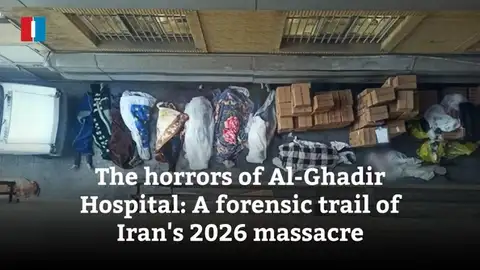
Forty days after more than 36,500 protesters were killed in a two-day crackdown in January, Iranians are marking the traditional chehelom not only in cemeteries but also in the streets and hospitals where the dead fell – a scale of loss that is reshaping how the country mourns.
In Iranian culture, the fortieth day after a death is a solemn threshold. Families and friends traditionally gather at the grave, laying flowers, reciting prayers and receiving visitors – a ritual of grief that is both private and communal, and that often carries religious undertones.
This week, cemeteries were only part of the picture as mourners map memory onto the sites of violence. With so many deaths concentrated in urban centers and around hospitals, intersections and residential streets, memorials have spread outward from cemeteries into the everyday fabric of cities.
Videos sent to Iran International and others circulating on social media show flowers placed not only on graves but on asphalt, sidewalks and hospital entrances – at the very spots where protesters were shot.
In Shiraz, relatives and close friends of Hamidreza Hosseinipour covered the boulevard where he was killed in petals. In Tehran’s Sadeghieh Square, citizens gathered at the traffic circle where demonstrators had been shot, laying flowers in what is normally a site of rush-hour congestion.
In Tehranpars district of the capital, mourners placed flowers and candles outside a hospital where wounded protesters were taken and where some died.
In Mazandaran province, black balloons were released into the sky.
Schools, too, became sites of commemoration. Videos show groups of schoolgirls lighting candles and singing patriotic songs, marking the chehelom inside classrooms rather than in mosques.
The sites of commemoration have widened beyond the places where many Iranians once expected mourning to unfold. Where people believe their loved ones fell, they now leave photographs, flowers or pieces of clothing.
Pavements become shrines. Traffic circles are transformed into temporary altars. Hospital gates turn into gathering points. The geography of grief has changed.
There are simply too many dead, and too many sites tied to their final moments, for remembrance to remain confined to cemetery gates.
Even when ceremonies do take place at graves, the atmosphere captured in recent videos differs sharply from older conventions of public mourning, where religious elegies used to set the tone. Today, music and movement have emerged as ways of carrying grief.
At Behesht Zahra cemetery in Tehran, footage shows families gathering and playing traditional musical instruments. In Najafabad, Isfahan province, mourners applauded and played music.
In Zanjan, kites were sent into the sky above the cemetery as names were read out.
In Shahreza, a video shows a traditional Qashqai dance performed during the fortieth-day memorial for 20-year-old Pouria Jahangiri, killed on January 8.
In Qarchak, near Tehran, mourners clapped in time to songs played for Hamid Nik, a resident who died after being hit during the crackdown. In another video from Najafabad, fireworks illuminate the night as people gather and chant.
In Mashhad, the memorial for Hamid Mahdavi – a firefighter whose act of carrying an injured protester on his back had spread widely online – took place not in silence but amid chants in the street: “For every one person killed, a thousand will rise behind them.”
These moments do not erase grief, they translate it.
The scenes appearing in recent weeks suggest a shift: not away from mourning itself, but away from a single, familiar language of mourning. Music, clapping, balloons released into the sky, kites and dance have become part of the ritual vocabulary.
After decades in which public mourning was steeped in official religious symbolism, the scenes in recent weeks suggest some are shaping something different: a mourning that is national in tone, public in form, and edged with defiance.
The fortieth day has long been a marker of closure in Iranian tradition – a moment when visitors thin out and life, at least outwardly, resumes.
But with flowers now laid on asphalt and candles lit at hospital doors, the boundary between mourning and daily life has blurred. The city itself has become the setting of remembrance – and, for many, the proof of how profoundly the culture of grief is changing.