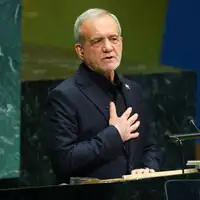
Pezeshkian says he cannot lift Iran’s internet restrictions
President Masoud Pezeshkian acknowledged on Sunday that his government has been unable to lift longstanding internet restrictions, saying he has ordered the deactivation of so-called “white SIM cards” that granted unfiltered access to a circle of state-linked users.
Speaking at a ceremony marking Student Day, Pezeshkian addressed the controversy surrounding the preferential access system, which drew widespread criticism after a November update to X revealed that numerous journalists, officials and pro-government figures were using unfiltered connections.
“We have instructed that these white internet lines be turned black as well, to show what will happen to people if this blackness continues,” he said.
Pezeshkian has repeatedly promised to lift filtering, a key pledge of his 2024 presidential campaign. On Sunday, he again suggested that political constraints lie beyond his control. “It is not enough for me to simply order the lifting of filtering. If it could be solved by instruction, we would have done it on the first day,” he said.
The comments came as government spokeswoman Fatemeh Mohajerani said that the administration seeks “free internet for all,” despite saying last year that no such promise had been made. Instagram, X, Telegram, and some other platforms remain blocked more than a year into Pezeshkian’s term.
Iran's President Masoud Pezeshkian
A stalled pledge
Filtering reform was central to Pezeshkian’s campaign, when he said he would “risk his neck” to fix it. Yet in his first meeting of the Supreme Cyberspace Council he emphasized implementing the Supreme Leader’s directives on internet governance rather than easing restrictions and ordered action against the flourishing trade in VPNs.
Since then, senior officials have offered varying timelines. In December, Majid Farahani from the presidential office said filtering would be removed in three phases by the end of the year. The newspaper Farhikhtegan later reported consensus among Iran’s three branches of government to move from blocking toward “smart restrictions,” indicating the system is being recalibrated rather than dismantled.
Public anger intensified after revelations of the white SIM scheme, which critics said exposed a tiered access system contradicting the government’s rhetoric about digital equality.