Israel indicts man accused of passing sensitive military data to Iran
File photo of Israeli police officers
Israel has indicted a 27-year-old resident of Kiryat Yam on charges of spying for Iranian intelligence, accusing him of transmitting sensitive military information and exploiting his girlfriend’s access to an Air Force base, the Shin Bet and Israel Police said on Sunday.
Prosecutors said the suspect, Shimon Azarzar, a resident of Kiryat Yam, sent photos and coordinates of strategic sites to Iranian operatives over the course of a year.
According to investigators, he also used his girlfriend – a reservist serving on an Israeli Air Force base – to obtain additional details on facilities and operations.
The indictment, filed at the Haifa District Court, includes espionage-related offenses such as unauthorized contact with a foreign agent and offering classified material. Authorities said Azarzar received digital payments for his activity.
In a joint statement, the Shin Bet and police warned Israelis against responding to online solicitations from foreign entities. “Security bodies will continue to identify and thwart terror and espionage activity in Israel, and will work to bring all those involved to justice,” they said.
Investigators said Azarzar had offered to pass information from inside military bases and attempted to leverage knowledge obtained through his girlfriend, who has not been charged.
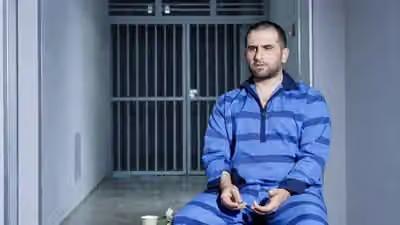
The case follows the recent arrest of another Israeli man on similar suspicions. During a search of his home, authorities allegedly found digital files and 18 SIM cards used to communicate with a foreign agent.
According to the Shin Bet, that individual had been tasked by an Iranian handler with photographing several public locations in the Tel Aviv area – including the Tel Aviv Museum of Art, Ganei Avraham Park in Bavli, and the site of a missile strike in Ramat Gan. He allegedly received thousands of shekels in cryptocurrency.
The indictments come amid what Israeli officials describe as an increase in Tehran-linked espionage efforts, often conducted through social media recruitment.
Last week, prosecutors charged a hotel worker from Tiberias with spying for Iran, in a separate case reported by local media.
Israel and Iran, longtime regional adversaries, have stepped up counter-intelligence measures following the 12-day war in June, when both sides exchanged direct strikes.
Israel’s destruction remains a core aim for the Islamic Republic, Iran’s top armed forces spokesman said on Thursday at a memorial ceremony in Tehran, as senior officials sharpened their rhetoric amid growing talk of another clash with Israel.
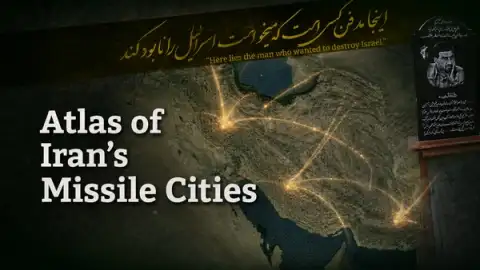
Abolfazl Shekarchi said the late Revolutionary Guard commander Hassan Tehrani Moghaddam, widely regarded as the father of Iran’s ballistic-missile program and killed in a 2011 explosion at an IRGC base west of Tehran, had “carried the wish to see Israel wiped out,” adding: “With God’s help, this wish will be fulfilled.”
He said Iran’s aerospace forces grow “more powerful by the day” and insisted the Islamic Republic becomes stronger when its commanders are killed.
“We never become weak — with every martyr we become more steadfast,” he said.
Other senior commanders used the same gathering to revisit the twelve day June war with Israel. Deputy IRGC chief Ali Fadavi said “all the world stood with Israel but they did not succeed,” adding that Iran had “acted on its duty” during the fighting and that “when duties are carried out, the promises of God are fulfilled.”
Vahid Azizi, head of parliament’s national security committee, said Tehran viewed the conflict as “an opportunity to understand the shortcomings and the needs” and as a chance to “prepare for what may come next.”
Growing signals of a new confrontation
The messaging reflects broader signals in Tehran, where several officials have spoken more openly in recent weeks about the prospect of fresh fighting with Israel. Some have said Iran is ready for “all scenarios” as political and military rhetoric intensifies.
Israeli Prime Minister Benjamin Netanyahu told the Knesset this week that Iran “remains a threat,” yet was weakened in the June war. He said Israel had “distanced and neutralized the nuclear threat and the ballistic threat alike” and warned that any next clash would be “much more aggressive” and could last far longer than twelve days.
Iran will run a drill to test its mobile phone warning system on Friday, Iranian media said, sending test alerts to selected users between 10 and 12 local time as officials speak more often of renewed conflict with Israel.
The reports said the test is part of a technical review of the Cell Broadcasting system used to warn residents during earthquakes, floods and other emergencies. Officials said the alerts will appear automatically on some phones, may include sound and vibration, and require no action from the public. They stressed the exercise does not reflect any real threat.
The test follows weeks of warnings from senior figures in Tehran. Foreign Minister Abbas Araghchi said that the country expects “any aggressive act” from Israel and is preparing for all scenarios, while former parliament speaker Ali Larijani said the war “is not over.” In Israel, former intelligence officials have also warned of a second round of fighting.
Tehran council chief says only 'special places' have new shelters
The drill comes as Tehran’s city council chief Mehdi Chamran said no new public shelters had been built for civilians, saying only “in special places” had new structures been prepared. “It is not necessary to say where,” he told the council, adding that the locations were not intended to be publicly disclosed.
Chamran said some metro stations were designed as shelters, including for chemical incidents, and were inspected during the twelve-day June war with Israel. He said work to complete these areas was ongoing, while stressing that he hoped no conflict would erupt.
His remarks echoed earlier comments from Iran’s passive defense agency, which said most residents would still rely on metro stations, underground car parks and basements in an emergency. The agency noted that limits on services and sanitation prevent the wider use of metro stations as full shelters.
During the June conflict, senior Iranian officials, including Supreme Leader Ali Khamenei, took cover in secure underground sites, while ordinary residents had no designated public shelters, prompting criticism. Tehran council members later admitted that no citywide shelter plan had been built in the past decades.
Syria will help the US take on Iran’s Guards and Hezbollah as part of a sharp turn in its ties with Washington, US special envoy for Syria Tom Barrack said on Thursday in a post on his X.
“Damascus will now actively assist us in confronting and dismantling the remnants of ISIS, the IRGC, Hamas, Hezbollah, and other terrorist networks, and will stand as a committed partner in the global effort to secure peace,” Barrack wrote, saying the pledge came during Syrian President Ahmed al Sharaa’s visit to the White House, the first by a Syrian head of state since independence.
Al Sharaa told the Washington Post this week that Syria had driven out Iranian and Hezbollah forces and was ready for a new phase with the US after decades of strain. He said Syria and Israel were in direct talks and had made progress toward a deal, and he said Israel should pull back to its pre Dec 8 lines to seal an accord. He said President Donald Trump backed the push.
He added that Syria wanted a working tie with Russia to secure its vote at the UN Security Council even as the two sides tried to settle the future of former president Bashar al Assad, who is in Russia. He said Syria wanted to bring Assad to justice and would press its case.
Washington has suspended most sanctions on Syria for 180 days while keeping curbs tied to Iran and Russia. US officials removed al Sharaa from a terror list before the visit as part of the effort to reopen ties.
A Guards-linked outlet has criticized an Iranian standards official for sitting at the same roundtable as an Israeli representative at last month’s ISO meeting in Rwanda, warning that such contact could carry legal penalties.
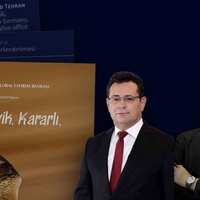
Fars News Agency said the photos showed Farahnaz Ghollasi, deputy head of Iran’s National Standards Organization, seated at the same table as Gilad Golub, chief executive of Israel’s Standards Institution, during the Kigali conference held from October 6 to 10. It said the images, later removed from the ISO website, were verified through its own checks.
The outlet called the encounter “unprecedented” under Iranian policy, noting that law prohibits any contact or cooperation with Israeli institutions and can lead to imprisonment or permanent dismissal from public service. It also recalled that Iranian athletes have long refused to compete against Israelis in international events.
Fars added that the episode came shortly after the June war between Iran and Israel and noted that the sister of Farzaneh Ansari, who led Iran’s delegation to the ISO meeting, was among those killed in Israeli strikes during the conflict.
The agency also repeated earlier conservative criticism of Ghollasi’s appearance at international gatherings, saying she had previously been reprimanded for dress code violations.
Golub’s office told Iran International that he had sat at a shared conference table as part of a multilateral discussion and that “no direct meeting took place.”
It added, “We did not know the woman sitting opposite was Iranian, head covering does not necessarily indicate nationality."
Iran and Israel have no diplomatic ties, and Iranian delegates are typically instructed to avoid any engagement with Israeli representatives. The ISO annual meeting in Kigali brought together officials from more than 160 member states to discuss emerging global standards.
Syrian President Ahmed al-Sharaa told the Washington Post his government has expelled Iranian and Hezbollah forces from Syria and is ready for a new phase of ties with the United States.
“The most important objective is starting on building the relationship between Syria and the United States, because in the past 100 years, it wasn’t a very good relationship,” he said in an interview published on Tuesday.
Al-Sharaa said his country is in talks with Israel with support from President Donald Trump and other international partners.
“Israel has always said it has concerns about Syria because it is afraid of the threats that the Iranian militias and Hezbollah represent,” he said. “We are the ones who expelled those forces out of Syria.”
He said Syria’s negotiations with Israel have made progress. “We are engaged in direct negotiations with Israel, and we have gone a good distance on the way to reach an agreement,” al-Sharaa said. “But to reach a final agreement, Israel should withdraw to their pre-Dec. 8 borders.”
“The United States is with us in these negotiations,” he said. “Today, we found that Mr. Trump supports our perspective as well, and he will push as quickly as possible in order to reach a solution for this.”
On the idea of creating a demilitarized zone south of Damascus, al-Sharaa said, “To talk about an entire region demilitarized, it will be difficult, because if there is any kind of chaos, who will protect it? And at the end of the day, this is Syrian territory, and Syria should have the freedom of dealing with their own territory.”
Al-Sharaa seeks pragmatic ties with Russia
Turning to Russia, al-Sharaa said Syria fought Moscow’s forces for a decade but now seeks a working relationship with it as a permanent member of the UN Security Council. “We need Russia because it’s a permanent member of the Security Council,” he said. “We need their vote to be on our side in some issues, and we have strategic interests with them.”
He added that the issue of former president Bashar al-Assad, who is in Russia, remains unresolved. “The issue of Bashar al-Assad is troublesome for Russia, and our relationship with them — we’re still in the beginning,” he said. “We will preserve our rights as Syrians to call for bringing Assad to justice.”
His remarks came as the United States suspended most sanctions on Syria for 180 days while keeping curbs on business tied to Iran and Russia, the Treasury said on Monday. The decision extends partial relief under the Caesar Act but maintains restrictions on transactions involving the two governments or their goods, technology or financing.
The step followed al-Sharaa’s visit to Washington, the first by a Syrian head of state, where he met Trump for talks on rebuilding ties. Washington removed al-Sharaa from its list of Specially Designated Global Terrorists before the visit, according to US officials.