• العربية
  • فارسی
Brand
  • Iran Insight
  • Politics
  • Economy
  • Analysis
  • Special Report
  • Opinion
  • Podcast
  • Iran Insight
  • Politics
  • Economy
  • Analysis
  • Special Report
  • Opinion
  • Podcast
  • Theme
  • Language
    • العربية
    • فارسی
  • Iran Insight
  • Politics
  • Economy
  • Analysis
  • Special Report
  • Opinion
  • Podcast
All rights reserved for Volant Media UK Limited
volant media logo

Khamenei’s office denies report that son bought Budapest hotel

Nov 2, 2025, 12:29 GMT+0
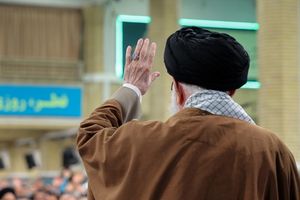
File photo of Meysam Khamenei, one of the sons of the Supreme Leader

An Iranian official has dismissed online reports alleging that a son of Supreme Leader Ali Khamenei purchased a hotel in Budapest to finance aid for Gaza, calling the claims “fake and fabricated.”

Mehdi Fazaeli, a member of Khamenei’s office, wrote on X that “fake and targeted news is being mass-produced these days,” comparing the reports to old folk tales to underscore their implausibility.

The denial followed viral posts on social media channels saying that Meysam Khamenei had used a loan from Iran’s central bank in September 2024 to buy a Hampton hotel in the Hungarian capital, with profits allegedly intended for Palestinians in Gaza.

Fazaeli shared a screenshot of a Telegram channel he said was linked to the exiled opposition group Mujahedin-e Khalq (MEK), accusing it of spreading disinformation.

No evidence has been presented to substantiate the claims about the alleged purchase, and Hungarian authorities have not commented publicly on the matter.

Most Viewed

Ghalibaf defends Iran-US talks amid hardline backlash
1
INSIGHT

Ghalibaf defends Iran-US talks amid hardline backlash

2
INSIGHT

Iran diplomacy wobbles as factions compete to avoid looking soft on US

3
VOICES FROM IRAN

Bread shortages, soaring prices strain households in Iran, residents say

4
ANALYSIS

The politics of pink: how Iran uses cuteness to rebrand violence

5

Scam messages seek crypto for ships’ safe passage through Hormuz, firm warns

Banner
Banner

Spotlight

  • Opposition to US talks grows in Tehran as ceasefire deadline nears
    INSIGHT

    Opposition to US talks grows in Tehran as ceasefire deadline nears

  • Tehran moderates see ‘no deal–no war’ limbo as worst outcome
    INSIGHT

    Tehran moderates see ‘no deal–no war’ limbo as worst outcome

  • The future has been switched off here
    TEHRAN INSIDER

    The future has been switched off here

  • Lights out, then gunfire: Witnesses recount Mashhad protest crackdown
    VOICES FROM IRAN

    Lights out, then gunfire: Witnesses recount Mashhad protest crackdown

  • Family told missing teen was alive, then received his body 60 days later
    EXCLUSIVE

    Family told missing teen was alive, then received his body 60 days later

  • Is Iran entering its Gorbachev moment?
    INSIGHT

    Is Iran entering its Gorbachev moment?

•
•
•

More Stories

Iran’s parliament speaker denies government reached deal with Telegram

Nov 2, 2025, 09:13 GMT+0

Iranian Parliament Speaker Mohammad Bagher Ghalibaf dismissed reports that the government had reached an agreement with Telegram to restore access to the banned messaging app, calling the claims false, state media reported on Sunday.

Ghalibaf said any foreign platform seeking to operate in Iran must comply with domestic laws and regulations set by the Supreme Council of Cyberspace.

“If a platform does not accept internal regulations, it will not receive a license,” he told parliament after a lawmaker said the administration of President Masoud Pezeshkian had signed an agreement with Telegram that had yet to be reviewed by the council.

Under existing policy, a nine-member committee oversees whether foreign platforms adhere to Iranian cyber regulations, including cooperation with judicial authorities and removal of content deemed threatening to national security or public morals.

  • Iran says Telegram must work with judiciary to lift ban

    Iran says Telegram must work with judiciary to lift ban

The reports of a Telegram deal surfaced after the Mehr news agency said Tehran had outlined conditions for lifting the app’s years-long ban, including blocking posts that incite ethnic tensions and assisting the judiciary with user data requests.

Telegram, which has been blocked since 2018 following anti-government protests, remains widely used through virtual private networks despite restrictions.

The alleged talks prompted criticism in parliament, where lawmakers warned that any agreement with Telegram must first be approved by the legislative body. One MP threatened to seek the impeachment of the communications minister if a deal were concluded without parliamentary consent.

Iran can build nuclear bomb quickly but chooses not to, ex-Khamenei advisor says

Nov 2, 2025, 08:33 GMT+0

Former Iranian official Mohammad‑Javad Larijani said his country has developed a new theoretical doctrine: one in which a state capable of building a nuclear bomb in under two weeks chooses not to do so.

He pointed out that the fatwa by Supreme Leader Ali Khamenei against nuclear weapons has strong Shia jurisprudential foundations.

Larijani, a former senior judiciary official who also served as a top adviser to the Supreme Leader, added that he supports the expansion of Iran’s nuclear capabilities, framing them as a deterrent and emphasizing the country’s decision not to weaponize.

He also voiced sharp criticism of the 2015 nuclear deal, saying the so-called “diplomacy doctrine” of the Joint Comprehensive Plan of Action (JCPOA) had led Iran to “distress and reversed courage.”

Larijani, speaking at a conference examining the thoughts of Ali Khamenei, said that the JCPOA doctrine -- based on trading rights for concessions -- was akin to surrendering part of Iran’s rights in order to preserve others, and he invoked Iran’s war-era ethos of resisting aggressors.

  • Khamenei's Nuclear Fatwa: A Fiction From The Start

    Khamenei's Nuclear Fatwa: A Fiction From The Start

  • Official daily says Khamenei banned use, not production of nuclear weapons

    Official daily says Khamenei banned use, not production of nuclear weapons

  • Iranian lawmakers urge review of defense doctrine, call for nuclear weapons

    Iranian lawmakers urge review of defense doctrine, call for nuclear weapons

Larijani’s comments reflect a nuanced position often heard from Tehran: while Iran signals that it remains technically close to nuclear weapon capability, it continues to assert that its policy remains peaceful and that the decision not to build such weapons stands.

The remarks come amid international scrutiny of Iran’s nuclear program, where questions remain over enrichment levels and stockpiles, and where the authenticity and legal force of Khamenei’s so-called fatwa have been contested by analysts.

International experts say the Iranian stance complicates diplomatic efforts, as Tehran’s acknowledgement of capability but insistence on conditional restraint leaves room for ambiguity.

Critics argue this could be designed to serve both as deterrence and diplomatic leverage.

Former TV chief warns Islamic Republic faces collapse without reform

Nov 1, 2025, 09:17 GMT+0

A senior Iranian official has called for sweeping changes in the country’s system of governance, warning that without reform the Islamic Republic risks “war, collapse, or chaos,” according to remarks published on Thursday.

Even a breakthrough in talks with the United States or renewed oil exports would not resolve Iran’s deeper political and economic dysfunction, said Mohammad Sarafraz, a member of the Supreme Cyberspace Council and former head of state broadcaster IRIB, in an interview with Khabar-e Fori. “We will not reach a desirable outcome, nor will the results benefit the people,” he added.

Sarafraz urged what he described as a “revolution in governance,” saying the Islamic Republic’s current structures had reached a dead end. On the nuclear file, he warned that Iran’s ambiguity “is certainly not to our benefit and must change,” as United Nations sanctions have now been reinstated. Continuing the present course, he said, would isolate Iran further, since “this time it will not only be the United States we face – Europe and some regional countries will also stand with America.”

His comments came as US Treasury Undersecretary John Hurley began a tour of the Middle East and Europe aimed at tightening financial pressure on Tehran.

"President Trump has made clear that Iran's destabilizing and terrorist activities must be met with sustained and coordinated pressure," Hurley said in the statement.

"I look forward to meeting with our partners to coordinate our efforts to deny Tehran and its proxies the financial access they rely on to evade international sanctions, fund violence, and undermine stability in the region."

Sarafraz also dismissed the notion that pursuing nuclear weapons could deter foreign threats. The Western countries say Iran’s uranium enrichment exceeds civilian needs. Tehran insists its nuclear program is peaceful.

Turning to Iran’s regional allies, he said groups such as Hamas, Hezbollah, and Yemen’s Houthis were now weakened or sidelined and no longer capable of providing strategic depth. “They were powerful in the past, but failed to deliver,” he said.

Sarafraz called for a recalibration of foreign policy toward the United States, China, and Russia, warning that all three “seek a weak Iran compliant with their interests.” He urged a balanced approach – “neither dependent nor hostile” – and said Iran’s faltering economy had become “a hostage of foreign policy.”

At home, he demanded fundamental reform rather than a mere change of president, advocating genuine public participation in governance.

Iran says Telegram must work with judiciary to lift ban

Nov 1, 2025, 08:31 GMT+0

Iran has told Telegram that a years-long ban on the messaging app will be lifted only if it agrees to cooperate with the judiciary and follow new oversight rules, state media reported on Saturday.

Mehr news agency said Iranian negotiators presented several conditions to Telegram during talks held this week. The terms include assisting judicial authorities with domestic legal requests, removing content reported by users, blocking posts that promote ethnic tensions or terrorism, and ensuring user data is not shared with foreign intelligence services.

The discussions are being led by the communications ministry under a directive from the Supreme Council of Cyberspace, which authorized talks with foreign platforms, Mehr said.

Meanwhile, on Thursday, the Fars news agency, which is affiliated with the Revolutionary Guards, said no vote had been taken by a government committee on lifting bans on Telegram, YouTube and Instagram. It said decisions on foreign platforms must follow a 32-point plan approved by President Masoud Pezeshkian.

The plan, which earlier led to the unblocking of WhatsApp and Google Play, requires foreign companies to accept Iran’s digital sovereignty and comply with domestic law.

Lawmakers have said all parts of the plan must be completed before Telegram’s case can move forward. Parliament Speaker Mohammad Bagher Ghalibaf said each stage should be implemented in order before reviewing the app’s status, according to Fars.

Telegram has been blocked in Iran since 2018 after officials said it was used to organize protests. Despite the ban, millions of Iranians continue to use the app through virtual private networks.

A recent government survey found that only 2.4 percent of users are “very satisfied” with internet quality and that more than 80 percent rely on VPNs to access blocked platforms. Officials say restrictions are needed for national security, while critics say censorship has hurt small businesses and public communication. Telegram has not commented publicly on the reported talks.

Tehran factions battle in mayoral race despite voter apathy

Nov 1, 2025, 07:01 GMT+0
•
Behrouz Turani

The race for Tehran’s City Council elections is heating up among state-aligned factions almost entirely detached from an electorate which has largely quit the ballot box.

Preoccupied with the daily struggle to make ends meet—and having lost hope in meaningful change through elections—many in Iran’s capital view the spectacle of rival elites competing for power as little more than political theatre.

Turnout in Tehran’s last council election barely reached 25 percent. Mehdi Chamran, the conservative who now chairs the council, was elected with votes from roughly five percent of eligible citizens.

Sociologist Masoumeh Entezam recently described this decline as part of a deeper “crisis of participation” marked by “silent votes” and the erosion of political representation.

Writing in the government’s official daily Iran, she said many Iranians now see elections as contests for “specific factions rather than society at large,” but added that the new “proportional” system—to be introduced in next year’s Tehran council elections—could “open a small window toward reviving the institution of elections.”

Power launchpad

Despite outside doubts, within Iran’s insular political class the race is seen as highly consequential.

The Tehran City Council not only selects the capital’s mayor but has long served as a launchpad for national ambitions.

In 1997, the municipality’s reformist-aligned daily Hamshahri helped propel Mohammad Khatami’s late campaign to victory. Eight years later, then-mayor Mahmoud Ahmadinejad, appointed by the ultraconservative Abadgaran faction that controlled the council, rode the same route to the presidency.

With the next election due in May 2026, nearly every major political camp is maneuvering to secure a foothold.

Reformists and centrist parties—often sidelined in recent years—have vowed to present a unified list, a first for Iran’s local elections, according to prominent centrist figure Hossein Marashi.

Hardliners, despite controlling the current council that installed Alireza Zakani as mayor, remain divided. Some members have resigned early to prepare their own bids.

Hardliners divided

Among the key contenders are the ultraconservative Paydari Party and Sharian, a newer faction led by Mehrdad Bazrpash, a former protégé of hardline presidents Mahmoud Ahmadinejad and Ebrahim Raisi.

Reports in Tehran media suggest Bazrpash now leads a well-funded campaign to secure the mayorship.

Outlets such as Khorassan and Khabar Online describe the council race as a “preliminary stage” for the next presidential contest, warning that hardliners risk repeating the infighting and disillusion that have already alienated many urban voters.

Despite the fevered jockeying among Iran’s political elite, few believe the outcome will meaningfully alter the city’s direction—or the country’s.

As in other elections under the Islamic Republic, the final result is widely expected to align with Supreme Leader Ali Khamenei’s preferences, not the will of an increasingly detached public.