• العربية
  • فارسی
BrandBrand
  • Iran Insight
  • Politics
  • Economy
  • Analysis
  • Special Report
  • Opinion
  • Podcast
  • Live TV
  • Iran Insight
  • Politics
  • Economy
  • Analysis
  • Special Report
  • Opinion
  • Podcast
  • Live TV
  • Theme
  • Language
    • العربية
    • فارسی
  • Iran Insight
  • Politics
  • Economy
  • Analysis
  • Special Report
  • Opinion
  • Podcast
  • Live TV
All rights reserved for Volant Media UK Limited
volant media logo

Iran’s ancient sites face rising land subsidence risk, experts warn

Oct 26, 2025, 14:08 GMT+0
A view from Persepolis in Fars province

Land subsidence driven by decades of groundwater over-extraction is emerging as a direct threat to some of Iran’s most treasured heritage sites, including Persepolis, Naqsh-e Jahan Square and the Tomb of Cyrus, Iranian scientists and officials say.

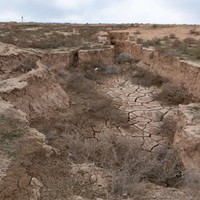
Geologists cited by Tasnim news agency said subsidence has accelerated across provinces such as Isfahan, Fars and Tehran, with field observations of cracks, surface fissures and foundation instability near historic structures.

“Nearly half of Iran’s valuable historic fabric lies in subsidence-prone zones,” geologist Ali Shahbaz was quoted as saying, adding that “63 nationally registered monuments and 27 world-class sites” are in affected areas.

In Isfahan, the long-dry Zayandehrud river has been linked to ground settlement of roughly 16-25 cm a year in the city’s north, raising stability concerns for Naqsh-e Jahan Square, the Shah and Sheikh Lotfollah mosques, and the Safavid-era Si-o-se-Pol and Khajou bridges, Tasnim reported.

In Fars province, subsidence in the Marvdasht plain -- estimated around 14 cm a year -- has prompted warnings about drainage systems and stone platforms at Persepolis and potential long-term risks to the Tomb of Cyrus at Pasargadae and the rock-cut tombs of Naqsh-e Rostam.

The concerns come amid broader alarms over nationwide land-subsidence.

Tasnim, citing official tallies, said 380 cities and about 9,000 villages have reported some level of subsidence, with roughly 42 million people living on sinking ground.

Iran’s Geological Survey says two decades of drought and sustained over-pumping, compounded by fragmented water governance, have pushed 106 plains into non-recoverable subsidence.

Cultural-heritage specialists stress there is no immediate risk of collapse at marquee sites, but warn that cumulative deformation, coupled with drying soils and sporadic heavy rains, could inflict irreversible damage over years to decades.

“No site is on the brink today,” Shahbaz said. “But without curbing withdrawals and restoring groundwater, we are setting the stage for losses that cannot be repaired.”

Most Viewed

Toppling Iran’s regime is ‘primary objective,’ Netanyahu says after US talks
1

Toppling Iran’s regime is ‘primary objective,’ Netanyahu says after US talks

2

Pakistani mediator leaves Tehran after Iran doubles down on demands

3
ANALYSIS

IRGC threatens undersea cables, but can it disrupt global internet?

4

Ghalibaf allies seek an end to war without giving up leverage over US

5

Iraq plays down Iran border disruption as more closures reported

Spotlight

  • Land subsidence threatens villages and farms in southeast Iran

    Land subsidence threatens villages and farms in southeast Iran

  • US blockade leaves Iran with millions of tons of surplus LPG

    US blockade leaves Iran with millions of tons of surplus LPG

  • Iran in Israeli election: Netanyahu all-in on regime change, rivals want more
    INSIGHT

    Iran in Israeli election: Netanyahu all-in on regime change, rivals want more

  • Saudi Arabia should join US-led push for change in Iran, analyst says
    ONE-ON-ONE

    Saudi Arabia should join US-led push for change in Iran, analyst says

  • Teenager killed by gunshot to eye after arrest in Iran, source says

    Teenager killed by gunshot to eye after arrest in Iran, source says

Banner
Banner
Banner
Banner
Banner