An Iranian lawmaker dismissed the return of UN sanctions on Tehran triggered through the so-called snapback mechanism by three European countries as an empty threat.
“The snapback (mechanism) is more like pointing a Kalashnikov without a cartridge case at people to scare them, while there are no bullets in it,” Hossein-Ali Haji-Deligani, a member of Iran’s parliament said on Monday.
“There is no sanction left that the enemy has not already imposed on Iran,” he added.

Iran's foreign minister on Monday said that there was still time for the West to solve its nuclear impasse with Iran through dialogue while the UN nuclear watchdog's head cited a "difficult" phase of talks with Tehran.
Abbas Araghchi, who is in New York for the UN General Assembly, said he plans to meet the UN nuclear watchdog later today and will also hold meetings with three European counterparts to discuss the looming reimposition of UN sanctions they triggered last month.
“At different times, the Islamic Republic of Iran has been tested, and they know we do not respond to the language of pressure and threats," Araghchi was quoted by official media as saying. "Rather, we respond in the language of respect and dignity. If there is a solution, it is only a diplomatic one.”
Araghchi said consultations with France, Germany and the United Kingdom are ongoing, and noted that the United States is also involved “directly or indirectly,” without elaborating.
Two months of fruitless Iran-US talks over Tehran's disputed nuclear program culminated in a surprise Israeli military campaign against Iran in June which was capped off by US strikes on three Iranian nuclear sites.
Following the attacks, Tehran suspended its cooperation with the UN nuclear watchdog. How to resume diplomacy and International Atomic Energy Agency (IAEA) inspections now remains a bone of contention between Iran and the West.
“We have emphasized our readiness for a diplomatic solution on the snapback mechanism, but one that secures Iran’s interests and addresses our security concerns,” Araghchi said. He warned Iran would take "the measures it must” if diplomacy fails.
UN sanctions on Iran, triggered through the so-called snapback mechanism by three European countries on August 28, are set to resume on September 28 after the UN Security Council rejected a resolution to keep the sanctions lifted in a 4–9 vote on September 19.
The sanctions would include an arms embargo, asset freezes and nuclear restrictions.
'Difficult juncture'
International Atomic Energy Agency chief Rafael Grossi, also in New York, told AFP the current situation with Iran is at a “difficult juncture.”
“It’s obviously quite a difficult juncture. It’s a very difficult situation we are facing right now,” Grossi said, adding that a series of talks are scheduled while all parties are gathered at the UN.
Iran and the IAEA signed a technical agreement in Cairo on September 9, mediated by Egypt, to make progress toward resuming nuclear inspections halted in June.
Tehran has warned that the deal will be void if new attacks or sanctions occur, though it views the agreement as a step toward de-escalation.

Iran’s natural gas exports to neighboring Iraq have fallen sharply over the past five months after US sanctions which long exempted the trade take hold.
Between April and August 2025, exports dropped by 40%, continuing a downward trend that began in 2024, according to financial intelligence platform Zawya.
“Iran’s exports to Iraq in the first five months of this year decreased by 18% compared to the same period last year, with a significant portion of the decline due to gas exports,” Abdulamir Rabihavi, Director General of the West Asia Office at Iran’s Trade Promotion Organization, said on September 15.
“In the first five months of last year, we exported around $1.6 billion worth of gas to Iraq, but this has fallen to $950 million this year," he was quoted as saying by Iran's Etemad newspaper.
Iraq’s imports have been constrained by stepped-up United States sanctions. In March 2025, the Trump administration revoked a waiver that allowed payments for Iranian electricity imports as a long-standing carve out to broad US sanctions on Tehran.
Baghdad seeks to diversify supplies by launching a new gas import line from Turkmenistan. However, because the pipeline runs through Iran, it remains subject to US sanctions, and Washington has refused to grant Iraq a waiver.
“The entry of new competitors and possible shifts in Iraq’s market require constant monitoring and preparedness by economic actors,” Etemad newspaper quoted Yahya Al-Ishaq, President of the Iran-Iraq Chamber of Commerce, as saying.
Hamid Hosseini, a member of the Iran Chamber of Commerce, noted: “One of Iraq’s main policies in recent years has been to support domestic production. The government regularly raises import tariffs, sometimes up to 36%.”
Despite holding vast natural gas reserves, Iraq lacks the infrastructure to fully utilize them and continues to depend on imports.
The country does not have enough refineries to process associated gas from its oil fields and still flares a large portion of it.
The US maximum pressure campaign on Iran, reinstated by President Trump in February 2025 via a National Security Presidential Memorandum, aims to deny Tehran nuclear weapon paths and counter its regional influence through sweeping sanctions on its energy sector, including oil exports targeted at zero.
The policy has blocked waivers for third-country energy deals involving Iran, directly curtailing Tehran's gas and electricity flows to Iraq and exacerbating domestic shortages.
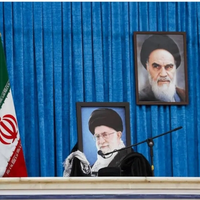
Iran's President Masoud Pezeshkian met Supreme Leader Ali Khamenei on Monday ahead of his trip to New York where he will attend the UN General Assembly, according to Iranian media reports.
During the meeting, Pezeshkian presented a report on his plans for the upcoming visit, state media said. Khamenei, in turn, "offered prayers and wished success for the president, while providing points and recommendations."
Some moderates in Tehran had urged him to seek Khamenei’s permission for a meeting with US President Donald Trump during the trip.
The Iranian president is scheduled to address the UN General Assembly on Wednesday.
Iran’s Foreign Minister Abbas Araghchi said that the Western powers “must decide whether they choose cooperation or confrontation,” ahead of his meeting with his European counterparts in New York to discuss the looming snapback of UN sanctions on Iran.
“At different times, the Islamic Republic of Iran has been tested, and they know that we do not respond to the language of pressure and threats. Rather, we respond in the language of respect and dignity. If there is a solution, it is only a diplomatic one,” Araghchi said.
He added that he hoped consultations in the coming days would lead to progress, but warned that “otherwise, the Islamic Republic of Iran will take the measures it must.”
Araghchi warned that Iran's Cairo agreement with the UN nuclear watchdog will lose its validity, and Tehran will respond if the UN sanctions on Iran are restored on September 28.

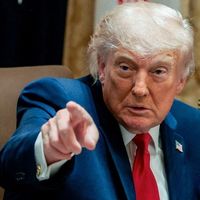
Moderates are pushing for President Masoud Pezeshkian to meet Donald Trump at the United Nations in hopes of easing mounting pressure on Iran, but entrenched hardline opposition makes such a breakthrough highly unlikely.
That pressure is set to intensify with the automatic return of UN sanctions on September 28, unless a last-minute diplomatic breakthrough materializes.
Amid decades of bitter discord following the 1979 Iranian Reovlution, no US President has ever met his Iranian counterpart. US President Barack Obama spoke with President Hassan Rouhani by phone while the latter was in New York in 2013.
Reformists argue the question is not whether Pezeshkian should meet Trump, but whether he can secure Supreme Leader Ali Khamenei’s mandate to resume the pursuit of a nuclear deal. Without it, they say, the trip risks becoming another empty exercise.
“If the trip is going to be like last year or like those of past presidents, it is better not to go,” former Tehran mayor Gholamhossein Karbaschi told the moderate outlet Jamaran.
“If they want real change, he must first go to the Leader and other decision-makers and secure the necessary powers. Then he can meet senior American, European and regional officials.”
‘Courage required’
The reformist daily Sazandegi ran the headline “A Speech Is Not Enough,” urging Pezeshkian to act decisively.
Prominent centrist figure Hossein Marashi argued in an editorial that only “courageous decisions” could help avoid renewed sanctions.
Other moderates, including Amir Eghtenaei and Mohammad Atrianfar, pressed for clarity from Khamenei before departure, warning that without it the trip would yield “only repetitive words in routine meetings.”
Reformist author Abbas Abdi went further In Tehran’s other moderate daily, Etemad: unless Pezeshkian resolves the matter at home, he argued, the UN visit will be “pure loss.”
“When you return,” Abdi warned, “we should know whether the person who went to the UN was Pezeshkian representing the Iranian nation, or merely a shadow of his rivals wearing his clothes.”
‘Romantic illusion’
The "rivals" have of course been hard at work to head off any grand gestures in New Yorkk.
Kayhan, funded by the Supreme Leader’s office, derided the proposal as a “childish prescription” that would send a message of weakness.
In a biting editorial, it accused reformists of being so servile to the United States they would “probably even kiss Trump’s seat if asked.”
Javan, the IRGC-linked daily, called the idea “banana peels under Pezeshkian’s feet,” reminding readers that Trump himself tore up the 2015 nuclear deal.
Even the more measured Farhikhtegan said Washington has shown “no willingness to talk to Iran,” branding reformist hopes “romantic illusions.”
The past speaks
Analyst Amirali Abolfath told the moderate daily Ham-Mihan that even if Pezeshkian and Trump met, “just as Trump’s meetings with Putin or his letters to Kim Jong-un did not change US policy, this will not either.”
Others warned of humiliation.
President Trump could treat Pezeshkian as he did Ukraine’s Volodymyr Zelensky, hardline journalist Pouyan Hosseinpour warned, “reducing the encounter to a moment of spectacle.”
This hardline consensus mirrors earlier UNGA seasons, when moderate presidents Mohammad Khatami and Hassan Rouhani likewise floated engagement but bowed to resistance at home.
The likely outcome is the same: no meeting, and a course set for confrontation as snapback sanctions take hold.