Ecuador blacklists Iran's Revolutionary Guards, Hamas and Hezbollah
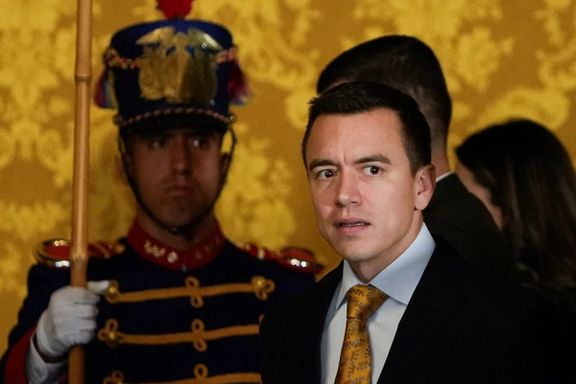
Ecuador has designated Iran’s Islamic Revolutionary Guards Corps (IRGC), Hamas and Hezbollah as terrorist organizations in a decree signed by President Daniel Noboa on Monday.
Ecuador has designated Iran’s Islamic Revolutionary Guards Corps (IRGC), Hamas and Hezbollah as terrorist organizations in a decree signed by President Daniel Noboa on Monday.
It cited reports from Ecuador’s National Intelligence Center (CNI) warning of the groups’ presence in South America and possible ties to domestic criminal networks.
The three groups, the decree added, pose a direct threat to public security and sovereignty of Ecuador. Quito has grappled with rising crime as drugs gangs have gained clout and firepower in recent years.
Israel’s foreign affairs minister Gideon Sa’ar welcomed the decision and thanked the Ecuadorean government for the designations.
"Ecuador’s courageous step sends a clear message against Iran’s terror network and strengthens global security," Sa’ar said in a post on X. "We call on more countries in Latin America and around the world to follow suit."
The move brings Ecuador in line with the United States, which lists Hamas, Hezbollah and the IRGC as foreign terrorist organizations.
Canada, Israel, Saudi Arabia and Bahrain have similarly blacklisted the IRGC.
The United States has long urged other countries to blacklist the group, and Secretary of State Marco Rubio appeared to announce Ecuador's move prematurely on X following a visit to the country this month. The post was subsequently edited to remove a reference to Ecuador's terrorist designation of Hezbollah and the IRGC.
Ecuador’s designation of the IRGC comes less than a month after Australia announced plans to legislate its own designation of the group as a terrorist organization.
Australian Prime Minister Anthony Albanese said last month that intelligence gathered by the Australian Security Intelligence Organization showed Iran had directed attacks on a kosher restaurant in Sydney and a synagogue in Melbourne last year.
Iran denied the allegations and said Australia's move aimed to distract from righteous solidarity with Palestine among Australia's own citizens.
Paraguay designated the IRGC as a terrorist organization in April and expanded its classification of Hamas and Hezbollah to include all components of both groups.
In a presidential decree, Paraguay’s President Santiago Peña expanded the country’s 2019 designation of the military wings of Hezbollah and Hamas to also cover their political and social branches.


Vahid Yazdanian, who leads the Space Research Center under the Ministry of Communications, told the state-run ILNA news agency that GPS disruptions in Iran stem from the absence of indigenous navigation satellites.
He said Iran currently lacks any navigation satellites, relying instead on foreign systems.
“No global navigation system can be fully secure,” he said. “The ultimate solution is to develop a domestic satellite navigation constellation.”
Yazdanian added that the country needs to build its own infrastructure to secure applications ranging from urban transport to the navigation of trains, ships and aircraft.


He also pointed to broader uses of space technology, saying that Iran’s Earth observation satellites already provide images that help policymakers estimate crop yields and manage water resources.
According to Yazdanian, satellite imagery has allowed the government to monitor wheat, barley, maize and potato production, and to make decisions about imports or domestic procurement.
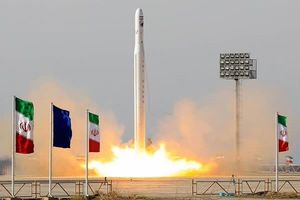
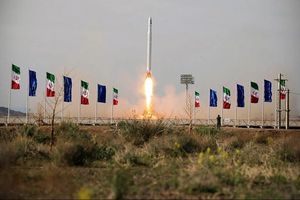

The comments come as Iran pushes ahead with an ambitious space program. The head of the Iranian Space Agency said earlier this month that Tehran plans to launch four satellites by March 2026 and begin operations at its new spaceport in Chabahar, on the country’s southeastern coast.
Among the planned launches are the Zafar, Paya, and a second model of the Kowsar Earth observation satellite, along with test units of the Soleimani narrowband communications constellation.
Western governments have repeatedly voiced concern that Iran’s satellite program could advance ballistic missile technology. Tehran says its activities are for peaceful purposes, adding the satellites will support civilian applications such as communications, agriculture and environmental monitoring.
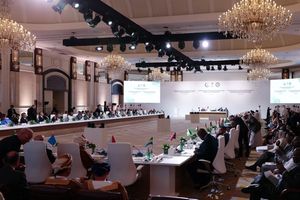
“Several countries in the region are trying to play a positive role, not only Qatar,” Araghchi told reporters at the opening of the second Iran-Economic Cooperation Organization (ECO) conference.
“But for starting negotiations, the question is not the mediator. The important point is the will of the other side. Whenever they accept that a deal must be based on mutual interests, without threat and intimidation, the rest are details.”
Araghchi used his speech to warn against what he called unchecked unilateralism and said the world needed to strengthen multilateral alliances.
“Today, more than ever, the world is faced with reckless unilateralism. This worrying trend has made the international order more fragile and posed serious challenges to security,” he said.“Cooperation among developing countries in multilateral formats is no longer a choice but a necessity.”
He said Iran had been a “victim of America’s unjust unilateralism and Israel’s dangerous adventurism” but would continue to act as an active regional player through bodies such as ECO.
Tehran and other member states are drafting a 10-year vision for the group until 2035 to expand its role in regional development, he said.
Turning to regional politics, Araghchi said this week’s emergency Arab-Islamic summit in Doha had highlighted a consensus on Israel as the main security threat.
“What the Islamic Republic of Iran has been saying for years -- that the Zionist regime is the main threat to the region and its aggression has no end -- has now become an undeniable truth for everyone,” he said.
He added that Iran welcomed the regional convergence and called for “collective movement and unity among all countries in the region” to respond.
On Monday, Iran’s foreign ministry rejected references to a two-state solution for the Israeli-Palestinian conflict in the final communique of the Arab-Islamic emergency summit in Doha, saying the approach would not resolve the issue and accusing US policies of sustaining Israeli aggression.

On the South Caucasus, Araghchi said disputes such as the Zangezur corridor remained complex and should be settled by regional states.
“The United States has not contributed to lasting peace in the region,” he said. “Our recommendation is regional mechanisms, and the Islamic Republic has proposed the 3+3 format.”
Araghchi and President Masoud Pezeshkian are due to attend this month’s United Nations General Assembly, which the minister described as an important platform for “conveying the voice of the Iranian people to the international community.”
Foreign ministry spokesperson Esmaeil Baghaei said on X that the text, backed by China, Russia, Venezuela, Nicaragua and Belarus, was intended “to defend the integrity of the NPT” and reaffirmed the inalienable right to develop nuclear energy for peaceful purposes.
“All states must refrain from attacking or threatening to attack peaceful nuclear facilities in other countries,” Baghaei wrote. “These principles must be upheld; it is high time that the international community acted firmly to prevent the normalization of lawlessness.”
Draft resolution
The draft resolution condemns “the deliberate and unlawful attacks carried out in June 2025 against nuclear sites and facilities of the Islamic Republic of Iran,” calling them clear violations of the UN Charter and the IAEA Statute.
It says nuclear sites under IAEA safeguards “shall not be subject to any kind of attack or threat of attack,” adding that such actions pose serious risks to international peace and security, human health, the environment, and the credibility of the non-proliferation regime.
The document also recalls UN Security Council Resolution 487 of 1981, which condemned Israel’s bombing of Iraq’s Osirak reactor, and reaffirms previous IAEA decisions prohibiting attacks on safeguarded facilities.
It further stressed that all questions regarding nuclear programs should be resolved “exclusively through dialogue and diplomacy, as the only viable path.”
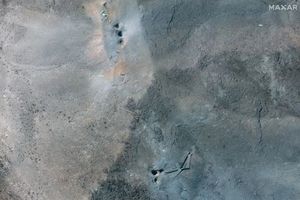
Israel launched a surprise military campaign on June 13 targeting Iranian nuclear and military sites, including senior commanders and nuclear officials in a conflict that lasted 12 days. On June 22, the United States joined the campaign, striking nuclear facilities in Fordow, Natanz and Isfahan. Washington brokered a ceasefire on June 24.
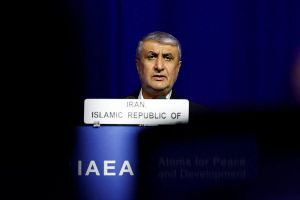

Iran’s nuclear chief Mohammad Eslami told the conference on Monday that Tehran’s atomic program “cannot be eliminated through military action,” accusing Israel and the United States of launching illegal strikes on Iranian sites in June.
“Despite our formal request, the agency did not condemn the attacks by the United States and Israel on the nuclear centers of the Islamic Republic,” Eslami said, calling the IAEA’s silence “a stain on the Agency’s history.”
Eslami said Tehran would use the conference to highlight what he called unlawful measures against its nuclear industry and to push for adoption of the draft.
The debate comes as Iran’s recent cooperation deal with IAEA chief Rafael Grossi awaits implementation and European powers press ahead with the UN “snapback” mechanism that could reinstate sanctions on Tehran by late September.
“Iran reiterates that the so-called two-state solution will not solve the Palestinian issue,” the Foreign Ministry said in a statement carried by state media. “The only real and lasting solution is the establishment of a single democratic state through a referendum with the participation of all Palestinians, inside and outside the occupied territories.”
It added that Tehran “disassociates itself from any reference to this concept and similar notions, including East Jerusalem, the 1967 borders and related terms, mentioned in the communique.”
The ministry reaffirmed support for what it called the “inalienable right of the Palestinian people to self-determination” and condemned “brutal crimes” by Israel.
“The people of Palestine have the right to use all necessary means to exercise their right to determine their destiny and free themselves from foreign colonial occupation,” it said.
The Iran-backed Houthis of Yemen echoed similar criticism, dismissing the communique as empty rhetoric and calling for stronger action. Mohammed Ali al-Houthi, a senior member of the group’s supreme political council, said “a simple and tiresome statement of condemnation will not prevent the crimes of the occupiers.”

'US cannot be neutral mediator'
While praising mediation efforts by Qatar and Egypt, Tehran said, “US policies and actions in practice sustain and support the aggressions of the Israeli regime against the Palestinian people. Therefore, the United States cannot be regarded as a credible or impartial party in advancing a just and lasting peace.”
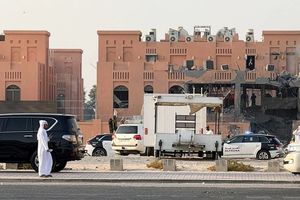
The Arab-Islamic summit, convened in Doha this week after Israel’s September 9 strike on Qatar, denounced the attack as a violation of international law and expressed full solidarity with Doha.

Leaders said Israel’s “crimes of genocide, ethnic cleansing, starvation and siege” undermine prospects for peace, and reaffirmed support for the Arab Peace Initiative and international resolutions backing a two-state solution with East Jerusalem as the Palestinian capital.
Iran requested that its reservations be recorded in the summit’s final report.


