US says Iran’s new tax law adds to people's financial woes
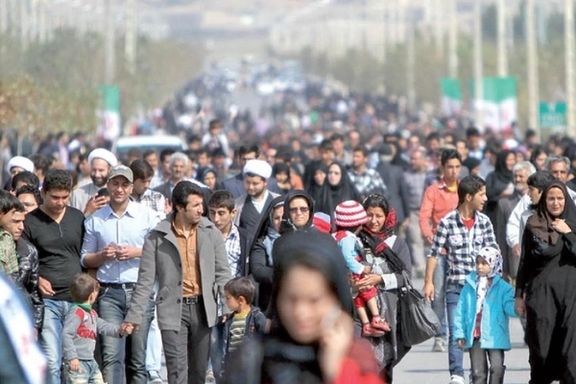
The US State Department, in a rare comment on Iran’s domestic financial policy, criticized a new law imposing capital gains taxes on real estate, vehicles, foreign currency, precious metals and cryptocurrencies, saying it would add to citizens’ hardships.
“By taxing the very assets people depend on for financial stability, the regime’s policies place an even greater burden on them,” it said in a statement posted on its Persian-language account on X Tuesday.
It said this decision "clearly demonstrates the regime’s disregard for the welfare of its citizens."
"Years of economic mismanagement and corruption have severely devalued Iran’s currency and forced many Iranians to rely on these assets as a hedge against inflation," the statement added.
Iran’s President Masoud Pezeshkian formally signed the tax bill last month, after it was passed by parliament in late June.
The law targets capital gains on real estate, vehicles, gold, jewelry, silver, platinum, foreign currency and even cryptocurrencies. However, the law imposes tax not only on capital gains but also on half of the inflation-driven increases to asset prices.
Iran faces one of the highest inflation rates in the region. According to the International Monetary Fund's estimates, the annual inflation rate has averaged above 42% since 2020.
Since 2021, when the late-president Ebrahim Raisi took to power, the Iranian government’s tax revenues increased by over 300%.
A damaged building in Doha, Qatar, September 9, 2025.
Iran on Tuesday condemned an Israeli attack on Hamas leaders in the Qatari capital Doha, calling the bombing of the Tehran-backed group's negotiating team a dangerous escalation to simmering Middle East tensions.
The Israeli military had earlier taken responsibility for the attack, saying it targeted what it called the "senior leadership of the Hamas terrorist organization" and that steps were taken to reduce civilian harm.
Iran's President Masoud Pezeshkian strongly condemned the attack as an "illegal, inhumane, and anti-peace action", saying it shows Israel "recognizes no limits to crime and terror, and destroys every attempt at diplomacy."
He called on the United Nations, the Organization of Islamic Cooperation, and other international bodies to respond to what he called a blatant aggression with immediate, decisive, and practical action.
"Attacking an independent country is a clear violation of national sovereignty and the UN Charter," Pezeshkian said, more than two months after Iran attacked a US base in Qatar during its 12-day war with Israel.
Iranian foreign ministry spokesman Esmaeil Baqaei also said "this action by the Israeli regime is a continuation of the crimes it has committed by violating all norms and international rules."
"This action is extremely dangerous and criminal; a blatant violation of all international laws and regulations, an infringement of Qatar’s national sovereignty and territorial integrity, and an attack on Palestinian negotiators."
Hamas has long based its political leadership in the gas-rich Persian Gulf state, which has traditionally served as a mediator in regional conflicts.
Khaled Qaddoumi, the Hamas representative in Iran, said the attack it described as an assassination attempt had failed and showed US perfidy.
“As always, the US government does not honor its commitments and consistently paves the way for the Israeli regime’s terrorist actions by creating the illusion of negotiations and offering superficial proposals," Qaddoumi was quoted as saying by Iranian state media.
"This time too, while the leadership of the movement was reviewing what was called the American plan in Doha, the occupying forces attacked the movement’s headquarters in a country that is one of the most important mediators, with US coordination.”
Hamas's ceasefire negotiation delegation survived Israeli attack, Reuters reported citing sources. There were no specific official comments on any casualties by Qatar or Hamas.
Negotiations to end the nearly two-year-old war in Gaza had been entering a critical new stage, with US President Donald Trump urging Israel and Hamas to agree to a prisoner exchange and ceasefire.
'Chieftains'
Speaking on X after the Doha attack, Israeli Prime Minister Benjamin Netanyahu appeared to stress there was no involvement by the United States, whose Mideast military hub is in Qatar.
"Today's action against the top terrorist chieftains of Hamas was a wholly independent Israeli operation," he said. "Israel initiated it, Israel conducted it, and Israel takes full responsibility."
Netanyahu on Monday visited the site of a deadly shooting by Palestinian gunmen on a bus in Jerusalem in which six people were killed, vowing to crush the Jewish state's enemies.
Iran and its regional affiliates have suffered multiple blows at the hands of its arch-foe in the regional conflagration which erupted since Hamas's October 7, 2023 attack on Israel.
A 12-day surprise Israeli campaign against Iran in June battered the Islamic Republic's military and nuclear infrastructure and killed hundreds of civilians and military personnel along with several top nuclear scientists.
32 Israelis were killed in Iranian counterattacks.
US attacks on three key Iranian nuclear sites capped off the war, and a retaliatory missile salvo caused damage deep inside a US airbase in Qatar, destroying a cutting-edge communications hub.
Iranian Supreme Leader Ali Khamenei this month sought Qatari mediation in talks with the West, multiple sources told Iran International, as Tehran signals rare flexibility on its enriched uranium as part of efforts to avert looming UN sanctions.
Iran has set up a suicide-prevention task force, the vice president for women and family affairs said on Monday, as the government prepares a national plan after rising cases among students and health workers.
Zahra Behrouzazar told an event at Iran University of Medical Sciences that a “Suicide Prevention Command Center” had been formed in Tehran province and would be expanded nationwide.
“Each of us is responsible for reducing suicide and our hope is that suicides will reach zero. This is an ambitious goal and requires a national program,” she said, according to state news agency IRNA. She described suicide as “a form of violence against oneself” and said prevention requires both “structural reforms and changes in mindset”.
Behrouzazar said Iran’s Social Emergency service -- a crisis intervention network run by the State Welfare Organization -- had been “65% effective” in its interventions and operates a 24-hour response in 378 cities.
“We cannot place all the burden on the Social Emergency; the supportive role of families matters,” she added.
Hassan Mousavi Chelek, the Welfare Organization’s deputy for social health, told the same conference the Social Emergency has worked on suicide prevention since 1999 and now runs fixed centers, mobile teams and the 123 hotline around the clock in 378 cities, IRNA reported.
He said interventions related to suicidal thoughts and attempts had increased fivefold between 2021 and 2024, which he said showed both need and growing public trust in the service.
Azarakhsh Mokri, a psychiatrist and associate professor at Tehran University of Medical Sciences, said social factors “more than medical illness” drive suicide risk, citing loneliness, unemployment and relationship breakdowns. He urged broader use of data and new technologies in prevention and cautioned against “over-medicalizing” suicide, IRNA reported.
The policy announcements come amid a spate of reported cases. Local rights outlet Haalvsh said on Monday that a farmer in Kahnuj, southeastern Iran, died by suicide at a local agriculture department office following alleged economic pressures, and that an internal-medicine specialist at Saravan’s Iranmehr Hospital was found dead in her dormitory after taking medication.
Also on Monday, a 26-year-old janitor who set himself on fire outside the governor’s office in Shadegan, southwestern Khuzestan province, died of his injuries, rights activists said.
In a separate report, a student collective said a female student died by suicide at Mohaghegh Ardabili University, calling for better campus support; the university has not issued an official statement.
Last year, a senior official at the prosecutor-general’s office said Iran records roughly 130,000 suicide attempts annually with about 7,000 deaths, and that suicide is the third-leading cause of death among people aged 15 to 24, according to reports from September 2024.
The official, Gholam-Abbas Torki, added that while Iran’s overall suicide mortality rate -- around 6.6 to 9.1 per 100,000 depending on the estimate -- is below the global average, it has been on an upward trend and requires scientific and coordinated prevention.
File photo of a group of Afghan migrants at the border with Iran
Iranian border guards opened fire on a group of Afghan migrants crossing into Sistan-Baluchestan province, killing six people and wounding five others, the Baluch rights group Haalvsh reported on Tuesday.
Haalvsh, which monitors events in the southeastern province, said around 120 Afghan nationals, including women, children and elderly people, came under fire on September 8 in the border district of Golshan.
The group said Iranian forces used both heavy and light weapons, including a DShK heavy machine gun, without issuing a warning.
According to Haalvsh, the bodies of five of the dead were left at the scene, and one of the wounded lost a leg after being hit by heavy gunfire. It also released the names of those hospitalized in Saravan, adding that the condition of three was critical.
The rights group said about 40 others were detained by border forces.
The US-based Human Rights Activists News Agency (HRANA) described the shooting as “a violation of fundamental human rights,” citing the direct fire on unarmed migrants, including women and children, and the use of heavy weapons. HRANA said the failure to provide timely medical treatment and the collective arrests also breached international law.
Haalvshadded that similar incidents have occurred before. In October 2024, Iranian border forces fired on groups of Afghan migrants, leaving dozens dead, injured or missing.
According to HRANA’s annual monitoring, 484 civilians in Iran were shot by security forces in 2024, with 163 killed and 321 wounded.
The reported incident comes amid an intensified crackdown on Afghan migrants in Iran. Late in August, an Interior Ministry official said Tehran expelled 1.8 million undocumented migrants in the past year, most of them Afghans, and intends to remove at least 800,000 more under a government plan.
The United Nations has warned of a looming humanitarian crisis in Afghanistan as deportations accelerate. UN experts urged Iran and Pakistan in July to halt forced returns, saying nearly 1.9 million Afghans had been sent back since the start of 2025.
Iran hosts millions of Afghan nationals, many of whom fled decades of war and instability.
Hamzeh Safavi, son of Yahya Rahim-Safavi, a senior military adviser to Supreme Leader Ali Khamenei, said Iran must be prepared for the possibility that Israel could attempt to assassinate the country’s top leader.
In a video interview, Safavi, a political science professor at Tehran University, repeatedly referred to the possibility of Khamenei’s killing, describing such scenarios as “disruptive and hostile acts” that Israel might pursue independently of US approval.
“If the issue of access to the number one or number two person in the country arises, they will carry it out at any cost, even at the risk of war,” Safavi said. “If Israel does this without America’s permission, the US will face a fait accompli, and Iran will be forced to think through its response.”
Former Israeli defense minister Yoav Gallant said last week that eliminating Khamenei should be part of Israel’s plan in any future conflict. Israeli officials, including Defense Minister Israel Katz, have also issued warnings aimed at the Supreme Leader, amid heightened rhetoric between Tehran and Tel Aviv following their 12-day war in June.
Safavi said US President Donald Trump had once claimed he stopped Israeli plans to target Khamenei during the June conflict. Trump later boasted he had “saved” the Iranian leader from what he called a “very disgraceful and humiliating death.”
While Safavi said war with Israel remained possible, he warned of what he called a more dangerous scenario of “gradual humiliation and erosion” if Iran did not respond to escalating threats.
“The worst scenario is not war. The worst scenario is being worn down,” he said.
Safavi also voiced rare criticism of Khamenei’s long-held stance on Washington, urging Iran to pursue what he called “comprehensive negotiations” with the United States that go beyond uranium enrichment.
“The nuclear deal was a single-issue agreement, and that is why it failed,” he said. “We need comprehensive talks with America.”
Rahim-Safavi, his father and Khamenei’s longtime military adviser, has himself said another war with Israel may be inevitable, but could be the last. “We soldiers always plan for the worst-case scenario,” he said in August.
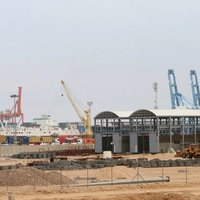
The aftermath of the explosion at Shahid Rajaee port, Hormozgan province (April 2025)
Twenty-one official bodies were found responsible for the April explosion at Shahid Rajaee port, southern Iran, that killed 58 people and injured more than 1,500, Iran’s judiciary said on Monday.
The judiciary said experts concluded that poor storage of hazardous materials, weak oversight, and lack of coordination among authorities contributed to the disaster. Official bodies including the Ports and Maritime Organization, Customs, the Central Bank and several ministries, were among those cited.
The blast, triggered by containers in the wharf area and followed by a massive fire, devastated part of Bandar Abbas’s main port infrastructure.
The Mostazafan Foundation, a multi-billion-dollar conglomerate controlled by Supreme Leader Ali Khamenei and sanctioned by the United States, was also named.
Judiciary chief Gholamhossein Mohseni Ejei called the explosion “very bitter and sad” and said inquiries into both organizations and individuals were continuing.
“According to expert assessments, some organizations and individuals were found at fault. Once the matter is finalized, those responsible will be held accountable,” he said on Monday.
He said several people had been arrested, but gave no numbers.
Ejei said damages for all 58 victims had been secured and most families had already received payments. Assistance has also been provided to survivors and to businesses that lost property.
The blast began with a fire in a container yard at the Sina company site in Bandar Abbas and spread quickly, destroying part of Iran’s main southern port. The area was operated by Sina Marine and Port Services, a subsidiary of the Mostazafan Foundation. Satellite images showed the yard, which could hold up to 20,000 containers, was completely destroyed.
The judiciary said port operations have restarted, with new measures promised to prevent similar tragedies.
Ejei said the judiciary would press for tougher safety enforcement and faster investigations. “Matters must be pursued with determination and should not be allowed to drag on,” he said.