Iran jails Afghan student documenting mass deportations
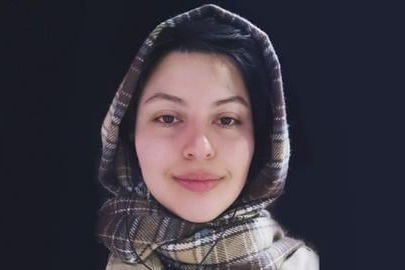
Sara Gohari, a 29-year-old Afghan sociology student at the University of Tehran, has been imprisoned in Iran after traveling to the country’s eastern border to document the forced deportation of Afghan refugees.
Sara Gohari, a 29-year-old Afghan sociology student living in Iran has been detained after traveling to the country’s eastern border to document the forced deportation of Afghan refugees, her lawyer and a rights group said.
The case underscores official sensitivity around a populist push to expel mostly impoverished Afghan migrants citing alleged security concerns after Tehran was worsted in a conflict with Israel.
Her lawyer Reza Shafakhah told Shargh newspaper she has been charged with launching propaganda against the Islamic Republic and photographing prohibited sites.
Since the outbreak of a 12-day war with Israel last month, nearly half a million Afghans have been deported from Iran—many of them facing violence and persecution upon return to Taliban-controlled Afghanistan and enduring inhumane conditions during expulsion, according to UN experts.
Gohari was arrested on July 6 at the Taybad border crossing in Razavi Khorasan province, where she had gone to conduct independent research on Afghan migrants, according to the rights group Hengaw.
The crossing connects Iran to Afghanistan’s Herat province via the town of Islam Qala and is a major transit point used by Iranian authorities in the ongoing mass deportations. The arrest was reportedly carried out without a warrant, and for over 10 days, Gohari's family and legal counsel had no contact with her.
The university of Tehran student had previously posted on Instagram that she intended to collect and share stories of Afghans being forcibly returned from Iran. After her arrest, she was held in solitary confinement for nearly three weeks at the Intelligence Ministry’s detention center in Mashhad before being transferred to Torbat-e Jam Prison, her lawyer said.
The prison is near Mashad, gaining attention gained due to executions, often in connection with drug-related charges
The university student's case was made public on July 22, when her lawyer posted to X that Gohari had been charged with “propaganda against the state.” He said the case is currently under review by the Taybad County Prosecutor’s Office.
In his follow-up interview with Shargh, Shafakhah said authorities have set bail at 500 million tomans (about $10,000), and efforts are underway to secure her temporary release.
Supporters have launched a social media campaign using the hashtag #WhereIsSaraGohari to pressure Iranian authorities for answers on her detention and legal status.
Authorities have released no details about the evidence against Gohari. Her sudden disappearance, extended incommunicado detention, and transfer between facilities have intensified concerns about the Islamic Republic’s treatment of Afghan migrants, students, and researchers.
A Belgian lawmaker of Iranian descent said the European country's police warned her of an Iranian plot to abduct her via Turkey after she backed labeling the Revolutionary Guards a terrorist group.
"Today, the Belgian police and security services contacted me regarding an alarming situation concerning my safety," Darya Safai said on her X account.
"They had received worrying information indicating that the Islamic regime in Iran wants to kidnap me and take me to Tehran via Turkey," she said, adding that she has been advised against visiting Turkey.
Iran has previously been accused of involvement in the kidnapping and killing of foreign nationals in the United Arab Emirates, according to Emirati and Western officials.
In 2020, German-Iranian dissident Jamshid Sharmahd was kidnapped by Iranian operatives from Dubai and forcibly taken to Iran via Oman. He was sentenced to death and executed in what Amnesty called a "grossly unfair trial" in 2023.
Iran also kidnapped dissident journalist Rouhollah Zam from Iraq after luring him to leave Paris for the Arab country in September 2019. He was later sentenced to death and executed in Iran one year later.
Two other dissidents, Masoud Molavi Vardanjani and Saeed Karimian, the owner of Iran-focused satellite broadcaster Gem TV, were also killed by the so-called Zindashti network, a criminal group linked to Iran’s Ministry of Intelligence and Security (MOIS).
On July 15, the European Union sanctioned the network and its leader Naji Ebrahim Sharifi-Zindashti for carrying out assassinations of Iranian dissidents overseas.
Push for blacklisting IRGC
The Belgian lawmaker said the Islamic Republic is plotting to kidnap her just after her resolution to place the Islamic Revolutionary Guard Corps (IRGC) on the European terrorist list was approved in the Belgian House of Representatives.
"The regime is now planning to kidnap, torture, and execute a member of parliament from a European country. Or to use it as a bargaining chip in their hostage diplomacy," she said.
Safai called on Western countries to "finally face up to how brazen this regime is."
The IRGC, a powerful branch of Iran’s armed forces, was designated a terrorist organization by the United States in 2019 under President Donald Trump. The United States and Canada have urged their European allies to follow suit.
From left: Chiako Yousefinezhad, Khabat Amini, Hamid Moradi
A third Kurdish environmentalist in less than a week died on Monday from severe burns sustained while battling a wildfire in western Iran, sparking renewed criticism of government mismanagement.
Amini had spent four days in intensive care before succumbing to his injuries. Another activist, Chiako Yousefinejad, died a day earlier in the same hospital.
The first to die from the group was Hamid Moradi, a lawyer and environmental activist from Sanandaj in Iran's Kurdistan province, according to the Kurdistan Human Rights Network (KHRN).
A blaze on Mount Abidar broke out on July 24, prompting a rapid response from local environmentalists and volunteers determined to stop its spread.
But their efforts were hampered by a lack of firefighting resources and proper protective equipment — a chronic issue in the Islamic Republic's handling of environmental disasters.
Their deaths have sparked an outpouring of grief and condemnation from civil society and environmental advocates, many of whom accused authorities of systemic neglect and mismanagement of natural disasters.
Among those voicing outrage was Nobel Peace Prize laureate Narges Mohammadi, who posted a tribute on Instagram calling the men the “brave defenders of Kurdistan’s environment.”
“Hamid, Chiako, and Khabat were consumed by flames so that Mount Abidar would not burn — so that life could remain green,” she wrote.
“We are a people who step in when competence, accountability, and the fulfillment of government duties are absent — a government that not only fails to protect the environment, nature, and the lives of those who care for it, but has turned nature into a battleground for exploitation and the pursuit of power, even at the cost of destruction," Mohammedi added.
Twenty-five environmental defenders have died in forest and grassland fires across Iran over the past decade, according to activists.
Two renowned Iranian filmmakers have condemned authorities for raiding the home of fellow dissident director Ali Ahmadzadeh and seizing his laptop and communication devices.
According to Iranian media, Ahmadzadeh’s residence was raided by several armed agents on July 26. There was no immediate announcement by Iranian judiciary on possible charges or why Ahmadzadeh residence was raided.
However, he is known as a dissident filmmaker and a supporter of protests against the Islamic Republic. He is also among the filmmakers who defy hijab regulations in their underground films.
“Fifty people raided the house of a prolific artist, stole his suitcase, laptop and mobile communication devices and held him at gunpoint, ordering him to appear the next day for questioning,” acclaimed director Jafar Panahi wrote on Instagram on Monday.
Panahi shared video footage from the aftermath of the raid, calling it “state terrorism.”
“This illegitimate power of the government allows them to imprison filmmakers or seize their belongings, but creativity cannot be imprisoned or detained. Iranian filmmakers will continue making their movies,” wrote fellow renowned filmmaker Mohammad Rasoulof in a separate Instagram post.
The raid occurred while Ahmadzadeh was on location filming his new project. He has faced previous restrictions, and some of his films have struggled to gain approval for release in Iran.
Both Panahi and Rasoulof are internationally acclaimed directors whose works have been featured at major film festivals, including Cannes.
Rasoulof was sentenced to eight years in prison in Iran before fleeing the country in 2024. Panahi also won the Palm d'Or at the 2025 Cannes Film Festival for his film "It Was Just an Accident".
Panahi has also previously faced restrictions and imprisonment and is still banned from filmmaking but continues to reside in Tehran and makes his films secretly.
Under Iranian law, all films must obtain government permits before production and receive official approval prior to any public screening.
Ahmadzadeh was arrested in Tehran in 2022 on charges of making a movie without permit.
His film “Critical Zone” won the Golden Leopard award at Locarno film festival in Switzerland in 2023. The movie was also screened at the 41st Haifa International Film Festival in Israel, a taboo in Tehran.
Iran continues to be ranked among the world’s worst countries for press freedom.
According to Reporters Without Borders, “Iran has reinforced its position as one of the most repressive countries in terms of press freedom, with journalists and independent media constantly persecuted through arbitrary arrests and harsh sentences handed down after unfair trials before revolutionary courts.”
Rasoul Bodaghi, a former political prisoner arrested during the height of Iran’s 2022 Woman, Life, Freedom protests, has reportedly taken his own life months after his release.
Rasoul Bodaghi, a prominent former political prisoner arrested during the height of Iran’s 2022 protest movement, has reportedly taken his own life months after his release.
Former political prisoner and rights activist Foad Choobin reported Bodaghi's suicide on his X account on Monday.
Human rights groups said his death followed a prolonged period of psychological trauma and abuse stemming from his imprisonment.
Bodaghi was arrested in his hometown of Izeh in Iran's southwestern Khuzestan province — one of the epicenters of discontent following the death of a young woman, Mahsa 'Jina' Amini, in morality police custody.
Amini’s September 2022 death sparked the largest wave of anti-government protests in Iran since 2009. They were ultimately stamped out with deadly force.
Izeh was the site of some of the Islamic Republic’s most violent crackdowns. On November 16, 2022, Iranian security forces opened fire on protesters, killing at least seven people including 9-year-old Kian Pirfalak.
The boy's death became a symbol of the uprising and a rallying cry for demonstrators demanding justice and change.
'War against God'
Bodaghi was accused of participating in the protests and was imprisoned under charges that carry the death penalty in Iran, including corruption on earth and waging war against God (moharebeh). He spent 16 months in Sheyban Prison in Ahvaz, under the authority of the Islamic Revolutionary Guard Corps (IRGC).
According to Choobin, Bodaghi was subjected to physical and psychological torture, and was administered pills of unknown origin.
“Despite being detained for over sixteen months, Mr. Bodaghi remained in an uncertain legal state in Sheyban Prison," the Human Rights Activists News Agency (HRANA) quoted a source close to his family as saying in a report last year.
"He suffered from mental health issues and attempted suicide multiple times while in custody," the report said.
He was released in March 2024 under heavy bail conditions. But Choobin says the trauma and mental anguish persisted long after his release, ultimately leading to his death.
Shahin Milani, Executive Director of the Iran Human Rights Documentation Center, called for accountability in the wake of Bodaghi’s death.
“The circumstances of Mr. Bodaghi’s death, as well as those of several other protesters who died shortly after release, warrant a full investigation," Milani told Iran International, "Whether caused by psychological harm due to torture or administration of unknown substances to prisoners, the Islamic Republic’s role in the tragic deaths of former detainees should be fully determined."
While no official data exists on how many protesters have died by suicide, Iran Human Rights reports that at least 22 people — including four children and eight women — have died by suicide or under suspicious circumstances following their detention in connection with the Woman, Life, Freedom protests.
Among the most high-profile cases is Kianoosh Sanjari, a well-known journalist and human rights advocate who died by suicide on November 13, 2024. Sanjari, who had worked for Voice of America’s Farsi service, jumped from a building in Tehran after posting a message demanding the release of four political prisoners.
He had warned publicly that if they were not freed, he would end his life. Reporters Without Borders (RSF) and VOA held the Iranian government accountable, citing years of harassment, torture and imprisonment as contributing factors in his death.
As the Islamic Republic stays keen to quash dissent and unrest, Bodaghi’s death adds to the growing list of individuals whose lives were lost not only in the streets but long after the protests were silenced.
A parched reservoir near a dam outside Tehran, showing alarmingly low water levels amid Iran’s deepening drought and water crisis.
An Iranian government plan to close workplaces and schools one day a week in response to deepening electricity and water shortages has drawn fire from many Iranians who say the move will only worsen daily hardships.
The move effectively creates a three-day weekend aimed at curbing the strain on water and energy systems during peak heat.
But residents across the country told Iran International's submissions line that the measure triggered mass departures from major cities, relocating rather than reducing consumption.
Iranian government spokeswoman Fatemeh Mohajerani has framed the weekly closures as an opportunity for the Iranian people to rest and take vacations following the 12-day war with Israel.
“Not only has there been no positive effect,” wrote one resident of northern Iran, “it’s made things worse. Tehran residents rush north or to nearby towns (for vacation), and now we suffer power cuts and water shortages too.”
Iran International asked its audience whether the closure had improved water availability in their regions. Dozens of respondents from Tehran, Mashhad, Qazvin, Bushehr and beyond described worsening outages and mounting utility costs.
“Before these holidays, we never had water cuts. Now it’s happening several times a day,” said one resident of Mashhad in the northeast. Others blamed the government for unequal access.
An audience in western Tehran said that in their neighborhood, which is home to personnel belonging to Iran's Revolutionary Guards, “we haven’t had a single water cut,” while surrounding districts faced regular disruption.
Reservoirs near historic lows
Four of the five reservoirs supplying the capital are nearly empty, with only 13% of capacity remaining, Tehran Governor Mohammad Sadegh Motamedian said on Wednesday.
“About 13% is the current fill level of the four main reservoirs, meaning that 87% of the reservoir responsible for supplying drinking water to Tehran are empty.”
More than 60% of the city’s water now comes from depleted groundwater—double the rate of a decade ago.
Motamedian attributed Tehran’s outsized demand to population density, which he said exceeds the national average by a factor of 21. He confirmed that 42% of the province’s water is consumed for drinking and sanitation—far above the 8% national average.
But many Iranians say government mismanagement, not personal consumption, is to blame.
“This Islamic Republic has spent decades funneling our wealth into foreign militias and nuclear programs,” one respondent said. “Not a single long-term plan for water or the environment has ever materialized.”
Living under extreme pressure, respondents offered various elaborate explanations for alleged official motives behind the shortages.
“They just want people to leave Tehran so it stays quiet,” one said. “They’re scared the heat and outages will spark protests.”
Another viewer wrote, “This isn’t about water. This is about keeping people from the streets.”
'Failure at every level'
Some reported deteriorating infrastructure and rising costs without warning. “We used to have water all day in Mashhad—now it cuts out repeatedly,” one audience said. Others described sudden hikes in electricity bills and inconsistent rationing that appeared to favor certain areas.
Messages also reflected broader disillusionment. “Please, help us. We are exhausted,” one message read. “No one listens. We are at the end of the line.”
With reservoirs exhausted and groundwater declining, officials have warned that more shutdowns may be imposed.
“If necessary, every week may be off from Tuesday or Wednesday (until Saturday),” Tehran lawmaker Amirhossein Sabeti warned Wednesday.
Reza Sepahvand, a member of the Parliament’s Energy Committee, also announced the possibility of water rationing in Iran in the coming months.
“At the moment, the only way to manage the situation is to reduce the outages ... Unfortunately, we will likely see water rationing in most parts of the country in the coming months — a process that has already begun in some provinces and cities,” he told the local media Wednesday.