• العربية
  • فارسی
Brand
  • Iran Insight
  • Politics
  • Economy
  • Analysis
  • Special Report
  • Opinion
  • Podcast
  • Iran Insight
  • Politics
  • Economy
  • Analysis
  • Special Report
  • Opinion
  • Podcast
  • Theme
  • Language
    • العربية
    • فارسی
  • Iran Insight
  • Politics
  • Economy
  • Analysis
  • Special Report
  • Opinion
  • Podcast
All rights reserved for Volant Media UK Limited
volant media logo

Iran President dangles cooperation with UN nuclear agency but alleges bias

Jul 10, 2025, 17:46 GMT+1Updated: 07:52 GMT+0
Iran's president Masoud Pezeshkian meeting local officials in the northern province of Gilan, July 7, 2025

Iran could resume cooperation with with the International Atomic Energy Agency (IAEA) if the UN watchdog ends its “double standards”, President Masoud Pezeshkian told the European Council president according to state media.

The comments follow the exit of IAEA inspectors from Iran following Israeli and US attacks on Iranian nuclear facilities and after Iran's parliament suspended cooperation with the body, but suggest openness to renewed ties.

“The continuation of cooperation is conditional on correcting the agency’s double behavior regarding Iran’s nuclear case,” Pezeshkian said. He also warned that “failure to respect impartiality in reporting undermines the IAEA’s credibility.”

Pezeshkian added that any future attacks on Iran would be met with “a stronger and more regrettable response.”

A fragile ceasefire continues between Iran and Israel after a 12-day war in which the Jewish state pounded the Islamic Republic. US officials say communications with Iran are ongoing and both sides have expressed openness to resuming talks.

Tehran has accused the IAEA of sharing sensitive information with Israel and the US, and of failing to condemn last month’s airstrikes on Iranian nuclear facilities.

IAEA Director General Rafael Grossi said this week that any lasting solution with Iran must be based on diplomacy and a strong verification mechanism.

“In each of the possible scenarios, a diplomatic agreement must be reached. The appropriate systemic verification should be part of such an agreement, and the necessary structure should be in place,” Grossi said.

Grossi added that he remains hopeful about resuming cooperation with Iran soon, saying that talks are ongoing through intermediaries.

Most Viewed

Iran diplomacy wobbles as factions compete to avoid looking soft on US
1
INSIGHT

Iran diplomacy wobbles as factions compete to avoid looking soft on US

2
ANALYSIS

The politics of pink: how Iran uses cuteness to rebrand violence

3

Scam messages seek crypto for ships’ safe passage through Hormuz, firm warns

4
EXCLUSIVE

Family told missing teen was alive, then received his body 60 days later

5
INSIGHT

Is Iran entering its Gorbachev moment?

Banner
Banner

Spotlight

  • Diplomacy tolls at Hormuz as conflict returns to its doorstep
    OPINION

    Diplomacy tolls at Hormuz as conflict returns to its doorstep

  • Opposition to US talks grows in Tehran as ceasefire deadline nears
    INSIGHT

    Opposition to US talks grows in Tehran as ceasefire deadline nears

  • Tehran moderates see ‘no deal–no war’ limbo as worst outcome
    INSIGHT

    Tehran moderates see ‘no deal–no war’ limbo as worst outcome

  • The future has been switched off here
    TEHRAN INSIDER

    The future has been switched off here

  • Lights out, then gunfire: Witnesses recount Mashhad protest crackdown
    VOICES FROM IRAN

    Lights out, then gunfire: Witnesses recount Mashhad protest crackdown

  • Is Iran entering its Gorbachev moment?
    INSIGHT

    Is Iran entering its Gorbachev moment?

•
•
•

More Stories

Tehran to turn homes bombed by Israel into museums

Jul 10, 2025, 17:04 GMT+1

Several homes damaged by Israeli strikes in a brief conflict last month will be turned into museums, Tehran’s mayor Alireza Zakani said.

“We’ll mark every damaged site with plaques or symbols as lasting reminders,” Zakani said on Wednesday.

The mayor was speaking on a state TV program focused on how the municipality plans to rebuild after Israeli attacks on Iran’s capital during the 12-day war.

Zakani announced that authorities plan to build ten-story residential buildings with underground parking that will serve as shelters.

Many Iranians criticized the government for not providing civilian shelters to mitigate harm to the public in the manner of Tehran's Israeli adversaries.

Government officials have said more than 3,200 residential units were destroyed in Tehran.

Zakani also announced that the municipality is currently housing people displaced by the conflict in nine hotels, with a total capacity of over 1,000 people.

During the war, Israel assassinated Iranian commanders and nuclear scientists and pounded nuclear and military sites nationwide, though targeting focused mostly on Tehran and western Iran.

The war killed over 1,100 Iranians and injured thousands more, according to US-based rights group HRANA.

Israeli evacuation orders for Tehran during the conflict encompassed areas home to hundreds of thousands of people.

The Israeli Air military said it also targeted 80 Iranian air defense systems and 250 missile launch platforms.

Iran fired approximately 600 missiles at Israeli territory in retaliation, killing 27 people across the country. More than 30,000 buildings were damaged, Israeli authorities said.

UK Parliament warns of rising Iranian threat in new intelligence report

Jul 10, 2025, 16:02 GMT+1

The UK Parliament’s Intelligence and Security Committee (ISC) released a report on Thursday morning warning that Iran poses one of the gravest state-based threats to British national security, on par with adversaries like Russia and China.

The report highlights Tehran’s escalating willingness to carry out assassinations, espionage, and cyber attacks within the United Kingdom, and calls for a fundamental shift in British strategy toward the Islamic Republic.

The 260-page report draws on classified intelligence and interviews with senior officials across MI5, MI6, GCHQ, the Cabinet Office, and the Home Office.

It paints a detailed picture of Iran’s evolving threat posture, concluding that the Tehran "is a pragmatic actor, often driven more by opportunism than ideology," and increasingly capable of projecting that pragmatism into hostile activity on British soil.

“The Iranian regime’s fundamental objective is to ensure the survival and security of the Islamic Republic,” the ISC said. “It has an acute historic sense of vulnerability. This shapes, directly or indirectly, its actions.”

Since January 2022, there have been at least 15 attempts at murder or kidnap against British nationals or UK-based individuals, according to the report.

Tehran's embassy in London issued a statement expressing "its strong protest and categorical rejection of the baseless, politically motivated and hostile claims," denying any acts of violence, espionage or cyber attacks on UK soil.

British intelligence chief Ken McCallum, head of MI5, said last year: “Iranian state actors make extensive use of criminals as proxies—from international drug traffickers to low-level crooks."

These operations, aimed primarily at dissidents and critics of the Islamic Republic, mirror tactics Iran has employed across the globe in continents including Africa, Asia and Europe.

Targeting critics

Iran has significantly stepped up efforts to intimidate dissident media outlets and Tehran opponents based in the UK, the report said. "That sharp increase in the physical threat represents the biggest change over the last 12 to 18 months in the overall Iranian threat to the UK."

"Of greater concern are Iran’s attempts to intimidate Iranian dissidents and employees of media organisations – such as Iran International – in the UK and beyond," the report said. "Some reports suggest these efforts to intimidate the regime’s perceived opponents have had a significant impact on the Iranian diaspora community in the UK."

In another section on increase in physical threats, the report said the increase in the physical threat shows how the domestic situation in Iran can indirectly affect the Iranian threat to the UK.

"In particular, MI5 told the Committee that it has seen persistent targeting of Iranian media organisations operating in the UK, primarily Iran International. BBC Persian and Manoto TV – which are broadcast from the UK – are also prominent targets, as they are viewed by Iran as 'deeply undermining of the Iranian regime.'"

'Greatest level of threat'

“The threat of physical attack on individuals in the UK is now the greatest level of threat we currently face from Iran,” the Homeland Security Group told the Committee. “It is comparable with the threat posed by Russia.”

"Since the beginning of 2022, there has been a significant increase in the physical threat posed by Iran to those residing in the UK. It has significantly increased both in pace and with regard to the number of threats."

MP Kevan Jones, the committee chair, said in a statement: "Iran is there across the full spectrum of all the kinds of threats we have to be concerned with."

UK-based targets and broader goals

According to the report, Tehran seeks to reduce the UK's military footprint in the Middle East, undermine its alliance with the United States and Israel, and suppress criticism of the Islamic Republic—including from exiles and journalists living in the UK.

“Iran and the UK have a complex history,” the report said. “Iran’s leadership perceives the UK to be a significant adversary—a ‘cunning fox’—opposed to the Iranian regime’s values and, as part of the West, seeking regime change.”

The Joint Intelligence Committee (JIC) Chair echoed these concerns, telling the ISC: “There is a deep suspicion [of the UK] for historical reasons as well as relatively contemporary reasons.”

Espionage and cyber operations

Iran’s espionage activity, the report warns, is “significant” and directed mainly through cyber capabilities but also via human agents. While the UK may sit just below the US, Israel, and Saudi Arabia in Tehran’s targeting priorities, intelligence officials warned that this could quickly shift.

“We are a priority target ... for Iran in an espionage sense,” the JIC Chair told the Committee. “Because they regard the United Kingdom as a particularly malevolent opponent of the Islamic Republic and, secondly, because of the role we play in nuclear negotiations and the relationship which we have with the United States.”

Cyber operations are another critical tool in Iran’s asymmetric arsenal, according to the report. It describes Tehran as “an aggressive cyber actor with extensive capabilities,” albeit less sophisticated than Russia or China.

The National Cyber Security Centre (NCSC) warned that many British entities are currently not equipped to detect or defend against Iranian cyber intrusions.

“It is essential to raise the resilience bar,” the ISC wrote. “If there is good cyber security and resilience across the UK, then it is less likely that Iran’s cyber-attacks will be successful.”

Policy gaps

The Committee welcomed some steps taken by the UK Government since receiving the draft report in April 2024, including the designation of Iran under the Enhanced Tier of the Foreign Influence Registration Scheme and new legal powers enabling the proscription of state-backed entities such as Iran’s Islamic Revolutionary Guard Corps (IRGC).

However, the Committee criticized the government for its approach to Iran. “The Government's policy on Iran has suffered from a focus on crisis management and has been primarily driven by concerns over Iran's nuclear program—to the exclusion of other issues,” the report said.

“'Fire-fighting' has prevented the Government from developing a real understanding of Iran, with a lack of Iran-specific expertise across Government.”

One critique in the report centered on the absence of Iran-specific expertise across the British Government. “We were particularly struck by one critique: if you have people running policy in the Foreign Office who don't speak a word of Persian, then that is a fat lot of good, to be honest."

The release of the report comes amid increasing scrutiny of Iran’s influence across Europe. Earlier this week, Italian authorities uncovered a broad network of individuals allegedly working to promote the Islamic Republic’s narrative in Europe.

“Whilst Iran favors proportionality in relation to conflict, this is not always achievable or pragmatic,” the Committee wrote. “It wants to avoid a full-scale war. It has therefore focused on the development of ‘asymmetric’ capabilities and a network of aligned militant and terrorist organizations across the Middle East to spread influence and deter potential aggressors.”

The Committee urged the UK Government and its allies to take a firmer stance in making clear that Iran’s hostile activities within the UK are unacceptable.

“We commend the efforts of MI5 and the police in response to what is now a serious threat, and we encourage the Government and its international partners to make it clear to Iran—at every opportunity—that such attacks would indeed constitute an attack on the UK and would receive the appropriate response.”

Without leadership change, Iranian threat to US remains – WSJ

Jul 10, 2025, 12:31 GMT+1

Iran will remain a threat to the United States as long as its current leaders stay in power, the Wall Street Journal wrote Tuesday, calling for the elimination of the country's Supreme Leader to prevent a far more dangerous conflict in the future.

“If Trump leaves the clerics in charge, the US will eventually have to deal with an even worse conflict—as it did in Iraq,” the outlet wrote in an opinion piece titled The Perfect Time for Regime Change in Iran just weeks after the ceasefire to end the Iran-Israel war, in which the US carried out strikes on Iran's nuclear facilities.

The paper referenced past American experiences in Afghanistan and Iraq to argue that strategic hesitancy has repeatedly led to prolonged wars and lost opportunities.

The commentary argued that Iran’s threat goes beyond its nuclear program. “Iran’s support for its terrorist proxies endangers regional stability and US lives,” it said, the US listing Iran as a state sponsor of terrorism in 1984.

“Iranian assistance with Russia’s illegal oil exports reduces America’s ability to pressure Moscow on the Ukraine war," it added.

Citing a July 3 interview with Iran’s deputy foreign minister, who told NBC News that Iran’s enrichment policy “has not changed,” the paper said Tehran remains committed to advancing its nuclear capabilities despite the strikes carried out by the US, which President Donald Trump said had 'obliterated' Tehran's nuclear ambitions.

The newspaper described the strikes as a tactical success but warned that failure to follow through strategically would repeat the mistake of the 1991 Persian Gulf War.

“The Iranian regime will remain a threat to America until different leaders occupy Tehran,” it wrote.

The piece concluded that the current moment, following heavy blows to Iran’s nuclear infrastructure and its regional allies, offers a rare opportunity to “eliminate the ideological source” of the threat by targeting Iran’s Supreme Leader, Ali Khamenei. “History suggests the time to act is now.”

Iran did not remove 60% enriched uranium from struck nuclear sites - Reuters

Jul 10, 2025, 08:57 GMT+1

Iran did not move its highly enriched uranium stockpile before US airstrikes last month hit its key nuclear sites at Fordo, Natanz, and Isfahan, an Israeli official told Reuters.

A senior Israeli official told Reuters the stockpile — estimated at 400 kilograms enriched to 60 percent — “was not removed and has not been moved since,” suggesting Iran made no attempt to safeguard the material before or after the strikes.

The official, who was not named, added that Iran may still be able to access the stockpile at Isfahan, but moving it would be very difficult.

“The Iranians might still be able to gain access to Isfahan but it would be hard to remove any of the material there,” wrote Reuters, citing the official.

The International Atomic Energy Agency (IAEA) had assessed before the war that most of the 60 percent enriched uranium was being stored at the Isfahan site.

Satellite imagery taken before US strikes on three key Iranian nuclear sites showed “unusual” activity near the entrance to Iran’s Fordow enrichment facility.16 cargo trucks were seen Thursday on the access road to the tunnel entrance, but by Friday most had relocated to an area about one kilometer northwest, Maxar Technologies said.

International Atomic Energy Agency (IAEA) inspectors have not publicly confirmed the condition of the stockpile since the strikes, and Iran has not allowed independent verification of the facilities since the war began.

The IAEA said on Friday that its team of inspectors had safely departed Iran to return to its headquarters in Vienna, after a new law barred cooperation with the UN body.

Tehran has accused the IAEA of sharing sensitive data with Israel and the US, and of failing to condemn last month’s airstrikes on Iranian nuclear sites.

While Iran has denied ending cooperation entirely, Foreign Minister Abbas Araghchi said coordination with the agency would now be managed through Iran’s Supreme National Security Council.

Israel must prevent Iran from restoring its prewar capabilities, Israeli Defense Minister Israel Katz said on Wednesday.

“We need to formulate an enforcement program to prevent Iran from reviving the capabilities it had before,” Katz said. “The Iranians will try in every possible way to learn their lessons and recover. The enemy is learning and preparing — and our challenge is to step up our abilities so that we are not taken by surprise.”

US President Donald Trump says the airstrikes obliterated the sites, but nuclear experts have expressed caution over the full extent of the damage, raising the possibility that some nuclear assets may have been hidden.

France’s top intelligence official, Nicolas Lerner, said Tuesday that the strikes had “very seriously affected” all stages of Iran’s nuclear program but acknowledged, a small part of Iran’s highly-enriched uranium stockpile had been destroyed, but the rest remained in the hands of the authorities.

"Today we have indications (on where it is), but we cannot say with certainty as long as the IAEA does not restart its work. It's very important. We won't have the capacity to trace it (the stocks)," Lerner said.

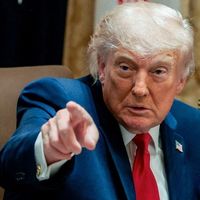
Trump mocks Iran official's Mar-a-Lago attack threat: 'I don't sunbathe'

Jul 9, 2025, 19:51 GMT+1

US President Donald Trump on Wednesday laughed off a threat by an Iranian official suggesting he could be attacked with drones while sunning himself at his Florida mansion, telling a bemused press corps he had not sunbathed since childhood.

“Trump has done something so that he can no longer sunbathe in Mar-a-Lago," Mohammad-Javad Larijani, a former senior advisor to Iran’s Supreme Leader had told Iranian state TV in remarks first reported in the English language media by Iran International.

"As he lies there with his stomach to the sun, a small drone might hit him in the navel. It’s very simple,” added Larijani, whose two brothers are among the Islamic Republic’s most powerful political figures.

Fox News reporter Peter Doocy read the comments to Trump at a press conference, adding, "Do you think that's a real threat? And when is the last time you went sunbathing anyway?"

Trump, smiling, retorted: "It's been a long time. I don't know, maybe I was around seven or so. I'm not too big into it. Yeah, I guess it's a threat. I'm not sure it's a threat actually, but perhaps it is."

Iranian clerics have previously called on Muslims to kill Trump and Israeli Prime Minister Benjamin Netanyahu in retaliation for their threats on the life of Iranian Supreme Leader Ali Khamenei during the conflict.

US forces attacked three Iranian nuclear sites in a bid to disable Tehran's disputed program days after Trump said Washington was well aware of where Khamenei was sheltering during the war.

Larijani's comments came after an online platform calling itself "blood pact" began raising funds for what it calls “retribution against those who mock and threaten the Supreme Leader Ali Khamenei.” The site says to have collected over $40 million to date.

It was not immediately possible to verify the authenticity of the figure.

Bounty for Trump’s head

“We pledge to award the bounty to anyone who can bring the enemies of God and those who threaten the life of Ali Khamenei to justice,” a statement on the site said.

The campaign's stated aim is to raise $100 million for the killing of Donald Trump. It remains unclear who operates the site.

However, Fars News Agency, affiliated with the Revolutionary Guards, reported the launch of the Blood Pact initiative and called on religious groups in Iran and abroad to rally in front of Western embassies and central squares to express support for Khamenei.

The outlet also urged the application of “Islamic rulings on moharebeh” against both Trump and Israeli Prime Minister Benjamin Netanyahu.

In the Iranian legal system, moharebeh—literally “waging war against God”—is punishable by death.

President Masoud Pezeshkian sought to distance his government from the campaign, telling US commentator Tucker Carlson on Monday that “the fatwa of warfare has nothing to do with the Iranian government or the Supreme Leader.”

But Kayhan newspaper, overseen by a representative of Khamenei, dismissed the president's remark.

“This is not an academic opinion. It is a clear religious ruling in defense of faith, sanctities and especially the guardianship of the jurist,” it wrote in a Tuesday editorial, referring to Iran's system of clerical rule.

Any future “fire-starter” would face retaliation, the newspaper added concluding that “The Islamic Republic will drown Israel in blood.”

Former lawmaker Gholamali Jafarzadeh Imenabadi earlier condemned Kayhan’s position, saying: “I can’t believe Kayhan’s editor-in-chief Hossein Shariatmadari is Iranian ... saying Trump should be assassinated will bring the cost down on the people.”

In response, Kayhan wrote: “Today, avenging Trump is nearly a national demand. It is Imenabadi’s words that are out of step with Iranian values."

Trump has been a target for assassination threats since he ordered the 2020 killing of Islamic Revolutionary Guard Corps (IRGC) General Qassem Soleimani in Iraq.

Last year, US law enforcement accused the IRGC of organizing a plot to kill Trump in retaliation for his order to assassinate Soleimani.