Iran crude oil flows to China drop as sanctions bite - Bloomberg
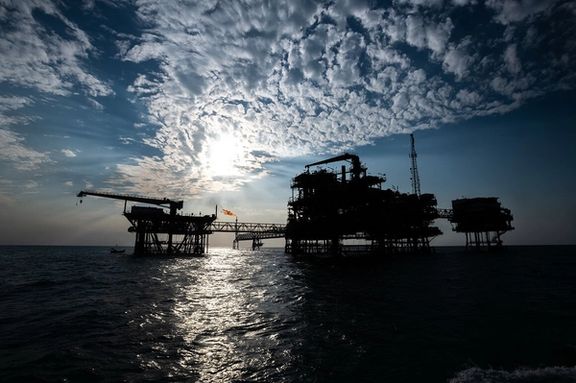
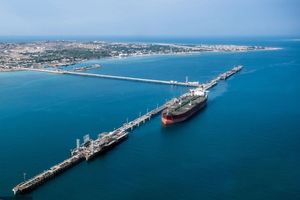
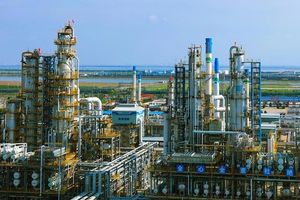
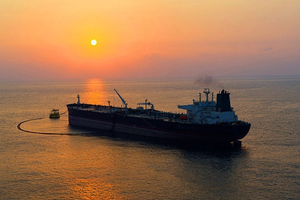
File photo of an oil facility in southern Iran
Iran’s crude oil shipments to China fell sharply in May as tighter US sanctions and seasonal refinery maintenance weighed on flows, Bloomberg reported on Wednesday, citing preliminary ship-tracking data and market analysts.
According to data from Vortexa Ltd., Iran exported just over 1.1 million barrels per day (bpd) of crude and condensate to China last month, marking a drop of roughly 20% compared to the same period a year earlier.
The figures, based on shipping movements, remain subject to revision due to a growing number of tankers switching off their tracking systems in an effort to avoid detection.
“The tightening US sanctions are straining the supply chain and raising concerns about the reliability of shipments,” said Emma Li, senior market analyst at Vortexa. “At the same time, refinery demand in China has weakened, largely due to delayed seasonal maintenance, which now appears likely to extend through July.”
Independent Chinese refiners, known as teapots, are Iran’s primary customers, drawn by steep discounts on sanctioned barrels. But the facilities—mostly concentrated in Shandong province—are currently operating near record-low rates, Li noted. Many refiners had already stockpiled Iranian oil earlier this year, reducing the need for additional purchases in May.
Lower prices of competing crude from Russia, including Sokol and Novy Port grades, have also edged out Iranian supplies in the Chinese spot market.
Impact of sanctions and port restrictions
The decline follows months of escalating US pressure on Iran’s oil exports. Since early 2025, Washington has sanctioned dozens of tankers and companies involved in the trade, particularly targeting Iran’s so-called “shadow fleet.”
The latest round of sanctions, imposed in May, included Hebei Xinhai Chemical Group Co.—a Chinese independent refiner alleged to have received hundreds of millions of dollars’ worth of Iranian crude—as well as several port operators in Shandong and seven vessels used to disguise Iranian shipments.
“The United States remains resolved to intensify pressure on all elements of Iran’s oil supply chain,” said Treasury Secretary Scott Bessent in a statement at the time.
The sanctions have disrupted, but not halted, Iran’s crude flows to China. According to Bloomberg, many shipments now occur in “dark mode,” with vessels turning off their transponders and conducting ship-to-ship transfers off Malaysia to obscure the oil’s origin.
However, sanctions have pushed freight costs sharply higher, with chartering rates for non-sanctioned supertankers reaching up to $6 million—an increase of 50% over the past year.
Shandong Port Group has reportedly advised local operators to avoid dealings with blacklisted tankers, further complicating logistics for Iranian crude.
Earlier cracks in the trade
China’s imports of Iranian oil began declining steeply in January after authorities barred sanctioned tankers from entering Shandong ports, which handle around 90% of Iranian cargoes.
According to Kpler data, Iranian oil deliveries to China dropped below 850,000 bpd in January, compared to over 1.8 million bpd in October 2024.
At the same time, Iran’s floating oil reserves have surged to 35 million barrels, underscoring the widening gap between official shipment figures and actual deliveries.
Despite sporadic rebounds—such as a brief rise in April driven by a backlog of delayed cargoes—the overall trend has been downward.
As US sanctions intensify and China takes further precautions, Iran’s reliance on its shrinking pool of buyers could deepen, while Tehran says its energy exports remain stable.
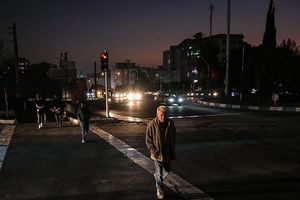
A carpenter works following a power outage at a carpentry workshop in Tehran, Iran, June 1, 2025.
Rolling power cuts across Iran continue to mar daily life and livelihoods, according to firsthand accounts by everyday people submitted to Iran International.
From scorched household appliances to destroyed crops and collapsing businesses, Iranians describe a national infrastructure crisis they say is pushing them into ruin.
Below are excerpts from voice messages sent to Iran International’s platform for citizen testimonies.
'How are we supposed to survive?'
A farmer from Semnan province in northeastern Iran sent a passionate voice message describing how repeated blackouts have destroyed his equipment and ruined his harvests.
“My irrigation pump has burned out twice,” he said. “Where am I supposed to find 800 million tomans ($9,670)? I’m a village farmer. We’re being crushed.”
The average monthly income in Iran is about $150.
He said blackouts come every five or six hours, killing crops and rendering farming impossible. “They’ve destroyed agriculture, the backbone of our economy. They’ve turned the clock back 1,400 years.”
Expressing broader political anger, he added, “As long as we sit and do nothing, they’ll keep dragging us backward—to the Qajar era, even the Safavid. They aren’t here to help us. They’re here to humiliate us.”
Businesses collapsing: 'I had to buy used fridges again'
A small supermarket owner shared how frequent power cuts ruined expensive appliances—even with surge protectors.
“My dairy fridge and ice cream freezer burned out. I had to replace them with second-hand ones,” he said.
Even those whose businesses are not directly affected by outages expressed sorrow. “I don’t work with electricity, but when I see shopkeepers sitting helplessly outside their stores, it breaks my heart,” one person said. “When will we wake up?”
Shoemakers work following a power outage at a shoe workshop in Tehran, Iran, June 3, 2025.
'God help the sick': Medical risks from power loss
Another voice message warned of life-threatening consequences from blackouts.
“Our bread dough spoils. Appliances burn out. But the real danger is for families who rely on oxygen machines,” the speaker said. “When the power cuts, they might lose a loved one.”
She called the blackouts a clear sign of state failure: “These blackouts prove the regime’s total incompetence. Only real change can fix this. God willing, the people will rise.”
Wrecked appliances
Many described a constant cycle of broken appliances and unbearable heat.
“I burn out a cooler motor every week,” said one angry resident.
Others reported fridges and air conditioners failing due to voltage spikes. “This isn’t just about heat. It’s engineered poverty. Engineered unemployment. Engineered misery,” another added.
A voice message captured the mood in one bitter list: “No jobs. No water. No power. No future. Even morality is breaking down. And it’s all by design.”
Priorities
Multiple speakers criticized the government’s priorities—pursuing military ambitions while ordinary Iranians suffer without basic utilities.
“They’ve been chasing nuclear power for 30 years,” one man said. “But they can’t provide a single kilowatt of electricity for the people.”
The comments come as Iran and the United States remain locked in faltering nuclear negotiations, with apparent mixed signals from Washington fueling uncertainty in Tehran.
He praised Iran’s truck drivers for their recent strikes and urged others to resist. “We have to stop watching each other suffer in silence. This is a war. And it’s being waged against us.”
Truck drivers are now on the 13th day of a nationwide strike, with actions reported in over 150 cities and towns despite growing government pressure.
The White House seen in the background of a junction with a stop sign, Washington, D.C., U.S
Iran’s government accused the United States on Tuesday of sending mixed signals that are obstructing progress in ongoing nuclear negotiations, as tensions mount ahead of a possible sixth round of indirect talks.
Fatemeh Mohajerani, spokeswoman for the Iranian government, told reporters in Tehran that Washington’s “contradictory statements” were complicating the process and undermining trust.
“We are prepared for every scenario, but we will not leave the negotiating table,” Mohajerani said.
Reported offer diverges from US public line
A key source of friction is a draft proposal delivered to Iran on Saturday by Omani Foreign Minister Badr al-Busaidi, who has been mediating between Tehran and Washington.
The document outlines a possible framework under which Iran could maintain limited low-level uranium enrichment on its soil, according to Axios and other US media outlets.
This reported flexibility contrasts with public remarks from senior US officials, including White House envoy Steve Witkoff and Secretary of State Marco Rubio, who have repeatedly said Washington would not permit any uranium enrichment and would demand full dismantlement of Iran’s nuclear infrastructure.
The proposal also includes limits on future enrichment, the dismantling of certain facilities, and phased sanctions relief tied to compliance verified by the International Atomic Energy Agency (IAEA).
Tehran says proposal lacks guarantees
Iranian officials have responded skeptically. Foreign Ministry spokesman Esmaeil Baghaei said on Monday that the proposal lacked credible assurances on sanctions relief — a central Iranian demand.
A senior Iranian diplomat told Reuters the offer was a “non-starter,” citing inconsistencies between the US public position and what was conveyed in the draft.
Abbas Araghchi, Iran’s foreign minister, speaking during a visit to Cairo, confirmed that Tehran is still drafting its formal response.
Iran seen preparing negative response - Reuters
According to Reuters, a senior Iranian diplomat said Tehran is drafting a negative response to the US proposal, which could amount to a rejection. The unnamed diplomat cited by Reuters described the offer as failing to address Iran’s key demands, including recognition of its right to enrich uranium for peaceful purposes.
Sources close to Iran’s negotiating team also criticized what they view as Washington’s shifting stance, which they say has created uncertainty about US intentions and credibility, Iranian state media reported on Monday.
CNN on Monday also reported that the next round of nuclear talks is “very uncertain and may not happen at all,” citing sources familiar with the negotiations.
A senior Iranian official told the network the US proposal was “incoherent and disjointed” and conflicted with the understandings reached during the fifth round in Rome. The official added that “the fact that the Americans constantly change their positions” has become a major obstacle to progress.
US officials reject claim of bad faith
Israel Hayom reported on Monday that American officials expected Tehran to accept some elements and object to others.
The outlet, citing unnamed US sources, said that the administration believes Iran’s response will be more measured and that further talks remain possible. A US official quoted in the outlet said negotiators could begin by addressing areas where the gaps are narrower.
The official also said that negotiations would not continue indefinitely and that all options remain under consideration.
Trump publicly contradicts reported offer
President Donald Trump added to the confusion on Monday when he wrote on Truth Social: “Under our potential Agreement — WE WILL NOT ALLOW ANY ENRICHMENT OF URANIUM!”
The statement directly contradicts media accounts of the proposal delivered to Tehran, which permits limited enrichment under strict international oversight — a provision aimed at accommodating Iran’s long-standing demand for civilian nuclear rights.
The gap between Trump’s public stance and the reported content of the offer has become a central point of contention for Iranian officials, who accuse Washington of negotiating in bad faith.
US senator demands transparency over reported ‘side deal’
US Senate Majority Leader Chuck Schumer on Monday warned that the Trump administration may be pursuing a side arrangement with Iran outside the scope of congressional oversight.
Speaking on the Senate floor, Schumer cited the Axios report and urged the administration to clarify whether informal commitments have been made. He said the alleged deal, if true, contradicts earlier statements by Rubio and Witkoff and risks undermining accountability.
Schumer also said any future agreement must address not only nuclear safeguards but also Iran’s support for regional militant groups.
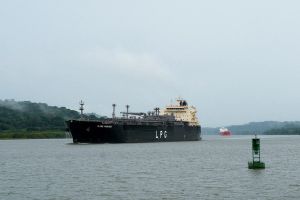
An LPG tanker ship sails through the Panama Canal, in Gamboa, Panama, May 23, 2025.
Panama’s Maritime Authority said it has removed more than 650 vessels from its shipping registry since 2019, including 214 in the past year alone, as it intensifies efforts to comply with US sanctions on tankers linked to Iran.
The registry, one of the world’s largest with over 8,500 vessels, has come under renewed pressure from the US and watchdog groups over its role in what they describe as enabling illicit oil shipments from Iran. Ships removed from the Panamanian registry can no longer operate under the country’s flag.
The move follows criticism from US-based United Against Nuclear Iran (UANI), which accused Panama of being the "flag of choice" for Iranian oil trade in violation of US sanctions.
UANI says nearly 17% of vessels suspected of transporting Iranian crude sail under Panama's flag, using tactics such as flag-hopping, false ownership documentation, and disabling tracking systems.
“This is not just a failure of Panama's registry. It’s a direct threat to global sanctions compliance and regional and US security,” UANI said in a statement last month.
Panama has defended its enforcement record, citing Executive Decree No. 512, which empowers authorities to deregister ships linked to sanctioned entities. In March, 107 vessels were removed, with 18 more under review.
The Maritime Authority said it has reinforced controls on ship-to-ship operations and is collaborating closely with the United States to prevent sanctions evasion.
In 2019, Panama signed an agreement with Liberia and the Marshall Islands to exchange data on suspect vessels.
The measures come as Iran expands its oil exports, despite sanctions. Iranian Oil Minister Mohsen Paknejad recently announced a production boost of 150,000 barrels per day, with plans to increase daily oil and gas output further through $10 billion in new energy projects.
While Tehran has not addressed the UANI report directly, it has consistently rejected US sanctions as illegitimate and maintains that its exports are legal under international law.
In recent months, the US has stepped up enforcement efforts, seizing Iranian tankers in the Persian Gulf. Some vessels were found using forged Iraqi documents, according to Iraqi officials.
Iran’s Foreign Ministry said on Monday that the United States has yet to provide clear assurances on lifting sanctions, a key condition for any nuclear agreement between Tehran and Washington.
“It must be clear to us how the oppressive sanctions against the Iranian people will be lifted, to ensure that past experiences are not repeated,” Ministry spokesman Esmaeil Baghaei told reporters in Tehran.
"I regret to inform you that the American side has not yet been willing to clarify this issue," Baghaei said at his weekly press.
The White House ordered a freeze on new sanctions activity on Iran last week, The Wall Street Journal reported on Sunday, pausing President Donald Trump’s so-called maximum pressure campaign against Tehran.
Oman's Foreign Minister Badr bin Hamad al-Busaidi visited Tehran on Saturday to deliver what Iran described as "elements of a US proposal" related to a possible nuclear agreement.
Muscat has been mediating between Iran and the United States as the two countries seek a breakthrough following five rounds of indirect talks last held in Rome this month.
US proposal under review
Baghaei emphasized that receiving a written text from the US did not signal any agreement on Iran's part.
"Certainly, receiving a text does not mean it is accepted, nor even that it is acceptable," he said. "Exchange of documents is a common practice in all negotiation processes."
Any proposal, Baghaei added, containing “radical and maximalist demands” which ignores what he called the legitimate rights and interests of the Iranian people would not receive a positive response from Tehran.
“The red lines of Iran will be the basis for our response to the American proposal,” he said, underlining the centrality of Iran’s uranium enrichment program and the demand for effective lifting of sanctions.
Iran accuses IAEA of bias
Baghaei also addressed the latest report by the International Atomic Energy Agency (IAEA), saying it was prepared under pressure from certain Western countries.
“The report contains mostly repetitive content, and some technical matters have been exaggerated,” he said. “We are certain that this report was prepared under pressure from specific countries.”
Documents seen by the IAEA showed that Iran carried out secret nuclear activities with material not declared to the UN nuclear watchdog at three locations which have long been under investigation, Reuters reported last week.
Baghaei criticized what he described as a long-standing pattern of Western states using international organizations for political purposes. “Unfortunately, this has become an undesirable trend over the past two decades,” he added.
He said that Iran’s nuclear activities remain under full monitoring by the agency and warned against misrepresenting internal procedural issues—such as revoking the accreditation of a few inspectors—while ignoring the continued presence of 125 active inspectors in the country.
Israel using nuclear issue to sway US policy, Iran says
Responding to longstanding allegations that Iran seeks to develop nuclear weapons, Baghaei argued that such claims have been used politically by Israel to influence US foreign policy.
“If you review the reports on Iran’s nuclear issue, you will see that since 1984, officials from the Zionist regime have claimed that Iran would obtain a nuclear bomb within six months,” he said. “It’s been nearly 40 years. The peaceful nature of our nuclear program has been consistently proven.”
He added, “Israel’s concern is not about a nuclear Iran, but about losing its ability to impose its will in the region and control US foreign policy.”
No clarity from US yet
Baghaei said that Iran’s key demand remains the complete and verifiable removal of economic sanctions.
“In the nuclear field, the matter is clear to us. If America’s concern is the absence of nuclear weapons, that issue is already resolved,” he said. “What matters is ensuring the real and observable end of the sanctions imposed over the past decades.”
He explained that Iran seeks to see practical outcomes, including improvements in banking, trade, and economic relations.
“This is a clear contradiction in the US approach,” Baghaei said. “On one hand, they claim to support diplomacy, but on the other, they reinforce the very obstacles that prevent any understanding.”
He said Iran regards any new sanctions as “a sign of the lack of seriousness and real intent on the part of the United States to advance diplomatic efforts.”
On the potential activation of the “snapback” mechanism—formally known as the dispute resolution process under the 2015 nuclear deal—Baghaei warned, “We have anticipated multiple scenarios. If such a mechanism is triggered by European signatories, we will respond in kind and appropriately.”
Consortium cannot replace enrichment inside Iran
Baghaei also said that any proposal to replace Iran's domestic uranium enrichment with a multinational consortium is unacceptable.
“This idea is not new, and it’s not surprising that negotiating parties continue to raise it. But the consortium proposal can in no way replace enrichment on Iranian soil.”
Baghaei added that while Iran is willing to participate in such initiatives, it would not consider any arrangement that undermines what Tehran sees as its sovereign right under international law.
Iran remains under global sanctions not only for its nuclear program but also over its human rights record at home, and supporting Russia's war on Ukraine. The situation has left Iran's economy in its worst state since the founding of the Islamic Republic in 1979.
The White House has issued a directive to pause all new sanctions activity toward Iran, the Wall Street Journal reported on Sunday, citing a source close to the administration.
According to the report, White House press secretary Karoline Leavitt issued the order last week, halting measures that had been part of President Donald Trump’s ongoing "maximum pressure" campaign.
The directive was passed to senior officials at the National Security Council, the Treasury Department, and the State Department, the report said.
While the White House did not deny the sanctions pause, deputy press secretary Anna Kelly said in a statement to the Journal: “Any new decisions with regard to sanctions will be announced by the White House or relevant agencies within the administration.”
The report said that Trump officials view the move as a temporary slowdown aimed at reviewing potential sanctions more carefully amid sensitive nuclear negotiations, and that it was overinterpreted somewhere along the chain.
Others expressed concern that key policymakers have been out of the loop and surprised by the sweeping pause.