Iran to slash four zeros from currency in 2025, chief banker says
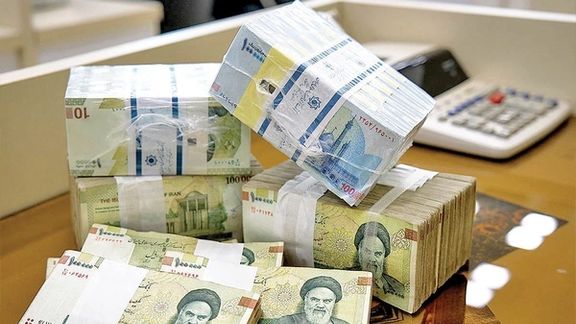
Iran will implement a long-delayed redenomination of its national currency this year, Central Bank Governor Mohammad Reza Farzin said on Monday, reviving a plan to strike four zeros from the rial and formally replace it with the toman in a bid to simplify transactions.
"This year, we will definitely pursue the removal of zeros," Farzin told an annual monetary and foreign exchange policy conference in Tehran. "It has been tried in about 70 countries such as Russia, Turkey, and Germany, and proven effective when implemented at the right time."
The announcement marks the clearest signal yet that Iran is moving forward with the redenomination plan first proposed in 2019 and approved by parliament in 2020.
The new currency system would peg one toman to 10,000 rials, aligning official usage with the informal practice already common among Iranians, who long abandoned the rial in everyday transactions.
Farzin stressed that the plan is being accompanied by broader reforms in the banking system, following the ratification of new legislation earlier this year.
"This is a year of transformation," he said. "We are moving from an old model of banking governance to a new one, underpinned by a series of newly approved laws and regulations."
Still, the move comes amid persistent economic headwinds. Iran’s inflation rate has hovered above 40% in recent years, and the national currency has lost more than 95% of its value over the past four decades.
A 10,000-rial note, once worth around $150 before the 1979 revolution, is now valued at less than 10 US cents.
Critics argue that striking zeros from the currency without addressing Iran’s underlying economic challenges—such as fiscal imbalances, monetary instability, and international sanctions—may prove cosmetic.
“The problem is not the four zeros, but the persistent inflation and monetary mismanagement,” economist Jamshid Assadi said in an earlier analysis. “Without reforms to central bank independence, fiscal discipline, and financial transparency, the redenomination will not have a lasting effect.”
Past experiences in countries like Zimbabwe, Venezuela, and Argentina have shown that currency redenominations alone do little to stabilize economies without deeper structural reforms. Conversely, countries such as Turkey and Germany only succeeded after implementing broad fiscal and institutional changes.
Iran’s caretaker Economy Minister Rahmatollah Akrami echoed some of these concerns at the same conference on Monday, warning that limited independence of the Central Bank, unclear inflation-targeting frameworks, and a lack of transparency have all contributed to Iran’s recurring macroeconomic instability.
“The effectiveness of monetary policy tools is limited in the absence of institutional strength,” Akrami said, urging a “redefinition of the Central Bank’s role” within Iran’s economic governance.
The new currency rollout is expected to span up to a few years, during which both the rial and the toman will circulate simultaneously. The Central Bank will oversee the withdrawal of rial notes and coins and their replacement with the new toman units.
While the psychological effect of dealing with smaller numbers may ease some frustrations for the public, analysts warn that without tackling deeper problems—such as rising liquidity, declining purchasing power, and a weakening private sector—the benefits of redenomination will be limited.
As global sanctions continue, not only for Iran's nuclear program, but for the country's human rights abuses and support of Russia's war on Ukraine, the economy is in its worst condition since the founding of the Islamic Republic.
Over one third of Iranians live below the poverty line with unemployment plaguing the population.
“The real question is whether this is meaningful reform—or just another economic shock dressed up as policy,” wrote Iran’s Jahan-e Sanat daily back in 2019 when the reform was first proposed.
Iranian women wear protective masks to prevent contracting coronavirus at Grand Bazaar in Tehran, Feb 2020.
Iran is witnessing a renewed rise in COVID-19 cases, prompting health experts to recommend that vulnerable individuals wear masks in public places, particularly in crowded enclosed areas, the state-run Islamic Republic News Agency (IRNA) reported.
Infectious disease specialist Davoud Yandegarinia told IRNA on Sunday that while there is no consolidated data on the number of new infections, an increase in hospital admissions and clinic visits indicates the virus is spreading again.
“It seems to be the Omicron variant, which remains the last variant of concern according to the World Health Organization,” he said.
Yandegarinia advised people with underlying health conditions, weakened immune systems, and those working or moving through densely populated areas — including healthcare workers — to resume mask use.
He also urged elderly individuals, pregnant women, heart patients, and those taking corticosteroids to continue using the same preventive methods employed during earlier stages of the pandemic.
“There is no need at this time to apply preventive measures to the general public,” he added, “but it is better for people to use masks in offices, closed environments, and hospitals.”
IRNA also earlier reported that Deputy Health Minister Alireza Raisi recently sent a letter to university health departments across the country, calling for increased precautions against respiratory illnesses, particularly COVID-19 and influenza.
Iran became the second country after China to officially declare an outbreak of the pandemic in February 2020, since reporting nearly 145,000 deaths — the highest official toll in the Middle East, with over 7.5 million confirmed cases.
Iranian political prisoner Ehsan Faridi has been sentenced to death on charges of “spreading corruption on earth,” a ruling quietly issued months ago but only recently made public, according to information obtained by Iran International.
Faridi, a 22-year-old student from the northwestern city of Tabriz, was studying manufacturing engineering at the University of Tabriz when he was first arrested by Iran’s Law Enforcement Intelligence Organization in March 2024.
He was released on bail after nearly a month in detention, only to be re-arrested in June that year after appearing before Branch 15 of the Tabriz Prosecutor’s Office, which handles so-called national security cases.
His death sentence was handed down in February 2025 by Judge Ali Sheykhlou of Branch 3 of the Tabriz Revolutionary Court, a figure known for issuing harsh rulings against dissidents.
The verdict was based on reports from the police intelligence unit and an indictment issued by a prosecutor who was later sacked for corruption. The ruling was delivered despite objections raised by Faridi and his lawyer, and without what sources describe as sufficient evidence.
Corrupt prosecutor
Faridi's indictment had been issued by Ali Mousavi Aghdam, a former prosecutor for Branch 15 of the Tabriz Prosecutor’s Office.
Aghdam was arrested in November 2024 — less than three months after filing the charges — for forming a corruption ring within the judiciary, accepting bribes, forging documents, and fabricating cases. He was later convicted and dismissed from the judiciary.
Faridi's case is currently under review by Iran’s Supreme Court. According to a source familiar with the proceedings, the lack of credible evidence in the file and the court's past record of overturning similar sentences issued by Judge Sheykhlou has given Faridi’s family hope that the ruling will be annulled.
Faridi had already been sentenced to six months in prison on a separate charge of “propaganda against the Islamic Republic,” prior to the death penalty case.
The revelation comes amid a surge in executions in Iran, particularly targeting political prisoners. Human rights groups reported that at least 230 people — including 8 women — were executed across Iranian prisons in the first three months of 2025, more than double the number from the same period the previous year.
As of early May, human rights monitors estimate that around 60 individuals facing political or security-related charges are currently on death row in Iran.
Iran's Foreign Minister Abbas Araghchi meets his Indian counterpart in New Delhi
Famous Indian TV host and former army officer Gaurav Arya sparked a brief diplomatic stir between Tehran and New Delhi and drew widespread reactions on social media after calling Iran’s Foreign Minister Abbas Araghchi a “son of a pig” on air.
Arya was criticizing Araghchi for visiting Pakistan before traveling to India for talks aimed at deescalating tensions between the two nuclear-armed neighbors, following the Pahalgam attack in Indian-administered Jammu and Kashmir.
The clip quickly circulated online, prompting a public response from the Iranian embassy in New Delhi. In a statement, the embassy said: "Respect for guests is a long-standing tradition in Iranian culture. We Iranians consider our guests 'beloved of God. What about you?"
Following the Iranian reaction, the Indian embassy in Tehran issued its own clarification, writing: "The Embassy of India in Iran wishes to clarify that the person in this video is a private Indian citizen."
"His comments do not reflect the official position of the Indian government, which finds the disrespectful language used in the video inappropriate," the Indian embassy added.
Major Gaurav Arya is a very popular Indian personality with nearly two million followers on X including Indian Prime Minister Narendra Modi. His program "Chankaya Dialogue" also has over four million subscribers on YouTube.
Iran's foreign ministry spokesman on Saturday hailed a truce deal between India and Pakistan, which was mediated by the United States, calling on both countries to ease their tensions using the ceasefire opportunity.
Esmaeil Baghaei in a statement on Saturday praised the two countries’ leaders in halting the conflict as a responsible and prudent move and expressed hope that the situation between India and Pakistan would return to normal as soon as possible.
He also emphasized "the importance of both countries seizing this opportunity to ensure a reduction in tensions and the sustainability of peace in the region."
Following a tense day of escalating conflict that risked spiraling out of control, India and Pakistan unexpectedly reached an agreement on an immediate ceasefire, putting an end to the most intense clashes in decades between the two nuclear-armed neighbors.
Earlier on Saturday, Pakistan reported that India had launched missile attacks on several of its military bases, prompting Pakistan to retaliate with strikes on Indian bases.
The pause in hostilities was first announced by US President Donald Trump, who shared on social media that the agreement followed a night of American-led mediation efforts.
An airport staff walks past wreckage of a destroyed plane at Sanaa International Airport, in the aftermath of an Israeli airstrike, in Sanaa, Yemen, May 7, 2025.
The surprise ceasefire between the United States and Yemen's Houthis this week underscored the unpredictability of diplomacy over Iran's nuclear talks as they head for crunch time over the weekend, experts told the Eye for Iran podcast.
The panel of Middle East specialists said the surprise deal mediated by Oman and announced by President Donald Trump highlights the US leader's maverick stances and Tehran's flexibility as it tries to clinch a deal to avoid war with Washington.
Iranian and US negotiators are due to meet in Muscat for a fourth round of talks on Sunday after Trump's special envoy Steve Witkoff rejected enrichment by Iran and for the first time mooted ending the talks if Tehran does not budge.
"Trump is totally unpredictable. Nobody knows what's going to happen with him the next day. This is something that is coming across all over the region," said Avi Melamed, a former Israeli intelligence official and current Mideast analyst.
Shock ideas like taking ownership of Gaza and the sudden end of American attacks on the Houthis keep friend and foe alike off balance, he added, and provide a moving target that may scramble any independent plans they have of their own.
"I don't know whether to even to call it policy but basically steps or measures that ... because they are so flexible, vague and unpredictable, create a dynamic that in a convoluted way could be sometimes constructively contributing to stability."
At the same time, according to Yemeni-American policy analyst Fatima Abo Alasrar, the Yemen truce likely signaled the influence of their Iranian backers over their armed proxies in the explosive region.
"It's an amazing strategy by Iran regime's officials to throw in something to show good faith and that they're serious, but also it shows power," said Abo Alasrar, a senior policy analyst at the Washington Center for Yemeni Studies.
"When you're able to stop your proxy... it shows how much power Tehran has in the region. This demonstrates to the US president, look at us, we can do this - we can turn this region upside down if we want to."
Wait and See
The truce between the theocratic guerrilla group and the populist president may prove fragile, and any breakdown between Tehran and Washington could inflame it anew.
"They are talking about nuclear agreement and a nuclear deal with Iran and that therefore Iran will make concessions, etc. And the Houthis maybe will be part of it," said Zineb Riboua, a research fellow at the Hudson Institute.
"It's more of a let's wait and see situation, precisely because a lot of these things are unpredictable."
Not just Washington's Houthi enemies but its Israeli allies seem not to be able to discern Trump's next move.
Israel pounded Yemen's main airport and several power plants the morning before Trump's truce announcement, escalating its military campaign just as their American backers ended theirs.
"This does suggest at least a certain amount of friction or a certain amount of uncoordination between the United States and Israel, at least when it comes to the policy towards the Houthis," said Gregory Brew, senior Iran analyst at Eurasia Group.