Ex-British soldier sentenced to 14 years for spying for Iran
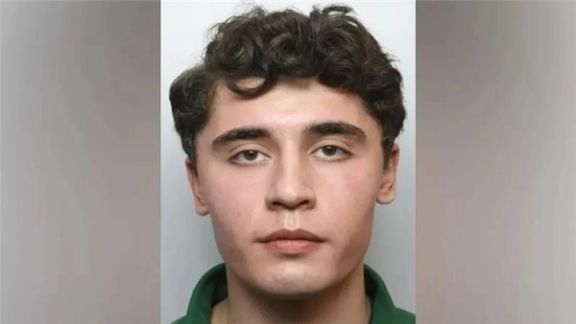
A former British soldier who escaped from custody while facing charges of gathering sensitive information for individuals linked to Iran’s IRGC was sentenced to 14 years and three months in prison at Woolwich Crown Court in London on Monday.
Daniel Khalife received six years for breaching the Official Secrets Act, six years for a terrorism offense, and two years and three months for escaping from prison, with the sentences to be served consecutively.
Khalife, 23, joined the British Army in 2018 and served with the Royal Corps of Signals. While enlisted, he "exposed military personnel to serious harm" by gathering and passing on sensitive information to Iran.
The judge said Khalife "took payment on two occasions and traveled to meet intelligence officers from Iran in Turkey." She noted that he "recorded a great deal of information," including the full names of fellow soldiers, and was "driven firmly to the conclusion that this was to send to the Iranians."
Khalife, who escaped from Wandsworth Prison in September 2023 but was caught days later, passed information to Iranian agents for cash and told handlers he would stay in the military for more than 25 years to serve them.
Iran's FM Abbas Araqchi meets Qatari counterpart Sheikh Mohammed bin Abdulrahman bin Jassim Al-Thani on January 30, 2025.
Iran's foreign ministry said on Monday that its senior diplomat, Abbas Araghchi, did not discuss negotiations with the United States during a recent visit to Doha.
Esmail Baghaei said the trip was within the framework of Iran-Qatar relations, emphasizing that Araghchi met with senior Hamas officials to review developments in Palestine.
“No specific discussion was raised regarding any other issue,” Baghaei said during a press conference on Monday, as reported by ILNA.
Iran and the US have not had diplomatic ties since 1980.
Araghchi traveled to Qatar last week, where he had discussions with Qatari Prime Minister and Foreign Minister Sheikh Mohammed bin Abdulrahman bin Jassim Al Thani.
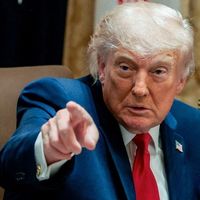
Tehran has conveyed conflicting messages about its openness to negotiate with Washington following Donald Trump's re-emergence in politics.
Iran’s Supreme Leader Ali Khamenei said on Sunday "Death to America" during a gathering at his headquarters after having tacitly given the go-ahead to talks with the US.
Tehran took part in indirect talks with the Biden administration between 2021 and 2022, to restore US involvement in the nuclear agreement which was inked in 2015 following Trump’s 2018 withdrawal and the imposition of strict sanctions. However, the Vienna talks failed to reach a result.
Regional ties and policy toward Afghanistan
Beyond the Qatar trip, Baghaei addressed Iran's diplomatic outreach to Afghanistan, saying the foreign minister’s visit to Kabul followed a steady course of engagement over the past four years.
“We have many things in common with them, and we hope these shared interests will serve as a basis for resolving outstanding issues, such as water rights,” he said.
The water dispute between Tehran and Kabul centers on the Helmand River, which originates in Afghanistan and flows into Iran. A 1973 treaty was designed to regulate water-sharing, guaranteeing Iran an annual quota of 820 million cubic meters.
However, Iran has accused Afghanistan—particularly under the Taliban—of violating the agreement by restricting water flow through dam projects like the Kamal Khan Dam. Afghan authorities, on the other hand, say climate change and persistent drought have reduced the river’s capacity, making it difficult to meet Iran’s expectations.
Sweden's arrest of cleric
During the trip, Baghaei also condemned Sweden’s detention of a senior Iranian cleric, describing the arrest as politically motivated. He said the move was influenced by “third parties that do not seek to benefit either us or Sweden.”
“Our inherent duty is to protect Iranian citizens,” he said. “He has not committed a crime, and this action is incompatible with legal principles.” Baghaei added that Iran had lodged a formal protest, and the Swedish ambassador had been summoned to the foreign ministry.
The Swedish daily Expressen reported on Saturday that an Iranian cleric, Mohsen Hakimollahi, serving as an imam at an Islamic center in suburban Stockholm, has been detained for nearly two weeks and faces deportation from Sweden. No specific reason was reported for the arrest.
Hakimollahi, 63, was originally transferred from Iran to Sweden to manage the Imam Ali Center and had lived in the country for several years, establishing ties with local political figures and religious organizations.
Later on Monday, Iran’s Foreign Ministry summoned Sweden’s ambassador over the arrest.
Iran has dispatched four vessels from its IRGC and army navies to the UAE for a meeting with Emirati naval forces.
"We have repeatedly said that regional countries can ensure the region's security and that there is no need for foreign presence," IRGC navy chief Alireza Tangsiri was quoted as saying by state media.
In addition to Persian Gulf forces, coalition forces including the US, Iran's archenemy, have a strong presence around the Strait of Hormuz.
The UAE and Iran repaired diplomatic ties in 2022, abou six years after Abu Dhabi cut diplomatic relations in allegiance with Saudi Arabia after the 2016 looting of the Saudi embassy in Tehran. Saudi followed one year later.
The IRGC navy chief announced there will be ongoing drills with other countries neighboring Iran such as Oman, which was one of the mediators involved in the repairing of ties between Iran and Saudi Arabia.
"We have had engagements with Oman's navy in this regard and have participated in joint drills with Oman," he said.
A multi-purpose drone carrier will also be integrated into the IRGC navy, he said.
Kamal Kharrazi, a senior foreign policy advisor to Iran's Supreme Leader, expressed concern about what he called Israel's presence in Azerbaijan Republic, which borders Iran to the northwest.
"Countries should take their neighbors' sensitivities into consideration," Kharrazi said during a Sunday meeting with the Azeri presidential assistant Hikmet Hajiyev in Tehran.
Last month, Azerbaijani President Ilham Aliyev condemned remarks by Iranian cleric Seyyed Hassan Ameli, the Friday Prayer Leader of Ardabil who accused Azerbaijan of collaborating with Israel and described President Aliyev's policies as part of a "multi-billion-dollar gamble with the Israelis."
Tehran has long been critical of Baku’s close ties with Israel, while Azerbaijan has expressed frustration over Tehran’s alleged provocations, including inflammatory rhetoric by Iranian clerics and media.
On January 25, Azerbaijan’s Ministry of Foreign Affairs summoned the chargé d'affaires at Iran's Embassy in Baku to lodge a protest over alleged anti-Azerbaijan content in Iranian media.
Tensions further escalated earlier in January after Azerbaijan’s security services said they had foiled a plot to assassinate a prominent local Jewish figure for $200,000.
Two suspects were arrested, with Azerbaijani officials alleging they acted "under the guidance of a foreign country." While no nation was explicitly named, sources within Azerbaijan’s Jewish community have pointed to Iran.
Also in December, an Iranian lawmaker has accused the United States, Israel, and Azerbaijan of orchestrating the helicopter crash that claimed the life of former President Ebrahim Raisi, rejecting the official explanation of a weather-related malfunction as implausible.
Iranian officials have also been occasionally accusing Azerbaijan of allowing Israel to set up intelligence and military bases on its territory as an operational base against Iran.
A video circulating on social media shows a woman standing naked on a police vehicle in Iran in the latest instance of a woman disrobing in public and dramatically flouting the Islamic Republic's dress strictures.
The exact time and location of the footage are unclear, but social media users say it has been recorded in the religious city of Mashhad within the past two weeks.
The new video is circulating three months after a similar incident at Tehran's Islamic Azad University, where a female Iranian student stripped to her underwear in protest after reportedly being assaulted by security forces.
During the student's arrest, Ahoo Daryaei was subjected to severe physical assault, including her head striking either a car door or a pillar, which caused heavy bleeding. “Blood stains from the student were reportedly seen on the car’s tires,” the report noted.
Since the emergence of the Woman, Life, Freedom movement in Iran, sparked by the death of Mahsa Amini in September 2022 while in police custody over hijab violations, hardliners have intensified efforts to enforce strict dress codes for women.
Despite widespread public defiance, government measures to reinforce mandatory hijab laws have escalated, resulting in the closure of businesses and the impoundment of vehicles associated with hijab offenses.
An Iranian daily criticized Foreign Minister Abbas Araghchi, arguing that his recent diplomatic approach toward the United States, particularly his demands for the release of blocked funds, has been misguided.
In a Sunday editorial, Ham-Mihan, a newspaper aligned with Iran’s Reformist faction, argued that the Foreign Ministry’s performance over the past six months has led to a diminished and weakened position in at least three key areas.
The newspaper pointed to Iran’s handling of overtures for negotiations with the United States as a key concern.
Iran’s policy toward Washington has long been a sensitive and contentious issue, especially after the US withdrawal from the JCPOA nuclear deal in 2018 and the imposition of sanctions. With President Donald Trump’s return, many Iranian politicians and commentators are voicing concerns over the possibility of harsher sanctions as the country struggles with a deep economic crisis.
Ham-Mihan said that efforts at engagement—whether overt or behind closed doors—have consistently encountered resistance from hardliners in both Tehran and Washington.
Beyond internal challenges, Ham-Mihan warned that Trump’s different view of foreign policy makes Iran’s diplomatic messaging particularly sensitive.
“One of Trump’s main arguments for withdrawing from the JCPOA was the lack of economic benefits for American companies,” the paper added, suggesting that any new diplomatic overtures must be framed in a way that aligns with Trump’s priorities.
Araghchi, however, has been criticized for failing to take such dynamics into account. The newspaper pointed to his recent interview with Al Jazeera, in which he asked for the release of frozen Iranian assets as a confidence-building measure.
Ham-Mihan argued that this approach misjudged Trump’s negotiating style and contrasted it with other Iranian officials who have suggested offering American companies investment opportunities in Iran instead.
The newspaper also expressed alarm over the apparent disarray within Iran’s foreign policy structure. Unlike the administration of President Hassan Rouhani where the foreign ministry led negotiations, figures like former Supreme National Security Council Secretary Ali Shamkhani and Strategic Council on Foreign Relations President Kamal Kharrazi now seem to be pursuing independent agendas, leading to confusion.
Iranian Foreign Minister Abbas Araghchi and Syrian President Bashar al-Assad (right) meet in Damascus on December 1, 2024.
Additionally, Ham-Mihan criticized some of Araghchi’s recent regional visits, suggesting they have become more about symbolic appearances than meaningful diplomatic efforts.
The paper particularly highlighted his trips to Beirut and Damascus right before Bashar al-Assad's fall, arguing that they failed to achieve meaningful results to bolster Iran's influence and instead reinforced the country's image as a passive observer rather than an influential actor.
The newspaper urged Araghchi to reassess his approach, warning that without a more unified and strategic direction, the Foreign Ministry risks becoming increasingly sidelined in shaping Iran’s diplomatic agenda.